

 App Store

COIN VALUE GUIDES
Quarters Worth Money: Silver, Key Dates and Modern Varieties
Compare valuable quarters across eras: silver issues, 1932-D and S keys, collector versions, modern varieties and genuine errors, with photos and focused guides.
 HeriBase TeamPublished
In this article
Which quarters are worth more than 25 cents?
Quarters worth more than face value include silver issues, scarce date-and-mint combinations, exceptional grades and authenticated varieties or errors. Start with regular Washington quarters dated 1932–1964, then check 1932-D and S, selected collector silver versions and specific modern varieties. Most ordinary worn clad quarters remain 25-cent coins; an S or unusual color alone proves neither silver nor rarity.
Evidence reviewed November 13, 2026. All quoted prices retain their stated dates and conditions.
Which real coin details should I compare?
How do the issues and values compare?
Which category explains a quarter’s premium?
This guide spans older silver and modern clad issues. The quarters worth checking after 1965 article retains its narrower modern scope. A silver-content premium, a scarce regular issue, a certified condition rarity and a genuine mint error are different reasons for value; do not combine their prices.
| Group | First identification check | Premium basis | Important limit | Focused guide |
|---|---|---|---|---|
| Barber / Standing Liberty | Design, full date and mint | Silver, key issue and condition | A dateless or damaged coin is another comparison | Standing Liberty quarters |
| Washington, 1932–1964 | Regular issue date and reverse mint | 90% silver; some scarce dates | Do not apply a gem-key price to common worn silver | Washington silver-year guide |
| 1932-D and 1932-S | Letter below wreath and genuine date | Key date-and-mint combinations | 1932 Philadelphia is a separate issue | 1932 mint comparisons |
| 1776–1976-S collector versions | Verify alloy and manufacture | Some versions contain 40% silver | S also occurs on clad Proofs | Bicentennial quarter guide |
| State-quarter varieties / errors | Exact diagnostic or production fault | Recognized attribution | Ordinary state designs are common | Selected state-quarter sales |
| 2019 / 2020 W issues | W mark; exact year and reverse | Collector demand and preservation | W is not an error or silver guarantee | 2019 quarter issues |
| Later Proof / silver collector issues | Set, alloy and finish | Collector manufacture and metal | Not every S coin is silver | Silver versus clad exceptions |
Which quarter years are silver?
Regular Washington quarters dated 1932–1964 are 90% silver and nominally 6.25 grams. Regular circulation quarters beginning in 1965 use copper-nickel clad construction and nominally weigh 5.67 grams. Collector exceptions continue after that date: selected Bicentennial S issues contain 40% silver, silver Proof quarters from 1992–2018 contain 90%, and designated silver Proof quarters beginning in 2019 use .999 silver. Confirm the actual product rather than reading S as an alloy.
A normal older 90% silver quarter contains approximately 0.18084 troy ounce of fine silver. Multiply by a silver price per troy ounce for a nominal metal-content reference. At a hypothetical $50 per ounce, that is about $9.04. This is not a live quote, retail price or guaranteed dealer offer. Wear, premiums and transaction costs change actual proceeds.
Why do 1932-D and 1932-S need separate checks?
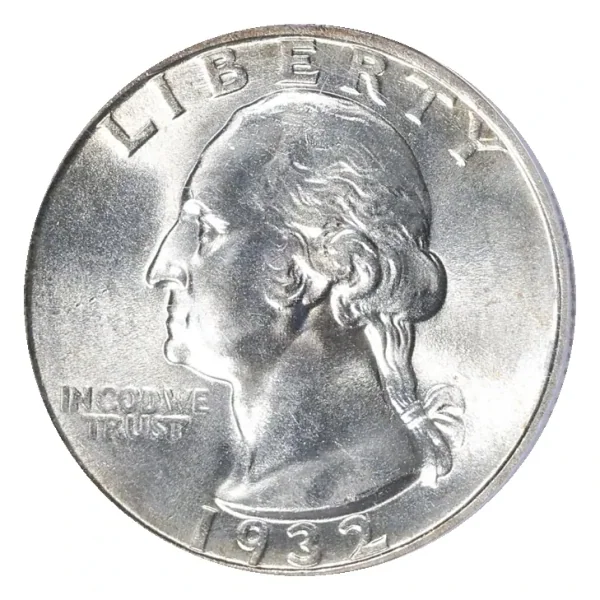
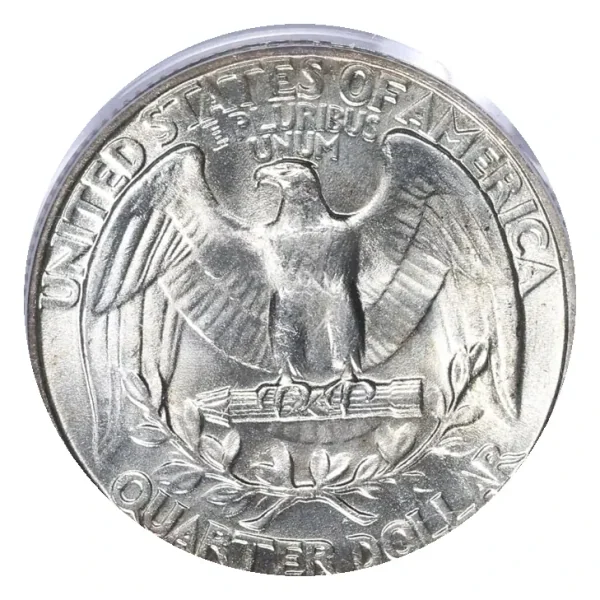
John Flanagan’s Washington design began in 1932 for the bicentennial of Washington’s birth. The two key mints produced 436,800 Denver and 408,000 San Francisco pieces. Despite the smaller S mintage, relative prices depend on grade and surviving quality; a lower mintage does not force a higher price at every grade. Confirm the small reverse letter and watch for added mint marks.
| Issue | Good 4 | Extremely Fine 40 | Price type / date | Limit |
|---|---|---|---|---|
| Philadelphia, no mint mark | $15.30 | $15.64 | NumisMedia FMV snapshot, Oct. 17, 2026 | Normal issue, not D or S |
| Denver D | $63.25 | $216 | Same guide and reference date | Genuine mint mark and grade |
| San Francisco S | $60.95 | $132 | Same guide and reference date | Guide estimates, not guaranteed selling prices |
The photographs above show a Philadelphia reference, not either key-mint coin or a specimen sold for a stated amount. For earlier design-era scarcity, use Barber quarter identification and the 1916 Standing Liberty guide instead of assigning all old quarters one value.
Which modern quarters deserve a closer look?
Check specifically attributed 2004-D Wisconsin Extra Leaf High and Low varieties, credible striking errors and well-preserved W-mint issues. The state-quarter comparison keeps selected transaction dates and certified conditions beside the amounts. A high-grade normal coin can attract a premium without being an error; an ordinary worn coin should not inherit its result.
For newer designs, 2023 quarter error pictures distinguishes a documented Kanakaʻole die clash and certified missing-layer records from normal Idar lettering or “IN COD” claims. A copper-colored edge is normal on clad quarters; an entire copper-colored face still needs surface and weight examination before a missing-layer attribution.
Does an S mint mark make my quarter valuable?
No single S rule answers both manufacture and metal. San Francisco has issued clad Proofs, silver Proofs and other collector strikes. A Proof is a method of manufacture, and silver is an alloy category. Determine both. Brilliant surfaces alone do not prove Proof manufacture, and polished clad coins do not become silver.
How do I compare a realistic price?
Keep the exact issue, mint, alloy, manufacture, variety, numerical grade and surface condition with each comparison. A dated price guide is a reference estimate. A completed auction is an individual transaction, possibly including a buyer premium. An unsold asking price proves neither. Use several relevant transactions and account for selling costs rather than choosing the largest number attached to the year.
For an inherited group, first separate identifiable silver dates, plausible key mints and clearly unusual production features. Keep damaged common coins apart from problem-free comparisons. The appraisal guide helps prepare photographs and records; the grading scale explains why a worn coin and a gem need different price evidence.
How can I check my coin in three steps?
- 01Identify the design era and full date. Separate regular 1932–1964 silver Washington issues from later clad coins and specific collector silver exceptions.
- 02Read the mint mark in the correct location for the issue. Record alloy, manufacture, surfaces and any exact variety diagnostics before selecting a price.
- 03Compare the same category and grade using dated guide figures and completed transactions. Keep credible key-date or error candidates uncleaned for examination.
What should I remember?
A quarter can deserve a premium because of silver, a scarce issue, exceptional condition or an authenticated feature. Establish which explanation applies before using a high price.
Begin with the date, mint and alloy. Keep the modern-only and state-quarter guides as specialist routes, and never use S or unusual color as a substitute for identification.
What else do collectors ask?
What quarters should I check for silver?
Start with regular Washington quarters dated 1932–1964. Later exceptions include specific 40% silver Bicentennial issues and designated silver Proofs; not every later S coin is silver.
Are all quarters before 1965 90% silver?
This guide’s simple 1932–1964 rule concerns regular Washington quarters. Earlier U.S. series require their own specifications and should not be covered by an unrestricted all-years rule.
Is a 1965 quarter silver?
A normal circulation 1965 quarter is copper-nickel clad. A claimed wrong-planchet exception needs physical evidence and expert authentication.
Are all S quarters silver Proofs?
No. San Francisco issued clad as well as silver collector coins, and the mint letter alone does not establish alloy or manufacture.
Why check 1932-D and 1932-S?
They are key Washington date-and-mint combinations. Confirm the genuine reverse letter and compare condition rather than applying their prices to 1932 Philadelphia coins.
Are modern quarters ever worth more than face value?
Yes, for specific varieties, genuine errors, collector issues or exceptional preservation. Most ordinary worn clad quarters remain 25-cent coins.
Is the $50 silver calculation a current price?
No. It is a hypothetical example showing the formula. Current spot, premiums, wear and actual offers must be checked separately.
Which references support this guide?
References and further readingExpand
- U.S. Mint: quarterWashington design and the 1965 material change.
- PCGS: 1932-D and 1932-SMintages and grade-dependent rarity, November 4, 2024.
- NumisMedia fair market valuesSelected 1932 issue figures retained from the existing year guide’s October 17, 2026 snapshot; not re-dated as live prices.
- U.S. Mint: Bicentennial coinsCollector silver and regular circulation distinctions.
- U.S. Mint: 2019 silver Proof quartersDesignated Proof quarters changed to .999 silver.