

 App Store

COIN VALUE GUIDES · BARBER QUARTERS
Barber Quarter Value:Silver, Mint Marks and Key Dates
Identify 1892–1916 Barber quarters, locate O, S and D marks, compare common-date circulated values and recognize dates that need specialist review.
 HeriBase TeamPublished
In this article
Quick answer
Barber quarters were issued from 1892 through 1916 and contain 90% silver, approximately 0.18084 troy ounce per standard coin. Most worn examples need a date-and-mint comparison rather than a rare-coin auction headline.
As a common-date benchmark, NumisMedia’s October 24, 2026 table lists 1892 Philadelphia at $14 in G4, $23 in F12 and $84 in XF40. The famous 1896-S, 1901-S and 1913-S require separate research and authentication; these three dates do not set the price of every Barber quarter.
Coin photos
Basics & coin story
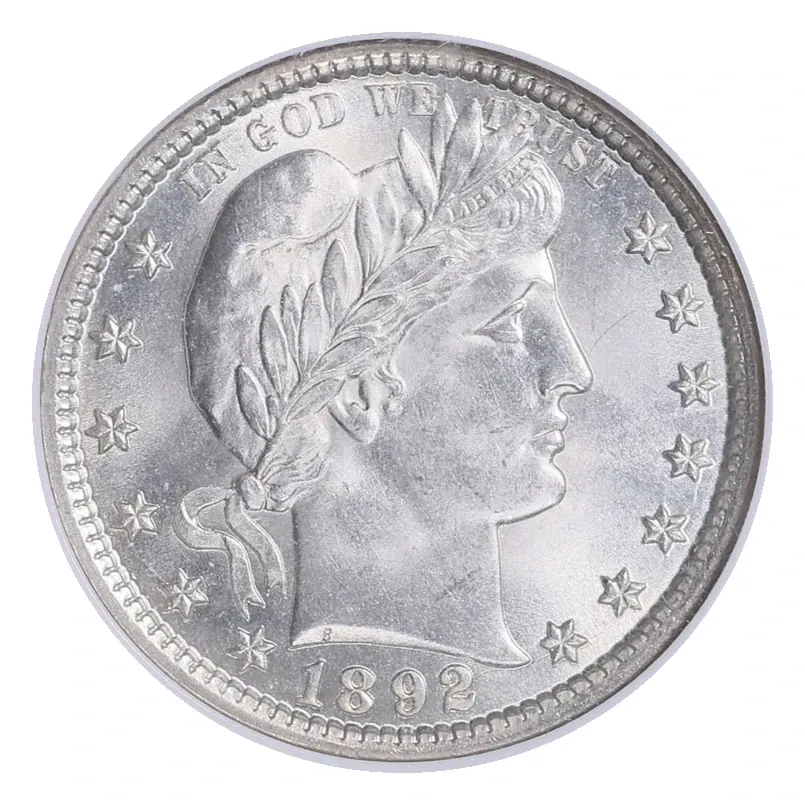
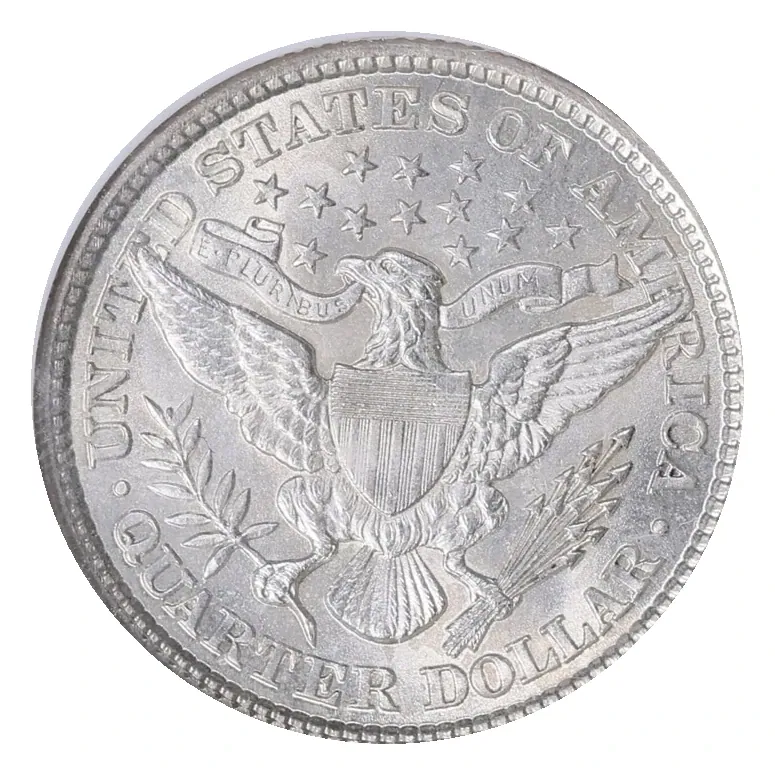
The Barber quarter replaced the long-running Seated Liberty design in 1892. Charles E. Barber used a Liberty head on the front and a heraldic eagle on the back, closely related to his half-dollar design. QUARTER DOLLAR and the smaller diameter distinguish this denomination.
Production continued into 1916, the year the Standing Liberty quarter also appeared. A date alone does not identify which design you have. Read both sides before using either series’ guide. The Standing Liberty guide covers the standing portrait and its own wear issues.
The four mint identities used across the series are Philadelphia, New Orleans, San Francisco and Denver. Denver began quarter production in 1906. No date exists in every possible mint combination, so use a verified issue listing instead of assuming a missing album slot must have been struck.
| Feature | What to check |
|---|---|
| Series / denomination | 1892–1916 / 25 cents |
| Designer | Charles E. Barber |
| Alloy | 90% silver, 10% copper |
| Nominal mass / diameter | 6.25 g / about 24.3 mm |
| Fine silver | Approximately 0.18084 troy ounce |
| Mint mark location | Reverse below eagle, above QUARTER DOLLAR |
| Mint identities | No mark = Philadelphia; O, S and D where issued |
| Important distinctions | Date, mint, wear, original surfaces and Proof status |
Identification
Read the complete date and mint
The date is below Liberty. On the reverse, look between the eagle and the denomination for O, S or D. A no-mint-mark Barber quarter is normally Philadelphia, not an error. Keep photographs of both sides so that a future comparison uses the same identity.
Check a proposed key date for altered digits or an added mint mark. A photograph may establish what needs examination without establishing authenticity. For a costly 1901-S or another major rarity, an established grading service or experienced specialist is a practical next step.
Inspect wear and surfaces separately
Headband lettering, Liberty’s hair and the eagle’s feather detail help compare circulated grades. A partial LIBERTY inscription alone does not prove a numerical grade. Strike strength, wear and damage can affect the same visible detail for different reasons.
Look at the cheek and fields under movable light. Hairlines, polished surfaces, corrosion or a bent rim can change the market even when the date is clear. The cleaned-coin guide explains common signs to preserve rather than remove.
Do not confuse a design variety with a minting error
First-year 1892 quarters have recognized reverse-design differences. Those require attribution from the relevant diagnostic details; they are not permission to call every uneven eagle an error. A small strike weakness or ordinary wear should be described before any premium is claimed.
For the larger denomination with a similar portrait, use the Barber half-dollar guide. The silver weight and price tables are different.
Condition & value
USD collector FMV references from NumisMedia, updated October 24, 2026. The circulated table does not value the photographed MS65 example.
| Issue | Grade / condition | Value or reference | Basis | Important condition |
|---|---|---|---|---|
| 1892 Philadelphia | G4 | $14 | NumisMedia FMV, Oct 24, 2026 | Ordinary issue; no major surface problem |
| 1892 Philadelphia | VG8 / F12 | $16 / $23 | Same dated guide | Correct circulated grade required |
| 1892 Philadelphia | VF20 / XF40 | $42 / $84 | Same dated guide | Not an MS65 comparison |
| 1896-S, 1901-S or 1913-S | Exact authenticated issue | Use its own listing | Key-date research | Do not transfer the 1892 benchmark |
| Silver content | 0.18084 troy oz | 0.18084 × silver spot per troy oz | Metal reference | Does not include a date premium |
The photographed 1892 coin was cataloged as NGC MS65. It illustrates the design, not the wear grades in the table. An uncirculated photograph must not be used to suggest that a visibly circulated coin is also MS65.
For ordinary circulated examples, determine identity first and grade second. Then compare several completed sales with similar toning, surface quality and certification. A seller’s asking price is not evidence that another collector paid that amount.
Silver value changes with spot prices, but the coin’s nominal silver weight does not. Record the spot date when calculating a metal reference. For an offer on a scarcer issue, the appraisal guide explains the photographs and identifying details to prepare.
Summary
Identify the 25-cent denomination, full date and reverse mint mark before pricing. Use ordinary 1892 values only for a matching grade and issue. Keep key dates, attributed varieties and Proofs in their own comparisons.
FAQ
Are Barber quarters 90% silver?
Yes. Standard examples weigh 6.25 grams and contain approximately 0.18084 troy ounce of fine silver.
What are the famous Barber quarter key dates?
The 1896-S, 1901-S and 1913-S are major dates collectors research separately. Authenticity and condition are essential to any valuation.
Is no mint mark on a Barber quarter rare?
Not by itself. No mint mark normally identifies Philadelphia; rarity depends on the exact date and condition.
Can a 1916 quarter be a Barber quarter?
Yes. Barber quarters and the new Standing Liberty design both exist with the 1916 date. Identify the design before choosing a price guide.
References
References and further reading
- NumisMedia: Barber quarter circulated prices, Oct 24, 2026
- NGC: Barber quarter history and designs
- GreatCollections: photographed 1892 NGC MS65
References consulted October 27, 2026. Price tables retain the update dates stated in the text; guide estimates, face values and completed transactions are different forms of evidence.