

 App Store

COIN VALUE GUIDES · GOLD EAGLES
1 oz American Gold Eagle:Weight, Purity and Value Calculation
Identify a one-ounce American Gold Eagle, distinguish its fine-gold content from its heavier gross weight and compare bullion, Proof and collector issues.
 HeriBase TeamPublished
In this article
Quick answer
A 1 oz American Gold Eagle contains one troy ounce of fine gold but weighs approximately 33.931 grams in total because it uses a 22-karat alloy. Its diameter is 32.70 mm and its legal-tender denomination is $50.
The useful metal reference is 1.000 × a dated gold spot quote per troy ounce. A retail purchase normally also involves a premium and transaction costs. The $50 face value, contained-gold value, dealer asking price and resale offer are separate amounts.
Coin photos
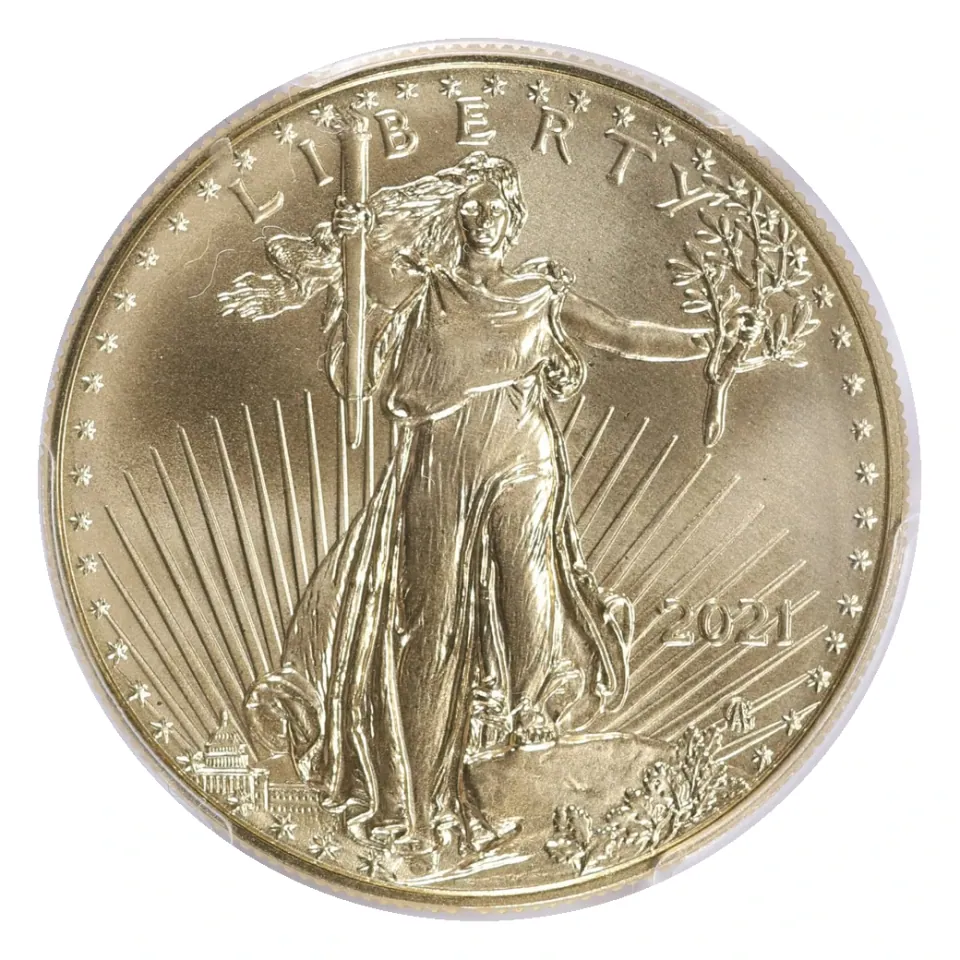
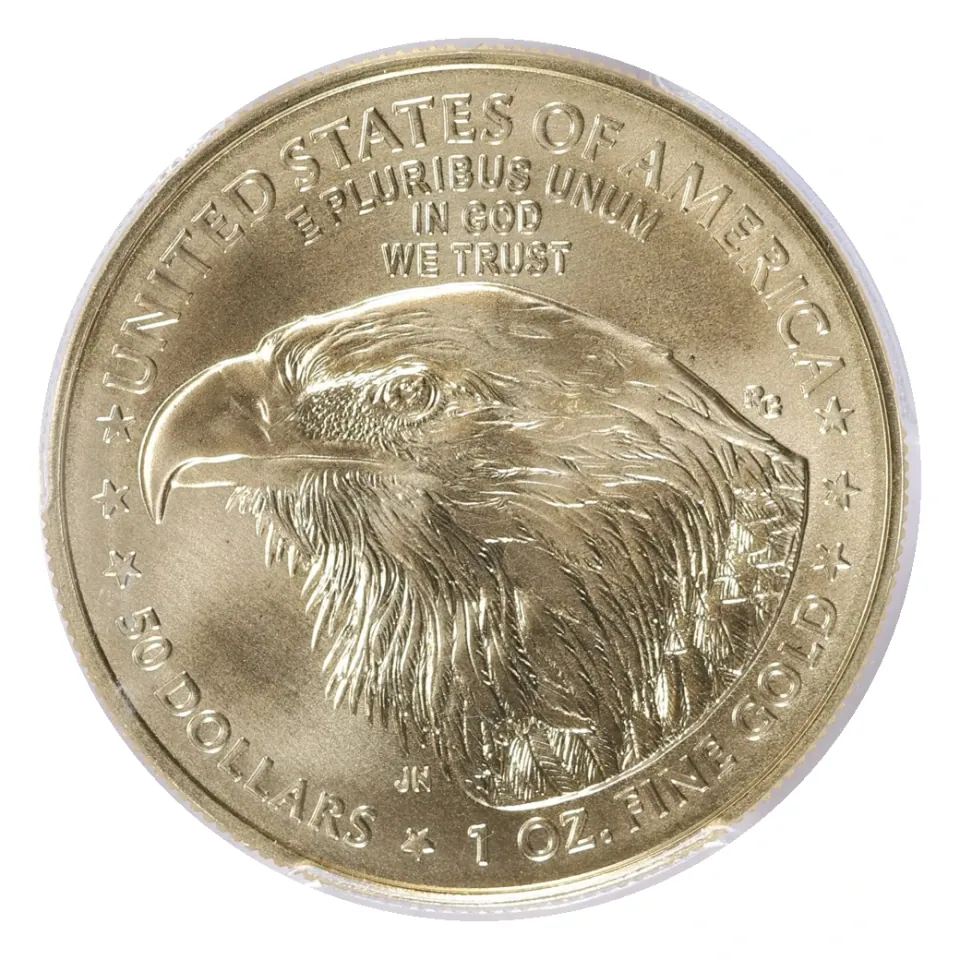
Basics & coin story
The modern American Gold Eagle program began in 1986. Its Liberty figure adapts Augustus Saint-Gaudens’ celebrated early-twentieth-century design. That visual connection does not turn a modern bullion coin into a 1933 Double Eagle or give it the same history.
The original reverse showed a family of eagles. A new eagle-head reverse entered the program during 2021, creating two major reverse types for that year. Jennie Norris designed the newer eagle, sculpted by Renata Gordon. The photographed 2021 coin shows that second type.
One ounce is the largest of the program’s four familiar gold sizes. The fractionals have different denominations and dimensions. The one-tenth-ounce guide covers the $5 version; the two coins should never share a one-coin metal calculation.
| Feature | What to check |
|---|---|
| Fine-gold content | 1.000 troy ounce, approximately 31.1035 g |
| Nominal gross weight | 33.931 g |
| Alloy | 91.67% gold, 3% silver, balance copper; 22 karat |
| Diameter / denomination | 32.70 mm / $50 |
| Program start | 1986 |
| Reverse types | Family of eagles; eagle-head type introduced during 2021 |
| Important versions | Bullion, Proof and collector Uncirculated issues |
| Price identity | Date + size + manufacture + grade + documented special attributes |
Identification
Read 1 OZ. FINE GOLD and 50 DOLLARS
The reverse identifies the fine-metal amount and denomination. Compare the size and mass with the one-ounce standard, rather than assuming that every gold-colored eagle coin contains one ounce.
The gross mass includes alloying metals. A genuine 22-karat one-ounce Gold Eagle is therefore heavier than a one-ounce .9999 Gold Buffalo. Purity and fine-gold quantity answer different questions; lower purity does not remove the stated ounce of gold.
Separate bullion from collector manufacture
A Proof uses a collector production method; it is not simply an exceptionally shiny bullion strike. A W mint mark can appear on different collector products, so the year, finish and issue listing must agree.
Keep the original packaging or verified certification information. A label such as First Day of Issue is different from the numerical grade and from an official coin feature. Do not apply a special Proof or privy-mark price to an ordinary bullion coin.
Use measurements as screening, not final authentication
An accurate scale and caliper can reveal a mismatch, but plausible counterfeits can reproduce basic dimensions. A correct reading and a nonmagnetic response do not prove authenticity.
For a valuable coin, compare the complete design, edge and surfaces and use a reputable specialist or appropriate instrument testing. Do not scratch, drill or acid-test the coin to investigate its content. The appraisal guide explains what to document first.
Condition & value
Metal formulas are educational calculations, not live quotations or purchase recommendations. The $4,000 spot and 5% premium are explicitly hypothetical examples, consulted and prepared October 27, 2026.
| Issue | Grade / condition | Value or reference | Basis | Important condition |
|---|---|---|---|---|
| One ordinary one-ounce bullion coin | Fine gold only | 1.000 × gold spot per troy oz | Metal-content reference | Use a separately dated quote in the same currency |
| Worked example only | Hypothetical gold spot = $4,000 | $4,000 metal reference | Arithmetic illustration | Not a current gold quote |
| Same hypothetical example | Assumed 5% retail premium | $4,200 before other costs | Illustrative purchase calculation | Actual premium must be obtained from a seller |
| Resale comparison | Actual dealer bid | Obtain a separate bid quote | Transaction evidence | Purchase premium is not guaranteed to be recovered |
| Proof, special issue or certified coin | Exact issue and grade | Compare matching completed sales | Collector market | Do not substitute an ordinary bullion quote |
For any real comparison, record the spot quote’s date, time and currency together with the seller’s all-in asking price. Calculate the premium as (asking price minus metal reference) divided by the metal reference. Include delivery and other applicable costs when comparing offers.
A hypothetical 5% premium is a teaching example, not a claim about the current market. Premiums and dealer spreads can change. A retail asking price also does not establish what the same dealer would pay to buy the coin back.
For a graded or special collector issue, match the date, manufacture, grading service, grade and any designation. The photographed PCGS MS70 Type 2 specimen is an illustration of the design, not a recommended purchase or a price guarantee. Preserve its surfaces and packaging.
Summary
Confirm the one-ounce denomination and distinguish fine-gold content from total mass. Calculate the metal reference using one troy ounce, then evaluate the actual premium or collector evidence for the exact version.
FAQ
Does a 22-karat Gold Eagle contain a full ounce of gold?
The one-ounce version contains one troy ounce of fine gold. Added alloying metals make the gross coin weight approximately 33.931 grams.
Is its value only $50?
$50 is the legal-tender denomination. The contained gold and any collector premium are separate from face value.
Why is a Gold Eagle heavier than a one-ounce Gold Buffalo?
The Eagle uses a 22-karat alloy and includes additional metals. Both one-ounce products specify one troy ounce of fine gold, but their gross weights differ.
Is every 2021 Gold Eagle the new reverse?
No. Both the older family-of-eagles reverse and the newer eagle-head reverse were issued during the 2021 transition.
References
References and further reading
- U.S. Mint: Gold Eagle bullion specifications
- U.S. Mint: Gold Eagle Proof history and reverse transition
- PCGS: modern Gold Eagle issue catalog
References consulted October 27, 2026. Price tables retain the update dates stated in the text; guide estimates, face values and completed transactions are different forms of evidence.