

 App Store

COIN VALUE GUIDES · FRACTIONAL GOLD
1/10 oz Gold Eagle:Size, Gold Content and Fractional Premiums
Identify the five-dollar American Gold Eagle, verify its tenth-ounce fine-gold content and compare the total cost per ounce without confusing it with an older half eagle.
 HeriBase TeamPublished
In this article
Quick answer
A modern 1/10 oz American Gold Eagle contains 0.1000 troy ounce of fine gold, has a $5 denomination and measures 16.50 mm across. Its 22-karat alloy gives it a nominal gross weight of approximately 3.393 grams.
The metal reference is 0.1000 × a dated gold spot quote per troy ounce. Ten genuine tenth-ounce coins contain one troy ounce of fine gold together, but their combined purchase premiums can differ from the premium on one one-ounce coin.
Coin photos
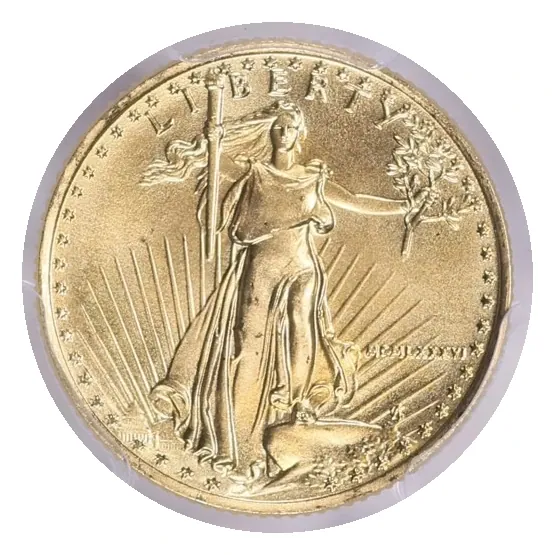
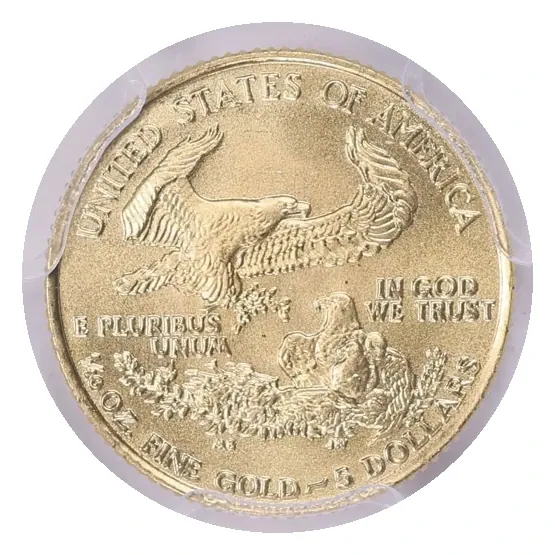
Basics & coin story
Fractional Gold Eagles were part of the modern program introduced in 1986. They let collectors choose a smaller individual coin while retaining the same overall Liberty theme as the larger denominations. The pictured first-year coin has the original family-of-eagles reverse.
The Liberty design connects the modern program to Saint-Gaudens’ historical work, but a modern five-dollar Eagle is not the older circulating five-dollar half eagle. Their dates, designs, alloy specifications and collecting markets are different.
The gold program’s reverse changed during 2021. Older-family and newer-eagle-head designs therefore need date-specific identification. This size guide concerns the modern tenth-ounce format across those types; the one-ounce Gold Eagle guide covers the larger $50 coin.
| Feature | What to check |
|---|---|
| Fine-gold content | 0.1000 troy ounce, approximately 3.11035 g |
| Nominal gross mass | 3.393 g |
| Diameter / face value | 16.50 mm / $5 |
| Alloy | 22-karat gold; 91.67% gold |
| Program start | 1986 |
| Early dates | Roman numeral dates appear on early issues |
| Versions to separate | Bullion, Proof and specific collector or variety issues |
| Comparison unit | All-in cost per coin and per fine troy ounce |
Identification
Read the fraction and denomination
The reverse should identify the fractional gold quantity and five-dollar denomination. Measure the actual coin; a close-up photograph does not reveal scale. A tenth-ounce coin is substantially smaller than the one-ounce format.
The illustrated 1986 coin uses MCMLXXXVI for its date. Roman numerals are intentional on early Gold Eagles, not missing Arabic digits or an error. Translate the date before choosing a listing.
Distinguish fine gold from total weight
The gold portion is about 3.11035 grams, while the complete alloy coin weighs about 3.393 grams. Those figures describe different quantities. Do not reject a coin merely because its complete mass exceeds the fine-gold amount.
A scale result is a screening observation. Authenticity also requires a coherent design, edge and material examination. Avoid destructive tests; preserve the coin and any original packaging for specialist review.
Compare fractional premiums on equal metal amounts
Compare the all-in cost of ten tenth-ounce coins with one one-ounce coin at the same moment, in the same currency and under comparable sale terms. The cheaper single coin is not automatically the lower cost per ounce.
Use actual buy and sell quotes separately. A Proof, a recognized variety or an unusually preserved certified coin can trade on collector attributes beyond its metal. The numerical grade and release label should not be treated as the same attribute.
Condition & value
Educational metal and unit-cost calculations prepared October 27, 2026. The $4,000 spot and $460 purchase are hypothetical figures, not current prices or promised resale values.
| Issue | Grade / condition | Value or reference | Basis | Important condition |
|---|---|---|---|---|
| One tenth-ounce bullion coin | Fine-gold reference | 0.1000 × gold spot per troy oz | Metal arithmetic | Use a dated quote |
| Worked example only | Hypothetical gold spot = $4,000 | $400 metal reference | Arithmetic illustration | Not a current quote |
| Illustrative purchase only | Hypothetical all-in coin cost = $460 | $4,600 per fine troy oz | 460 ÷ 0.1000 | Shows unit cost, not a market recommendation |
| Ten tenth-ounce coins | 1.000 fine troy oz total | Compare combined all-in cost | Equal-metal comparison | Ten premiums and costs may differ from one large coin |
| Proof or attributed special issue | Exact date, manufacture and grade | Use matching completed sales | Collector comparison | A standard bullion reference may be insufficient |
A small coin can have a lower individual ticket price while carrying a higher percentage premium. That is why both total cash outlay and cost per fine ounce should be recorded. The illustrative $460 purchase is not an observed current offer.
The face value of five dollars identifies the denomination. It is not a market estimate for the contained gold. Conversely, an old five-dollar gold coin from another series should not be priced by this modern tenth-ounce formula without identifying its own gold content.
For a proposed collector premium, keep the exact date, reverse type, mint attribution, manufacture, grade and surface status together. The pictured 1986 PCGS MS68 coin illustrates the first-year regular issue. Grading costs and resale spreads should be considered before assuming a label adds recoverable value.
Summary
Identify the modern $5 Gold Eagle and its 0.1000-troy-ounce fine-gold content. Separate gross weight from gold weight and compare actual costs per ounce. Proofs, varieties and exceptional grades need issue-specific evidence.
FAQ
How much gold is in a 1/10 oz Gold Eagle?
It contains 0.1000 troy ounce of fine gold, approximately 3.11035 grams. Its complete alloy weight is approximately 3.393 grams.
How big is the tenth-ounce Gold Eagle?
The standard diameter is 16.50 mm, and the denomination is five dollars.
Do ten tenth-ounce Eagles equal one ounce of gold?
Together they specify one troy ounce of fine gold. Their combined purchase cost can differ from the cost of one one-ounce coin.
Is a modern $5 Gold Eagle the same as an old $5 half eagle?
No. The modern fractional bullion coin and historical circulating half eagles are separate series with different specifications and markets.
References
References and further reading
- U.S. Mint: Gold Eagle fractional specifications
- PCGS: 1986 five-dollar Gold Eagle
- PCGS: modern Gold Eagle issue catalog
References consulted October 27, 2026. Price tables retain the update dates stated in the text; guide estimates, face values and completed transactions are different forms of evidence.