

 App Store

COIN VALUE GUIDES · HALF DOLLARS
Barber Half Dollar Value:Dates, Mint Marks and Silver Content
Identify 1892–1915 Barber half dollars, locate the mint mark, compare circulated grades and separate silver content from date-and-mint premiums.
 HeriBase TeamPublished
In this article
Quick answer
A Barber half dollar is a 90% silver, 50-cent coin dated 1892–1915. A standard example contains about 0.3617 troy ounce of fine silver. The date, reverse mint mark, remaining detail and surface quality determine its collector value.
For a defined common-date reference, the PCGS table consulted October 27, 2026 lists a regular 1907 Philadelphia half at $55 in G4, $120 in F12 and $275 in XF40. These retail guide estimates concern one issue and specified grades; they do not price every Barber half or a cleaned coin.
Coin photos
Basics & coin story
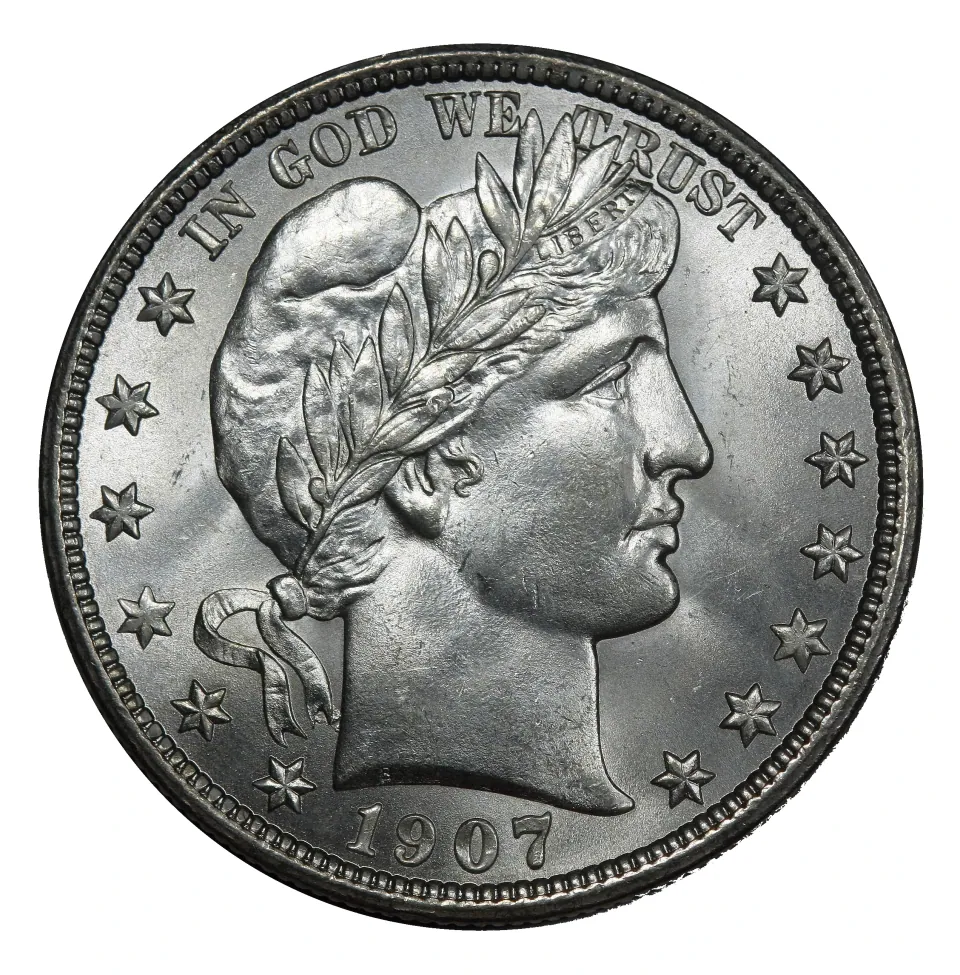
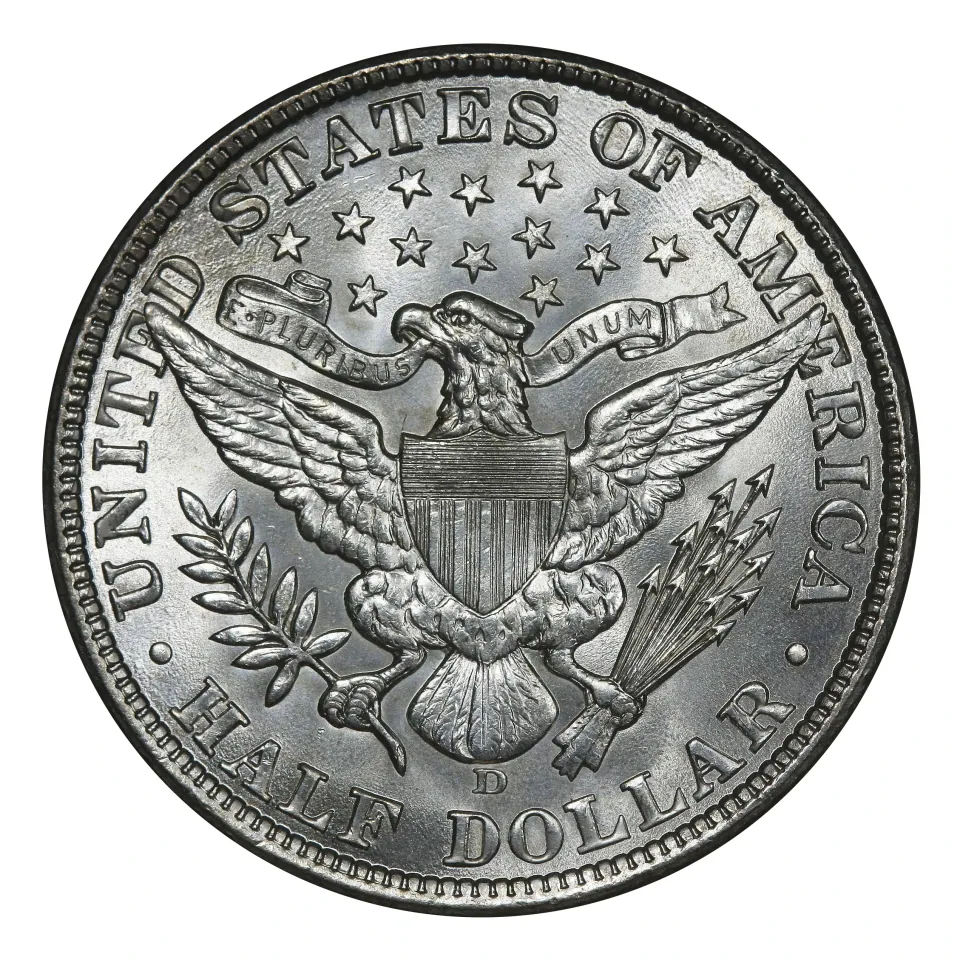
Charles E. Barber’s Liberty portrait appeared on the dime, quarter and half dollar in 1892. The half carries a heraldic eagle and the words HALF DOLLAR on its reverse. The similar portraits make the denomination and dimensions more useful than a face-only identification.
The design continued on halves through 1915, before the Walking Liberty half began in 1916. Philadelphia, New Orleans, San Francisco and, from 1906, Denver supplied different issues during the series. The same date can therefore require several comparisons. An absent Philadelphia mint mark is normal.
Collectors often begin with a representative circulated coin, then decide whether to collect dates or every mint. A complete date-and-mint set has a different budget from a single type coin. Use the 50-cent coin overview to separate Barber halves from Franklin, Kennedy and commemorative designs.
| Feature | What to check |
|---|---|
| Years / face value | 1892–1915 / $0.50 |
| Designer | Charles E. Barber |
| Alloy | 90% silver, 10% copper |
| Nominal weight / diameter | 12.50 g / about 30.6 mm |
| Fine silver | Approximately 0.3617 troy ounce |
| Mint marks | No mark, O, S or D where issued |
| Mark location | Reverse below the eagle, above HALF DOLLAR |
| Price identity | Date + mint + manufacture + grade + surface quality |
Identification
Read the reverse before choosing a value row
Find the date below Liberty, turn the coin over and inspect the area beneath the eagle. O means New Orleans, D Denver and S San Francisco. No letter normally means Philadelphia. The photographed 1907-D coin illustrates the location; the Philadelphia price reference does not establish its value.
A letter that is weak, filled or obscured by wear should be examined with angled light. Do not scratch the area. A mint mark belongs to an issue, while an unusual-looking scratch beside it does not automatically create a recognized variety.
Use LIBERTY as one clue, not a complete grade
The headband letters wear as the portrait loses detail. They help compare circulated examples, but rim strength, hair, cheek, eagle and remaining feather detail also matter. A weak strike can reduce detail without the same amount of circulation wear.
Inspect the fields for parallel hairlines and the high points for friction. A bright coin can be polished; a toned coin can still have original luster. Compare the full coin against the grading scale rather than assigning a grade from one visible letter.
Separate scarce issues and Proofs
Dates such as 1892-O and 1892-S, and low-mintage late Philadelphia issues, should not be assigned a common-date price merely because they look worn. Confirm the complete date and mint in a specialist listing. Philadelphia Proofs belong to a different manufacture category from regular circulation strikes.
The Barber quarter guide covers the smaller 25-cent denomination. The portraits look related, but quarter key dates and half-dollar prices are not interchangeable.
Condition & value
USD retail estimates from the PCGS table consulted October 27, 2026. The 1907 Philadelphia rows are grade-specific examples, not prices assigned to the photographed 1907-D coin.
| Issue | Grade / condition | Value or reference | Basis | Important condition |
|---|---|---|---|---|
| 1907 Philadelphia regular strike | G4 | $55 | PCGS retail guide | Problem-free example at the stated grade |
| 1907 Philadelphia regular strike | F12 | $120 | PCGS retail guide | Do not infer grade from the date alone |
| 1907 Philadelphia regular strike | XF40 | $275 | PCGS retail guide | Surface quality remains important |
| 1907 Philadelphia regular strike | MS63 | $1,075 | PCGS retail guide | Uncirculated comparison; not a worn-coin price |
| Silver component | 0.3617 troy oz | 0.3617 × silver spot per troy oz | Metal calculation | Not a guaranteed dealer payout |
The PCGS page identifies these as U.S.-dollar guide prices. Its separate exchange-rate timestamp is not treated here as a valuation update date. The table is a dated research snapshot, and completed sales should be checked before a purchase or sale.
Use the silver calculation as one component of value. A date-and-mint premium can remain above metal value, while damage, corrosion, harsh cleaning or a hole can reduce a coin’s collector appeal. A coin cannot be valued simply by multiplying a high-grade auction record by its age.
When comparing sold lots, keep the exact mint, grade and grading service together. Read whether the result includes buyer’s fees. The cleaning identification guide explains why polishing a family coin can make the comparison worse rather than improve it.
Summary
Start with HALF DOLLAR, the full date and the reverse mint letter. Then compare wear and original surfaces with the same issue. The 90% silver content is measurable; the collector premium requires evidence specific to the coin.
FAQ
Are Barber half dollars silver?
Yes. Standard Barber halves are 90% silver and contain approximately 0.3617 troy ounce of fine silver at their nominal 12.50-gram weight.
Where is the Barber half dollar mint mark?
On the reverse below the eagle, above HALF DOLLAR. O, S and D identify branch mints where issued; no mark normally indicates Philadelphia.
Is a Barber half dollar the same as a Barber quarter?
No. Both use related Liberty portraits, but the half is a larger 50-cent coin and the quarter is a 25-cent coin with different issue values.
Is a worn Barber half worth the MS63 guide price?
No. MS63 describes an uncirculated grade. A worn coin needs a matching circulated grade, mint and surface-quality comparison.
References
References and further reading
- PCGS: Barber half dollar price guide
- PCGS: 1907 half dollar specifications
- NGC: Barber half dollar series
References consulted October 27, 2026. Price tables retain the update dates stated in the text; guide estimates, face values and completed transactions are different forms of evidence.