

 App Store

COIN VALUE GUIDES · QUARTERS
1916 Standing Liberty Quarter:Value, Date Identification and Full Head
Identify the scarce first-year quarter, avoid confusing it with 1917 Type 1, and compare grade-specific values with and without Full Head.
 HeriBase TeamPublished
In this article
What is a 1916 Standing Liberty quarter worth?
A genuine 1916 Standing Liberty quarter is a valuable key-date coin even when heavily worn. The PCGS retail guide checked October 19, 2026 lists $5,250 in Good 4, $9,500 in Very Fine 20 and $12,500 in Extremely Fine 40. Without a Full Head designation, MS63 is $22,500. These are problem-free, grade-specific estimates; an altered date, counterfeit or damaged coin cannot be priced from them.
Only 52,000 were struck, all at Philadelphia without a mint mark. A Type 1 design or an unreadable final digit is not enough to prove 1916, because Type 1 continued into 1917. Authenticate the date first, then assess condition and any Full Head designation before assigning value.
A genuine 1916 Standing Liberty quarter
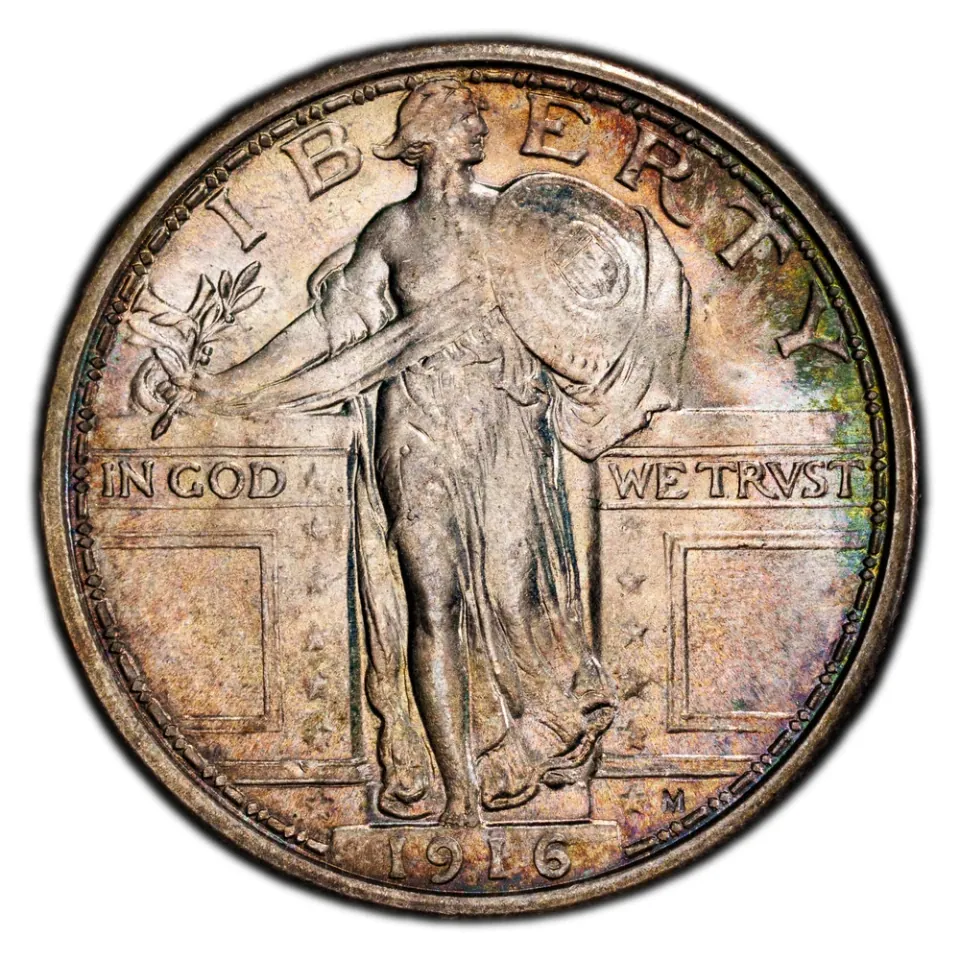
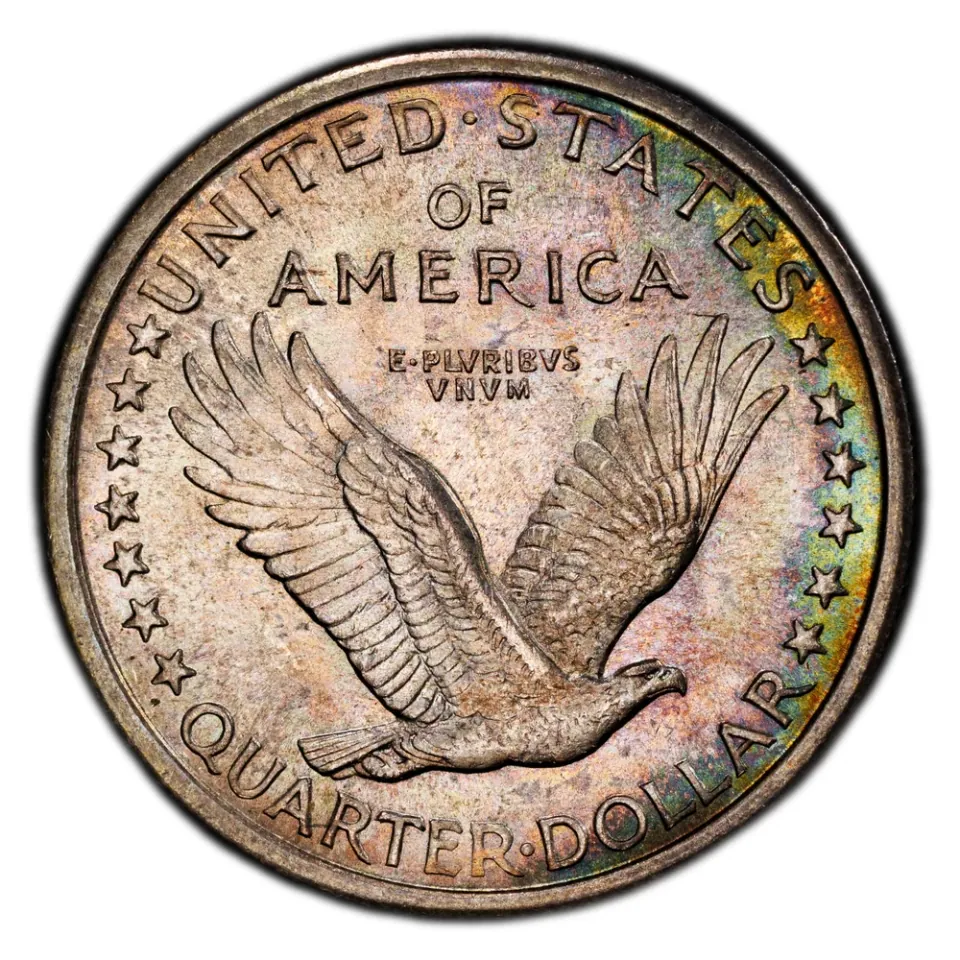
A first issue struck at the end of the year
Hermon A. MacNeil’s Standing Liberty design arrived in the final weeks of 1916 as the Barber quarter era ended. The first 52,000 coins were released in January 1917 even though they bore 1916. The short initial production explains the low mintage and why collectors treat the date separately from the more accessible early issues.
Liberty stands in a gateway with a shield and an olive branch, while an eagle flies across the reverse. The first design is usually called Type 1. It continued into 1917 before changes to Liberty’s clothing and the reverse arrangement introduced Type 2. The two-year use of Type 1 is crucial when examining a coin with a worn date.
| Feature | What to check |
|---|---|
| Designer | Hermon A. MacNeil |
| Mintage / mint | 52,000 / Philadelphia |
| Mint mark | None |
| Composition | 90% silver, 10% copper |
| Nominal weight / diameter | 6.25 g / approximately 24.3 mm |
| Fine silver content | Approximately 0.1808 troy ounce |
| Edge | Reeded |
| Release timing | Struck late 1916; released January 1917 |
The Standing Liberty series guide explains the later design and date changes. This article focuses on identifying and valuing the first-year coin, rather than repeating the whole series history.
1916 or 1917? Establish the date before the price
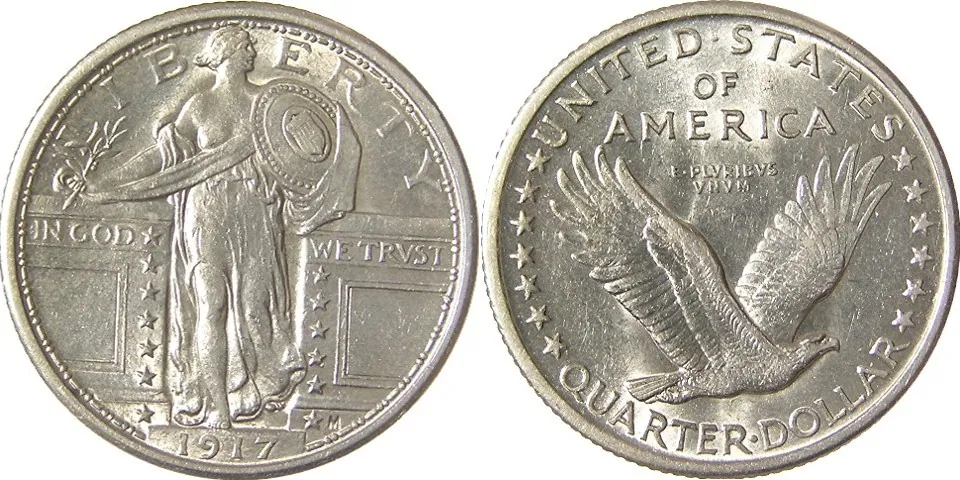
Start with the raised date at the bottom of the obverse. All digits must be assessed in the context of the surrounding surface. A partly visible curve that seems to resemble a 6 is not a sufficient attribution. Wear can obscure digits, and an altered date can imitate a more valuable year.
Use the reverse to narrow the design type, not determine the year. Type 1 has no group of three stars below the flying eagle. That helps distinguish it from Type 2, but it cannot separate 1916 from 1917 Type 1. The comparison photograph shows why the reverse alone does not settle the question.
Resolve uncertainty before using a key-date price. If the date is incomplete or its surface appears disturbed, obtain specialist authentication with the coin in hand. Do not scratch, acid-treat or polish the pedestal to make a digit appear. A claimed date should be supported by the coin’s complete diagnostics, not by the seller’s confidence.
Full Head is a separate detail designation
For Type 1 coins, PCGS describes the Full Head (FH) requirement as clear separation between Liberty’s hair cords and cap. This is a strike-detail assessment in addition to the numerical grade. It does not mean the whole coin is unworn, nor does it authenticate the date by itself. Apply the Type 1 criteria rather than borrowing the later Type 2 helmet checklist.
For wear, luster and surface-condition terms, see the coin grading guide. A complete-looking head in a small photograph is not enough to assign FH.
1916 Standing Liberty quarter value chart
| Grade | Without FH | With FH | Condition category | Comparison note |
|---|---|---|---|---|
| G4 | $5,250 | — | Heavily circulated | Genuine, problem-free date |
| VF20 | $9,500 | — | Circulated | Do not price from detail alone |
| XF40 | $12,500 | — | Lightly circulated | Surface problems remain important |
| AU58 | $18,000 | $20,000 | Slight wear | FH must be independently established |
| MS63 | $22,500 | $26,000 | Uncirculated | Match numerical grade and designation |
| MS65 | $35,000 | $40,000 | Higher Mint State | Not an ordinary raw-coin assumption |
PCGS retail guide estimates in US dollars, checked October 19, 2026. These are references for genuine, problem-free coins in the stated grade, not auction results or guaranteed offers. Cleaned, damaged and incorrectly graded coins need different comparisons.
G, VF, XF, AU and MS mean Good, Very Fine, Extremely Fine, About Uncirculated and Mint State. The dash does not mean zero value; it indicates that no FH comparison is supplied for that row. The price difference between the two columns is not a fee that can simply be added because Liberty’s head looks sharp.
Authenticity and surface history come before choosing a row. A cleaned, repaired or scratched genuine coin may receive a Details assessment and require comparable sales of similarly affected examples. A counterfeit or altered date is a different problem entirely and must not be described as a lower-grade genuine 1916.
The nominal silver content is small compared with the collector premium shown here. Treating an authenticated 1916 as an ordinary silver quarter would miss the significance of the date; treating every dateless Type 1 as 1916 makes the opposite mistake.
For a purchase, verify the grading service’s certification record and check that the coin and holder match it. For an inherited or newly found example, document both sides without cleaning and use the appraisal guide to prepare for a qualified assessment.
Authenticate the date, then match the grade
1916 is a scarce first-year issue, not a label for every Type 1 quarter. The checked guide begins at $5,250 in G4 and reaches $22,500 at MS63 without FH; actual value depends on authenticity and surface condition.
Confirm the full date before valuing the coin. Then distinguish wear from strike detail and use a matching numerical grade and Full Head status, with separate treatment for cleaned or damaged examples.
Frequently asked questions
How many 1916 Standing Liberty quarters were made?
The recorded mintage is 52,000, struck at Philadelphia late in 1916 and released in January 1917. Regular examples have no mint mark.
What is a heavily worn 1916 Standing Liberty quarter worth?
The PCGS guide checked October 19, 2026 lists $5,250 in Good 4 for a genuine, problem-free coin. Authentication and surface condition are essential; altered dates and damaged coins do not fit that comparison.
Does a Type 1 Standing Liberty quarter have to be from 1916?
No. Type 1 was also used in 1917. The absence of three stars below the eagle identifies the broad reverse type, not the exact year.
What does Full Head mean on a 1916 quarter?
It is a separate strike-detail designation. PCGS’s Type 1 criterion calls for clear separation between Liberty’s hair cords and cap. It does not independently prove the date or replace the numerical grade.
References
Sources
Research checked October 19, 2026. Any price example retains its stated source date and scope.
- PCGS · 1916 Standing LibertyFirst-year chronology, mintage and non-FH guide.
- PCGS · 1916 Full HeadSeparate designation and guide values.
- PCGS · Full Head criteriaDifferent criteria for Type 1 and Type 2.
- PCGS · 1917 Type 1Continuation of the first design into 1917.
- NGC · Silver coin specificationsNominal weight and fine-silver content.