

 App Store

COIN VALUE GUIDES · QUARTER GUIDES
Washington Quarter:Silver Years, Design Eras and Mint Marks
Sort Washington quarters by design and composition, recognize the 1964–1965 silver transition, and choose the correct year or program guide before checking value.
 HeriBase TeamPublished
In this article
Quick answer
The Washington quarter began in 1932. Regular issues dated 1932–1964 contain 90% silver; regular circulating quarters from 1965 onward use copper-nickel clad. Later silver collector issues are exceptions, so date and product type must be considered together.
A normal worn clad quarter has a 25-cent face-value baseline. Original silver quarters contain about 0.18084 troy ounce of fine silver, while scarce date-and-mint combinations, exceptional grades and recognized varieties need separate collector comparisons. Washington’s portrait alone does not identify the era, composition or price.
Compare the designs
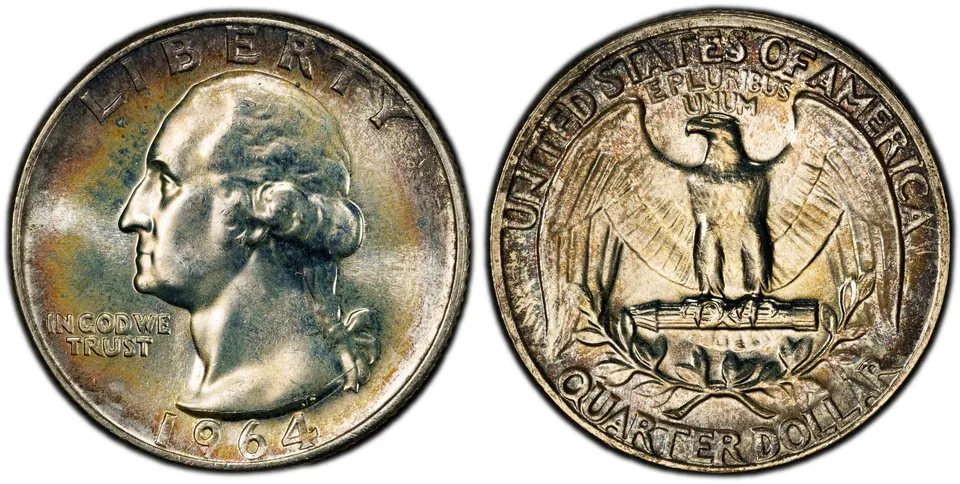
1964 · the final regular silver year
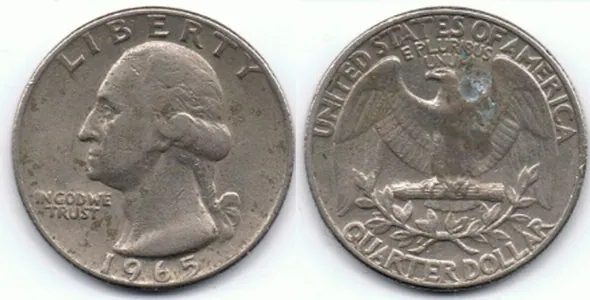
1965 · the first regular clad year
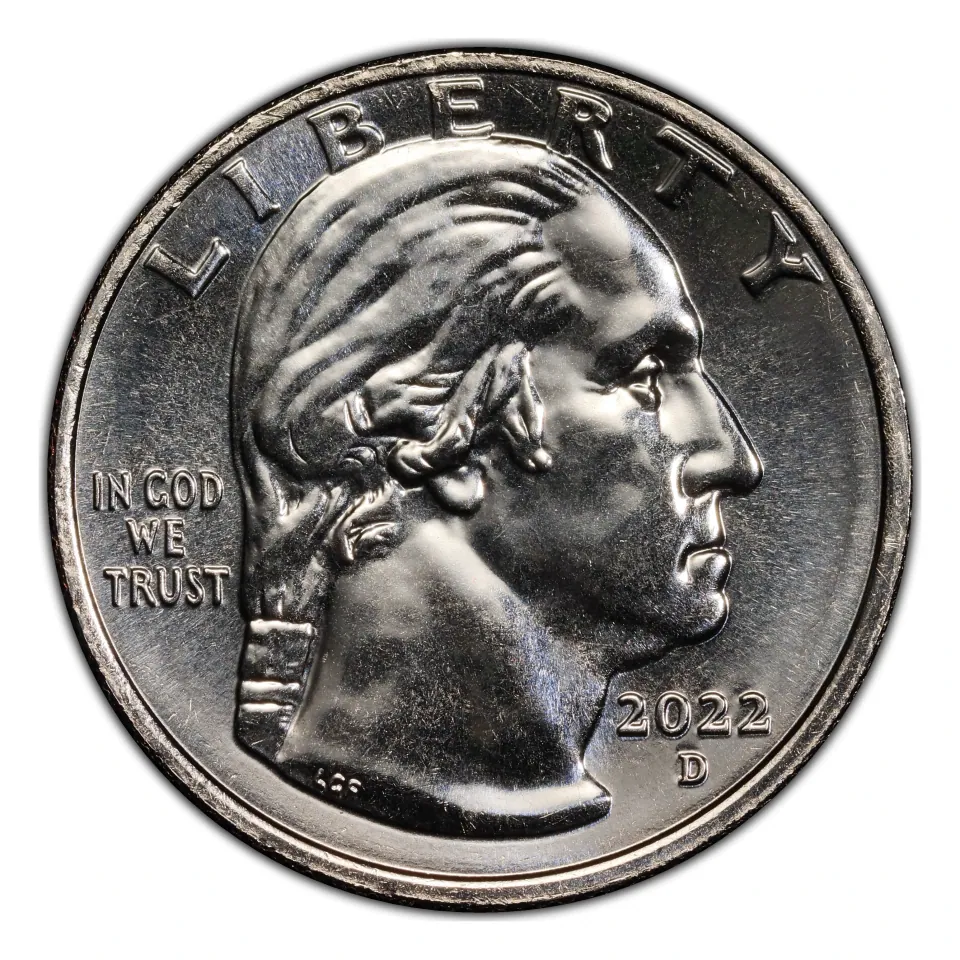
2022 · the American Women portrait
Types, history & value
John Flanagan’s Washington portrait entered circulation for the 200th anniversary of Washington’s birth. The classic eagle reverse remained familiar for decades. In 1965, a metal change altered the quarter’s composition while leaving its basic appearance recognizable.
The Bicentennial design interrupted the eagle reverse during 1975 and 1976; all those coins carry the dual date 1776–1976. From 1999, successive programs made changing reverse designs routine. A collector can therefore organize quarters by date, mint, design program or metal, but should choose a scope before interpreting completeness.
The comparisons below distinguish face value, contained metal and collector evidence; no single series-wide price is asserted.
| Type / issue | Identification | Metal / specification | Value evidence | Comparison limit |
|---|---|---|---|---|
| Regular 1932–1964 | Classic Washington and eagle | 90% silver; 6.25 g | Approx. 0.18084 oz × silver spot | Collector premiums depend on date, mint and condition |
| Regular 1965–1998 | Classic portrait; eagle except Bicentennial | Clad; 5.67 g; 24.26 mm | Ordinary worn coin: 25¢ baseline | Special collector silver issues are separate |
| 1776–1976 dual date | Colonial drummer reverse | Clad regulars; separate silver collectors | Use exact mint and product evidence | Date alone does not prove silver |
| 1999–2025 programs | Changing themes and portrait details | Circulation clad; collector exceptions | Use matching year and program guide | One Washington portrait does not imply one alloy |
| Scarce dates / mint errors / grades | Exact attribution and preservation | Issue-specific | Use matching evidence | Do not apply a generic quarter price |
A
Silver-era example: 1964
Read the date first. The standard 1964 coin belongs to the 90% silver circulation era. The eagle portrait alone does not establish the alloy.
Check the reverse for a mint letter. This era uses the position below the eagle. Later obverse mint-mark rules should not be applied to it.
Compare the full issue. The year guide distinguishes mint and grade, while the contained-metal formula supplies only a metal reference.
B
Clad-era example: 1965
The design continued while the metal changed. A regular 1965 coin is clad, despite its similarity to a 1964 quarter.
No mint mark is expected. The omission is normal for regular 1965–1967 issues and does not establish an error.
Investigate exceptional claims separately. An off-metal claim needs measurements and authentication; a silver-colored surface alone does not prove a silver strike.
Identification & collecting
Use the year, then the mint mark
For classic silver issues, the branch letter is on the reverse below the eagle and above the denomination. For later marked classic issues beginning in 1968, check the obverse beside Washington. The 1965–1967 circulation issues normally lack mint marks. A missing letter on those dates is expected.
Do not treat all S quarters as silver or all unmarked quarters as errors. San Francisco’s role and the location of the letter changed over time. P, D, S and the later W issues need date-specific interpretation; identify the year before selecting a mint-mark rule.
Sort the major design programs
| Era or design | Where to continue |
|---|---|
| 1964 silver and 1965 transition | 1964 quarter value and 1965 clad identification |
| Bicentennial drummer | 1776–1976 quarter guide |
| 1999–2008 state designs | Fifty state themes; distinguish them from the later park designs |
| 2010–2021 park designs | National Park quarters overview |
| 2022–2025 women’s designs | Complete twenty-design American Women gallery |
| 2026 anniversary designs | 2026 quarter designs and identification |
The 2009 District of Columbia and territories group is separate from the fifty-state program. The 2021 Washington Crossing the Delaware coin is also distinct from that year’s final America the Beautiful release. Read the actual reverse rather than treating every scenic quarter as the same series.
The 2026 anniversary group introduces additional historical themes and obverse designs; do not assume every 2026 quarter uses the American Women Washington portrait. Compare the specific design and issue through its own guide.
Separate silver value from collector rarity
Multiply approximately 0.18084 by the current silver price per troy ounce for a standard original silver quarter’s contained-metal reference. That calculation is not a dealer’s guaranteed buying price. Later collector silver quarters require their own alloy and weight, rather than this formula by date alone.
The 1932-D and 1932-S are important classic-series keys, but a worn common date, a cleaned key date and an exceptional Mint State coin are different comparisons. Read the complete mint mark and check surfaces before choosing a premium. Use the grading scale and surface-preservation guide when assessing a possible better piece.
Summary
Sort by date and product type before assigning metal or value. Regular 1932–1964 quarters are 90% silver; regular 1965-and-later circulation coins are clad. Then identify mint, design program and condition, and follow the exact year guide rather than valuing every Washington portrait alike.
FAQ
What years are regular Washington quarters silver?
Regular issues dated 1932–1964 contain 90% silver. Later silver collector issues are separate exceptions.
Is a normal 1965 quarter silver?
No. The standard 1965 circulation quarter is copper-nickel clad. A suspected off-metal error needs authentication.
Why does a Bicentennial quarter say 1776–1976?
That is the intentional dual date used on the Bicentennial quarter made during 1975 and 1976.
Does an S mint mark always mean a silver quarter?
No. San Francisco produced different issues and finishes. The date, manufacture and actual product must establish the metal.
References
References and further reading
- U.S. Mint: quarter design chronology and composition change
- PCGS: 1964 Washington specifications
- PCGS: 1965 Washington specifications
- PCGS: 1932-S and classic key dates
- U.S. Mint: mint-mark history
Sources checked October 21, 2026. Retail guides and historical sales are identified separately; neither guarantees a buying offer.