

 App Store

COIN VALUE GUIDES · SILVER DOLLARS
1888 Silver Dollar Value:No Mint Mark, O, S and Variety Checks
Identify an 1888 Morgan dollar by its reverse mint mark, compare grade-specific values, and understand why an S, Scarface attribution or Prooflike surface changes the comparison.
 HeriBase TeamPublished
In this article
Quick answer
An 1888 silver dollar is a Morgan dollar containing 90% silver; its mint mark is central to its collector value. Philadelphia coins have no letter, New Orleans coins have O, and San Francisco coins have S. There was no regular 1888-CC Morgan issue.
In the PCGS retail guide checked October 21, 2026, a problem-free Philadelphia coin is $92 in Very Fine 20, $100 in Mint State 63 and $275 in Mint State 65. An 1888-S is listed at $160, $975 and $2,650 in those same grades. These are guide estimates rather than purchase offers. An O-mint coin, a recognized die variety or a Prooflike designation needs its own comparison.
Coin photos
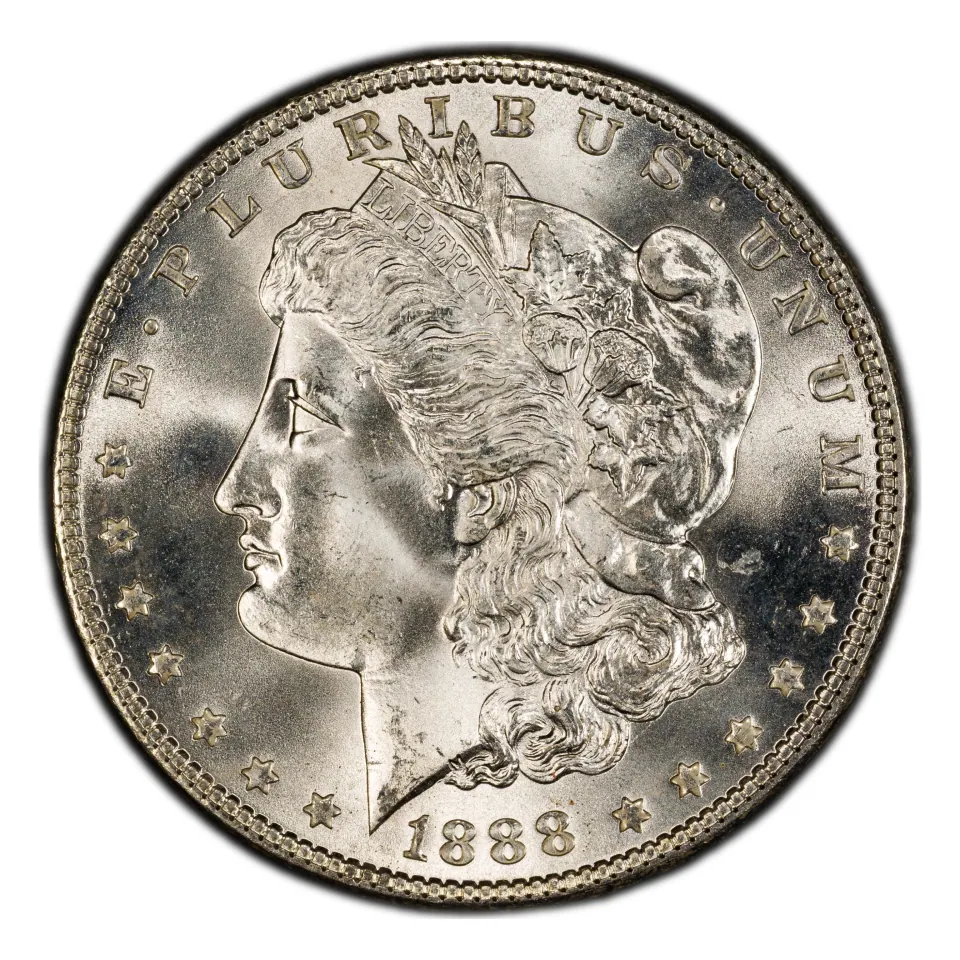
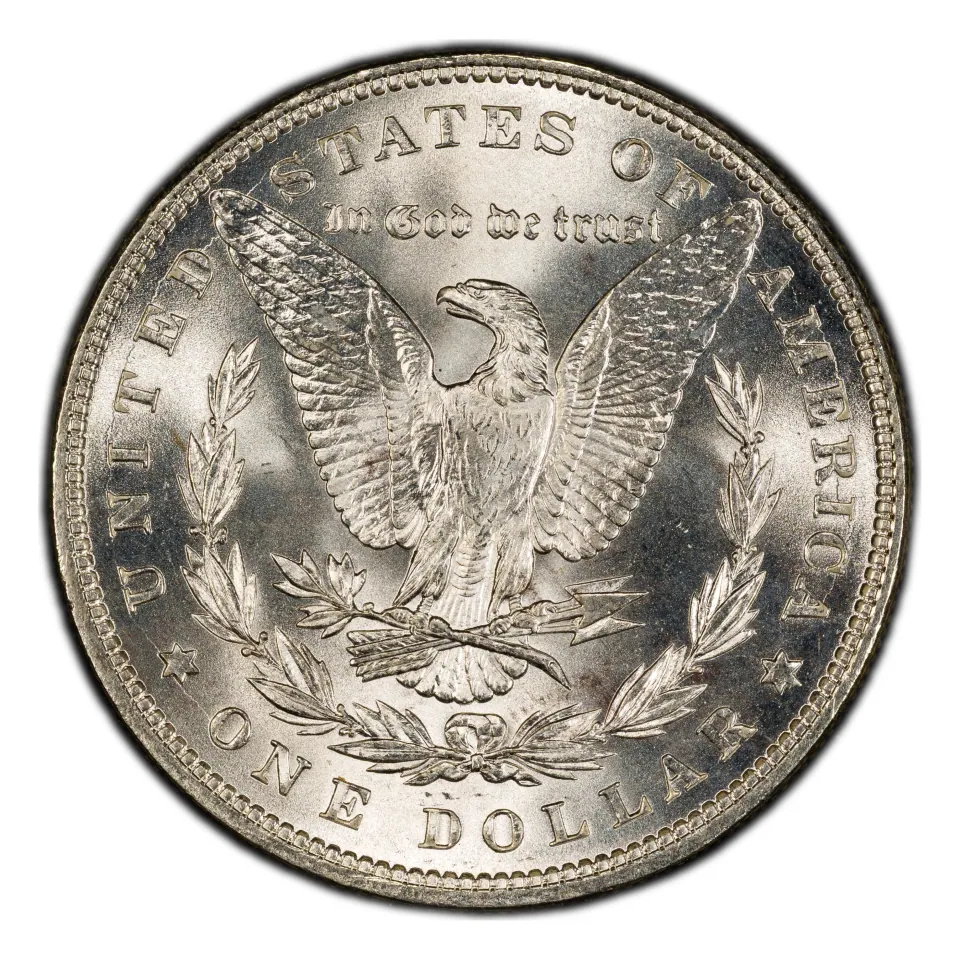
Basics & coin story
George T. Morgan’s dollar belonged to the silver-dollar production era that began in 1878 under the Bland–Allison Act. Large mintages did not make all surviving dates and grades equally available: storage, release patterns and handling left different supplies of well-preserved coins. That is why a date alone is too broad a valuation.
For 1888, the published mintages are 19,183,000 at Philadelphia, 12,150,000 at New Orleans and 657,000 at San Francisco. These are original production totals, not surviving population counts. The much smaller S issue deserves separate attention, but an attractive P or O coin can still command a condition premium. Use the Morgan series guide for the wider mint-mark system.
| Feature | What to check |
|---|---|
| Design / denomination | Morgan dollar / $1 |
| Designer | George T. Morgan |
| Composition | 90% silver, 10% copper |
| Nominal weight / diameter | 26.73 g / 38.10 mm |
| Fine silver | Approximately 0.7734 troy ounce |
| Mint mark location | Reverse, above DO in DOLLAR |
| 1888 circulation issues | No mark, O and S; no CC issue |
Identification
Find the mint mark on the reverse
Read the 1888 date first, then turn to the eagle side. Inspect the small area between the wreath and DOLLAR. An O or S determines a different guide entry; no letter is normal for Philadelphia. A blurred mark should be photographed under changing light, not guessed from a seller’s title.
Separate die varieties from scratches
The 1888-O listings include the recognized Scarface variety and doubled-die entries. Scarface refers to a die-break feature, not any line crossing Liberty’s cheek. A scratch cut into the surface is different from a raised feature produced by a damaged die. Attribution requires matching the correct issue and diagnostics, not simply recognizing a nickname.
Prooflike is a designation, not a cleaning result
Some business strikes receive Prooflike (PL) or Deep Mirror Prooflike (DMPL) designations. Brightness alone does not establish either. Polishing can make a coin shiny while reducing collector appeal. Check luster, cheek marks and hairlines before comparing a reflective coin to designated examples. The surface-cleaning guide explains what to inspect.
Condition & value
Amounts are in U.S. dollars. PCGS retail-guide examples were checked October 21, 2026 and apply only to the stated issue, grade and designation. They are not guaranteed purchase offers; current market conditions and selling costs can change the amount received.
| Issue | Grade / condition | Value or reference | Basis | Important condition |
|---|---|---|---|---|
| 1888, no mark | VF20 | $92 | PCGS retail guide | Ordinary problem-free strike |
| 1888, no mark | MS63 | $100 | PCGS retail guide | No PL or DMPL designation |
| 1888, no mark | MS65 | $275 | PCGS retail guide | Grade confirmed independently |
| 1888-S | VF20 / MS63 / MS65 | $160 / $975 / $2,650 | PCGS retail guide | Do not substitute Philadelphia values |
| 1888-O / attributed varieties | Exact grade and variety | Use matching entry | Issue-specific | No generic Scarface premium assumed |
Compare Liberty’s cheek and the open fields for contact marks, then the hair above the ear and the eagle’s breast for wear. A weakly struck area and a worn area are not necessarily the same. An uncertified coin needs a realistic condition assessment before a Mint State guide entry becomes useful.
The silver-content calculation is approximately 0.7734 multiplied by the silver price per troy ounce. That measures contained metal, not the retail collector price or a dealer’s net offer. On a scarcer mint or high-grade coin, numismatic value can dominate. Compare adjacent years using the 1887 dollar guide and the 1889 dollar guide without transferring their prices to 1888.
Summary
Value an 1888 dollar by mint, grade and attribution, in that order. No mark, O and S are different issues; a CC mark on an alleged 1888 coin calls for authentication. Preserve the surface, photograph the reverse mint-mark area and use the correct grade-specific comparison before seeking an offer.
FAQ
Is an 1888 silver dollar with no mint mark rare?
No mint mark is normal for Philadelphia. Exceptional preservation or an attributed variety can matter, but the missing letter alone is not an error.
Where is the mint mark on an 1888 Morgan dollar?
It is on the reverse, above the DO in DOLLAR and below the wreath. Philadelphia coins have no letter in that position.
Did Carson City make an 1888 silver dollar?
There is no regular 1888-CC Morgan dollar issue. A coin presented with that combination should be authenticated rather than priced as a normal variety.
Is every line on Liberty’s cheek a Scarface variety?
No. The recognized 1888-O Scarface attribution requires die-break diagnostics. Scratches, damage and unrelated die features do not establish the variety.
References
References and further reading
- PCGS CoinFacts: exact issue, specifications and available guide evidence
- PCGS: 1888-O specifications and recognized varieties
- PCGS: 1888-S specifications and grade-specific guide
- U.S. Mint: Morgan dollar history
Sources and quoted guide evidence checked October 21, 2026. Guide estimates, historical sales, face value and metal-content calculations are identified separately.