1889 Silver Dollar Value:No Mint Mark, O, S and Rare CC Issues
Identify your 1889 Morgan dollar by mint mark, compare dated value checkpoints, and understand why the Carson City issue needs special attention.
In this article
How much is an 1889 silver dollar worth?
An ordinary circulated 1889 Morgan silver dollar with no mint mark is listed at $52–$72 in NGC’s October 16, 2026 guide, depending on grade. Uncirculated Philadelphia examples are listed at $100 in MS-60 and $130 in MS-63. These are guide estimates for the specified issue and condition, not guaranteed offers for every raw coin.
The mint mark can change the value dramatically: an 1889-CC is a scarce Carson City issue, with APMEX listing $2,250 at VF-20 when checked on October 16. O and S issues also need their own comparisons. All regular 1889 Morgan dollars are 90% silver; read the mint mark below the reverse wreath and assess condition before using a price.
Liberty’s portrait and the reverse mint-mark location
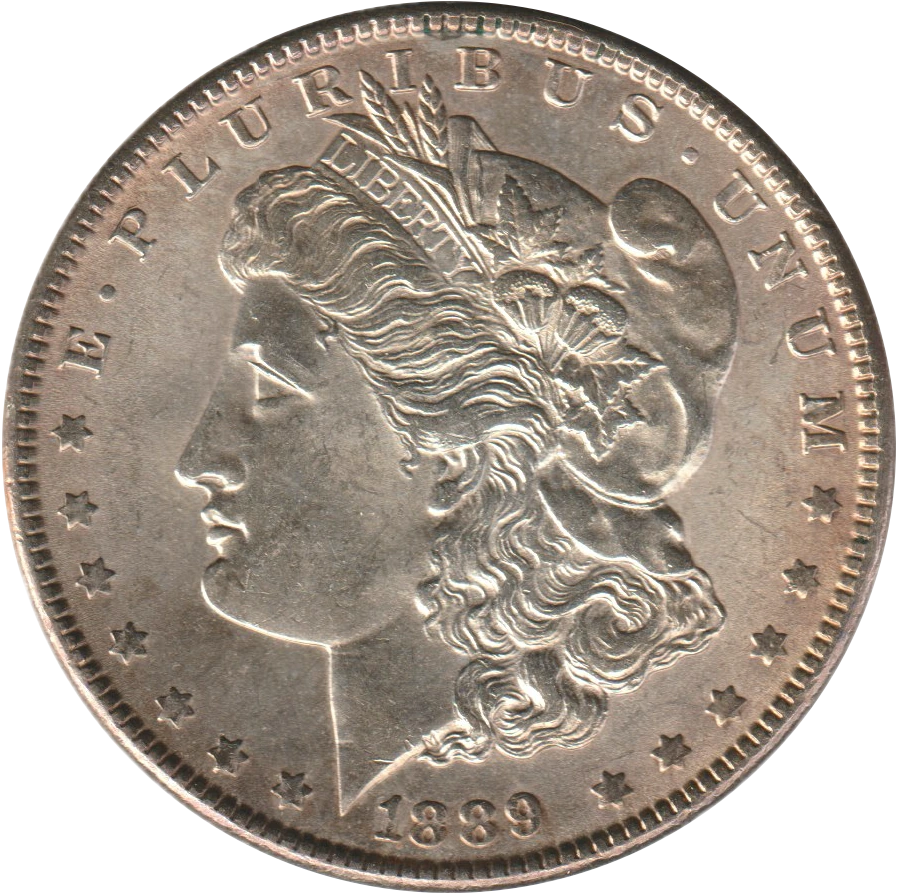
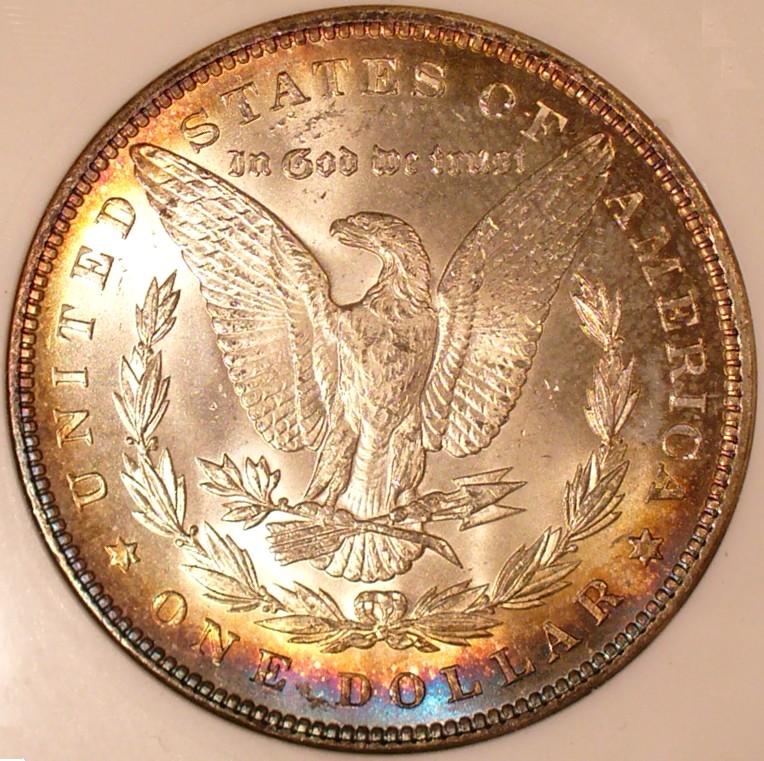
1889 Philadelphia Morgan dollar · obverseLiberty faces left, with the 1889 issue date below.Morgan reverse · 1899 design referenceUse this separate coin to locate the space below the wreath; it is not the reverse of the 1889 specimen.
Why the Carson City issue stands apart
The Morgan dollar takes its name from designer George T. Morgan. Its portrait represents Liberty, while the eagle, wreath and denomination occupy the reverse. The broader Morgan silver dollar guide explains the series; the useful question here is why coins sharing the 1889 date can fall into very different collecting categories.
Carson City resumed coinage in 1889 after a pause, and its dollar production reached only 350,000 pieces. PCGS describes the issue as the rarest Carson City Morgan dollar. Philadelphia produced more than 21 million that year. The date alone therefore tells only part of the story: the two small letters on the reverse can change the comparison completely.
Original mintage is not the number of coins surviving today. Grade, later dispersal and preservation affect what collectors can actually find. A low production total cannot be converted directly into a price, and even a valuable mint mark needs authentication.
Four mints, one date
1889 regular-strike Morgan dollars
Mint mark
Mint and reported production
None
Philadelphia · 21,726,000
O
New Orleans · 11,875,000
S
San Francisco · 700,000
CC
Carson City · 350,000
No mint mark: Philadelphia
The absence of a letter below the wreath is normal for Philadelphia. It is not a missing-mint-mark error. PCGS describes the issue as common even in Mint State; unusually high preservation or a recognized variety needs its own comparison.
O: New Orleans
Read the letter as O, not the numeral zero. A small or softly defined letter can be hard to read in a photograph, so inspect the actual location under even light. New Orleans is a separate issue, not a damaged Philadelphia coin.
S: San Francisco
Match the S before using an 1889-S price table. Its smaller production makes it a different collecting comparison from Philadelphia, but the premium still depends on grade and surfaces.
CC: Carson City
An apparent CC deserves more careful authentication before buying or selling. Added mint marks and altered dates can imitate valuable issues. Do not infer authenticity from a seller’s label, a matching weight or an attractive photograph alone.
1889 silver dollar value chart
Regular-strike guide checkpoints · USD · checked October 16, 2026
Issue
VF-20
EF-40
MS-60
MS-63
No mint mark · NGC
$57
$60
$100
$130
1889-O · NGC
$57
$60
$250
$550
1889-S · NGC
$80
$100
$275
$500
1889-CC · APMEX
$2,250
$5,446
$30,000
$50,000
The Philadelphia, O and S rows use NGC’s regular-strike Base-grade guide, updated October 16, 2026. The CC row uses APMEX’s guide checked that day; APMEX does not display a per-row update date. These are retail guide estimates, not completed transactions or guaranteed dealer offers. Sources can differ, so compare recent sold coins of the same mint, grade and surface designation before a transaction.
Separate silver content from collector value
The nominal specification is 26.73 g at 90% silver, or approximately 0.7734 troy ounce of pure silver. An indicative metal-content calculation is 0.7734 × the silver price per troy ounce. At a hypothetical $50 silver price, that equals $38.67; this is an illustration, not a live silver quote or a cash offer.
A worn common coin can trade with a premium over its metal content, while a rare CC or high-grade coin requires numismatic comparisons. A buyer’s offer also reflects costs and market conditions. Do not add a guide price to melt value: the quoted coin price already includes the metal.
Why grade and surfaces matter
VF and EF are circulated grades; MS means Mint State. A coin with many contact marks can be uncirculated, while a bright coin can be worn or cleaned. Prooflike and deeply mirrored designations are separate from ordinary Mint State prices and do not automatically mean the coin is a Proof.
Use the grading guide for grade terminology and cleaned-coin guide before comparing a raw coin with a straight-graded example. Cleaning or damage can prevent the price chart from being a useful match.
Three checks before estimating your coin
1. Confirm the date and denomination
Read 1889 beneath Liberty and ONE DOLLAR on the reverse. The Morgan design, reeded edge and approximately 38.1 mm diameter should agree. A tiny 1889 gold dollar is a different coin and does not belong in this table.
2. Photograph the mint-mark area
Take one complete image of each face and a sharp detail below the reverse wreath. Preserve the date in the obverse photograph. For a suspected CC, have the date and mint mark evaluated together rather than relying on a cropped view of the letters.
3. Match condition and sale terms
Compare coins of the same mint, grade and surface designation. Separate cleaned or damaged examples from coins with an ordinary numerical grade, and record whether a sold price includes the buyer’s premium. The appraisal guide explains how to prepare a useful comparison.
If you are sorting several dates, use the 1879 silver dollar guide for that year’s issues. Morgan dollars share a design, but their mint-and-date combinations are not interchangeable price categories.
The key takeaway
Identify the mint before valuing an 1889 Morgan dollar: no mint mark is the common Philadelphia issue; O and S have their own comparisons; CC is the key-date exception. All regular issues contain 90% silver, but metal content alone cannot price a collectible example. Preserve the surfaces, establish the grade and authenticate a suspected CC before applying a guide figure.
Frequently asked questions
Is an 1889 silver dollar with no mint mark rare?
Usually not. No mint mark identifies Philadelphia, whose 1889 regular issue is common. Exceptional grade, a recognized variety or a separate Proof attribution needs its own assessment.
Where is the mint mark on an 1889 Morgan dollar?
Look on the reverse below the wreath and above the denomination. O means New Orleans, S means San Francisco, CC means Carson City, and no letter normally means Philadelphia.
How much silver is in an 1889 dollar?
The Morgan dollar has a nominal weight of 26.73 g and is 90% silver, approximately 0.7734 troy ounce of pure silver. Multiply that amount by a current silver price for an indicative metal-content value.
Why is the 1889-CC silver dollar worth more?
It is a scarce Carson City issue with a reported mintage of 350,000 and strong collector demand. Authenticity, grade and surface quality still determine the appropriate comparison; not every apparent CC is genuine.


 App Store