Why the quarter changed for the Bicentennial
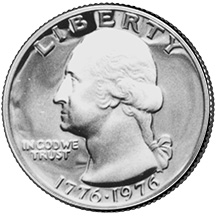
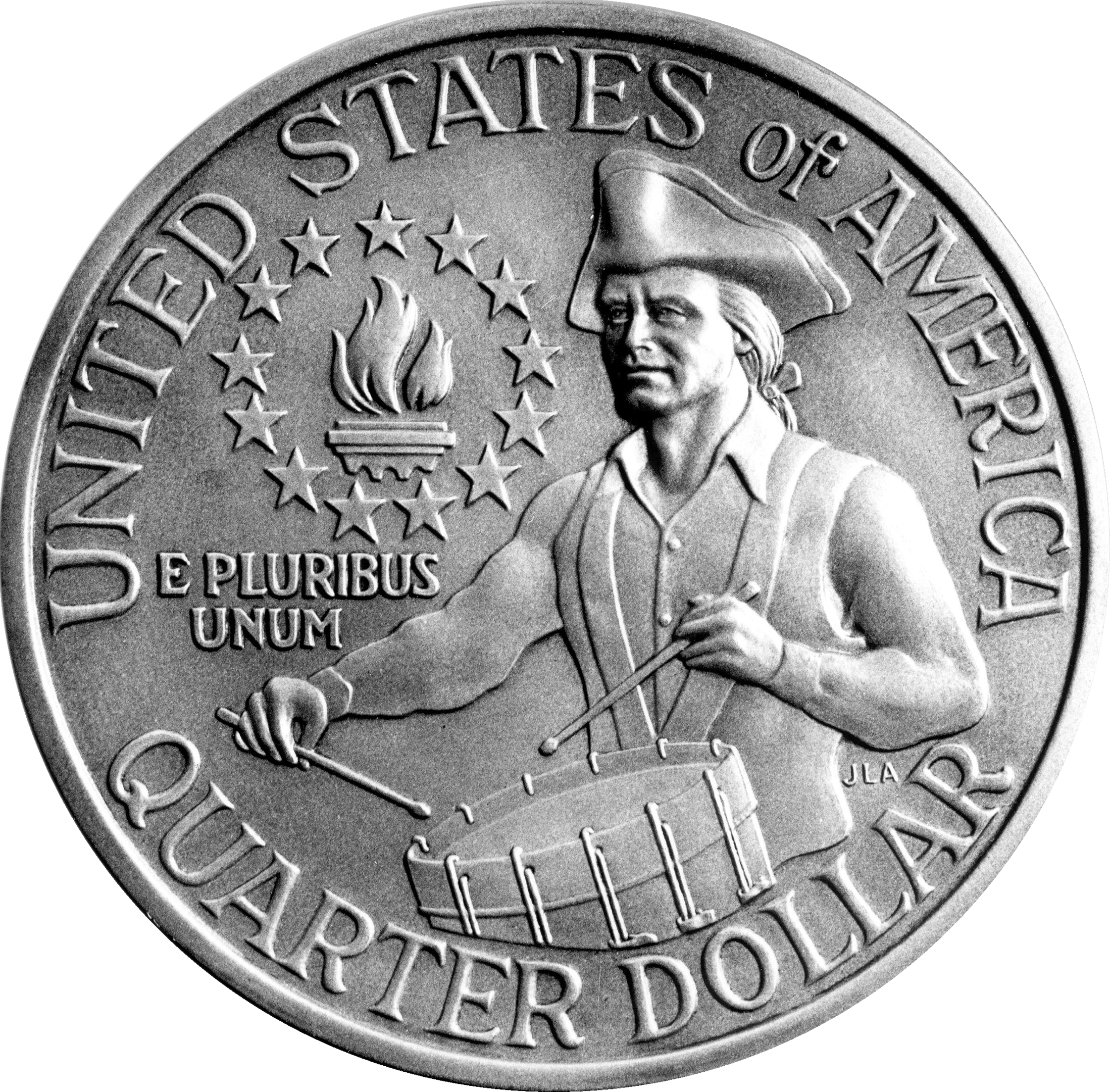
The United States marked the 200th anniversary of independence with special quarter, half-dollar and dollar reverses. Jack L. Ahr’s drummer design was selected for the quarter. The obverse retained Washington while replacing the ordinary single year with 1776–1976.
Production covered two calendar years, but the dual date stayed the same. That is why looking for a separate 1975-dated Washington quarter leads to confusion: the Bicentennial date covered that production. It also means the inscription alone cannot identify the calendar year in which a particular coin was struck.
The Bicentennial half dollar carries Independence Hall, and the Bicentennial Eisenhower dollar uses a Liberty Bell-and-Moon design. Read the denomination before comparing values across these related coins.
No mint mark, D and S: identify the correct version
Bicentennial quarter identification| Feature | Meaning |
|---|
| No mint mark | Philadelphia regular copper-nickel clad quarter. |
|---|
| D | Denver regular copper-nickel clad quarter. |
|---|
| S clad Proof | San Francisco collector Proof; no silver in the standard clad composition. |
|---|
| S 40% silver | San Francisco collector uncirculated or Proof issue. |
|---|
| Weight comparison | Standard clad: about 5.67 g; 40% silver: about 5.75 g. |
|---|
| Date | 1776–1976 on all Bicentennial quarter versions. |
|---|
The small weight difference is not a complete home authentication test. Scale precision, wear and deposits can affect readings. Examine the edge, finish, packaging and certification together; if a valuable metal claim remains uncertain, seek professional testing.
A copper-colored edge band is useful evidence for clad, but lighting and surfaces can obscure it. Neither silver color nor an S mint mark is sufficient by itself. The 1964 silver quarter is a different issue with 90% silver, not the Bicentennial collector alloy.
Bicentennial quarter value: ordinary and collector coins
Value checkpoints · reviewed October 16, 2026| Coin / version | Condition | Value basis | What supports a premium | Comparison limit |
|---|
| No mark / D clad | Worn circulation coin | $0.25 baseline | A verified mint error | The dual date is normal. |
|---|
| No mark / D clad | Uncirculated | Compare same-mint and grade sales | Preservation and strike | Do not use a top-grade record for a raw coin. |
|---|
| S clad Proof | Proof | Compare clad Proof sales | Grade and contrast | S does not mean silver. |
|---|
| S 40% silver | Uncirculated or Proof | Silver reference plus collector demand | Correct finish and condition | Proof and uncirculated are separate comparisons. |
|---|
Silver reference = 0.07394 × silver price per troy ounce. At a hypothetical $50 per ounce, the metal calculation is about $3.70. This is not a current market quote or dealer offer. It applies to an identified full-weight 40% silver coin, not an ordinary clad quarter.
A current grade-by-grade collector price range is not established here. When comparing sold records, match mint, composition, finish, certification and grade. A price covering a three-coin silver set includes more than the quarter. Damaged or cleaned coins should not be compared directly with problem-free examples.
Which unusual features deserve a closer look?
The drummer, torch, stars and double date are intended features. On regular coins, no mint mark is also normal. Scratches near the drum or flattened lettering should not automatically be described as valuable errors.
Recognized varieties do exist, including the cataloged 1976-D doubled-die obverse FS-102. The name applies to a specific die variety, not every coin that appears doubled in a phone picture. Compare the exact diagnostic features or obtain an attribution before using variety prices.
Photograph both complete faces and the suspected detail under even light. Avoid cleaning or rubbing the area. The coin appraisal guide helps decide when additional examination is worthwhile. If your coin instead reads 1776–2026, use the 2026 anniversary quarter guide; those are different designs and issues.


 App Store