

 App Store

COIN VALUE GUIDES
Top 10 State Quarters Worth Money: Varieties, Errors and Auction Prices
Compare ten selected state-quarter auction cases with real coin photos, variety and error checks, certified conditions and clear distinctions from ordinary change.
 HeriBase TeamPublished
In this article
Which state quarters are worth more than 25 cents?
Most worn state quarters remain 25-cent coins, but specific die varieties, genuine production errors and exceptional certified grades can carry premiums. This selected Top 10 ranks ten documented transactions from eight states, from $53 to $6,000. It compares those individual sales, not today’s retail values or the ten highest prices ever paid.
Evidence reviewed November 13, 2026. Prices retain their original reference dates and stated conditions.
Top 10 state quarters: ranked photos and auction examples
Ranked by the ten selected recorded sale amounts, not a claim of the highest prices ever paid. Each entry shows a real specimen photograph. Reference photographs may differ from the sold coin in grade or error extent; the note below each image identifies those differences.
- #1
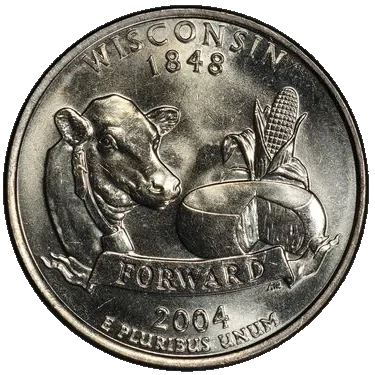
1. Wisconsin Extra Leaf Low, 2004-D
US$6,000.00
PCGS MS67 Jan. 12, 2020
Look beside the corn stalk for the recognized low extra-leaf form, not a scratch in the field. Low and High are separate varieties. The selected transaction concerns a gem; an ordinary Wisconsin reverse does not share the attribution.
Attributed Extra Leaf Low reference specimen; not the selected auction coin.
- #2
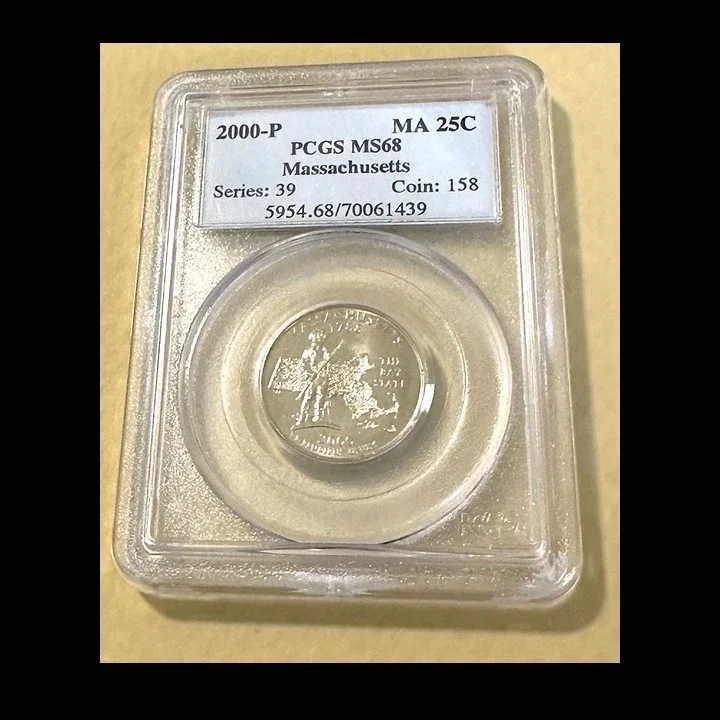
2. Massachusetts, 2000-P
US$3,760.00
NGC MS69 Jan. 8, 2017
The Minuteman reverse is normal. This example illustrates a condition premium rather than an error. A bright circulated coin or an uncertified online MS69 claim is not equivalent to the certified auction specimen.
Same-issue PCGS MS68 reference; the transaction below is NGC MS69.
- #3
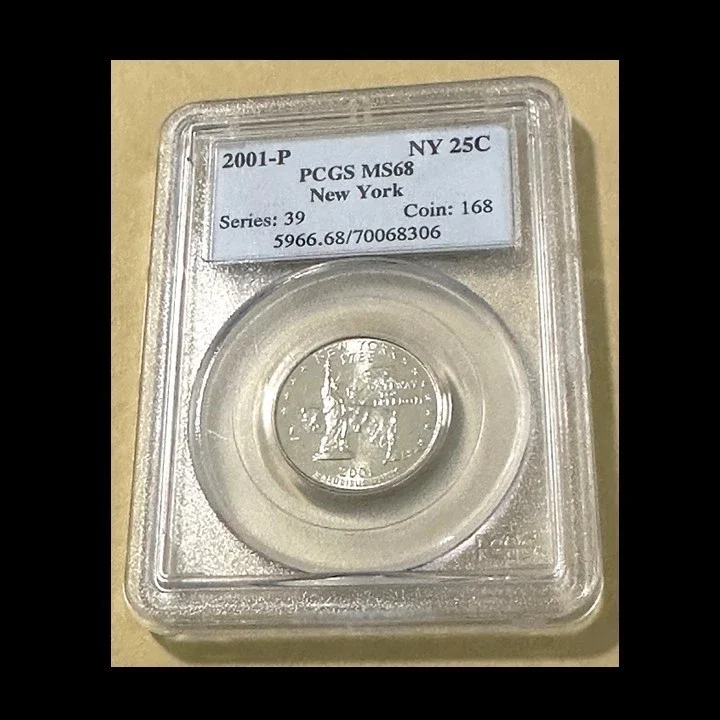
3. New York, 2001-P
US$2,585.00
PCGS MS69 Jan. 2017
The Statue of Liberty, state outline and eleven stars are intended artwork. Here the premium is tied to exceptional preservation, not the existence of a Statue of Liberty reverse. Keep this comparison separate from the multi-strike entry below.
Same-issue PCGS MS68 reference; the transaction below is MS69.
- #4
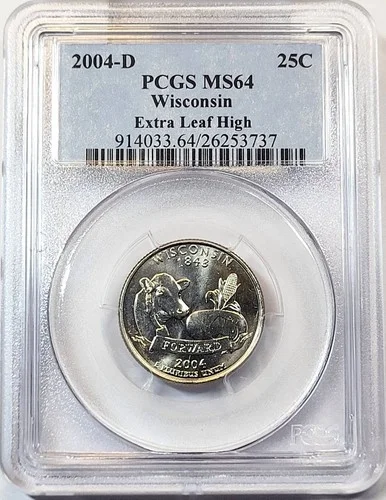
4. Wisconsin Extra Leaf High, 2004-D
US$2,530.00
MS66 July 2006
The high extra leaf is another specific raised form beside the corn. Identify its outline and position rather than inferring a variety from any extra line. The historical result is not proof that High always sells for less than Low in a matched grade.
Extra Leaf High PCGS MS64 reference; the transaction below is MS66.
- #5
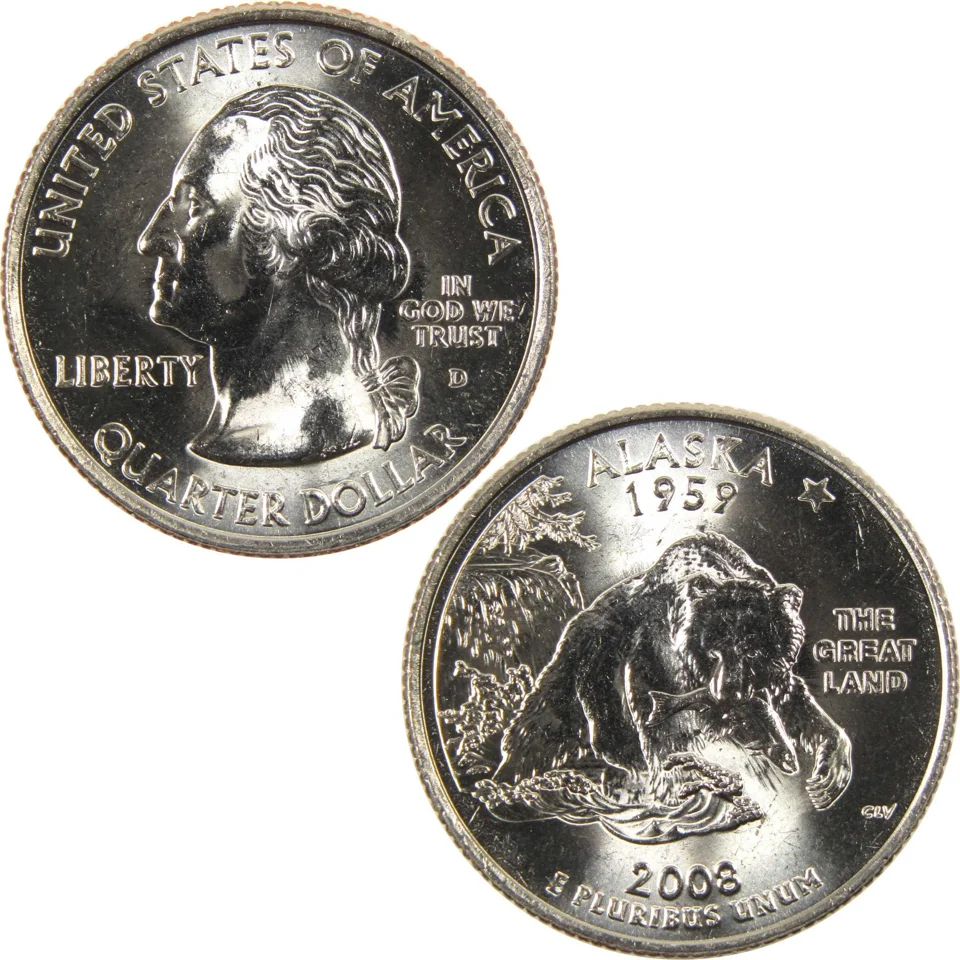
5. Alaska, 2008-D
US$2,350.00
MS69 Jan. 2017
The bear-and-salmon reverse belongs to the intended Alaska design. This recorded MS69 transaction illustrates how preservation can create a premium on a common issue. Ordinary wear, bag marks and cleaning make the comparison inappropriate.
2008-D issue reference; not the MS69 auction specimen.
- #6
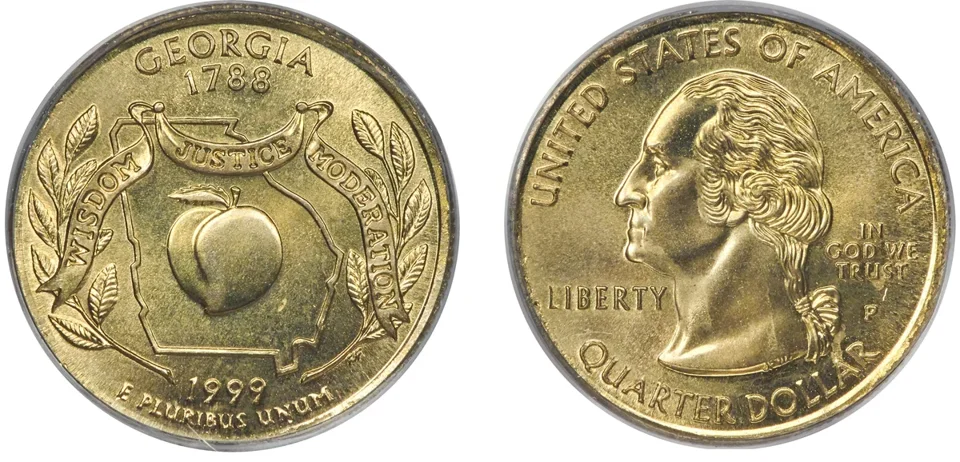
6. Georgia, 1999-P, experimental planchet
US$2,160.00
PCGS MS65 Feb. 2020
The auction describes an experimental planchet, a specialized attribution that requires physical evidence. Gold-colored toning or plating does not establish it. Do not confuse this category with a normal Georgia quarter or with a dollar/quarter mule.
Experimental-planchet reference; not the selected auction specimen.
- #7
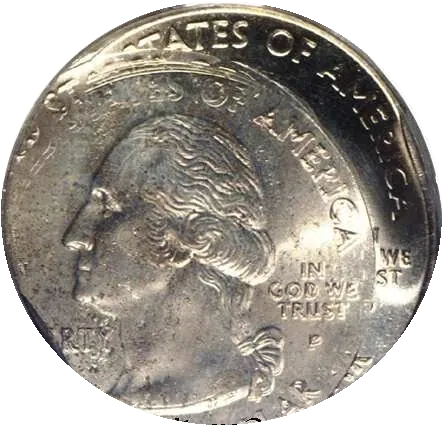
7. New York, 2001-P, quadruple struck
US$603.75
PCGS MS63 May 3, 2003
The pictured four-strike coin has additional off-center impressions and a distorted outline. Its identity rests on the whole object, not a tiny doubled-looking letter. The detailed year article includes both sides and separates other error categories.
Photograph of the documented quadruple-struck auction coin.
- #8
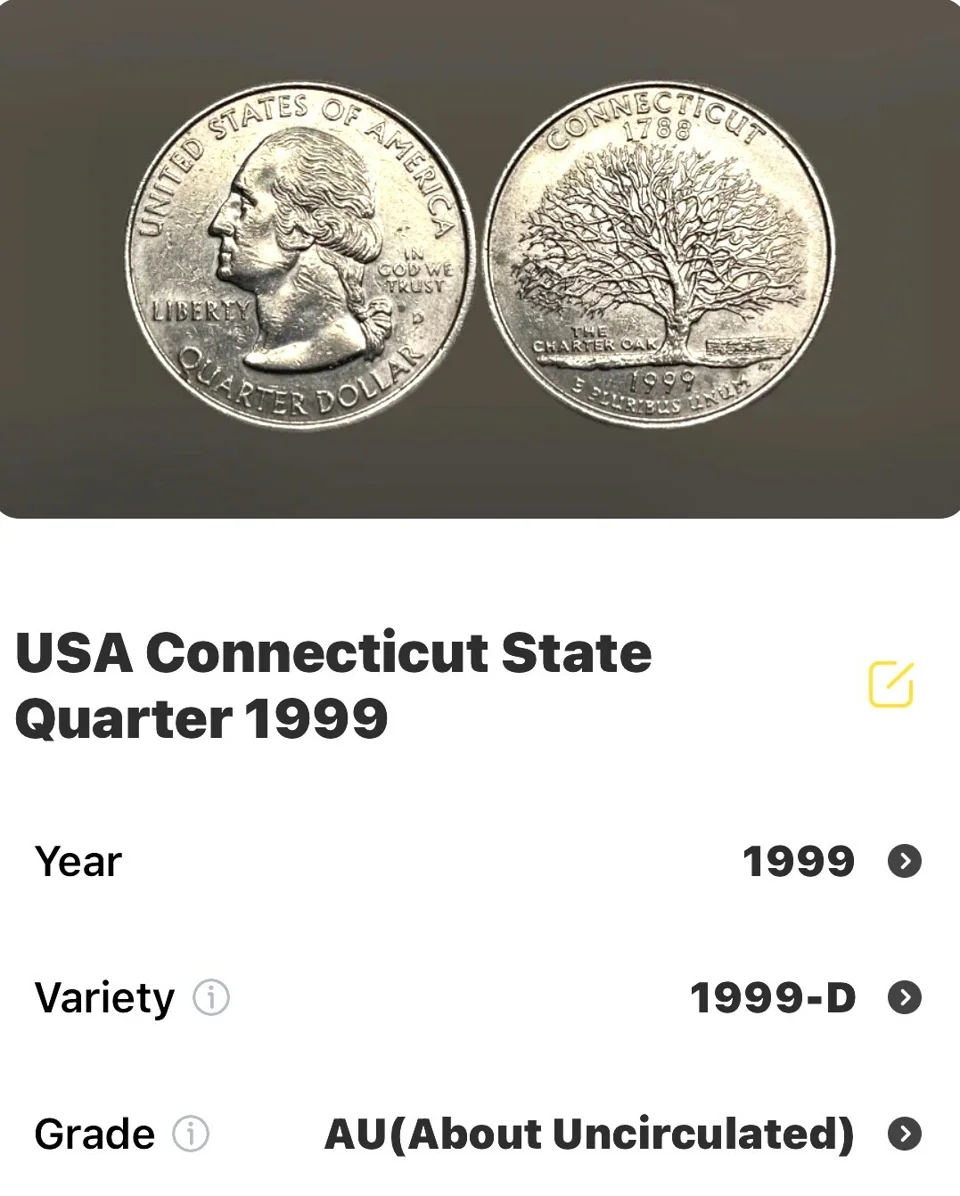
8. Connecticut, 1999-D
US$480.00
PCGS MS68 Dec. 13, 2018
The Charter Oak design is normal, and this selected grade premium is not an extra-branch error valuation. Tree details should first be compared with a normal reverse. Certification and preservation matter more than a dramatic nickname.
1999-D issue reference in circulated condition; not the MS68 auction specimen.
- #9
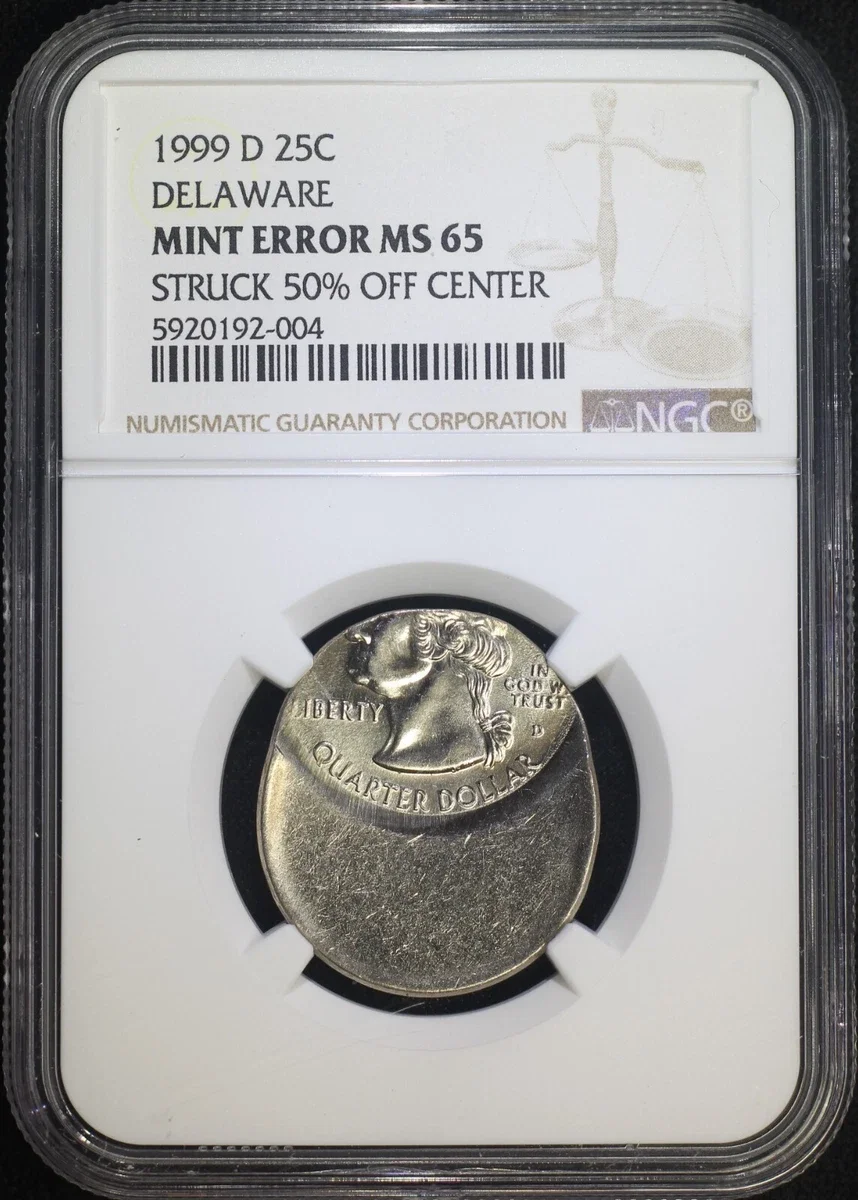
9. Delaware, 1999-D, 35% off-center
US$161.00
PCGS MS63 Sept. 26, 2010
This attributed off-center example is a different object from an ordinary Delaware quarter with a minor die crack. Look for displaced design and unstruck area on the complete coin. Cutting or an uneven rim alone is not enough.
1999-D 50% off-center NGC MS65 reference; the selected sale is a different 35% off-center PCGS MS63 specimen.
- #10
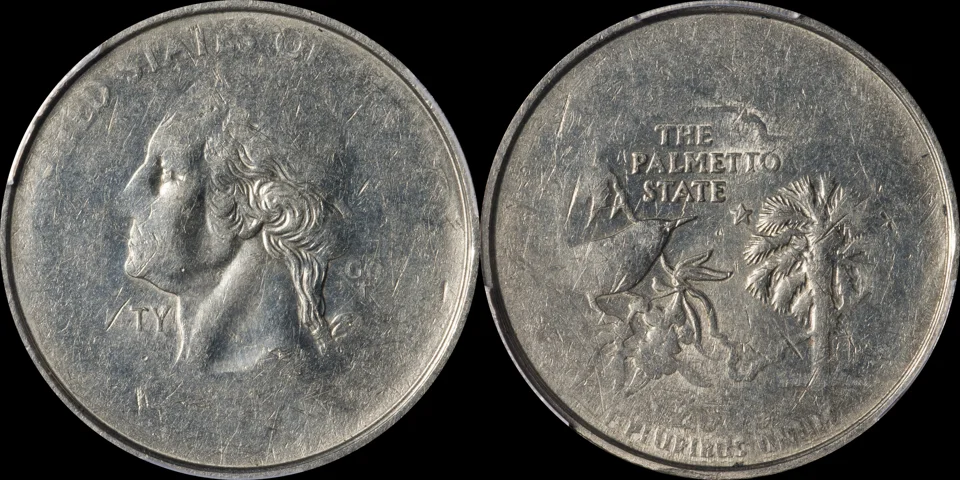
10. South Carolina, 2000-P, struck through grease
US$53.00
ANACS MS63 Mar. 20, 2023
Grease interfering with the dies can weaken intended design detail. This modest published result is a useful counterweight to sensational error claims. Worn or abraded lettering can look incomplete too; condition and the actual cause must be separated.
South Carolina grease-strike reference, mint not established; not the selected 2000-P auction specimen.
How do the issues and values compare?
What does this Top 10 include?
The 50 State Quarters program ran from 1999 through 2008. This selection stays within that program: it excludes 2009 territories, later America the Beautiful quarters, W-mint national-park issues and American Women quarters. The full state-quarter checklist and value guide covers the normal designs; this article focuses on why particular examples attracted premiums.
Ten transactions represent eight states because Wisconsin contributes two recognized varieties and New York contributes both a high-grade normal coin and a striking error. They are different collecting categories. The order below compares the selected published USD totals without adjusting for inflation or sale fees; it is not an all-time record list or a prediction of resale value.
1. Why check Wisconsin Extra Leaf Low, 2004-D?
PCGS MS67 · $6,000 · Jan. 12, 2020. Look beside the corn stalk for the recognized low extra-leaf form, not a scratch in the field. Low and High are separate varieties. The selected transaction concerns a gem; an ordinary Wisconsin reverse does not share the attribution.
Continue with Wisconsin and the other 2004 quarters.
2. Why check Massachusetts, 2000-P?
NGC MS69 · $3,760 · Jan. 8, 2017. The Minuteman reverse is normal. This example illustrates a condition premium rather than an error. A bright circulated coin or an uncertified online MS69 claim is not equivalent to the certified auction specimen.
Continue with the 2000 quarter designs.
3. Why check New York, 2001-P?
PCGS MS69 · $2,585 · Jan. 2017. The Statue of Liberty, state outline and eleven stars are intended artwork. Here the premium is tied to exceptional preservation, not the existence of a Statue of Liberty reverse. Keep this comparison separate from the multi-strike entry below.
Continue with the 2001 quarter checklist.
4. Why check Wisconsin Extra Leaf High, 2004-D?
PCGS MS66 · $2,530 · July 8, 2006. The high extra leaf is another specific raised form beside the corn. Identify its outline and position rather than inferring a variety from any extra line. The historical result is not proof that High always sells for less than Low in a matched grade.
Continue with 2004 quarter identification.
5. Why check Alaska, 2008-D?
NGC MS69 · $2,350 · Jan. 2017. The bear-and-salmon reverse belongs to the intended Alaska design. This recorded MS69 transaction illustrates how preservation can create a premium on a common issue. Ordinary wear, bag marks and cleaning make the comparison inappropriate.
Continue with the final year of the state-quarter program.
6. Why check Georgia, 1999-P, experimental planchet?
PCGS MS65 · $2,160 · Feb. 2020. The auction describes an experimental planchet, a specialized attribution that requires physical evidence. Gold-colored toning or plating does not establish it. Do not confuse this category with a normal Georgia quarter or with a dollar/quarter mule.
Continue with the first five state quarters.
7. Why check New York, 2001-P, quadruple struck?
PCGS MS63 · $603.75 · May 3, 2003. The pictured four-strike coin has additional off-center impressions and a distorted outline. Its identity rests on the whole object, not a tiny doubled-looking letter. The detailed year article includes both sides and separates other error categories.
Continue with New York quarter errors and paired specimen photos.
8. Why check Connecticut, 1999-D?
PCGS MS68 · $480 · Dec. 13, 2018. The Charter Oak design is normal, and this selected grade premium is not an extra-branch error valuation. Tree details should first be compared with a normal reverse. Certification and preservation matter more than a dramatic nickname.
Continue with 1999 designs and normal features.
9. Why check Delaware, 1999-D, 35% off-center?
PCGS MS63 · $161 · Sept. 26, 2010. This attributed off-center example is a different object from an ordinary Delaware quarter with a minor die crack. Look for displaced design and unstruck area on the complete coin. Cutting or an uneven rim alone is not enough.
Continue with Delaware and the 1999 program launch.
10. Why check South Carolina, 2000-P, struck through grease?
ANACS MS63 · $53 · Mar. 20, 2023. Grease interfering with the dies can weaken intended design detail. This modest published result is a useful counterweight to sensational error claims. Worn or abraded lettering can look incomplete too; condition and the actual cause must be separated.
Continue with 2000 state-quarter designs.
How do the ten dated transaction examples compare?
| Coin / variety | Premium category | Condition | Published total | Sale date / record |
|---|---|---|---|---|
| 1. Wisconsin Extra Leaf Low, 2004-D | Die variety | PCGS MS67 | $6,000 | Jan. 12, 2020 · Heritage / PCGS record |
| 2. Massachusetts, 2000-P | High-grade normal issue | NGC MS69 | $3,760 | Jan. 8, 2017 · Heritage |
| 3. New York, 2001-P | High-grade normal issue | PCGS MS69 | $2,585 | Jan. 2017 · Heritage |
| 4. Wisconsin Extra Leaf High, 2004-D | Die variety | PCGS MS66 | $2,530 | July 2006 · Heritage / PCGS record |
| 5. Alaska, 2008-D | High-grade normal issue | NGC MS69 | $2,350 | Jan. 2017 · Heritage / PCGS record |
| 6. Georgia, 1999-P, experimental planchet | Planchet attribution | PCGS MS65 | $2,160 | Feb. 2020 · Heritage / PCGS record |
| 7. New York, 2001-P, quadruple struck | Striking error | PCGS MS63 | $603.75 | May 3, 2003 · Heritage |
| 8. Connecticut, 1999-D | High-grade normal issue | PCGS MS68 | $480 | Dec. 13, 2018 · Heritage |
| 9. Delaware, 1999-D, 35% off-center | Striking error | PCGS MS63 | $161 | Sept. 26, 2010 · Heritage |
| 10. South Carolina, 2000-P, struck through grease | Striking error | ANACS MS63 | $53 | Mar. 20, 2023 · Heritage |
How is an ordinary quarter different from these examples?
| Observation | Ordinary interpretation | Potential premium category | Evidence required | Price comparison limit |
|---|---|---|---|---|
| Familiar state reverse | Normal program design | None from design alone | Date, mint mark and issue | Most worn clad examples start at $0.25 denomination |
| Nearly perfect surfaces | Appearance needs examination | High certified grade | Original surfaces and reliable grading | MS69 sale is not a price for a cleaned coin |
| Extra corn leaf | Must match a recognized form | Wisconsin High or Low | Specific shape, position and attribution | Not every corn-field line qualifies |
| Overlapping displaced designs | Requires whole-coin inspection | Multiple strike | Coherent repeated impressions and planchet outline | Not machine doubling |
| Different color or weight | May be toning or alteration | Planchet error only if established | Weight, dimensions, alloy and expert attribution | Not a value based on color alone |
A grading label is part of a comparison, not a guarantee that another coin is identical. The Massachusetts sale is for an NGC MS69; the New York normal issue is PCGS MS69. Some older records are reported through PCGS’s auction database, which also contains coins graded by other services. The company hosting the record should not be confused with the company that graded the coin.
Why should I keep ordinary grade premiums separate from errors?
A regular coin can be difficult in an exceptional grade even when its overall mintage is large. An error, by contrast, is a production departure, and a die variety is a recurring feature of a particular die. Those distinctions explain why a high-grade normal New York coin can appear above a lower-grade multi-strike New York coin in a selected price comparison. They do not establish a fixed hierarchy for all grades.
Before sending a coin for paid grading, compare realistic recent sales for its likely category and preservation. A $53 historical grease-strike sale cannot automatically justify substantial certification or selling expenses, and a $6,000 gem variety sale cannot price an unidentified worn quarter. Use the grading scale and the appraisal guide to prepare a useful comparison.
Which claims should I leave out of a state-quarter ranking?
An asking price without a completed transaction is not a realized value. Gold plating, novelty packaging, a claimed “spitting” line or a large online number does not establish a rare error. This selection also leaves out dollar/quarter mules because those are not ordinary state-quarter planchets. The Top 10 U.S. errors and varieties provides a separate cross-denomination comparison.
For a newer design with clearly documented but publicly price-restricted records, see 2023 quarter error identification. Keeping that program separate makes both lists easier to use and prevents newer issues being mistaken for state quarters.
How can I check my coin in three steps?
- 01Sort the coin into the correct program, year and mint. Use the reverse to identify the state and the obverse mint mark to distinguish P or D; separate collector Proof manufacture.
- 02Decide whether the potential premium is condition, an attributed die variety or a production error. Photograph both sides and the edge; do not assign a high grade, experimental alloy or missing layer from appearance alone.
- 03Match the exact attribution and condition to completed sales, preserving their original dates and fee basis. Keep promising coins uncleaned and obtain a specialist opinion when the evidence is uncertain.
For more illustrated mint-error comparisons, explore the coin errors and varieties guides.
What should I remember before pricing?
State quarters can carry premiums for very different reasons. Identify whether you have a normal issue in exceptional condition, a recognized variety or a genuine production error before using a high price as a comparison.
This Top 10 is a transparent selection of ten dated transactions from eight states. It ranks those examples only. The next useful step is a matching attribution and recent comparable sales, not assuming every coin with the same state reverse shares the listed value.
What else do collectors ask?
Are these the ten highest state-quarter prices ever paid?
No. They are ten selected documented transactions ordered by their historical USD totals. The selection is not an all-time record ranking, a current retail chart or a forecast.
Why are Wisconsin and New York each listed twice?
Wisconsin appears as the separate Extra Leaf Low and Extra Leaf High varieties. New York appears as a high-grade normal issue and a quadruple-strike error. Ten distinct transaction examples therefore represent eight states.
Are ordinary state quarters worth more than face value?
Most worn, normal clad examples start at their 25-cent denomination. Exceptional preservation, an attributed variety, a genuine error or a different collector issue may require a separate valuation.
What is the highest selected sale in this article?
The selected 2004-D Wisconsin Extra Leaf Low example, PCGS MS67, is recorded at $6,000 in a January 12, 2020 Heritage sale. That is an individual historical result, not a universal value for Low Leaf quarters.
Is every high-priced quarter an error?
No. The Massachusetts, ordinary New York, Alaska and Connecticut examples illustrate premiums associated with certified condition. An unusual grade and a mint error are different categories.
Do gold-colored Georgia quarters automatically have an experimental planchet?
No. Color may result from toning, plating or other alteration. The experimental-planchet category requires physical evidence and specialist attribution; it cannot be established from color alone.
Does this list include W quarters or 2023 quarters?
No. The selection is confined to the 1999–2008 50 State Quarters program. Later America the Beautiful, W-mint and American Women issues belong to separate guides.
Which references support this guide?
References and further readingExpand
- Transaction reference: Wisconsin Extra Leaf Low, 2004-DPCGS MS67; $6,000; Jan. 12, 2020. Historical published result; no current retail claim. Checked November 13, 2026.
- Transaction reference: Massachusetts, 2000-PNGC MS69; $3,760; Jan. 8, 2017. Historical published result; no current retail claim. Checked November 13, 2026.
- Transaction reference: New York, 2001-PPCGS MS69; $2,585; Jan. 2017. Historical published result; no current retail claim. Checked November 13, 2026.
- Transaction reference: Wisconsin Extra Leaf High, 2004-DMS66; $2,530; July 2006. Historical published result; no current retail claim. Checked November 13, 2026.
- Transaction reference: Alaska, 2008-DMS69; $2,350; Jan. 2017. Historical published result; no current retail claim. Checked November 13, 2026.
- Transaction reference: Georgia, 1999-P, experimental planchetPCGS MS65; $2,160; Feb. 2020. Historical published result; no current retail claim. Checked November 13, 2026.
- Transaction reference: New York, 2001-P, quadruple struckPCGS MS63; $603.75; May 3, 2003. Historical published result; no current retail claim. Checked November 13, 2026.
- Transaction reference: Connecticut, 1999-DPCGS MS68; $480; Dec. 13, 2018. Historical published result; no current retail claim. Checked November 13, 2026.
- Transaction reference: Delaware, 1999-D, 35% off-centerPCGS MS63; $161; Sept. 26, 2010. Historical published result; no current retail claim. Checked November 13, 2026.
- Transaction reference: South Carolina, 2000-P, struck through greaseANACS MS63; $53; Mar. 20, 2023. Historical published result; no current retail claim. Checked November 13, 2026.
- U.S. Mint: 50 State Quarters program1999–2008 program scope; separate from later quarter programs. Checked November 13, 2026.