

 App Store

COIN VALUE GUIDES · NICKELS
Buffalo Nickel Value:Dates, Mint Marks and Worn-Date Identification
Find a Buffalo nickel’s date and mint mark, compare common and scarce issues, and understand dateless coins and the two 1913 designs.
 HeriBase TeamPublished
In this article
How much is a 5-cent Buffalo coin worth?
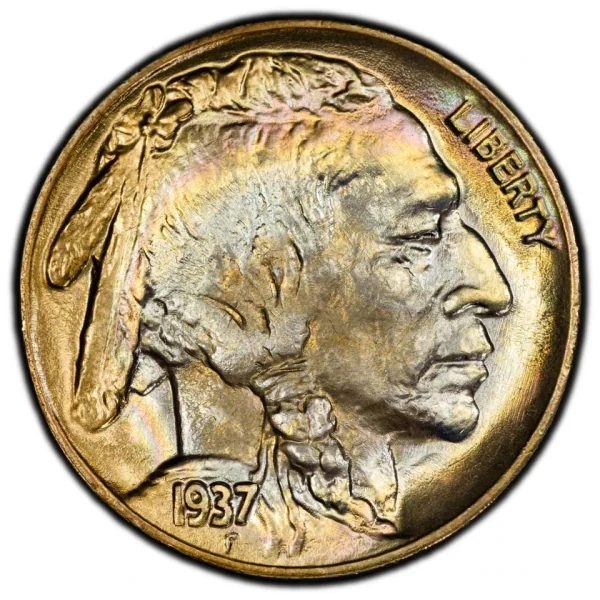
A Buffalo nickel’s value depends on its readable date, mint and condition; there is no single price for the series. As a common-date reference, the PCGS guide checked October 20, 2026 lists a 1937 Philadelphia coin at $3 in G4, $6 in VF20 and $9 in EF40. A dateless coin cannot simply be assigned one of those dated values.
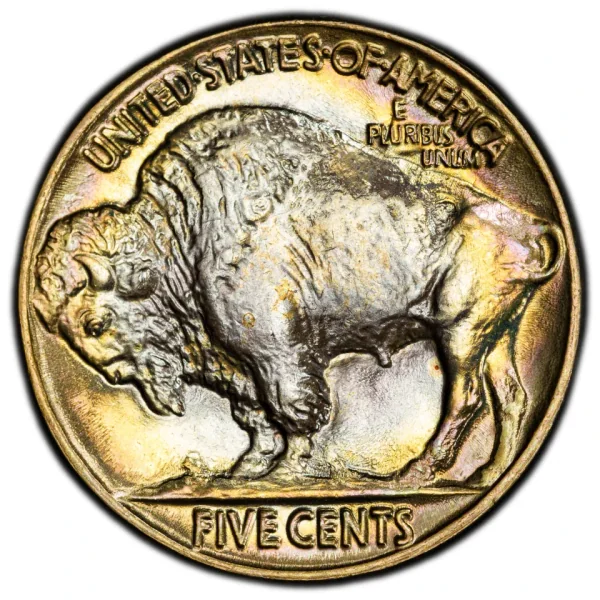
Scarce dates and genuine varieties are different markets. For example, a 1926-S is $40 in G4 and $185 in VF20 in the same guide. Check the date on the portrait side and the D or S below FIVE CENTS on the reverse. Normal 1913–1938 Buffalo nickels are copper-nickel, not silver.
Buffalo nickel portraits, dates and reverse types
Why the Buffalo nickel changed in its first year
| Feature | What to check |
|---|---|
| Series | 1913–1938; designed by James Earle Fraser |
| Face value | 5 cents |
| Normal standard | 5.00 g; approximately 21.2 mm; plain edge |
| Metal | 75% copper, 25% nickel |
| Mints | Philadelphia: no mark; Denver: D; San Francisco: S |
Fraser’s design paired a Native American portrait with an American bison, giving the nickel a markedly different identity from the preceding Liberty Head coin. Collectors commonly call it the Buffalo nickel, while Indian Head nickel also describes this series. It should not be confused with the Indian Head penny, which has a different denomination and design.
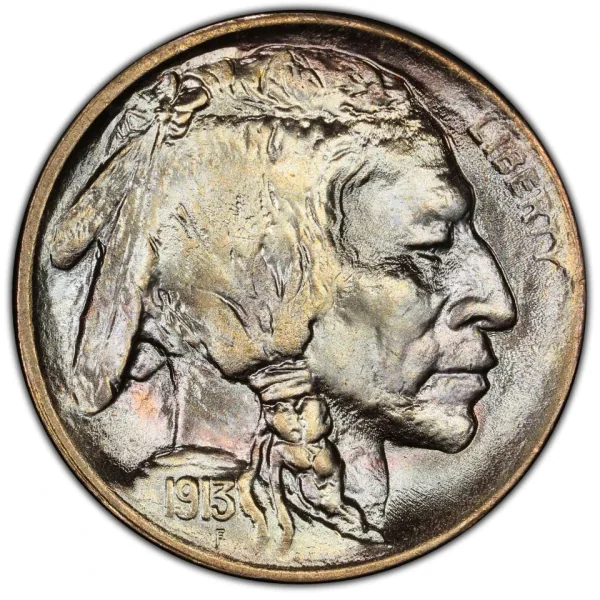
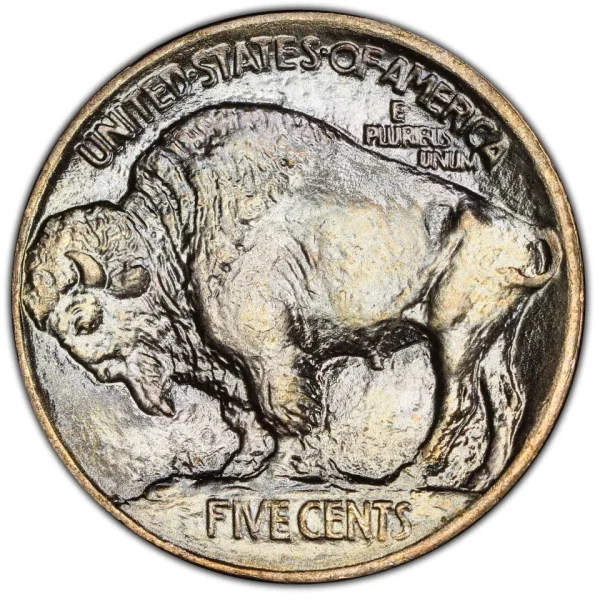
The 1913 Type 1 reverse placed the denomination on a raised mound. The Type 2 revision recessed that area to protect the lettering. Both types belong to 1913, and later regular issues use the revised reverse. The portrait-side date remained vulnerable to circulation wear, which explains the many undated survivors.
A 2005 Jefferson nickel with a bison reverse is a later five-cent design. A modern American Buffalo gold coin is a different denomination and metal. Read both sides before applying this series guide.
Three checks before using a Buffalo nickel price
1. Read the date without treating the surface
Look below the portrait, using gentle side lighting. If the final digits are gone, record the date as unreadable rather than guessing a valuable year. Acid date restoration alters the surface; a chemically revealed date is not equivalent to an original full-date coin.
2. Locate the mint mark below FIVE CENTS
A D or S sits below the denomination on the reverse. No letter is normal for Philadelphia. For 1913, also compare the raised mound and recessed-ground types; the date and mint alone are not enough.
3. Separate wear, weak strike and an attributed variety
A weakly struck horn or worn leg is not proof of a rare variety. The 1937-D three-legged variety requires a specific die attribution; removing a leg by abrasion does not create it. A valuable candidate needs authentication of the date, mint and diagnostics together.
Use the grading guide for condition terms and the appraisal checklist when a credible scarce issue warrants closer inspection.
Buffalo nickel value examples by date and grade
PCGS retail guide estimates in US dollars, checked October 20, 2026. These are references for genuine, problem-free coins in the stated grade, not auction results or guaranteed offers. Cleaned, damaged and incorrectly graded coins need different comparisons.
G4 is Good, VF20 Very Fine, EF40 Extremely Fine and MS63 Mint State. This is a selected comparison, not a complete date-by-date price list. It shows why a generic “5 cent buffalo coin value” cannot identify a particular coin’s price.
| Issue | G4 | VF20 | EF40 | MS63 |
|---|---|---|---|---|
| 1937, no mark | $3 | $6 | $9 | $42 |
| 1913 Type 1, no mark | $15 | $23 | $29 | $125 |
| 1926-S | $40 | $185 | $1,125 | $11,500 |
How much is a dateless Buffalo nickel worth?
Without a defensible date, the coin is usually evaluated as an undated collectible or bulk item, rather than as a specific key date. No reliable universal current price is assigned here. A partial date, original surface quality and a genuine attributable variety can change the task, but a seller’s claimed year is not evidence.
What creates a premium?
Readable dates, original surfaces and genuinely scarce date-and-mint combinations matter. Mint State coins also need strong luster and acceptable marks; a shiny cleaned coin does not qualify. Compare completed sales for the same issue and condition, rather than the most expensive Buffalo nickel ever sold.
Date first, then mint, type and condition
Start with a readable date and the reverse mint mark. Common dated coins can be modestly priced, while scarce issues and verified varieties need separate comparisons. For 1913, identify the reverse type; for an undated coin, avoid guessing or chemically restoring a date just to chase a premium.
Frequently asked questions
Are Buffalo nickels silver?
No. Normal 1913–1938 Buffalo nickels are 75% copper and 25% nickel.
Where is the Buffalo nickel mint mark?
Look below FIVE CENTS on the reverse. D means Denver, S means San Francisco and no mark means Philadelphia.
Why does my Buffalo nickel have no date?
The raised date area wears readily. A worn-off date is not by itself a mint error or evidence of a rare year.
Are all three-legged-looking Buffalo nickels valuable?
No. Wear or damage can remove detail. The recognized 1937-D variety must match its die diagnostics and be authenticated.
References
Sources
Research checked October 20, 2026. Any price example retains its stated source date and scope.
- PCGS CoinFacts: 1937PIssue specifications, collecting history and grade-specific retail estimates.
- PCGS CoinFacts: 1913T1Issue specifications, collecting history and grade-specific retail estimates.
- PCGS CoinFacts: 1926SIssue specifications, collecting history and grade-specific retail estimates.
- PCGS: Buffalo nickel guideDesign types, key dates, strike characteristics and varieties.