

 App Store

COIN VALUE GUIDES · NICKELS
1935 Buffalo Nickel Value:No Mint Mark, D, S and Doubled Dies
Read a 1935 Buffalo nickel’s date and mint mark, compare ordinary grade-specific values, and distinguish the doubled-die reverse from wear and damage.
 HeriBase TeamPublished
In this article
Quick answer
A normal 1935 Buffalo nickel with a readable date is a collectible five-cent coin, but it is not rare simply because it is old or has no mint mark. NGC’s ordinary-strike guide lists Good examples at $1.25 and Fine examples at $3.50 for Philadelphia, Denver and San Francisco. Those rows were last updated September 20, 2024 and accessed November 13, 2026; use them as dated retail references, not current cash offers.
The mints separate more clearly at better grades. NGC’s Extremely Fine 40 references are $6 for Philadelphia, $25 for Denver and $6 for San Francisco. Ordinary MS65 references are $130, $325 and $195 respectively. Mint State (MS) means uncirculated. An attributed doubled-die reverse is a separate issue, and a dateless, corroded or cleaned coin is not equivalent to a problem-free example.
Coin photos
Basics & coin story
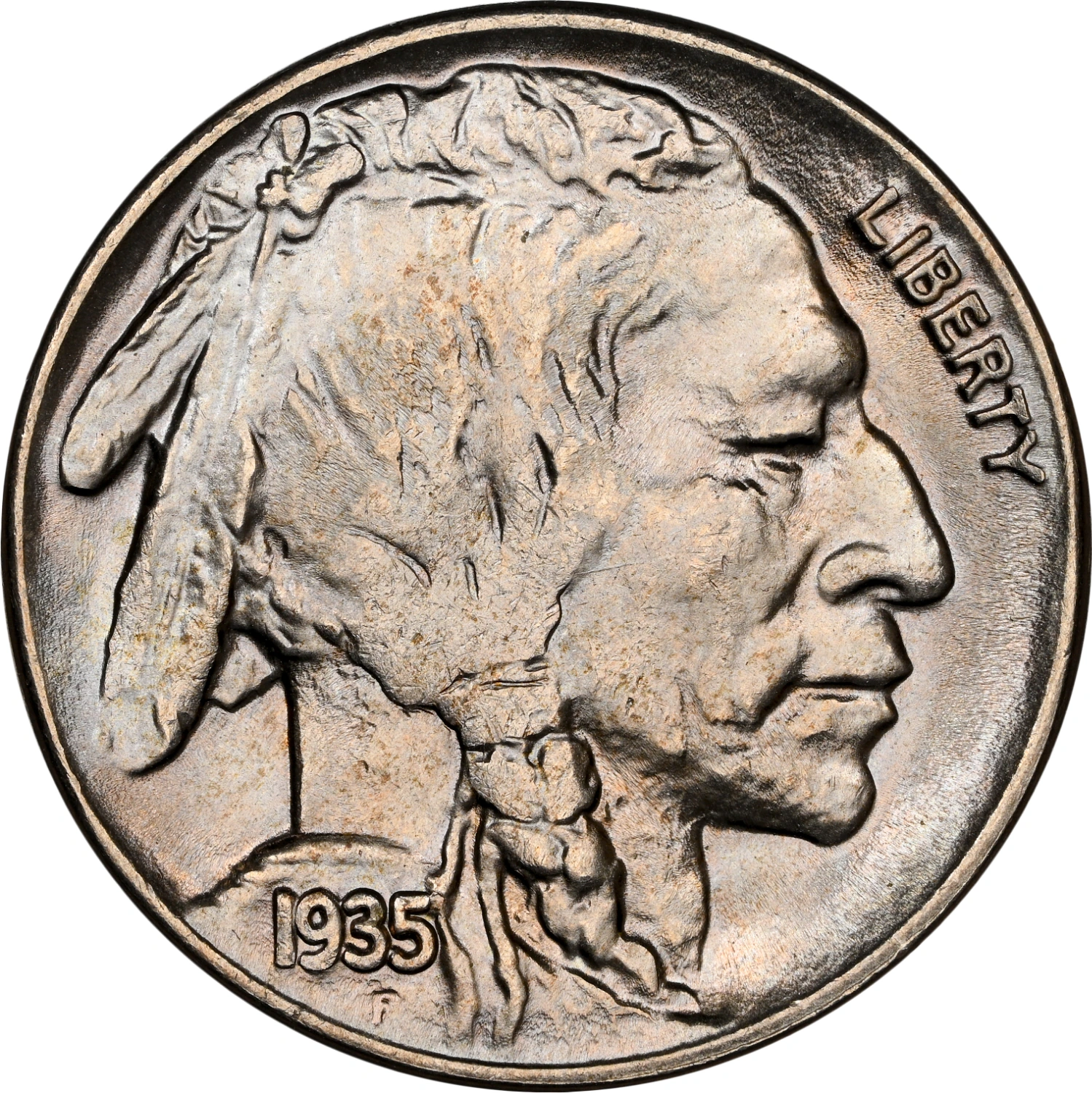
Fraser’s Native American portrait and American bison reverse were already familiar by 1935. The denomination remained on the recessed ground introduced during the first year of the series, while the raised date on the portrait’s shoulder remained vulnerable to wear. That placement explains why a coin can still show a recognizable bison yet have an unreadable year.
PCGS records 58,264,000 Philadelphia regular strikes. It was a substantial issue, and NGC describes many surviving Mint State coins while emphasizing incomplete central striking on numerous examples. The useful collecting question is therefore not just how many were minted, but how much detail and original surface a particular coin retains. The Buffalo nickel series guide explains the wider date-and-mint framework.
| Feature | What to check |
|---|---|
| Issue | 1935 Buffalo nickel / five cents |
| Designer | James Earle Fraser |
| Standard alloy | 75% copper; 25% nickel |
| Nominal weight / diameter | 5.00 g / 21.2 mm |
| Edge | Plain |
| Regular mints | No mark = Philadelphia; D = Denver; S = San Francisco |
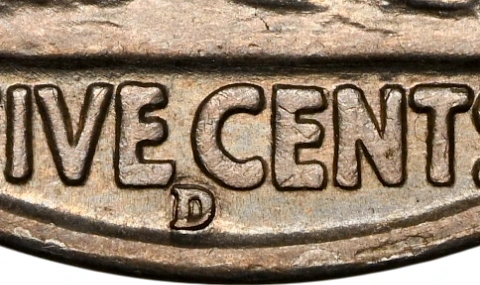
| Mint-mark location | Reverse below FIVE CENTS |
Identification
Read the date without restoring it
Find all four digits on the shoulder below the portrait. The small F beneath the date is the initial of designer James Earle Fraser. It does not stand for a mint and does not create a special F-mint issue. If the year is ambiguous, record it as uncertain rather than assigning a 1935 price.
Acid date restoration changes the surface. A chemically recovered digit does not make the coin a normal problem-free specimen for a grade-based retail table. Do not scratch or treat a coin simply to force a readable date.
Check below FIVE CENTS for D or S
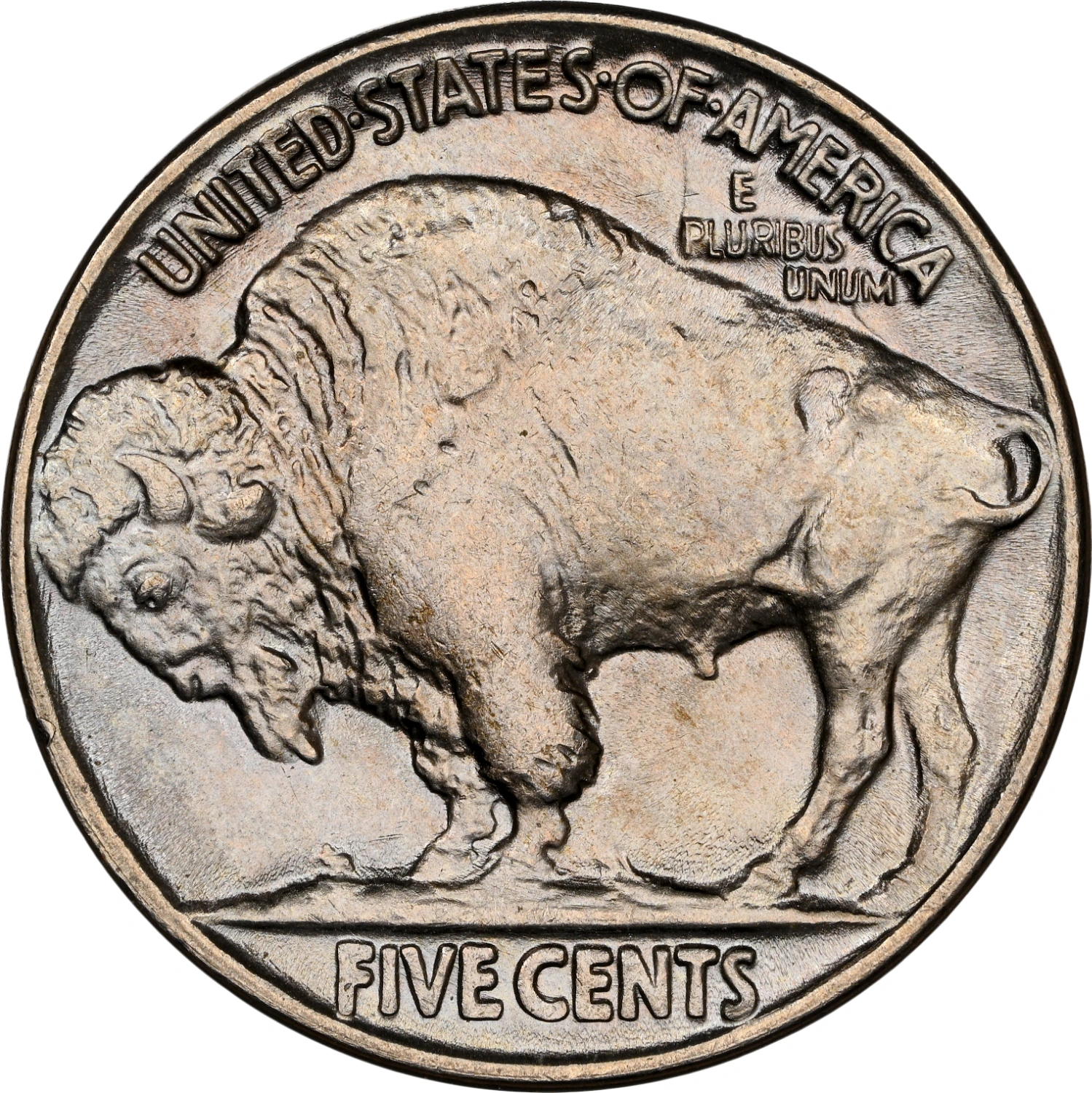
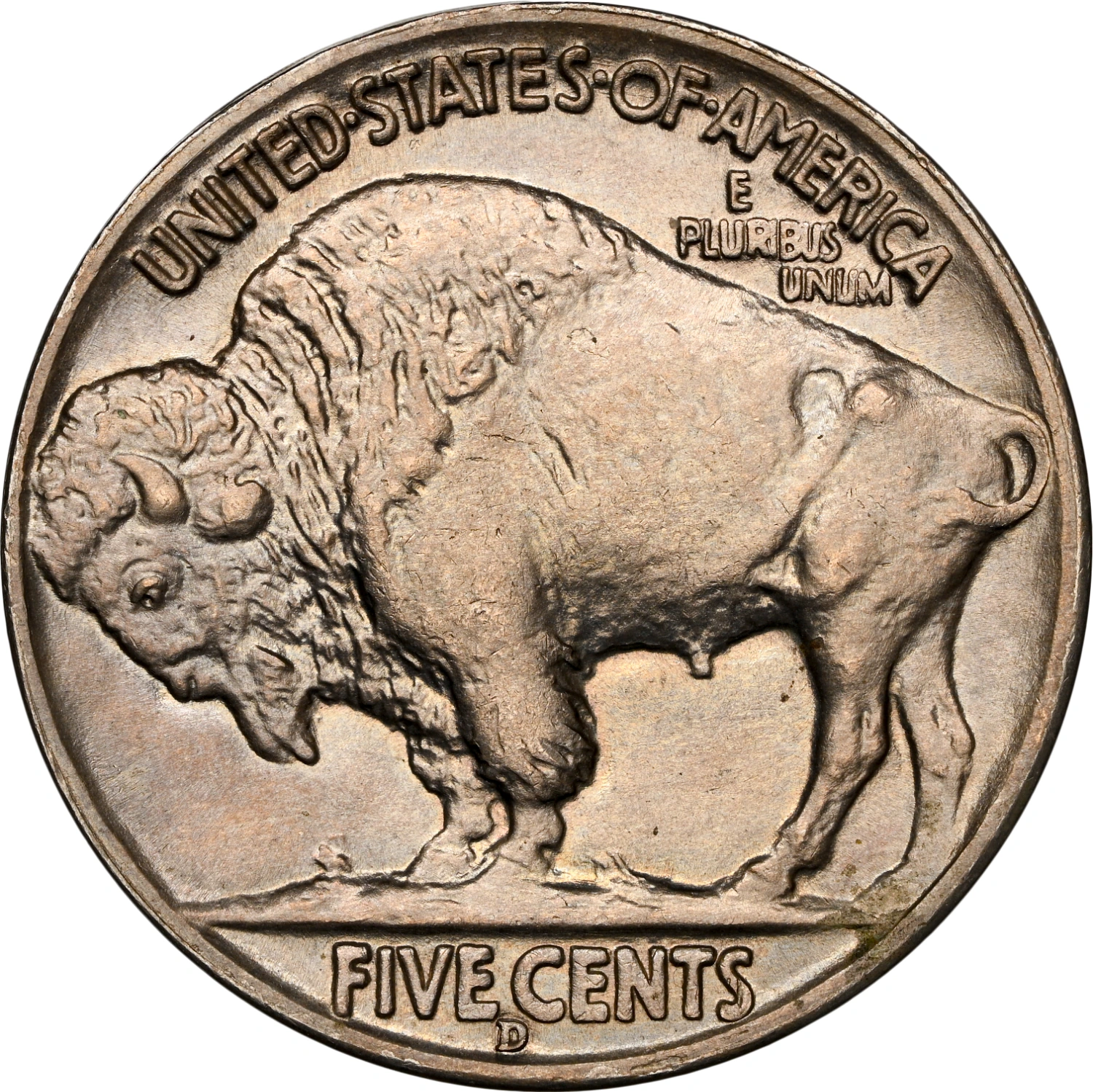
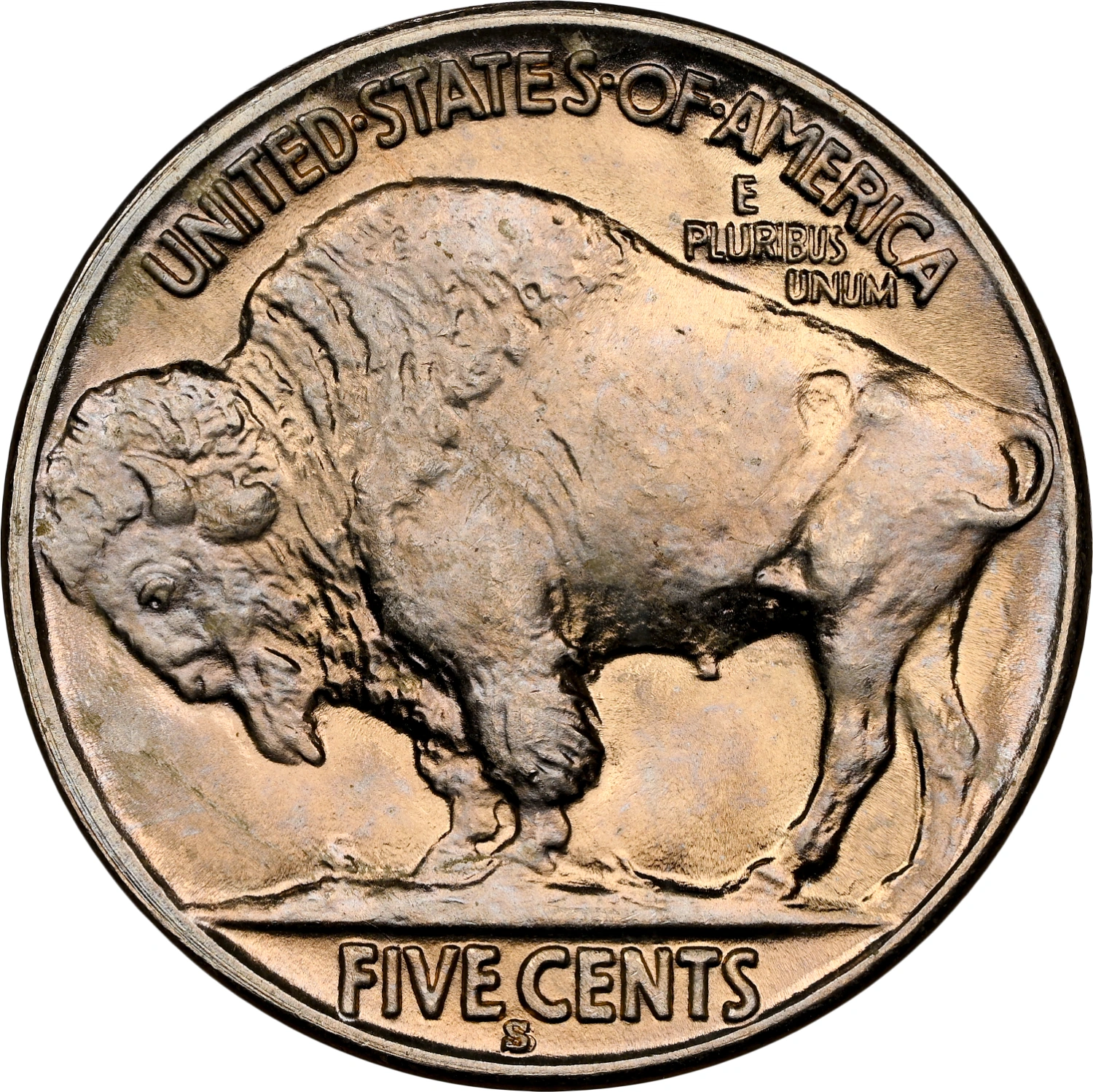
The mint letter is on the reverse below the denomination. A blank position is normal for Philadelphia. D identifies Denver and S identifies San Francisco; neither is on the portrait side. Use a close photograph and changing light to read a weak letter, keeping scratches and dark spots separate from the actual raised mark.
A Denver coin deserves its own comparison as condition improves. Do not multiply every coin’s price just because a mint had lower production: the guide’s ordinary Good and Fine levels overlap, whereas the better grades diverge.
Doubled die reverse is an attribution, not a blurred image
PCGS separately catalogs the 1935 Philadelphia doubled-die reverse, including FS-801. Look for matching doubling at the documented reverse lettering and other die markers, not a single uncertain outline caused by motion, glare or damage. A shelf-like displaced edge alone is not enough to name the variety.
The ordinary photographs here establish the date, normal reverse and mint-mark position. They are not labeled as the FS-801 specimen. Likewise, the famous 1937-D Three-Legged and 1936-D 3½ Legs varieties should not be transferred to a 1935 coin with a worn or damaged leg.
Condition & value
Amounts are in U.S. dollars. The table reports published ordinary-strike guide references, not completed sales or guaranteed offers. The final column is the source row’s own update date (month/day/year); all rows were accessed November 13, 2026. Older guide dates are a limitation, so obtain recent matching sales or offers before a transaction.
MS means Mint State. Proofs and attributed die varieties are excluded.
| Issue | Grade / condition | USD reference | Basis | Guide updated |
|---|---|---|---|---|
| 1935 5C | Good | $1.25 | NGC retail guide | 09/20/2024 |
| 1935 5C | Fine | $3.50 | NGC retail guide | 09/20/2024 |
| 1935 5C | Extremely Fine 40 | $6 | NGC retail guide | 09/20/2024 |
| 1935 5C | MS63 | $45 | NGC retail guide | 09/20/2024 |
| 1935 5C | MS65 | $130 | NGC retail guide | 09/20/2024 |
| 1935 D 5C | Good | $1.25 | NGC retail guide | 09/20/2024 |
| 1935 D 5C | Fine | $3.50 | NGC retail guide | 09/20/2024 |
| 1935 D 5C | Extremely Fine 40 | $25 | NGC retail guide | 09/20/2024 |
| 1935 D 5C | MS63 | $85 | NGC retail guide | 09/20/2024 |
| 1935 D 5C | MS65 | $325 | NGC retail guide | 09/20/2024 |
| 1935 S 5C | Good | $1.25 | NGC retail guide | 09/20/2024 |
| 1935 S 5C | Fine | $3.50 | NGC retail guide | 09/20/2024 |
| 1935 S 5C | Extremely Fine 40 | $6 | NGC retail guide | 09/20/2024 |
| 1935 S 5C | MS63 | $70 | NGC retail guide | 09/20/2024 |
| 1935 S 5C | MS65 | $195 | NGC retail guide | 09/20/2024 |
Why a weakly detailed coin is not automatically circulated
On a Buffalo nickel, the portrait’s central hair and the bison’s head and shoulder can be soft because the dies did not fill completely. Circulation creates rubbing as well as lost detail. Examine luster continuity, high-point wear and the fields together; do not assign MS65 merely because the date looks sharp.
NGC’s separate mint analyses make strike quality particularly relevant to 1935-D and 1935-S. The value table does not promise that every coin at a named numerical grade will be equally attractive. Two equally graded pieces can differ in strike, toning and marks.
Compare ordinary coins before using a variety result
The table’s ordinary MS63 references are $45 for Philadelphia, $85 for Denver and $70 for San Francisco. These grade-specific guide figures belong to the same dated NGC ordinary entries; they exclude authenticated doubled dies and other attributed varieties. Paid grading and selling costs can consume much of a modest premium.
A dealer’s price tag, an unsold internet listing and a recorded auction result answer different questions. For an offer, assemble recent completed comparisons with the same mint, grade and surface condition. The grading-scale guide and cleaning-identification guide help screen coins before a specialist examines a promising variety.
For an initial identification, photograph both faces in even light and record the visible date and mint mark. HeriBase can help organize a photo-based identification; verify important mint, finish and variety details against the references before using a price. An app result is a starting point, not a certified grade, authentication or purchase offer.
Summary
For a 1935 Buffalo nickel, establish a readable date and reverse mint mark before comparing value. Ordinary circulated coins belong to a modest-dollar collecting market; Denver becomes more important at better grades. Keep the surface untreated and reserve doubled-die prices for a matching, authenticated attribution.
FAQ
Is a 1935 Buffalo nickel with no mint mark an error?
No. No mark below FIVE CENTS is normal for Philadelphia. The blank position does not itself establish rarity or an error.
What does the F below 1935 mean?
It is designer James Earle Fraser’s initial, not a mint mark. The mint letter, if present, is on the reverse.
Is a 1935-D worth more than a Philadelphia coin?
The mint matters, especially in better grades. NGC’s dated Good and Fine ordinary references overlap, while the Extremely Fine and Mint State comparisons differ.
Does doubled-looking lettering prove the valuable reverse variety?
No. Match the correct 1935 Philadelphia die attribution and its diagnostics. Blur, glare, mechanical displacement and damage can imitate part of the appearance.
References
References and further reading
- NGC: 1935 5C MS specifications, analysis and dated guide
- NGC: 1935 D 5C MS specifications, analysis and dated guide
- NGC: 1935 S 5C MS specifications, analysis and dated guide
- PCGS: 1935 Philadelphia specifications, production and catalog entries
- PCGS: 1935 doubled-die reverse FS-801 attribution
References accessed November 13, 2026. Guide update dates, access dates and historical sale dates are separate. No current dealer offer or independent examination of a reader’s coin is implied.