

 App Store

COIN VALUE GUIDES · INDIAN HEAD CENTS
Indian Head Penny:Value, Key Dates and Mint Marks
Identify the cent before Lincoln, separate common dates from scarce issues, and discover the history behind its changing design.
 HeriBase TeamPublished
 In this article
What is an Indian Head penny worth?
An Indian Head penny is a U.S. one-cent coin issued from 1859 to 1909. Many common, worn late-date examples have only a modest collector premium: the PCGS guide checked October 15, 2026 lists a normal 1907 at $2 in Good 4, $6 in Fine 12 and $18 in Extremely Fine 40. Those examples are a starting point, not a price for every date or condition.
Check 1877, 1908-S and 1909-S separately. At the same Good 4 grade, the guide lists $650, $75 and $400 respectively. Genuine scarce dates, recognized varieties, Proofs and exceptional preservation can be worth much more than common circulated coins. No mint mark is normal for Philadelphia; the only regular S-mint dates are 1908 and 1909.
Read the date and reverse mint mark, distinguish copper-nickel from bronze on 1864 coins, then compare the same issue and grade. Guide values are estimates, not guaranteed proceeds; cleaning, corrosion or an altered date or mint mark can change the assessment substantially.
A real Indian Head penny: both sides
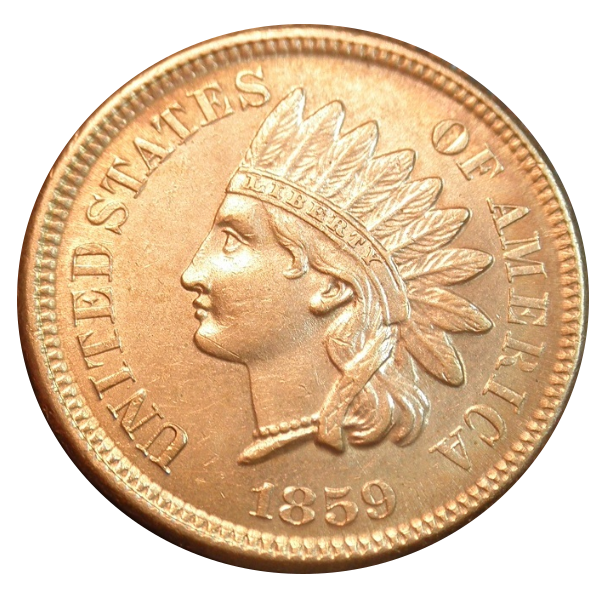
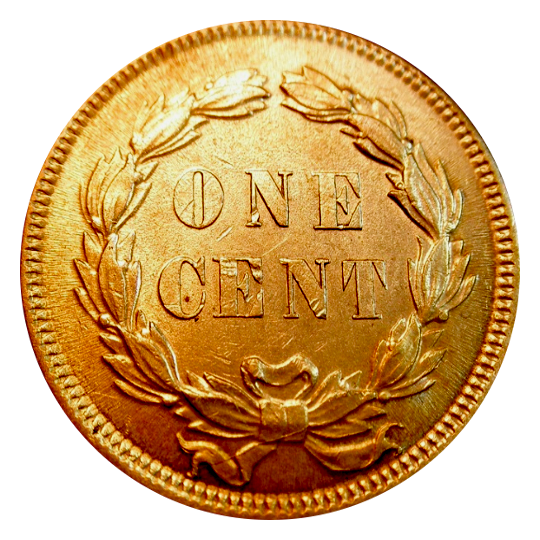
These photographs show the first-year design, not a grade assigned in this article. Later Indian Head cents retain the portrait but use an oak wreath and a shield on the reverse. Do not mistake that normal design change for a minting error.
The coin before Lincoln: design and story
Whose portrait is on the penny?
James Barton Longacre designed the Indian Head cent. Despite the familiar series name, the figure represents Liberty wearing a Native American headdress; it is not a portrait of a named Native American leader. The design belongs to the nineteenth-century tradition of representing national ideals through an allegorical figure.
The series followed the short-lived Flying Eagle cent in 1859. Its first reverse used a laurel wreath; the oak wreath and shield became the regular design in 1860. In 1909, the Lincoln cent replaced it for the centennial of Abraham Lincoln’s birth. A 1909 date therefore needs a second look: both Indian Head and Lincoln cents exist, and their key-date names are not interchangeable.
Why the metal changed during the Civil War
Wartime hoarding removed small change from everyday commerce. Privately issued bronze tokens helped fill the gap and showed that the public would accept a lighter coin. In 1864, the cent changed from the heavier copper-nickel alloy to bronze. A familiar design survived, but its weight and composition changed.
That history matters when identifying a coin: two cents dated 1864 can belong to different metal types. Record the weight as well as the date; color alone is unreliable on worn, toned or altered surfaces.
| Feature | What to record |
|---|---|
| Country / denomination | United States · one cent ($0.01) |
| Regular series dates | 1859–1909 |
| Designer / portrait | James Barton Longacre · Liberty in a feathered headdress |
| Copper-nickel type | 1859–1864 · 88% copper, 12% nickel · approximately 4.7 g |
| Bronze type | 1864–1909 · 95% copper, 5% tin and zinc · 3.11 g |
| Diameter / edge | Approximately 19 mm · plain |
| Mint marks | Philadelphia: none · San Francisco: S, in 1908 and 1909 only |
Key dates and mint marks to check
Find the S below the wreath
Turn the coin over and inspect the bottom of the reverse, below the wreath’s bow. A small S identifies San Francisco on the 1908-S and 1909-S. A blank area is normal on Philadelphia coins. There is no regular Denver-mint Indian Head cent.
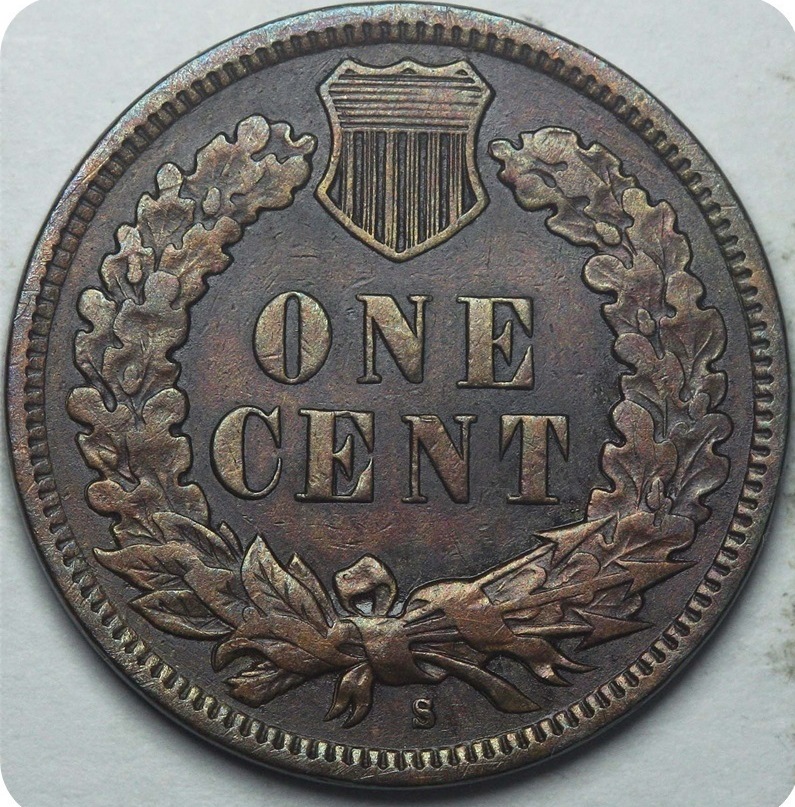
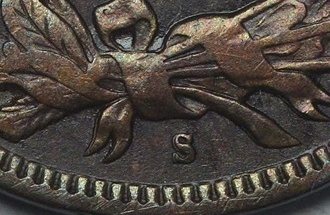
San Francisco struck 1,115,000 Indian Head cents in 1908 and 309,000 in 1909. The latter is the lowest regular-issue mintage in the series. Yet mintage is not the same as surviving supply: the 1877, with 852,500 reported struck, remains a central key date. Added S marks are a known alteration; a photograph of the letter alone does not authenticate the coin.
Separate the 1864 types
Check metal and weight first. Bronze cents occur both without and with Longacre’s small L on the ribbon behind the neck. That L is a designer’s initial, not a mint mark. Worn examples may need magnification and comparison with an attributed specimen before a variety price is appropriate.
Recognize the reverse change
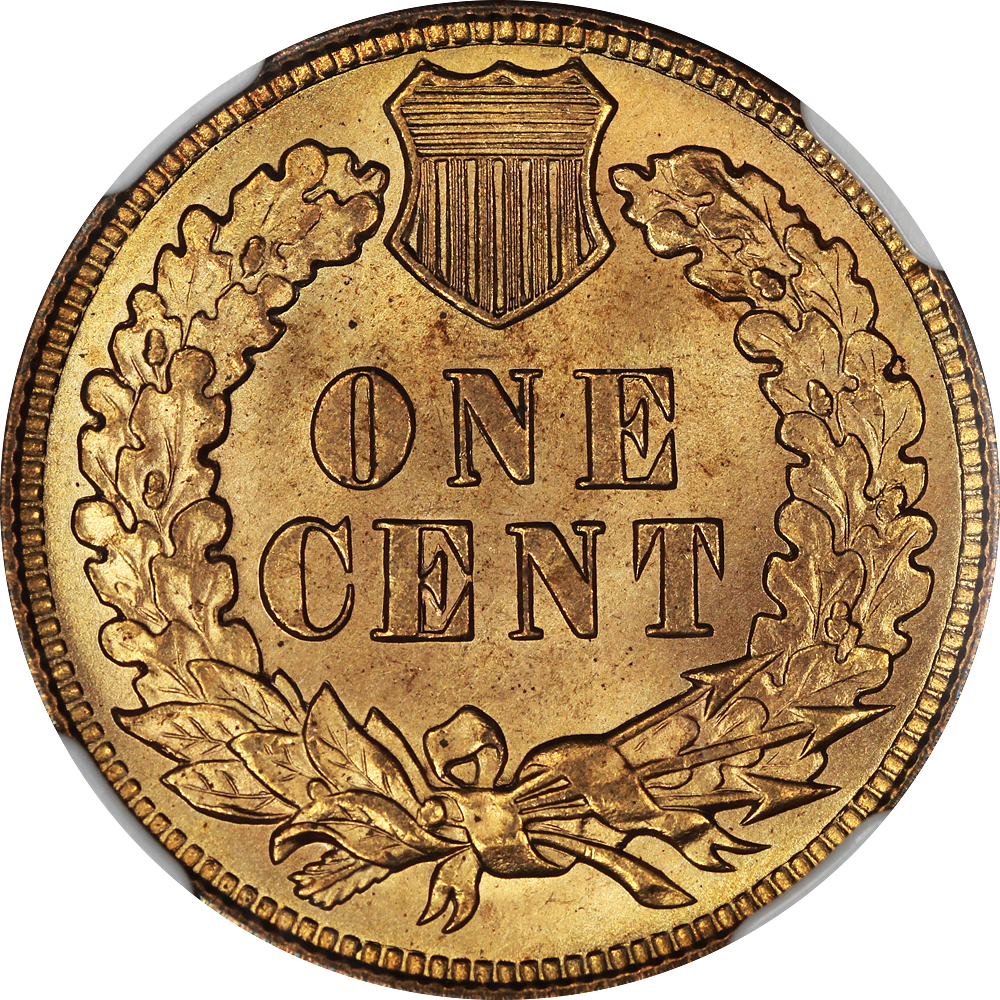
The shield identifies the later regular reverse design, not a scarce date by itself. Keep the date, metal type and mint mark together in your notes. If your coin shows Lincoln instead, continue with our Lincoln penny identification and value guide.
Indian Head penny value by date and grade
Selected PCGS regular-issue guide estimates, checked October 15, 2026, in US dollars. These circulated-grade examples illustrate the difference between common and scarce issues. They are not auction results, dealer buy offers or prices for damaged coins.
| Issue | Good 4 | Fine 12 | Extremely Fine 40 | About Uncirculated 50 |
|---|---|---|---|---|
| 1859 | $22 | $40 | $135 | $215 |
| 1907 | $2 | $6 | $18 | $34 |
| 1877 | $650 | $1,350 | $2,650 | $3,150 |
| 1908-S | $75 | $125 | $190 | $260 |
| 1909-S | $400 | $475 | $650 | $900 |
The table deliberately compares specific grades. A readable date alone does not establish Good 4, and visible headband letters alone do not settle the grade. Use the coin grading scale to understand the categories before matching a price.
Which details matter on this series?
Examine the hair above the ear, the curl beside the ribbon and the reverse bow knot for wear. Also inspect the rims, open fields and feather detail. Weak striking can soften some features even on an unworn coin; a sharp feature elsewhere does not cancel circulation wear.
On bronze coins, Brown (BN), Red-Brown (RB) and Red (RD) are color designations, distinct from the numerical grade. Mint State coins and Proofs need their own comparisons, including the color designation and surface quality. An orange or shiny surface alone does not establish original red color, and polishing cannot create a higher grade.
For surface problems, use our guide to cleaned coins. Avoid applying a problem-free guide value to a coin with corrosion, scratches or altered color.
Turn an identification into a useful comparison
Use a precise search such as 1908-S Indian Head cent Fine 12, then compare several completed sales with matching descriptions and photographs. Separate Proofs from circulation strikes, check the certification and note whether the sale price includes fees. An unsold asking price does not establish market value.
HeriBase can help you organize photographs and identify the likely series. Save both sides and confirm the date and mint mark against the coin itself; see the HeriBase user guide. For an apparent 1877 or S-mint rarity, use expert appraisal and authentication before relying on a substantial premium.
What matters most for an Indian Head penny
Most common, worn Indian Head cents are modest-value collectibles; 1877, the two S-mint dates and well-preserved or attributed special issues need separate comparisons. The date, metal type, reverse mint mark and condition tell you which price category to use.
Keep the coin uncleaned, photograph both sides and match its exact issue to a dated guide and recent sales. A blank mint-mark area is normal, the 1864 L is a designer’s initial, and an apparent rare date or added S requires authentication.
Frequently asked questions
Are all Indian Head pennies rare?
No. Many late-date Philadelphia examples are available in worn condition. Scarce dates, recognized varieties and exceptional preservation must be assessed separately.
Where is the mint mark on an Indian Head penny?
Look below the wreath’s bow on the reverse. Only the regular 1908-S and 1909-S issues carry an S; Philadelphia issues have no mint mark.
Who is on the Indian Head penny?
The portrait represents Liberty wearing a Native American headdress. James Barton Longacre designed it; it does not identify a particular Native American leader.
Is a 1909-S Indian Head penny the same as a 1909-S VDB?
No. The Indian Head cent has Liberty in a headdress. The 1909-S VDB is a Lincoln wheat cent. They are different issues with separate mintages and prices.
References
- PCGS · Indian Cent Complete Set Price GuideSelected regular-issue circulated-grade values, checked October 15, 2026. Guide estimates rather than realized sale prices.
- U.S. Mint · The Evolution of Liberty on CoinsThe allegorical Liberty portrait and headdress.
- U.S. Mint · PennyIndian Head series dates and the 1909 Lincoln transition.
- PCGS · 1859–1909 Indian CentsReverse types, the 1864 metal change and L-on-ribbon distinction.
- Stack’s Bowers · Type 3 Indian Head CentCivil War tokens and the adoption of the lighter bronze cent.
- PCGS · The S-Mint Indian CentsMintages, relative scarcity and added-mint-mark alterations. Historical prices in this article are not used in our table.
- PCGS CoinFacts · 1864 copper-nickel centEarly alloy, approximate weight, size and edge.
- PCGS CoinFacts · 1907 bronze centBronze composition and weight.
- NGC · Indian CentsSeries grading context and wear points.
- PCGS · Grading Mint State Indian CentStrike weakness and preservation considerations.