

 App Store

COIN VALUE GUIDES · LINCOLN BICENTENNIAL CENTS
2009 Penny:Four Designs, Lincoln’s Story and Value
Identify all four 2009 penny designs, learn what each scene means, and distinguish ordinary cents from collector issues.
 HeriBase TeamPublished
 In this article
What are the four 2009 pennies, and what are they worth?
The 2009 penny has four reverse designs: a log cabin, Lincoln reading on a log, Lincoln outside the Illinois State Capitol, and the unfinished U.S. Capitol dome. They mark the 200th anniversary of Lincoln’s birth and the 100th anniversary of the Lincoln cent. Every version has Lincoln’s portrait and the date 2009 on the front.
A normal worn 2009 penny is generally worth its one-cent face value. An unfamiliar back or no mint mark does not make it rare. Uncirculated coins, 95% copper satin-finish Mint Set coins, S-mint Proofs and authenticated varieties can carry premiums; compare the exact design, mint, finish and grade. As one dated example, the PCGS guide listed the Philadelphia Formative Years regular strike at $10 in Mint State 65 (MS65) Red and $18 in MS66 Red on October 15, 2026—values for those certified grades, not loose pocket change.
Four coins complete the designs; eight complete the Philadelphia-and-Denver circulation issues. Philadelphia has no mint mark, Denver has D, and S identifies San Francisco Proofs. Regular circulation coins are copper-plated zinc; the collector-set issues use a different alloy.
Why one year has four different penny designs
Instead of choosing one anniversary image, the 2009 program turned the penny into a short biography. Its four scenes move from Kentucky to Indiana, then Illinois and Washington, D.C. The familiar Lincoln portrait stayed on the front, while the back changed through the year.
The first coin entered circulation on February 12, 2009, Lincoln’s 200th birthday. It also marked a century since Victor David Brenner’s Lincoln portrait first appeared on the cent in 1909. That is why the cabin reverse includes 1809: it commemorates his birth, rather than dating the coin itself.
The sequence lets a collector follow the story with only four coins. The cabin represents beginnings; the book and tools combine learning with work; the Illinois scene introduces public life; the unfinished Capitol evokes the presidency. These are deliberate design changes, not four mint errors.
The shared portrait, mint marks and metal
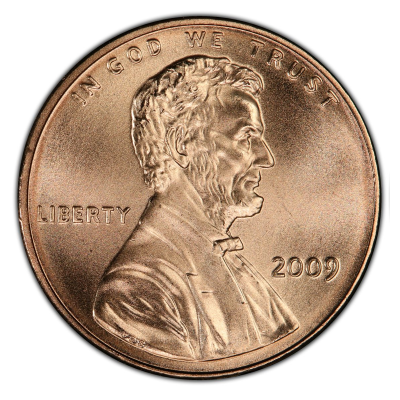
Find the date beside Lincoln’s portrait. It should read 2009. Check the space below it for D or S. A coin catalog may call a Philadelphia coin “2009-P,” although there is no P on the coin.
Match the reverse next. Use the four scenes below, then record the mint separately. All four regular designs were made in Philadelphia and Denver.
Do not identify the alloy from copper color. Both copper-plated zinc circulation coins and copper-alloy collector coins look copper-colored. Packaging, finish, weight and the correct issue specifications help distinguish them.
| Coin or feature | What to know |
|---|---|
| Face value / edge | One cent ($0.01) · plain edge |
| Regular circulation issues | Philadelphia, no mint mark; Denver, D · copper-plated zinc · 2.50 g |
| 2009 Uncirculated Mint Set cents | Satin finish · Philadelphia and Denver · 95% copper, 3% zinc and 2% tin |
| 2009-S Proof cents | San Francisco · specially prepared Proof finish · 95% copper, 3% zinc and 2% tin |
| Collection size | 4 reverse themes; 8 regular P/D issues. Satin-finish and Proof coins are additional versions, not additional designs. |
The four 2009 penny backs, in order
These real coin examples show the four regular reverse designs. Compare the scene first; the brightness of a photographed coin does not establish the condition of your own.
2009 · Lincoln Bicentennial cents
4 designs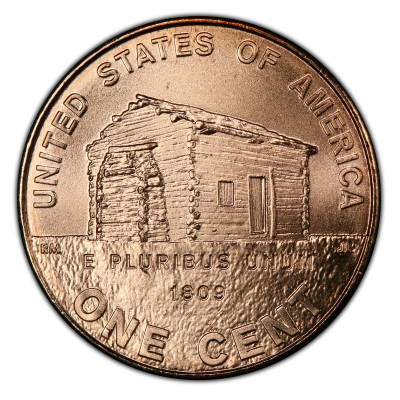
2009
Birth and Early Childhood in Kentucky
- The story
- The cabin represents Lincoln’s early Kentucky years and modest beginnings. Its simple outline makes the first design easy to distinguish from the later public buildings.
- What to check
- Read 2009 on the front. The 1809 beneath the cabin is part of the anniversary design, not a wrong date.
2009
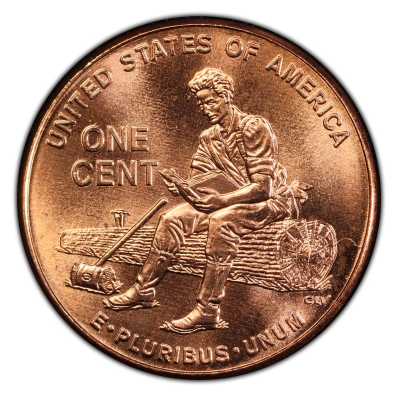
Formative Years in Indiana
- The story
- This scene brings self-education and physical work together. It represents his Indiana years, 1816–1830, and is often called the “log-splitter” or “reading Lincoln” penny.
- What to check
- Look for the open book and seated figure. A suspected doubled detail needs comparison with a specific cataloged variety, not just this full-coin photo.
2009
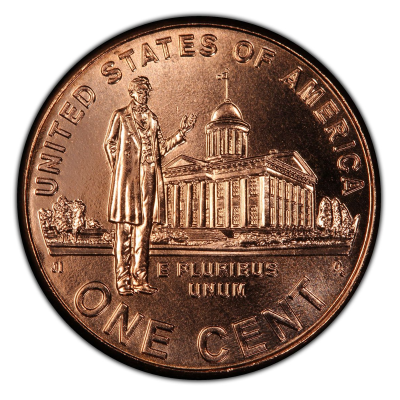
Professional Life in Illinois
- The story
- The third scene moves from rural life to Lincoln’s career in law and politics. The standing figure and completed state-house dome distinguish it from the final Capitol design.
- What to check
- Find Lincoln at the left of the building. Do not confuse this Illinois building with the unfinished U.S. Capitol on the fourth coin.
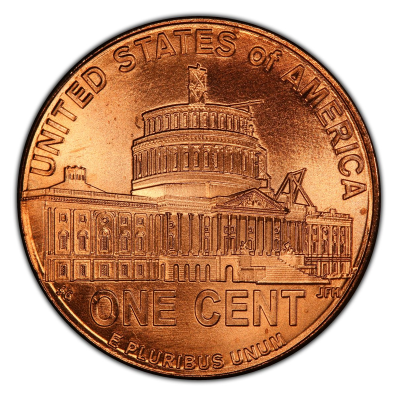
2009
Presidency in Washington, D.C.
- The story
- The unfinished dome recalls the building as it stood during Lincoln’s presidency. Construction is part of the intended historical scene, not evidence that the coin’s design failed to strike.
- What to check
- Identify the incomplete dome and construction framework. There is no standing Lincoln figure on this reverse.
Collecting 2009 pennies and checking their value
Start with the right version
A worn cent from change is not comparable to a high-grade certified coin, even if the reverse matches. Separate regular strikes, satin-finish Mint Set coins and Proofs before looking at prices. “Uncirculated” describes condition; it does not by itself prove a coin came from the special 2009 Mint Set.
| Coin or feature | What to know |
|---|---|
| Normal circulated regular strike | Start at $0.01. An unusual-looking anniversary design alone does not establish a premium. |
| Philadelphia Formative Years · MS65 Red | $10 PCGS guide value, checked October 15, 2026. |
| Philadelphia Formative Years · MS66 Red | $18 PCGS guide value, checked October 15, 2026. |
| Satin-finish coins, S Proofs or attributed varieties | Compare the same design, mint, finish, color designation and grade. Do not apply the two regular-strike prices above. |
MS means Mint State; Red is the grading service’s copper-color designation. The two prices are guide estimates for PCGS-graded examples, not recorded sales or purchase offers. They illustrate how condition affects one issue, not a universal price list for all four designs. Use recent completed sales for the exact version before selling; grading fees can exceed the value of an ordinary coin.
Build a four- or eight-coin collection
For a design set, choose one cabin, one reading Lincoln, one Illinois and one Presidency reverse. For a regular mint set, collect each with no mint mark and with D: eight coins in total. Keep satin-finish and S Proof examples in separate slots so they do not silently replace circulation issues.
Record the design, mint, finish and condition. The beginner’s collecting guide covers storage, while our coin grading guide explains wear and Mint State terminology.
Check an apparent error before assigning a premium
PCGS catalogs multiple doubled-die reverse varieties for the Formative Years cent, including FS-801 through FS-809. A doubled die is a variety produced by the die itself; it is not established by a scratch, reflection or an extra-looking line. Attribution requires matching the specific diagnostic details.
Photograph the whole coin and the suspect area under even light. Keep the surface untouched; see how to recognize cleaned coins. If the details appear to match a significant variety, follow the coin appraisal guide before paying for authentication. The cabin’s 1809 and the unfinished Capitol are normal features.
Four designs tell the story; the version sets the comparison
The 2009 penny series follows Lincoln from a Kentucky cabin to Indiana, Illinois and the presidency. Read 2009 on the front, match one of the four backs, then check the mint mark. Four coins complete the designs; eight cover the regular Philadelphia and Denver issues.
Ordinary worn examples generally start at one cent. Assess uncirculated regular strikes, copper-alloy satin-finish coins, S Proofs and authenticated varieties separately. Match finish and grade before using a price: neither the missing P nor an unfamiliar reverse makes a common coin rare.
2009 penny FAQ
How many different 2009 pennies are there?
There are four reverse designs: Birth and Early Childhood, Formative Years, Professional Life and Presidency. One of each makes four coins; collecting both Philadelphia and Denver regular issues makes eight. Satin-finish and Proof versions are additional issues.
Is a 2009 penny with no mint mark rare?
No. Philadelphia normally made 2009 cents without a mint mark. A missing P is not an error. Value depends on the design, finish, condition and any authenticated variety.
Are all 2009 pennies 95% copper?
No. Regular circulation coins are copper-plated zinc and weigh 2.50 g. The 2009 satin-finish Mint Set cents and S Proof cents use 95% copper, 3% zinc and 2% tin. Copper color alone cannot distinguish them.
Why does my 2009 penny say 1809 on the back?
The log-cabin design includes 1809 to mark Abraham Lincoln’s birth. The actual issue date is 2009 on the portrait side. The two dates are intentional, not a mint error.
References
Sources and further reading
- U.S. Mint · 2009 designs announcementSeptember 22, 2008: anniversary purpose, four themes and common obverse.
- U.S. Mint · First redesigned Lincoln centFebruary 12, 2009: cabin design and birthday launch.
- U.S. Mint · Professional Life in IllinoisIllinois State Capitol and Lincoln’s career in law and politics.
- U.S. Mint · 2009 Uncirculated Coin SetSeptember 28, 2009: eight satin-finish cents and special copper composition.
- U.S. Mint · 2009 Annual ReportProgram designs and the alloy of numismatic Proof and uncirculated cents.
- PCGS · Formative Years regular strikeSpecifications, listed doubled-die varieties and MS65/MS66 Red guide values checked October 15, 2026.
- PCGS · Presidency regular strikeUnfinished Capitol design and regular-strike identification.