

 App Store

COIN VALUE GUIDES
Nickel Errors by Year: Pictures, Identification and Values
Find U.S. nickel errors and die varieties by year. Compare real Buffalo and Jefferson specimens, normal features, damage checks and dated auction evidence.
 HeriBase TeamPublished
In this article
Which nickel errors are worth checking?
Nickel errors are manufacturing faults such as wrong-planchet or off-center strikes; doubled dies and the 1937-D Three-Legged Buffalo are die varieties. Most unusual-looking nickels need comparison with normal coins first. Identify the exact year, feature and condition before pricing: the historical sales below range from $305.50 to $281,750 for different certified specimens.
Value evidence reviewed November 12, 2026. Historical sales retain their original dates and are not current offers.
Which real coin details should I compare?
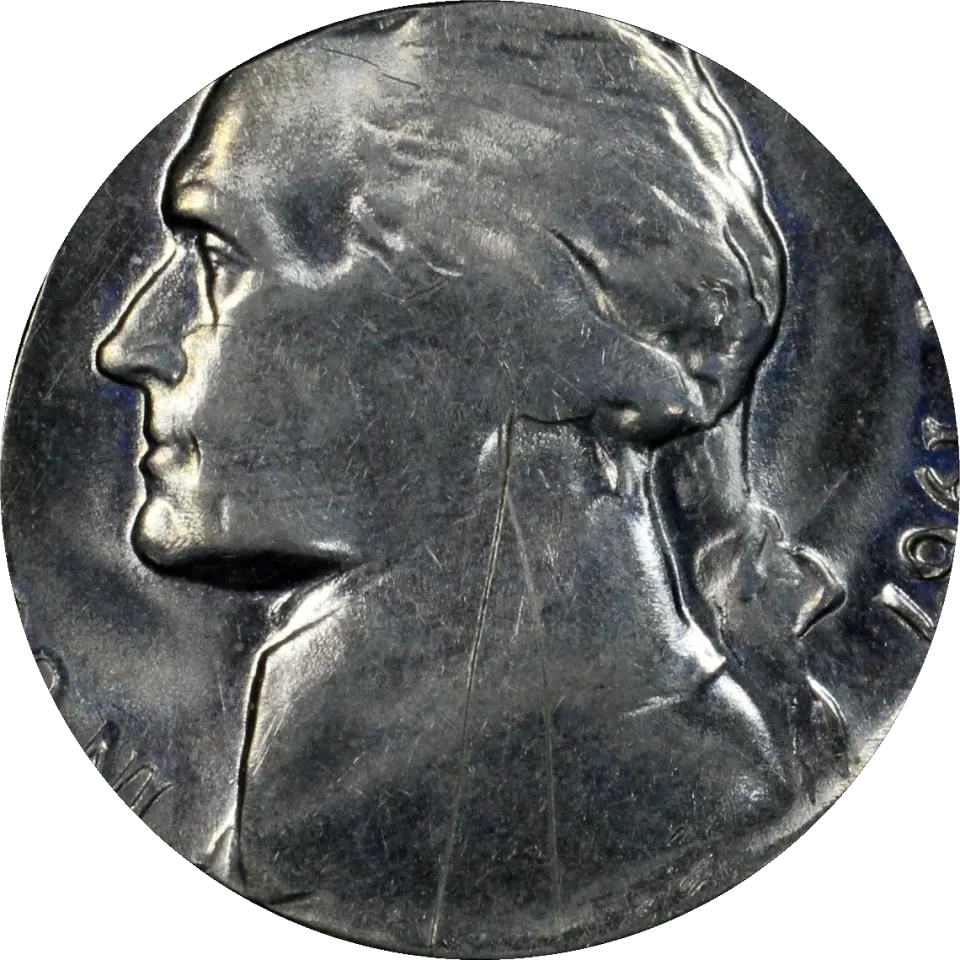
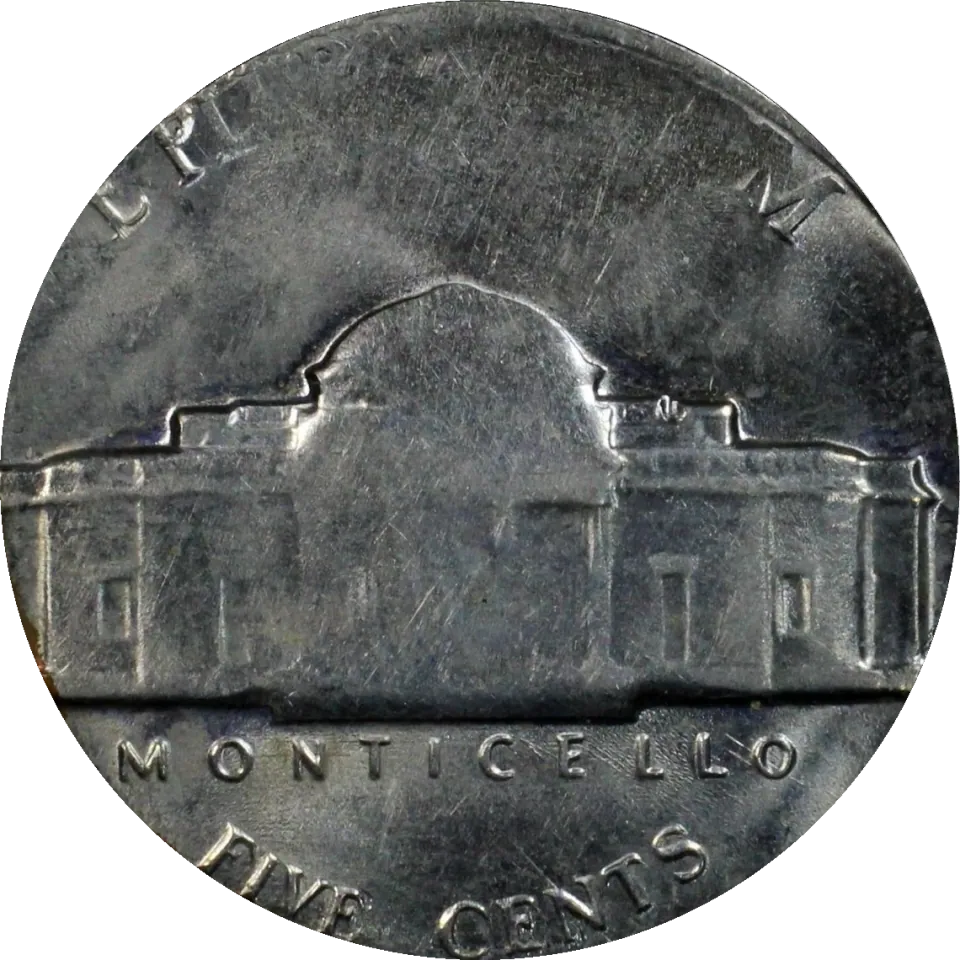
How do the normal features, errors and values differ?
Why separate Buffalo, Jefferson and collector issues?
A nickel guide must first establish which design belongs on the coin. The Buffalo series and the Jefferson series have different portraits, reverse details and diagnostic locations. Jefferson’s Monticello reverse dates to the 1938 introduction of Felix Schlag’s design, while later commemorative designs introduce other comparisons. A 2005 bison nickel is not a 1913–1938 Buffalo nickel.
Composition and manufacturing category matter too. Wartime silver-alloy nickels belong to a distinct normal issue, while Special Mint Set (SMS) coins are collector strikes. Neither category is automatically an error. Use the Buffalo nickel value guide and wartime nickel guide for their normal issue context; this page focuses on diagnosing errors and varieties.
| Year / issue | Category | Feature to examine | Normal comparison | Next step |
|---|---|---|---|---|
| 1916 Buffalo | Doubled-die obverse variety | Doubled date contours | Normal single date | Match the attributed die |
| 1937-D Buffalo | Three-Legged die variety | Missing foreleg and associated reverse diagnostics | Normal four-legged bison | Reject a leg simply ground away |
| 1939 Jefferson | Doubled Monticello reverse variety | Reverse lettering and building detail | Normal reverse lettering | Match the recognized doubled reverse |
| 1967 Jefferson | Wrong-planchet error example | Nickel design on smaller clad dime blank | 5.00 g, 21.20 mm normal nickel | 1967 nickel error checks |
| 1965–1967 nickels | Normal mint-mark omission | No mint mark | Expected for the period | No missing-mark premium from absence alone |
| 2005-D bison reverse | Speared Bison die-gouge variety | Raised diagonal feature through the bison | Normal bison without the gouge | Match the specific raised die feature |
How do the 1916 doubled die and 1937-D Three-Legged nickel differ?
The 1916 variety concerns the portrait-side date. A doubled die produces repeatable design details from a particular die; it is not the same as a coin being struck twice. Flat shelf-like edges or a blurred date do not authenticate the valuable variety. Compare the complete digit shapes under magnification, using a properly attributed reference.
Where should I inspect a 1916 Buffalo nickel?
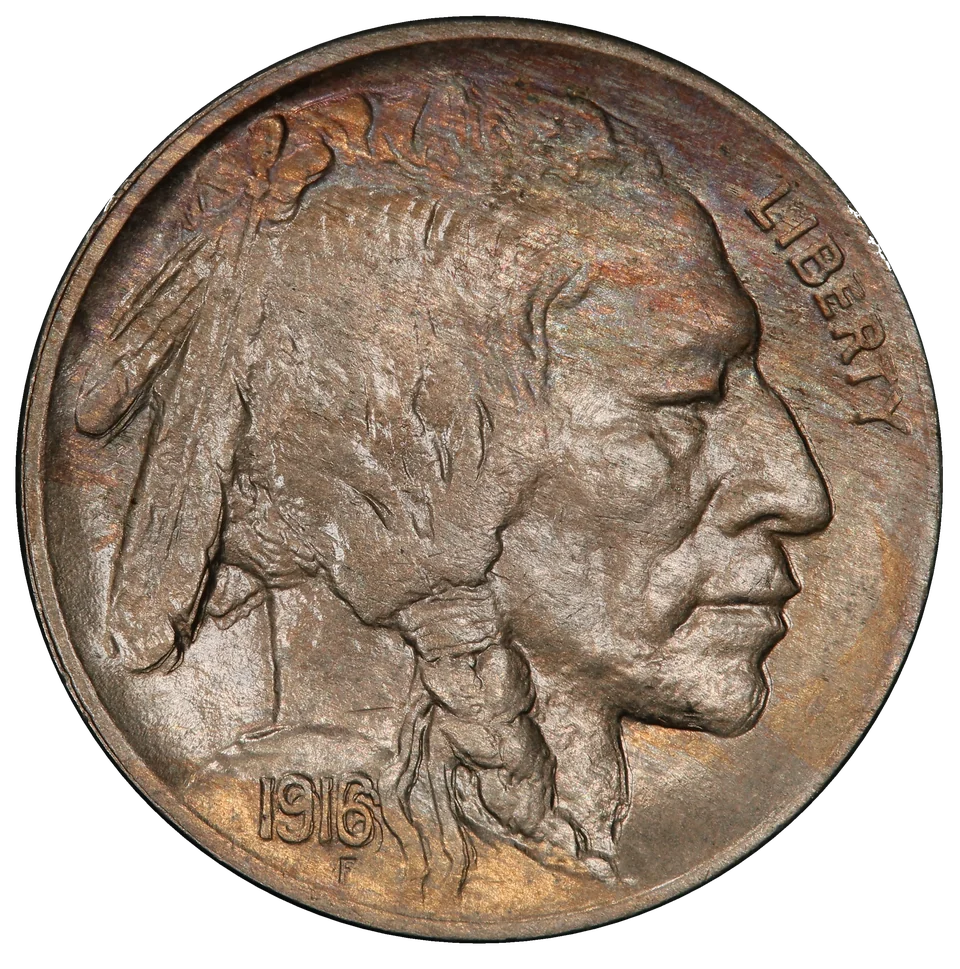
Look at the date beneath the portrait. Wear often makes Buffalo nickel dates difficult to read, so a general resemblance at normal viewing size is weak evidence. A strong candidate needs close photographs and a match to the recognized doubled-date diagnostics.
The selected MS64 historical sale below demonstrates a high-grade attributed example. It does not price a worn, dateless or unverified nickel.
How can I check a claimed 1937-D Three-Legged nickel?
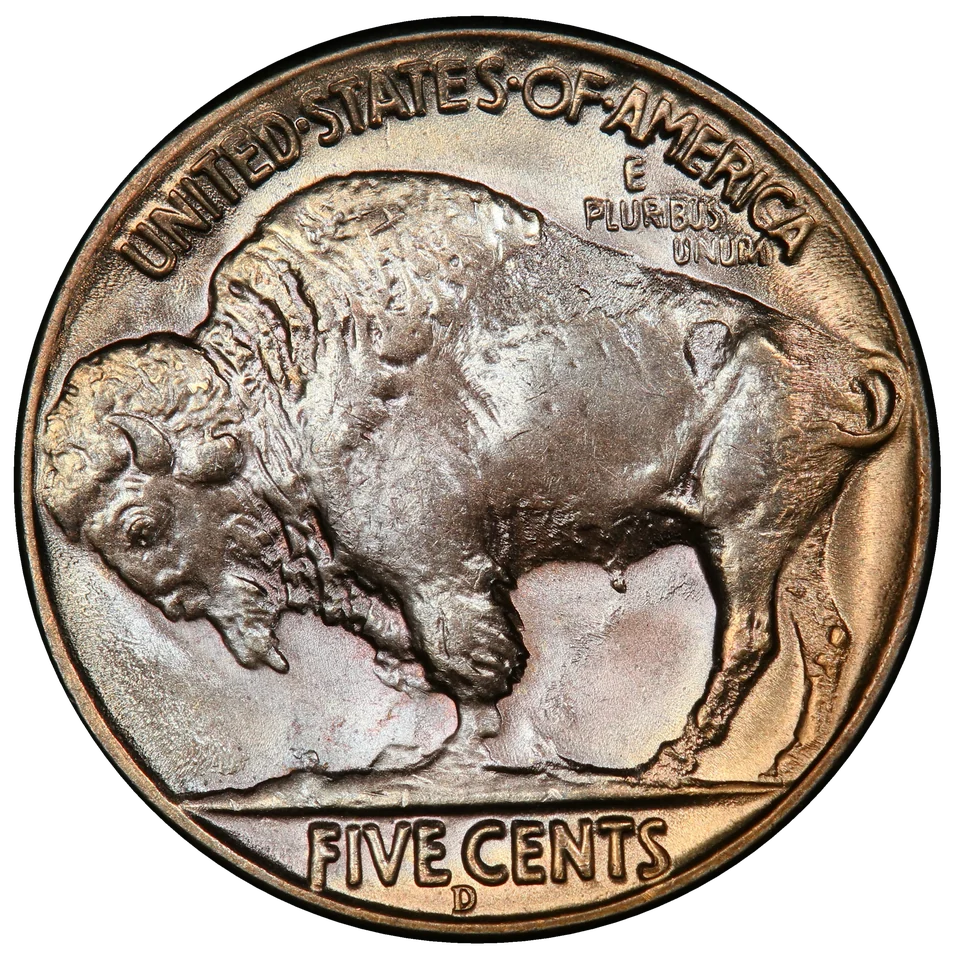
Check the reverse and confirm the Denver mint mark as well as the absent foreleg and the surrounding die diagnostics. Simply removing a leg from a normal coin does not reproduce the genuine die variety. Scraping, unnatural surfaces or a damaged field require examination.
The missing-leg appearance is associated with the die, not a random planchet flaw. Keep this separate from clips, off-center strikes and damage. The Top 10 U.S. errors and varieties includes this variety alongside its dated sale context.
What separates a normal nickel from an error or damage?
| Observation | Normal / benign explanation | Error possibility | Useful evidence | Avoid this mistake |
|---|---|---|---|---|
| Missing mint mark | Normal on many issues, including 1965–1967 | Only meaningful if mark was required | Exact year, issue and mint-mark position | Treating all unmarked nickels as rare |
| Weak Monticello steps | Wear, weak strike or die condition | Not an error by itself | Surface preservation and strike | Calling every weak detail a mint error |
| Extra design edge | Machine doubling or damage | Recognized doubled die if diagnostics match | Sharp close-ups of the complete feature | Pricing from a blurred image |
| Small or odd-shaped coin | Filed, cut or otherwise damaged | Wrong blank, clip or striking error | Edge, weight, diameter and both faces | Identifying from silhouette alone |
| Raised line on 2005-D bison | Match the correct reverse design first | Speared Bison if gouge diagnostics match | Relief and precise position | Confusing a scratch with a raised die feature |
What are useful nickel error price comparisons?
The following selected sales were reviewed on November 12, 2026. They are historical auction results for particular certified specimens, not a complete market range or a ranking of all nickel errors. Grade, original surfaces and attribution create large differences. Compare recent sales of the same type and grade before interpreting a headline number.
| Coin / error | Condition | Realized price | Sale date / auction | Comparison limit |
|---|---|---|---|---|
| 1916 Buffalo Doubled Die Obverse | PCGS MS64 | $281,750 | Aug. 14, 2004; Bowers and Merena | Attributed high-grade variety |
| 1937-D Three-Legged Buffalo | PCGS MS66+ | $99,875 | Oct. 28, 2021; Legend | Exceptional preservation |
| 1967 nickel on clad dime planchet | PCGS MS61 | $305.50 | Jan. 11, 2016; Heritage lot 9631 | Different manufacturing error |
| Ordinary worn modern Jefferson nickel | No attributed error | $0.05 face value | Denomination baseline | Other dates, metals and grades need separate checks |
Do not multiply a record sale by how unusual your coin looks. A damaged coin can be more visually dramatic than a genuine minor error. For preservation terminology use the coin grading scale; for the evidence to collect before valuation use the coin appraisal guide.
How can I check my coin in three steps?
- 01Read the date, identify the design and locate any expected mint mark. Establish the normal issue, alloy and production category first; use the 1967 guide for the mint-mark suspension and SMS distinction.
- 02Photograph both faces, the rim and the suspected diagnostic under diffuse light. For a physical planchet concern, record weight and diameter. Compare with a reference of the same year and error category, not just another unusual nickel.
- 03Look for altered dates, removed metal, tool marks, polishing and displaced surfaces. Preserve plausible candidates and seek attribution when photographs cannot establish the manufacturing explanation. Price only after the type and condition are supported.
What should I remember before pricing?
Start with the year and normal design, then decide whether the feature belongs to a die variety, a striking or planchet error, or post-mint damage. No mint mark, weak detail and brightness do not establish an error on their own.
For a detailed worked comparison use 1967 nickel errors. To screen another denomination under the same principles, see dime errors by year and 1966 dime identification.
What else do collectors ask?
Are nickel errors and nickel varieties the same?
No. A mint error is a manufacturing fault affecting a coin or strike, while a die variety is a repeatable feature associated with a die. Both can be collectible, but their diagnostics and price comparisons differ.
Which nickel years should I check for varieties?
Useful starting points include the 1916 Buffalo doubled die, 1937-D Three-Legged Buffalo, 1939 Doubled Monticello and 2005-D Speared Bison. The year alone is insufficient; each needs its specific diagnostics.
Is a nickel with no mint mark valuable?
Not from the missing mark alone. Many normal issues have no mint mark, including 1965–1967 nickels. Establish the exact issue before treating an absent letter as an error.
Is a 2005 bison nickel a Buffalo nickel?
The 2005 bison reverse belongs to the Jefferson nickel series and is distinct from the 1913–1938 Buffalo nickel series. Compare Speared Bison candidates with the correct 2005-D variety.
Does a doubled date mean my nickel was struck twice?
No. A doubled die originates in the die and repeats on coins struck from it. A double strike is a different production fault; machine doubling and damage can also imitate extra edges.
Can I value a suspected error from an auction record?
Only as a comparison after matching the exact attribution, grade, surfaces and sale terms. A high-grade historical sale is not a current offer for an ungraded or damaged coin.
Which references support these checks?
References and further readingExpand
- U.S. Mint: mint marksOfficial mint-mark history, including the 1965–1967 suspension. Checked November 12, 2026.
- NGC: Special Mint Set coinsBackground on the 1965–1967 collector issues. Checked November 12, 2026.
- NGC: variety versus mint errorDistinguishing die varieties, errors and production characteristics. Checked November 12, 2026.
- NGC: broadstrikesCollar failure, complete designs and the distinction from off-center strikes. Checked November 12, 2026.
- PCGS CoinFacts: 1967 nickelRegular-issue specifications and series context. Checked November 12, 2026.
- PCGS CoinFacts: 1967 SMS nickelSeparate collector-strike attribution. Checked November 12, 2026.
- PCGS certificate 31080474: 1967 nickel on a dime planchetMS61 attribution and Heritage sale history: January 11, 2016, lot 9631, $305.50. Checked November 12, 2026.
- PCGS CoinFacts: 1916 Doubled Die Obverse Buffalo nickelVariety identification and selected $281,750 MS64 historical result. Checked November 12, 2026.
- PCGS CoinFacts: 1937-D Three-Legged Buffalo nickelVariety attribution and the selected $99,875 MS66+ result. Checked November 12, 2026.
- PCGS CoinFacts: 1939 Doubled MonticelloRecognized doubled reverse, distinct from damage. Checked November 12, 2026.
- PCGS CoinFacts: 2005-D Speared BisonRaised die-gouge variety on the Jefferson bison reverse. Checked November 12, 2026.
- Heritage: 1967 nickel on a clad dime planchet, lot 9631January 11, 2016, auction 1231, lot 9631; PCGS MS61. Checked November 12, 2026.