

 App Store

COIN VALUE GUIDES
Dime Errors by Year: Pictures, Identification and Values
Identify Mercury and Roosevelt dime errors by year, with real coin photos, normal-versus-error comparisons, No P and No S distinctions and dated price evidence.
 HeriBase TeamPublished
In this article
Which dime errors are worth checking?
Dime errors include wrong-planchet and off-center strikes; overdates and specific missing-mint-mark issues need their own diagnostics. An unmarked 1966 dime is normal, while 1982 No P and certain No S Proof dimes are collectible issues. Identify year, strike type and condition first; selected historical sales below are comparisons, not current quotes.
Value evidence reviewed November 12, 2026. Historical sales retain their original dates and are not current offers.
Which real coin details should I compare?
How do the normal features, errors and values differ?
Why does the year change the missing-mint-mark test?
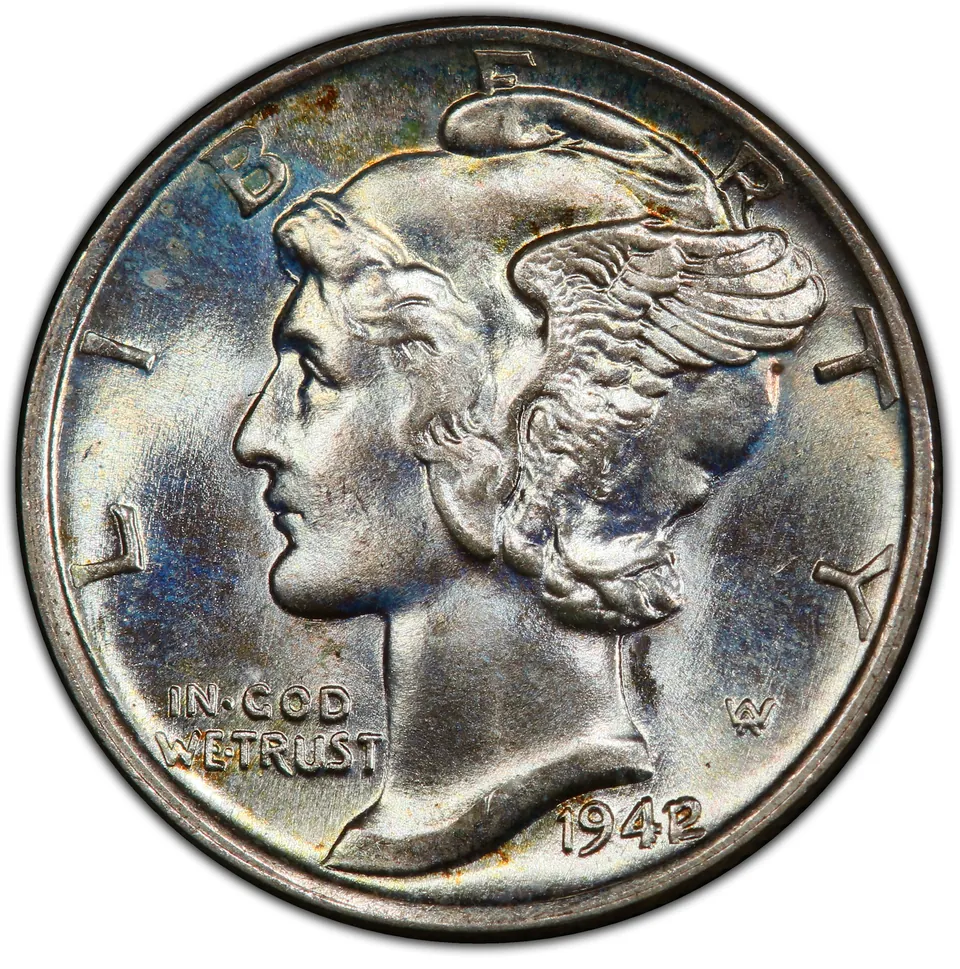
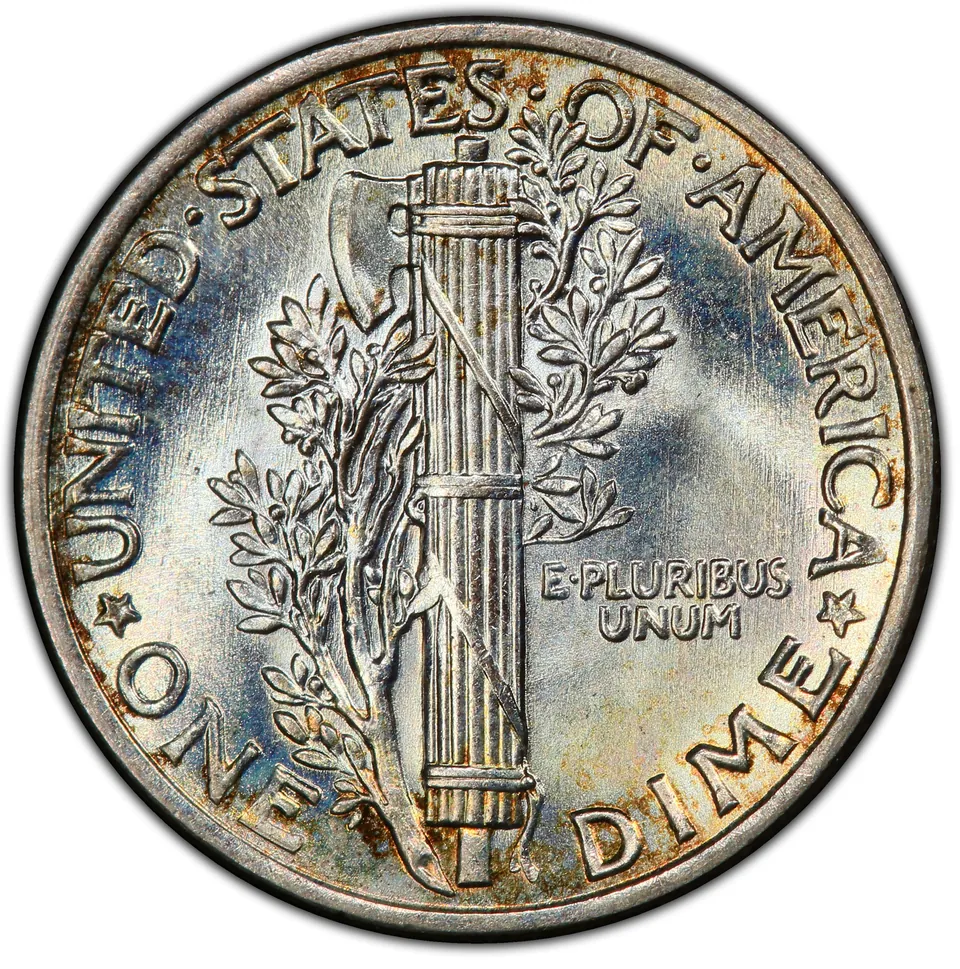
The Mercury dime’s Winged Liberty portrait and the Roosevelt dime’s presidential portrait belong to different series. The change in design and the later transition from silver to clad coinage matter before any error test. A normal Philadelphia Mercury dime has no mint mark, and mint marks were intentionally omitted during 1965–1967. A blank area on those coins is not comparable with a later die that should carry a mark.
Sinnock’s Roosevelt dime began in 1946. For ordinary issues dated 1965 onward, clad construction is the normal baseline. The collector Special Mint Set (SMS) issues of 1965–1967 also need their own classification. For broader normal-value context, use the Mercury dime guide or Roosevelt dime guide.
| Year / issue | What to check | Normal comparison | Issue distinction | Next action |
|---|---|---|---|---|
| 1942/1 Mercury | Underlying date contours | Normal 1942 date | Philadelphia and Denver varieties differ | Match the correct overdate |
| 1966 SMS | 5-shaped cheek feature, FS-401 | Normal SMS portrait | Collector strike, not missing mint mark | 1966 dime error guide |
| 1968, 1970, 1975, 1983 No S | Missing expected S on the Proof issue | Ordinary circulation coins can lack S | Must establish Proof status | Use year-specific Proof diagnostics |
| 1982 No P Roosevelt | Missing expected P; match attributed issue | Normal 1982-P circulation dime | Strong and Weak varieties are distinguished | Confirm attribution and surfaces |
| 1965–1967 Roosevelt | No mint mark | Intentional omission | Normal circulation or SMS | No missing-mark premium by absence alone |
| Any relevant year | Off-center strike or wrong planchet | Normal flan, design placement and metal | Individual production fault | Inspect both faces, edge and measurements |
How do I tell a real overdate from damage?
On a 1942/1 Mercury dime, remnants of the underlying date are part of a specific doubled-die variety. Check the whole date, not a single line that happens to resemble a 1. Philadelphia and Denver have separate varieties; the Philadelphia photograph above is not a diagnostic template for every 1942-D dime. An added piece of metal or a damaged digit can imitate an overdate.
A useful photograph has enough context to locate the mark, followed by a sharp detail view. If the date is too worn or altered to match reliable diagnostics, keep the attribution unresolved. Do not clean the date to make a suspected feature “show up.” The same rule applies to the recognized 1966 SMS cheek variety.
Does no P on a 1982 dime mean the same as no mark in 1966?
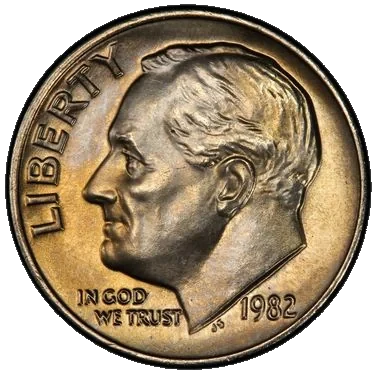
No. In 1982, the missing expected Philadelphia P is the feature of a recognized issue. By contrast, no mint mark was expected on an ordinary 1966 dime. Start with the date, then compare the correct mark location and attribution. Dirt, wear or an altered surface can obscure a letter, so absence in a photograph is only the beginning of examination.
NGC distinguishes Strong and Weak forms of the 1982 No P issue. Those descriptions concern the recognized varieties, not a license to call any poorly struck or worn dime a missing-P coin.
What is different about a No S Proof dime?
No S Proof dimes are particular collector issues missing a mark expected for their issue. A normal circulation dime from the same year is not converted into a No S Proof by lacking S. Establish the strike category, surfaces and exact date first. A mirrored or polished surface by itself does not prove Proof manufacture.
This distinction prevents one of the most expensive comparison mistakes: applying a rare Proof transaction to an ordinary unmarked circulation dime. A potentially valuable No S Proof needs expert authentication. Keep packaging or provenance when available, but check the coin itself rather than relying on a seller’s label.
Where is the 1966 SMS cheek diagnostic?

The cheek feature belongs to FS-401 on the 1966 SMS issue. Compare its exact outline and position; a stain or scratch elsewhere on Roosevelt’s face is a different observation. The dedicated article provides both sides and a normal SMS comparison.
A named die variety and a random strike error should not share an assumed price. Establish the category before deciding which sale history is relevant.
What do documented dime error sales actually tell me?
Price evidence below was reviewed on November 12, 2026. These examples intentionally span different years, grades and categories. They show why one “dime error price” is misleading. The normal ten-cent face-value baseline applies to a worn modern clad dime without a premium attribution; older silver issues need their metal content and collector factors considered separately.
| Coin / variety | Condition | Historical realized price | Date / source | Comparison limit |
|---|---|---|---|---|
| 1966 SMS 5 on Cheek, FS-401 | PCGS SP67 | $366 | Heritage, May 12, 2026; lot 23407 | Specific SMS variety and grade |
| 1966 rolled thick planchet | PCGS AU58; 3 gram label | $30 | Heritage, Jan. 7, 2014; cert 19374246 | Individual planchet error; not pictured |
| 1968 No S Proof | PCGS PR67 | $40,250 | Heritage, July 1, 2008; PCGS CoinFacts | Not an ordinary unmarked circulation dime |
| Normal worn modern clad dime | No attributed error | $0.10 face value | Denomination baseline | Not a valuation for silver, Proofs or varieties |
How can I distinguish an error from post-mint damage?
| Observation | Normal or damage possibility | Error candidate | Evidence to collect | Next step |
|---|---|---|---|---|
| Copper visible at edge | Normal clad copper core | Missing layer only with further evidence | Both faces, edge and weight | Do not infer error from edge color |
| Broad, flat coin | Flattening after manufacture | Broadstrike if full design survives collar failure | Complete design, rim and surfaces | Compare both sides |
| Part of design missing | Wear, cutting or damage | Off-center strike | Unstruck flan and displaced design | Reject a cropped-photo conclusion |
| Thin or light coin | Wear, corrosion or filing | Wrong planchet / missing layer | Weight, diameter, thickness and alloy | Seek physical examination |
| Extra line or facial mark | Scratch, stain or machine doubling | Attributed die variety | Shape, relief and exact position | Match diagnostics before pricing |
A reference photograph helps locate a feature; it cannot verify alloy, certify a numerical grade or exclude every alteration. Use the coin grading scale to describe preservation and the appraisal guide to prepare evidence for a credible candidate.
How can I check my coin in three steps?
- 01Identify Mercury or Roosevelt, read the date and establish normal metal and mint-mark expectations. Separate circulation, SMS and Proof manufacture before testing a missing mark.
- 02Photograph both sides and the edge, then the suspected diagnostic. Match the exact year and variety. For planchet concerns, record weight and diameter; for a No S claim, establish Proof status rather than surface shine alone.
- 03Check for filing, removed letters, displaced metal, scratches and polishing. Preserve the surfaces and seek attribution when evidence is incomplete. Compare dated sales only after matching issue, variety, grade and condition.
What should I remember before pricing?
Year and strike category control the identification test. No mark can be normal, a recognized missing-mark issue or an alteration; the blank space alone does not decide which.
Use the 1966 dime guide for paired SMS photos and the FS-401 detail, then compare nickel errors by year or the Top 10 errors and varieties for other authenticated examples. Keep any candidate uncleaned until its evidence has been assessed.
What else do collectors ask?
Are all dimes without a mint mark valuable errors?
No. Many normal issues have no mint mark, including ordinary 1965–1967 dimes. The 1982 No P issue and specific No S Proofs require the correct year, manufacture and diagnostics.
Which years have No S Proof dime issues?
Recognized No S Proof Roosevelt dime issues include 1968, 1970, 1975 and 1983. An ordinary circulation dime from one of those years is not a No S Proof simply because it lacks S.
Is a 1966 dime the same error as a 1982 No P dime?
No. A missing mint mark is expected on an ordinary 1966 dime. The 1982 No P is a specific attributed issue missing the expected Philadelphia mark.
Does a copper-colored dime edge prove an error?
No. The copper core can be visible at the edge of a normal clad dime. A suspected missing layer or wrong planchet needs physical evidence beyond color.
Is the 1942/1 Mercury dime a double strike?
No. It is an overdate associated with a doubled die. Philadelphia and Denver have separate varieties, and damage or added metal can imitate date details.
Can a photograph establish my dime error value?
It can help screen a feature, but cannot by itself verify alloy, authenticity or a numerical grade. Use the same attribution, condition and sale terms when comparing documented transactions.
Which references support these checks?
References and further readingExpand
- U.S. Mint: mint marksOfficial mint-mark history, including the 1965–1967 suspension. Checked November 12, 2026.
- NGC: Special Mint Set coinsBackground on the 1965–1967 collector issues. Checked November 12, 2026.
- NGC: variety versus mint errorDistinguishing die varieties, errors and production characteristics. Checked November 12, 2026.
- NGC: broadstrikesCollar failure, complete designs and the distinction from off-center strikes. Checked November 12, 2026.
- PCGS CoinFacts: 1966 dimeClad regular-issue specifications. Checked November 12, 2026.
- PCGS CoinFacts: 1966 SMS dimeCollector-strike category, distinct from circulation strikes. Checked November 12, 2026.
- PCGS CoinFacts: 1966 SMS 5 on Cheek, FS-401Recognized variety attribution. Checked November 12, 2026.
- Heritage: 1966 SMS FS-401, SP67, lot 23407May 12, 2026 realized price: $366. Auction 132619; published total, not seller proceeds. Checked November 12, 2026.
- PCGS certificate 19374246: 1966 dime, rolled thick planchetAU58; label identifies a 3 gram rolled thick planchet. Heritage, January 7, 2014, lot 20656, $30. Checked November 12, 2026.
- PCGS CoinFacts: 1942/1 Mercury dimePhiladelphia overdate attribution. Checked November 12, 2026.
- NGC: counterfeit detection, 1942/1 Mercury dimeAltered-date risks. Checked November 12, 2026.
- NGC: 1982 No P dimeStrong and Weak forms and No S Proof context. Checked November 12, 2026.
- PCGS CoinFacts: 1968 No S Proof dimeProof distinction and July 1, 2008 PR67 sale for $40,250. Checked November 12, 2026.
- Heritage: 1966 dime rolled thick planchet, lot 20656January 7, 2014, auction 131401, lot 20656; PCGS AU58, $30 realized. Checked November 12, 2026.