

 App Store

COIN VALUE GUIDES
1966 Dime Errors: Identification, SMS and Value Checks
Compare normal 1966 dimes with the SMS 5 on Cheek variety and planchet errors using real photos, diagnostic arrows, condition checks and dated auction evidence.
 HeriBase TeamPublished
In this article
Which 1966 dime features are errors, and what are they worth?
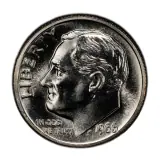
A normal worn 1966 dime is a clad ten-cent coin; no mint mark is expected. Special Mint Set (SMS) pieces are collector strikes. The attributed SMS “5 on Cheek” variety and genuine planchet or striking errors require specific evidence. One SP67 FS-401 example sold for $366 in May 2026.
Value evidence reviewed November 12, 2026. Historical sales retain their original dates and are not current offers.
Which real coin details should I compare?
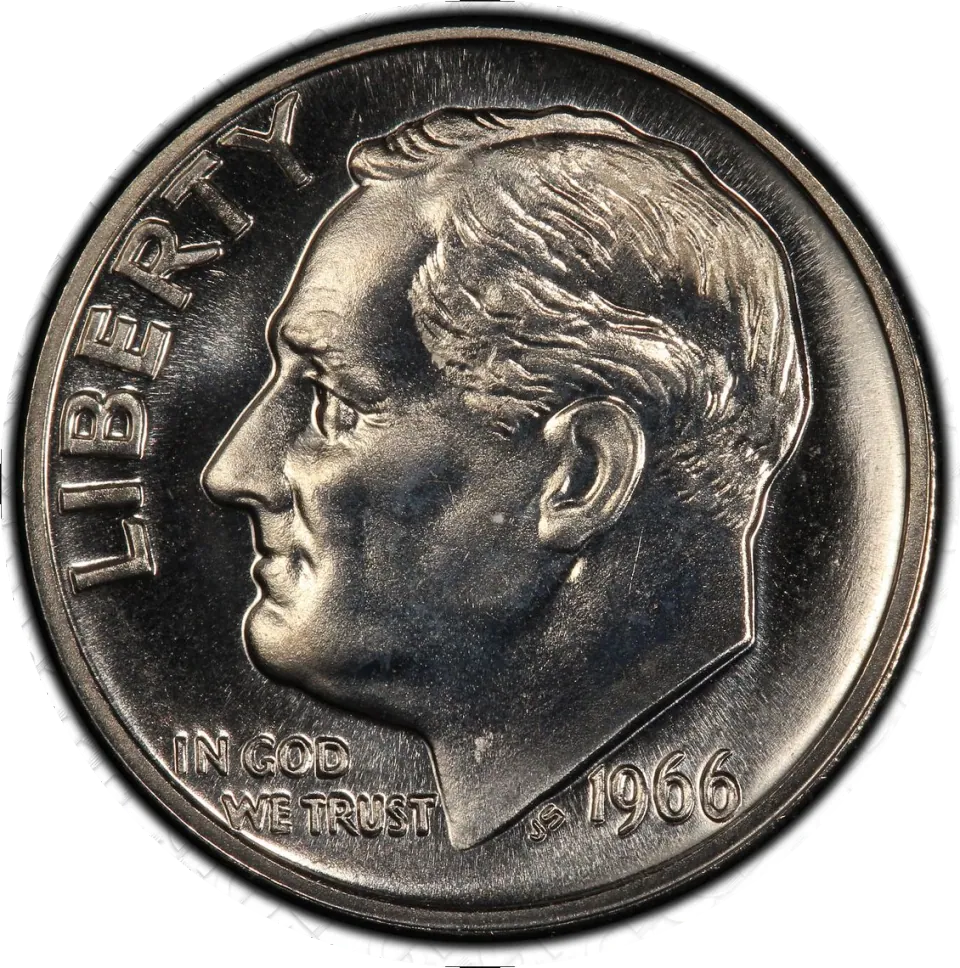
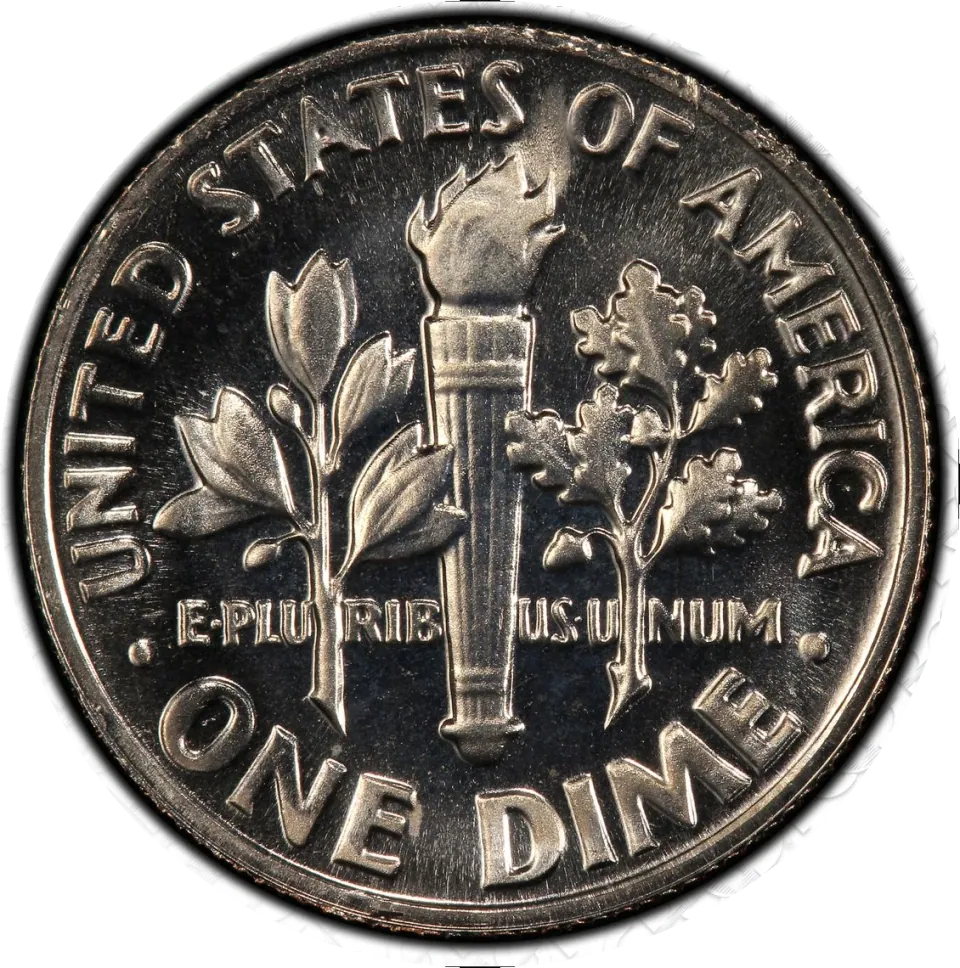
How do the normal features, errors and values differ?
Why is no mint mark normal on a 1966 dime?
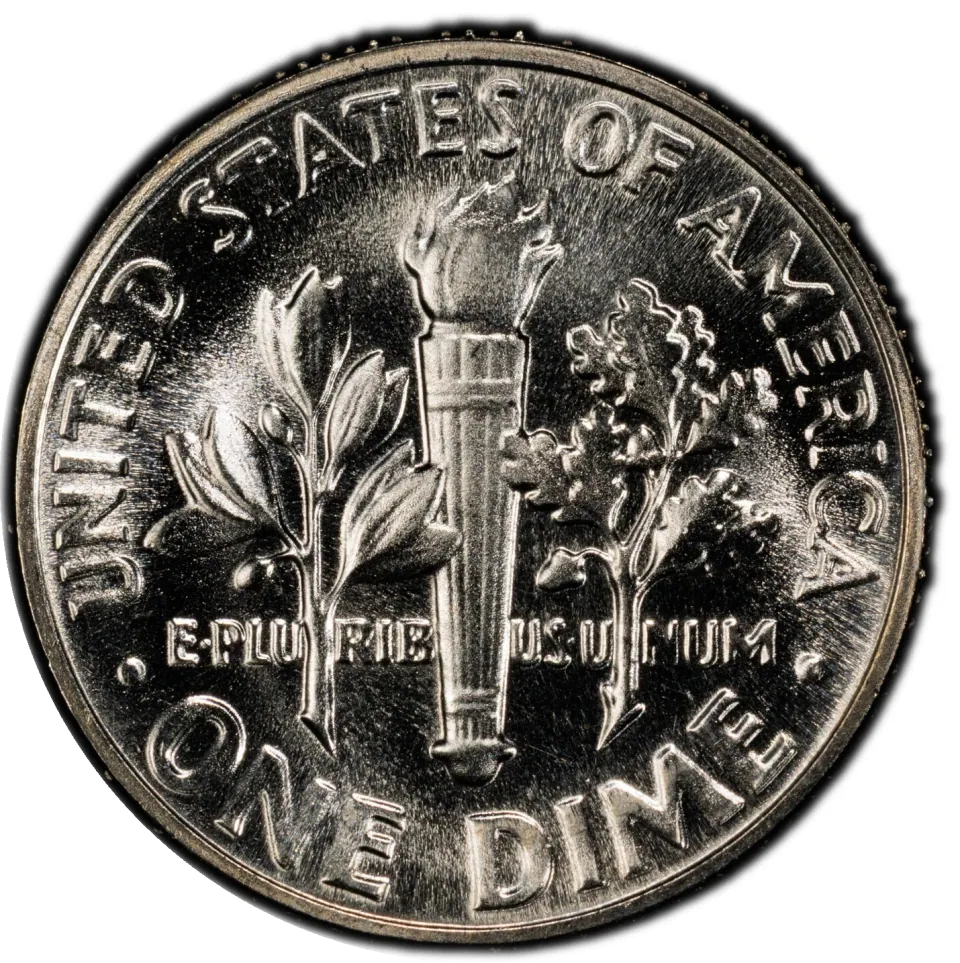
John R. Sinnock’s Roosevelt design began in 1946. By 1966, ordinary dimes used copper-nickel-clad construction rather than the earlier silver alloy. The usual specification is 2.27 grams and 17.90 millimeters, with a reeded edge. The outer layers are 75% copper and 25% nickel over a copper core. A visible copper-colored edge is consistent with that normal construction.
Mint marks were omitted during 1965–1967. A 1966 dime without a letter is therefore not equivalent to the later 1982 No P dime or a No S Proof. First establish what should be present for the exact year and issue. The dime error guide by year separates those categories, while the Roosevelt dime value guide covers the wider series.
| Feature | Normal comparison | Possible category | Evidence needed | What it does not prove |
|---|---|---|---|---|
| No mint mark | Expected for 1966 | Normal issue | Correct date and design | Not a missing-P error |
| Copper-colored edge | Clad copper core | Normal composition | Edge and weight | Not automatically missing cladding |
| Reflective surface | Possible SMS finish | Collector strike | Surface examination and attribution | Not automatically Proof or error |
| 5-shaped cheek detail | Absent from normal design | SMS FS-401 variety | Match attributed cheek diagnostic | Not every scratch or spot is FS-401 |
| Unusual thickness / weight | Nominal 2.27 g | Possible planchet error | Accurate weight, edge, thickness and expert examination | Not established by color alone |
| Design displaced or missing | Normal design centered | Possible striking error | Both faces, rim and unstruck area | A clipped photograph proves nothing |
How do I check the 1966 SMS 5 on Cheek variety?
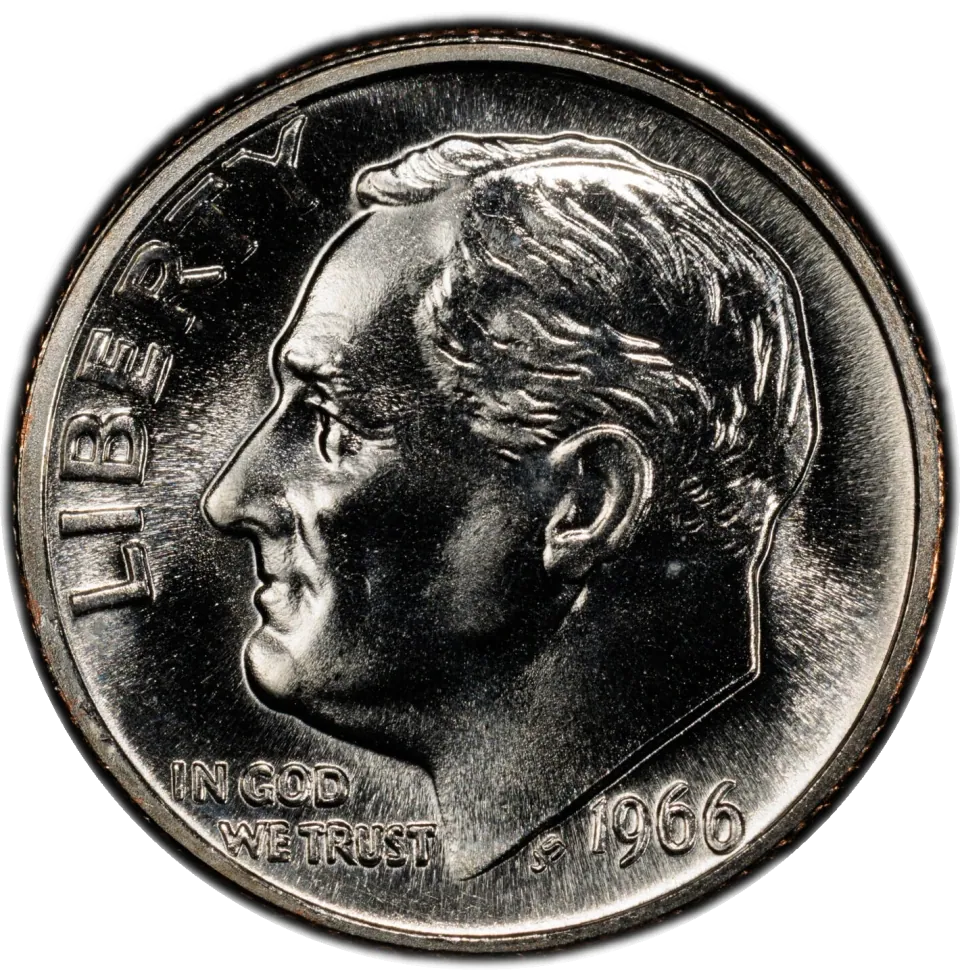
FS-401 is a recognized variety of the 1966 SMS dime. The name describes a small 5-shaped feature on Roosevelt’s cheek; it is not the date, a mint mark or a large numeral added to the design. Compare its exact position and shape with the attributed specimen. The arrow below locates the area, and the close-up shows the same coin at a useful scale.
What should the cheek detail look like?

The feature is small. Use diffuse light and compare the surrounding portrait detail as well as the mark itself. A scratch normally removes or displaces metal; a stain changes color. Neither becomes FS-401 because it resembles a digit in one photograph. An attributed holder and matching certificate are useful evidence, but still check that the actual coin agrees with them.
The pictured SP67 coin sold at Heritage on May 12, 2026. Its price applies to that attribution and preservation, not to every 1966 dime with a facial mark. Do not infer the variety’s manufacturing mechanism from the nickname alone.
What price evidence exists for 1966 dime errors?
These are selected historical transactions reviewed on November 12, 2026. They illustrate why attribution and grade must precede a value comparison. Heritage’s published realized total is not the seller’s net proceeds, and fees or taxes should not be added indiscriminately to a reported total. A guide value or seller’s asking price is a different kind of evidence.
| Issue / category | Condition / attribution | Price or baseline | Date and evidence | Comparison limit |
|---|---|---|---|---|
| Normal worn clad dime | Circulated; no error | $0.10 face value | Denomination baseline | No missing-mark premium established |
| Normal SMS dime | Collector strike | Grade-dependent; no single price here | PCGS lists SMS separately | Match SMS grade and finish |
| SMS 5 on Cheek, FS-401 | PCGS SP67 | $366 realized | Heritage, May 12, 2026, lot 23407, auction 132619 | Pictured specimen; historical sale |
| Rolled thick planchet | PCGS AU58; label states 3 gram | $30 realized | Heritage, Jan. 7, 2014, lot 20656; cert 19374246 | Different error and grade; not pictured |
| Suspected off-center / missing clad layer | Unattributed | Not established | Examine the individual coin | Do not reuse the FS-401 price |
How can damage imitate a dime error?
Grinding can thin a coin or remove an edge, chemicals can change color, and impact can flatten lettering or move metal. These effects happen after striking. A missing-clad-layer candidate needs more than a copper-colored face: compare weight and edge construction and have the surfaces examined. Do not chemically test, scratch or cut a collectible candidate.
A broadstrike and an off-center strike also need different evidence. A broadstrike can retain the full design on an expanded flan; an off-center strike loses part of the intended design. A photograph cropped too tightly cannot establish either. Use the grading guide to separate wear from a production fault before seeking an appraisal.
How can I check my coin in three steps?
- 01Identify Roosevelt, the 1966 date and the reeded edge. Record both faces and the edge in neutral light. No mint mark and a copper-colored clad edge are normal starting observations.
- 02For a suspected FS-401, compare the cheek with the attributed close-up and establish SMS status separately. For a planchet concern, measure weight and diameter; do not substitute a facial mark or surface color for physical evidence.
- 03Look for displaced metal, filing, polishing, corrosion or altered surfaces. Keep a credible candidate uncleaned and obtain a specialist attribution before comparing transactions for the same variety, grade and finish.
What should I remember before pricing?
A 1966 dime is not an error merely because it has no mint mark or a bright finish. FS-401 is a specific SMS cheek variety; genuine planchet and striking errors require their own evidence.
Use the paired photographs, detail and measurements to decide what needs expert examination. The $366 and $30 sales concern different coins, grades and categories. For the related 1965–1967 mint-mark context on another denomination, see 1967 nickel error checks.
What else do collectors ask?
Is a 1966 dime without a mint mark an error?
No. The absence of a mint mark is expected for ordinary 1966 dimes during the 1965–1967 suspension. It is not the same as the later 1982 No P dime.
Is a normal 1966 dime silver?
No. Standard 1966 dimes are copper-nickel clad over a copper core, with a nominal weight of 2.27 grams. Color alone cannot establish an unusual alloy or authenticate an error.
What is the 1966 dime 5 on Cheek?
It is the recognized FS-401 variety of the 1966 Special Mint Set dime, named for a small 5-shaped cheek feature. Match the position and shape to an attributed example; not every facial scratch is the variety.
What did the pictured FS-401 dime sell for?
The pictured PCGS SP67 SMS FS-401 sold for $366 at Heritage on May 12, 2026, lot 23407 in auction 132619. This is a historical realized total for one coin, not a current universal value.
Does a copper-colored edge mean a missing clad layer?
No. A copper-colored core at the edge is normal for a clad dime. A suspected missing layer needs examination of the faces, edge and weight; color alone is insufficient.
How can I tell an SMS dime from a polished circulation coin?
Assess the strike, original surface texture and issue attribution together. Brightness alone cannot distinguish them. Do not polish the coin; questionable surfaces should be examined before assigning SMS status or a premium.
Which references support these checks?
References and further readingExpand
- U.S. Mint: mint marksOfficial mint-mark history, including the 1965–1967 suspension. Checked November 12, 2026.
- NGC: Special Mint Set coinsBackground on the 1965–1967 collector issues. Checked November 12, 2026.
- NGC: variety versus mint errorDistinguishing die varieties, errors and production characteristics. Checked November 12, 2026.
- NGC: broadstrikesCollar failure, complete designs and the distinction from off-center strikes. Checked November 12, 2026.
- PCGS CoinFacts: 1966 dimeClad regular-issue specifications. Checked November 12, 2026.
- PCGS CoinFacts: 1966 SMS dimeCollector-strike category, distinct from circulation strikes. Checked November 12, 2026.
- PCGS CoinFacts: 1966 SMS 5 on Cheek, FS-401Recognized variety attribution. Checked November 12, 2026.
- Heritage: 1966 SMS FS-401, SP67, lot 23407May 12, 2026 realized price: $366. Auction 132619; published total, not seller proceeds. Checked November 12, 2026.
- PCGS certificate 19374246: 1966 dime, rolled thick planchetAU58; label identifies a 3 gram rolled thick planchet. Heritage, January 7, 2014, lot 20656, $30. Checked November 12, 2026.
- U.S. Mint: dimeRoosevelt design and denomination history. Checked November 12, 2026.
- Heritage: 1966 dime rolled thick planchet, lot 20656January 7, 2014, auction 131401, lot 20656; PCGS AU58, $30 realized. Checked November 12, 2026.