

 App Store

COIN VALUE GUIDES · DIME GUIDES
Roosevelt Dime Value:Silver Years, Mint Marks and Collector Issues
Sort Roosevelt dimes by silver and clad eras, check changing mint-mark positions and compare ordinary coins separately from Proofs and Full Bands examples.
 HeriBase TeamPublished
In this article
Quick answer
Regular Roosevelt dimes dated 1946–1964 are 90% silver; ordinary regular issues from 1965 use copper-nickel clad metal and contain no silver. A common worn clad dime usually starts at its 10-cent face value. Later silver collector Proofs are exceptions to the simple year rule.
For a specific silver-era reference, the PCGS table consulted October 26, 2026 lists 1946 Philadelphia non-Full Bands regular strikes at $7 in Extremely Fine 40, $10 in Mint State 63 and $22 in Mint State 65. The retrieved table states an October 4 update. These dated guide figures are not prices for every Roosevelt dime.
Coin photos
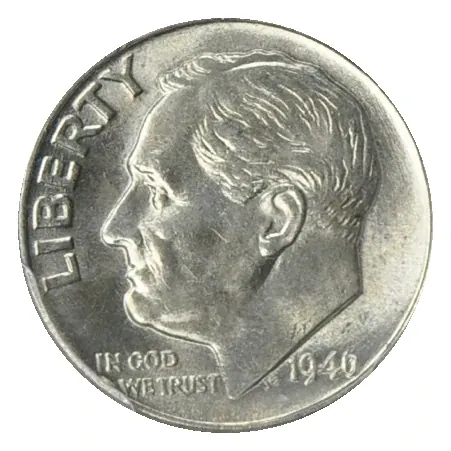
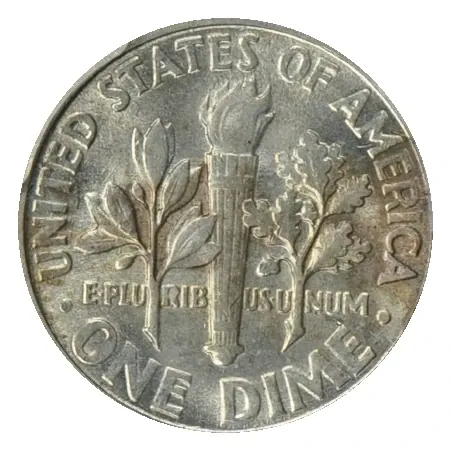
Basics & coin story
The Mint first released the Roosevelt dime on January 30, 1946, honoring the late president’s birthday. John R. Sinnock designed the portrait and the reverse torch between olive and oak branches. Roosevelt’s support for the March of Dimes gave the denomination a meaningful connection to his life.
The Mercury dime ended in 1945. Regular dime silver was removed for 1965, even though the Roosevelt portrait remained familiar. That continuity makes the date more useful than color when sorting metal. The Mercury dime guide covers the earlier Winged Liberty design.
For 2026, Emerging Liberty temporarily replaces the Roosevelt theme. The Mint states that Roosevelt returns in 2027. A dual-dated anniversary dime should be researched through the 2026 dime guide rather than treated as a Roosevelt variety.
| Feature | What to check |
|---|---|
| Introduced / designer | 1946 / John R. Sinnock |
| Denomination / diameter | 10 cents / approximately 17.9 mm |
| Regular 1946–1964 | 90% silver; nominal 2.50 g; approximately 0.07234 troy oz silver |
| Ordinary clad issues from 1965 | Copper-nickel clad; nominal 2.268 g; no silver |
| Mint-mark chronology | Reverse in the early silver era; no marks in 1965–1967; obverse from 1968 |
| Collector silver Proofs | Separate issues: 90% silver in 1992–2018, .999 silver from 2019 |
| Strike designations | Match PCGS Full Bands or NGC Full Torch to the actual service |
| 2026 design | Emerging Liberty; separate from the Roosevelt portrait |
Identification
Use the date and product to decide silver content
A normal 1964 dime is silver; a normal 1965 dime is clad. An S mint mark on a later Proof is not enough to decide metal because clad and silver collector products can share that letter. Match the original product, composition and nominal weight.
Find the mint mark in the correct location
On early silver Roosevelt dimes, inspect the reverse near the bottom left of the torch. D and S identify branch mints where issued, and Philadelphia is normally unmarked. Coins dated 1965–1967 omit mint marks; from 1968 the mark is on the obverse above the date. Philadelphia began using P on dimes in 1980.
Separate strike detail and special manufacture
Full Bands and Full Torch describe specified torch detail under the grading service’s criteria; they are not a new metal or a numerical grade. Proofs use their own entries. A weakly struck torch is not automatically a circulation-worn coin, and bright polished fields do not establish Proof manufacture.
Condition & value
Amounts are USD. The cited guide was consulted October 26, 2026; its displayed update date is stated below. Values apply only to the specified issue, grade and designation, and are not guaranteed purchase offers.
| Issue | Grade / condition | Value or reference | Basis | Important condition |
|---|---|---|---|---|
| Ordinary worn clad dime | Standard issue from 1965, exceptions excluded | 10¢ baseline | Face value | No premium established by age alone |
| 1946 Philadelphia regular, non-FB | XF40 / MS63 | $7 / $10 | PCGS reference table | October 4 source update |
| 1946 Philadelphia regular, non-FB | MS65 | $22 | PCGS reference table | Exact issue and grade |
| 1946–1964 regular silver content | 0.07234 troy oz | 0.07234 × silver price per troy oz | Metal calculation | Not a complete collector valuation |
| Silver Proof / FB / FT / named variety | Exact product and attribution | Compare separately | Issue-specific | Do not transfer ordinary clad or non-FB values |
Keep the source update date beside the silver-era guide examples. A metal calculation can be updated with a timestamped silver quotation; doing that does not refresh the old retail table. A guide estimate and a dealer’s cash offer may also differ.
Collectors should research recognized scarce issues, exceptional preservation and verified missing-mark Proof varieties through their exact listings. An ordinary unmarked Philadelphia coin is not automatically a no-S Proof. The issue’s normal mint marking and manufacture must be established first.
For a mixed collection, group regular silver dimes, clad circulation coins and collector products before comparing grades. Use both faces, retain packaging and avoid cleaning. The Barber dime comparison and grading guide help keep design identification separate from condition.
Summary
Start with the date, then establish manufacture and mint. Regular 1946–1964 silver and ordinary later clad coins have different baselines; silver Proofs and strike designations need their own comparisons. Preserve the coin and record the exact source date beside any value.
FAQ
Which Roosevelt dime years are silver?
Regular issues dated 1946–1964 are 90% silver. Later collector silver Proofs are exceptions and must be identified by product.
Are all S Roosevelt dimes silver?
No. Clad and silver collector issues can both use S. Match the actual product and composition.
Where is the Roosevelt dime mint mark?
Early silver-era marks are on the reverse near the torch. The 1965–1967 coins have no mint mark; from 1968 the location is on the obverse above the date.
Is the 2026 dime a Roosevelt dime?
The 2026 circulating design is Emerging Liberty. The U.S. Mint states that Roosevelt returns in 2027.
References
References and further reading
- U.S. Mint: Roosevelt history, silver transition and 2026 design
- PCGS: silver Roosevelt dime reference table
- U.S. Mint: mint-mark history
- U.S. Mint: .999 silver collector Proof composition
References consulted October 26, 2026. Price tables retain the update dates stated in the text; guide estimates, face values and completed transactions are different forms of evidence.