

 App Store

COIN VALUE GUIDES · DIME GUIDES
Barber Dime:Dates, Mint Marks, Silver and Value
Identify the 1892–1916 Barber dime, locate its reverse mint mark, and compare ordinary dates without confusing the series with the rare 1894-S or 1916-D Mercury dime.
 HeriBase TeamPublished
In this article
Quick answer
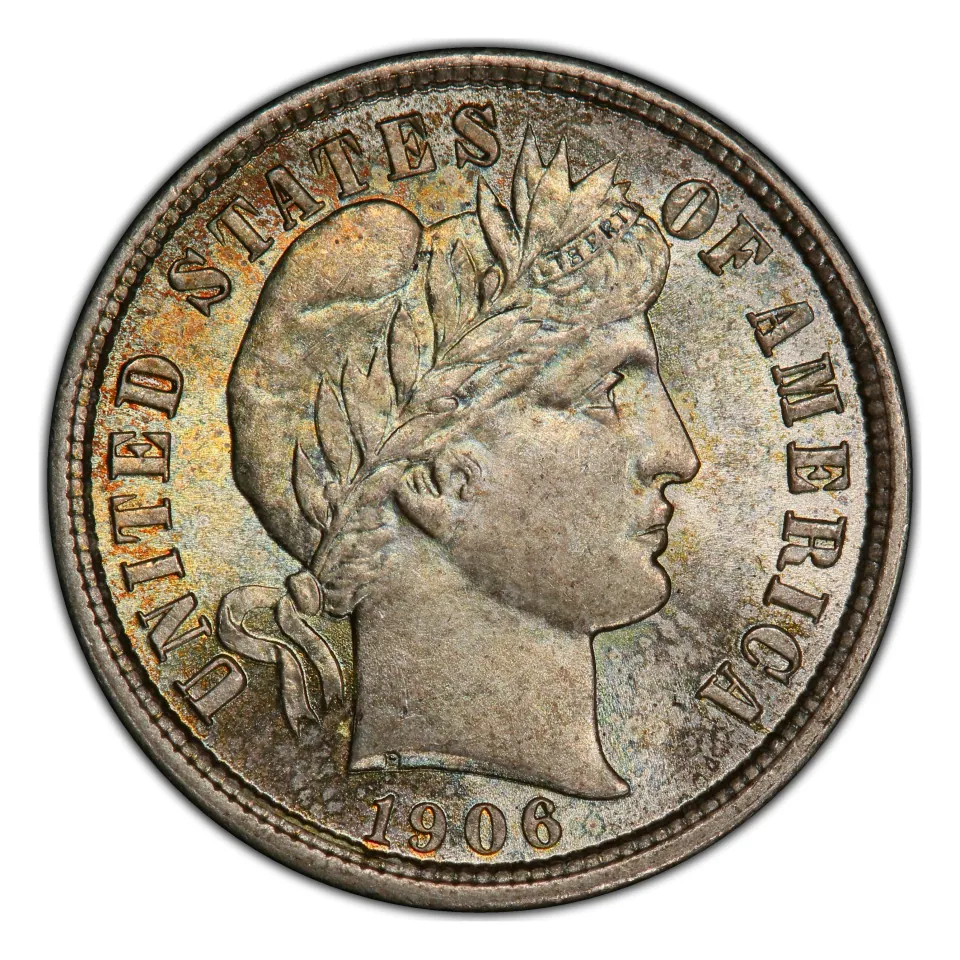
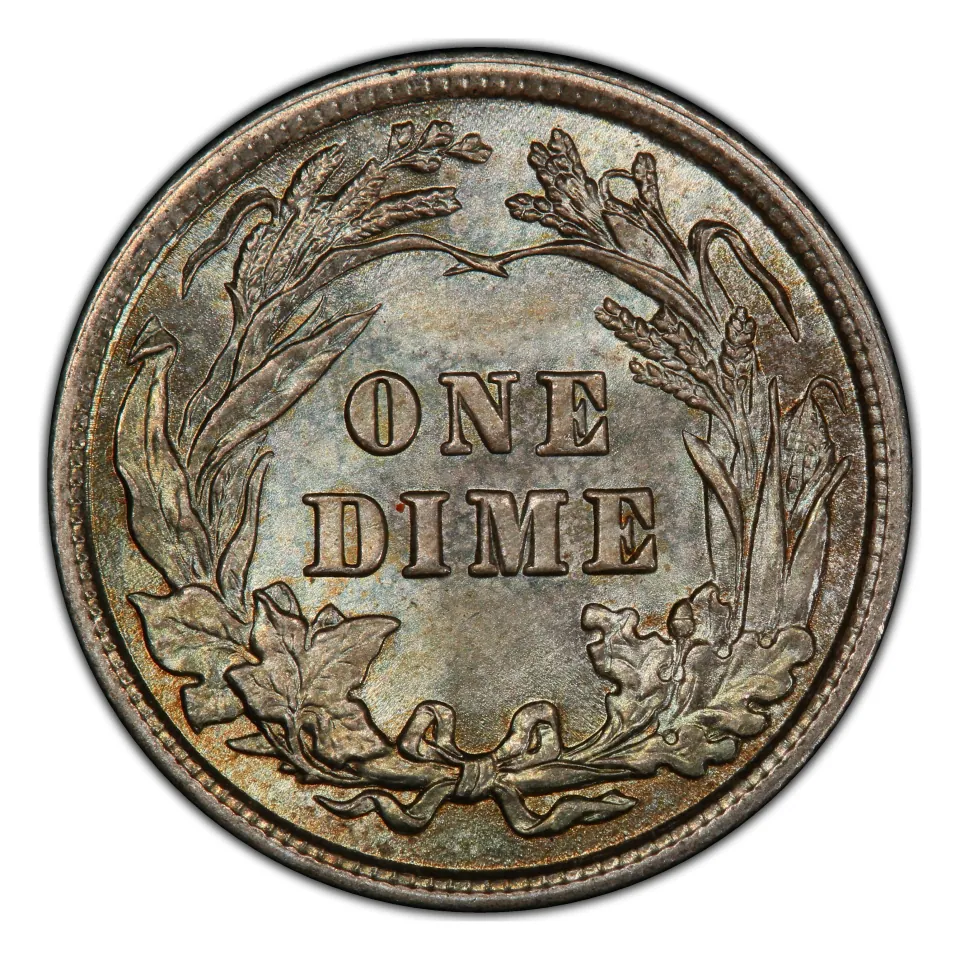
A Barber dime is a ten-cent silver coin dated 1892–1916, designed by Charles E. Barber. It contains 90% silver and about 0.07234 troy ounce of fine silver. Liberty’s capped portrait and ONE DIME inside a wreath distinguish it from the similarly styled Barber quarter and half dollar.
For a common-date example, the PCGS guide checked October 21, 2026 lists a 1906 Philadelphia dime at $15 in G4, $30 in VF20, $55 in XF40 and $265 in MS63. The date and mint matter: these values do not price the exceptional 1894-S or a scarce branch-mint issue.
Coin photos
Basics & coin story
Barber’s dime entered circulation in 1892 alongside new quarter and half-dollar designs. Their shared portrait explains why the denomination on the back matters as much as the face. The small dime used a wreath and written denomination rather than the larger coins’ eagle reverse.
The series lasted until 1916, when the Mercury dime arrived. Both designs can bear that year, but the famous 1916-D rarity is a Mercury dime. A genuine 1916-S Barber dime belongs to a different issue. Begin with the portrait rather than transferring a well-known date-and-letter price between designs.
| Feature | What to check |
|---|---|
| Dated series | 1892–1916 |
| Denomination / designer | 10 cents / Charles E. Barber |
| Composition | 90% silver, 10% copper |
| Nominal weight / diameter | 2.50 g / 17.9 mm |
| Fine silver | Approximately 0.07234 troy ounce |
| Edge | Reeded |
| Mint marks | None, O, S or D where issued; reverse below wreath |
Identification
Match the denomination and mint
Look for ONE DIME inside the reverse wreath. A Barber quarter and half dollar share a family resemblance but differ in size, weight and reverse. The mint letter, when present, is below the wreath. No letter normally identifies Philadelphia; O is New Orleans, S San Francisco and D Denver.
Not every date exists from every mint. Check an exact catalog listing rather than assuming a complete grid of letters for every year. Read the date and reverse together before selecting a price.
Keep major rarities separate
The 1894-S is an extraordinary issue with a recorded original production of only 24. That history should not set the expected value of an ordinary worn Barber dime. A claimed example requires authentication of the date, mint mark and complete coin.
The 1895-O is another issue that deserves its own reference. A faint O or an uncertain final digit cannot be assigned the highest plausible value. Photograph the mark and date under soft light and retain any certificate or ownership information.
Condition & value
Amounts are U.S. dollars. These PCGS retail-guide examples were checked October 21, 2026 for the stated issue and designation. A raw coin needs its own condition assessment; guide figures are not guaranteed sale proceeds and can lag metal prices.
| Issue | Grade / condition | Value or reference | Basis | Important distinction |
|---|---|---|---|---|
| 1906 Philadelphia regular | G4 / VF20 | $15 / $30 | PCGS retail guide | Common-date comparison only |
| 1906 Philadelphia regular | XF40 / MS63 | $55 / $265 | PCGS retail guide | Problem-free surface required |
| 1906 Philadelphia regular | MS65 | $500 | PCGS retail guide | Not a raw-coin grade assumption |
| Contained silver | Approx. 0.07234 troy oz | 0.07234 × silver spot per oz | Metal calculation | Not a complete collector valuation |
| 1894-S / scarce date or mint | Exact authenticated issue | Separate evidence | Rarity-specific | Do not use the 1906 row |
LIBERTY on the headband is a useful wear indicator, but a complete grade considers the whole coin. Look for rim wear, hair detail, luster and surface problems. A cleaned or corroded coin can retain readable lettering while selling below a problem-free guide.
Compare sold examples with the same date, mint and grade; avoid substituting a seller’s ambitious asking price. For a mixed dime collection, the 2026 dime guide helps identify a later design before valuation. The grading scale explains the condition terms used here.
Summary
Confirm ONE DIME, read the date and reverse mint mark, then judge condition. The 1906 figures are a common-date reference. Keep the 1894-S, scarcer branch issues and 1916 Mercury rarities in their own comparisons, and preserve original surfaces before seeking an offer.
FAQ
Are Barber dimes silver?
Yes. Standard Barber dimes contain 90% silver, approximately 0.07234 troy ounce of fine silver in a 2.50-gram coin.
Where is the mint mark on a Barber dime?
It is on the reverse below the wreath when present. No letter normally identifies Philadelphia.
Is the rare 1916-D dime a Barber dime?
No. The famous 1916-D is a Mercury dime. Identify the design before applying its price.
Is every Barber dime rare?
No. Dates and mints vary substantially. Common-date coins, the exceptional 1894-S and other scarce issues need separate comparisons.
References
References and further reading
- PCGS: photographed issue, specifications and guide
- Stack’s Bowers: Barber dime history and rarities
- PCGS: Barber dime series
Sources checked October 21, 2026. Retail guides and historical sales are identified separately; neither guarantees a buying offer.