

 App Store

COIN VALUE GUIDES · NICKEL GUIDES
War Nickel:Find the Large Mint Mark and 35% Silver
Identify silver wartime nickels from 1942–1945, understand the 1942 transition, and calculate silver content without treating every old Jefferson nickel as silver.
 HeriBase TeamPublished
In this article
Quick answer
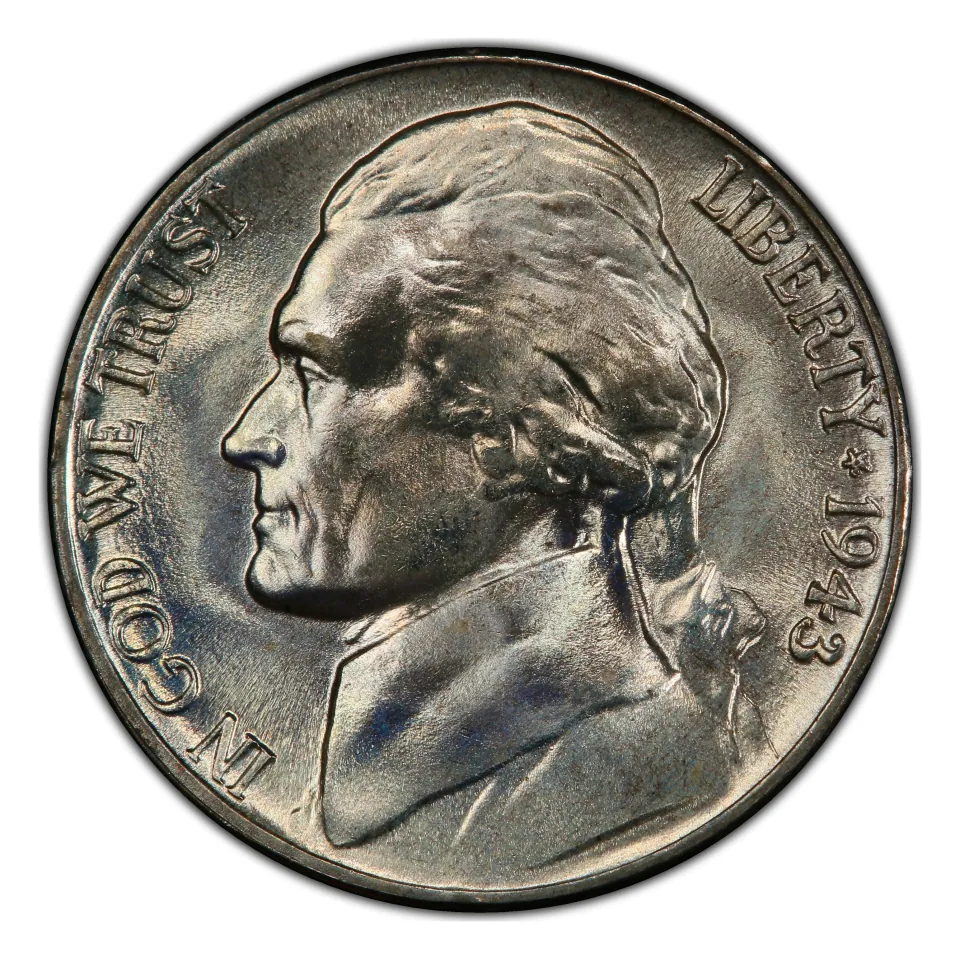
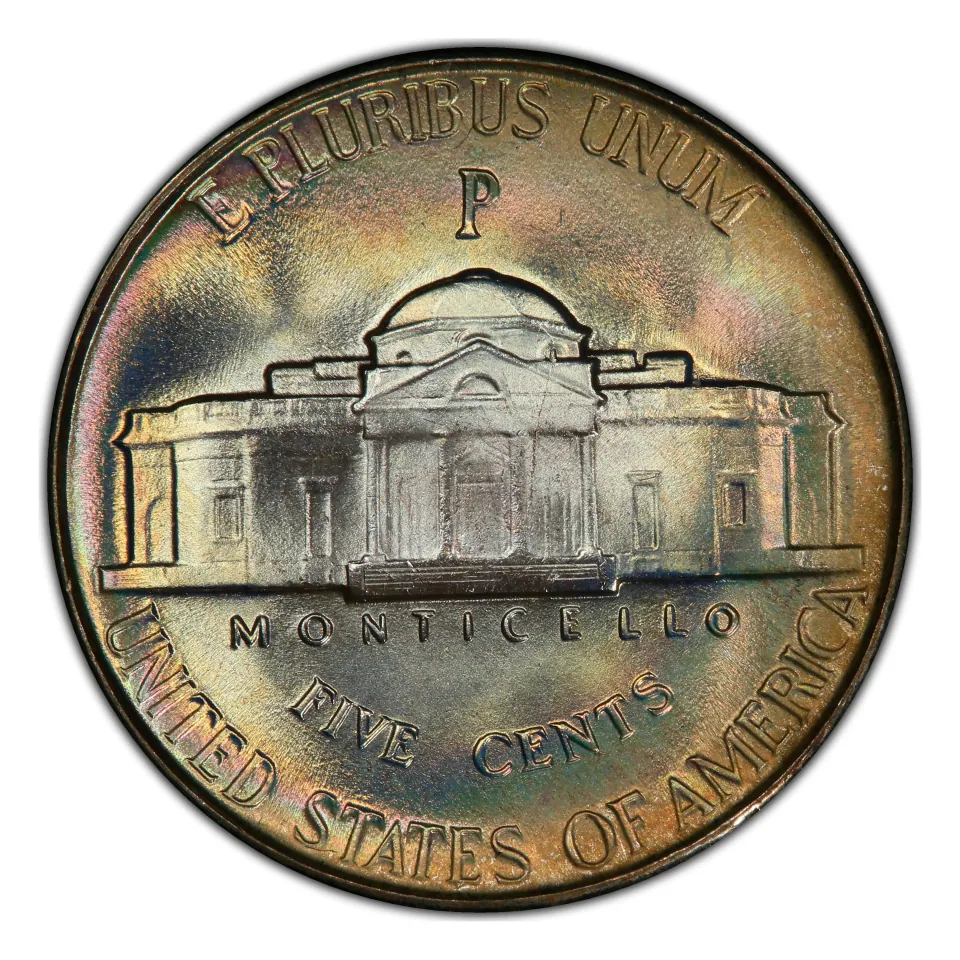
A war nickel is the 35% silver Jefferson five-cent coin made during part of 1942 and through 1945. Its key visible feature is a large P, D or S above Monticello on the reverse. The standard alloy is 56% copper, 35% silver and 9% manganese, containing about 0.05626 troy ounce of silver.
Not every 1942 nickel is silver. That year includes earlier copper-nickel coins and later silver-alloy issues. For a specific reference, the PCGS guide checked October 21, 2026 lists a regular 1943-P at $6 in G4 through XF40, $14 in MS63 and $24 in MS65, without a Full Steps designation.
Coin photos
Basics & coin story
Wartime demand for nickel led to a replacement alloy for the five-cent coin. The large reverse letter made the new composition readily identifiable. Philadelphia’s P appeared on these coins, an important change from its usual absence on earlier circulating denominations.
The design itself remained Felix Schlag’s Jefferson portrait and Monticello. A familiar appearance can therefore conceal a significant alloy change. When sorting a mixed collection, use the year and the large reverse mint mark together rather than the portrait alone. Compare the pre-war 1941 nickel guide for the earlier mint-mark arrangement.
| Feature | What to check |
|---|---|
| Silver-alloy dates | Part of 1942; all regular 1943–1945 issues |
| Composition | 56% copper, 35% silver, 9% manganese |
| Nominal weight / diameter | 5.00 g / 21.2 mm |
| Fine silver | Approximately 0.05626 troy ounce |
| Edge | Plain |
| Decisive mint-mark location | Large letter above Monticello |
| 1942 exception | Earlier non-silver coins also exist |
Identification
Turn the coin over and inspect above the dome
A large P, D or S belongs above Monticello on the wartime silver type. Earlier non-silver Jefferson nickels use a different mint-mark arrangement or no letter. A small letter beside the building is not the same diagnostic as the large wartime mark.
The regular 1942 silver issues are P and S; 1942-D is the non-silver composition. For 1943, 1944 and 1945, all three mints made the silver type. This produces eleven standard date-and-mint combinations: two in 1942 and three in each following year. Proofs and varieties are additional collecting categories.
Do not decide from dark toning alone
War nickels can develop dark surfaces, but ordinary copper-nickel coins can also discolor. Date, mint-mark position and correct measurements provide a stronger first identification than color. Magnet behavior by itself is not a complete composition test.
For a possible overdate or doubled die, match the exact attribution. A raised mint mark and a wartime date do not establish a rare variety. Keep suspected pieces uncleaned and document both complete faces and the area in question.
Condition & value
Amounts are U.S. dollars. These PCGS retail-guide examples were checked October 21, 2026 for the stated issue and designation. A raw coin needs its own condition assessment; guide figures are not guaranteed sale proceeds and can lag metal prices.
| Issue | Grade / condition | Value or reference | Basis | Important distinction |
|---|---|---|---|---|
| 1943-P regular, no FS | G4 / VF20 / XF40 | $6 | PCGS retail guide | Same listed figure across these grades |
| 1943-P regular, no FS | MS63 / MS65 | $14 / $24 | PCGS retail guide | Uncirculated, non-Full Steps entry |
| Contained silver | Approx. 0.05626 troy oz | 0.05626 × silver spot per oz | Metal reference | Not a guaranteed dealer offer |
| 1942 early type / 1942-D | Copper-nickel | No war-nickel silver content | Composition distinction | Do not use silver formula |
| Full Steps / recognized variety | Exact attribution | Separate comparison | Specialist entry | No FS premium assumed |
Full Steps is a separate designation for qualifying Monticello step detail, not a consequence of a high grade alone. A non-FS MS65 guide should not price an FS coin or a different mint. Check the certificate and the step area before using a specialized comparison.
For ordinary worn silver pieces, contained metal can be a useful reference, but current buying prices include spreads and transaction costs. Compare offers on the same lot and date. The grading guide explains why luster, rub and marks also matter on collectible uncirculated examples.
Summary
Use the large letter above Monticello to identify the wartime silver type, then handle 1942 as a transition year. Calculate metal from about 0.05626 ounce of silver per coin, and compare a collector premium only after matching date, mint, grade and any designation.
FAQ
Are all 1942 nickels silver?
No. Earlier 1942 issues are copper-nickel, including 1942-D. The silver type has a large P or S above Monticello.
How much silver is in a war nickel?
A standard war nickel contains 35% silver, approximately 0.05626 troy ounce of fine silver in a 5-gram coin.
Where is the P on a silver Jefferson nickel?
The wartime P is large and appears above Monticello’s dome on the reverse.
Does a high grade automatically mean Full Steps?
No. Full Steps is a separate designation requiring the relevant step detail. A numerical grade alone does not establish it.
References
References and further reading
- PCGS: photographed issue, specifications and guide
- U.S. Mint: wartime composition change
- U.S. Mint: Philadelphia P and mint-mark history
- PCGS: 1942-P silver entry
Sources checked October 21, 2026. Retail guides and historical sales are identified separately; neither guarantees a buying offer.