

 App Store

COIN VALUE GUIDES · DOLLARS
Most Valuable U.S. Dollar Coins:Key Dates and Auction Prices
See which U.S. dollar coins sold for the most and what to look for in a collection, from 1794 silver dollars to Morgan keys and rare modern varieties.
 HeriBase Editorial TeamPublished
In this article
Which U.S. dollar coins are most valuable?
The 1794 Flowing Hair and 1804 Class I Draped Bust dollars are among the most valuable U.S. $1 coins with documented public sales. Named specimens sold for $10,016,875 in 2013 and $7,680,000 in 2021. The 1885 Trade dollar, 1870-S Seated Liberty, and 1893-S Morgan are also important keys.
For a coin from a collection or change, first identify the series and mint mark. A 1921 High Relief Peace dollar, 1979-P Wide Rim Anthony dollar or attributed 2000-P Sacagawea variety is a more practical comparison than a record-setting early dollar.
Most valuable dollar coins with auction prices
These are selected publicly reported sales in U.S. dollars, ordered by the transaction shown. Each price belongs to the stated specimen, attribution, condition and date. Scope includes U.S. $1 issues and rare $1 varieties. A proof, a specimen strike and a circulation strike are different comparisons.
| Coin | Mint or diagnostic | Certified grade | Reported sale | Auction and date |
|---|---|---|---|---|
| 1794 Flowing Hair dollar | Philadelphia; no mint mark | PCGS SP66 specimen | $10,016,875 | Jan. 2013 · Stack’s Bowers |
| 1804 Draped Bust dollar | Class I diplomatic issue; no mint mark | PCGS PR68 Childs–Pogue | $7,680,000 | Aug. 2021 · Stack’s Bowers |
| 1885 Trade dollar | Proof; no mint mark; TRADE DOLLAR on reverse | NGC PR66 at this sale | $3,960,000 | Jan. 2019 · Heritage |
| 1870-S Seated Liberty dollar | San Francisco; S below the eagle | NGC XF40, Miles–Queller | $420,000 | Jan. 2023 · Heritage |
| (2000)-P Sacagawea / Washington quarter mule | P on quarter obverse; Sacagawea eagle reverse | NGC MS67; lot 2382 | $192,000 | Mar. 2018 · Stack’s Bowers |
| 1893-S Morgan dollar | San Francisco; S under the wreath | PCGS AU58 | $114,000 | May 2022 · Heritage |
SP means Specimen, PR means Proof, MS means Mint State, AU means About Uncirculated, and XF means Extremely Fine. The 1804 Class I coins were struck decades after the date on the coin. A date alone cannot establish the issue or pedigree.
Compare the designs before using a price
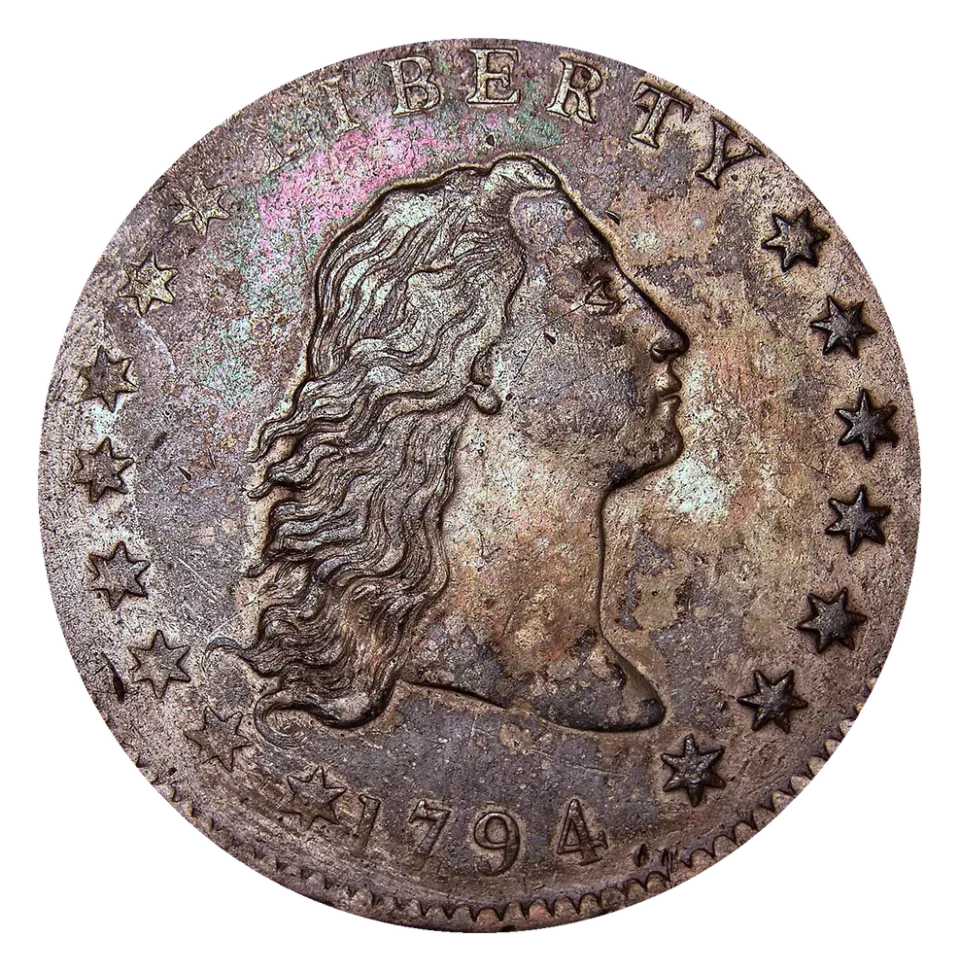
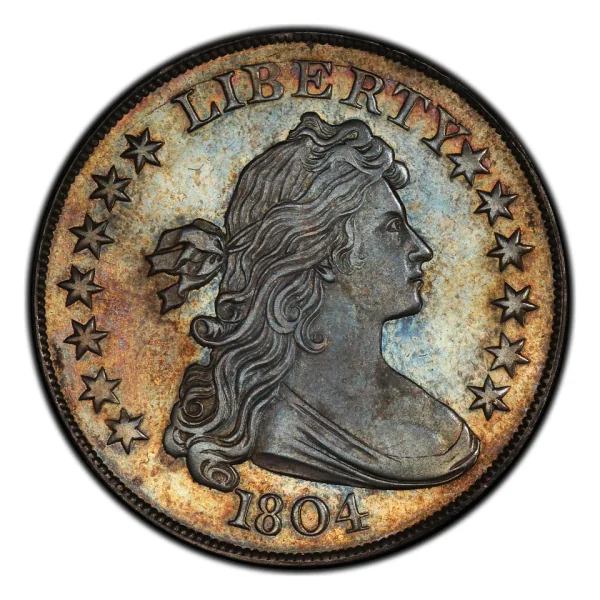
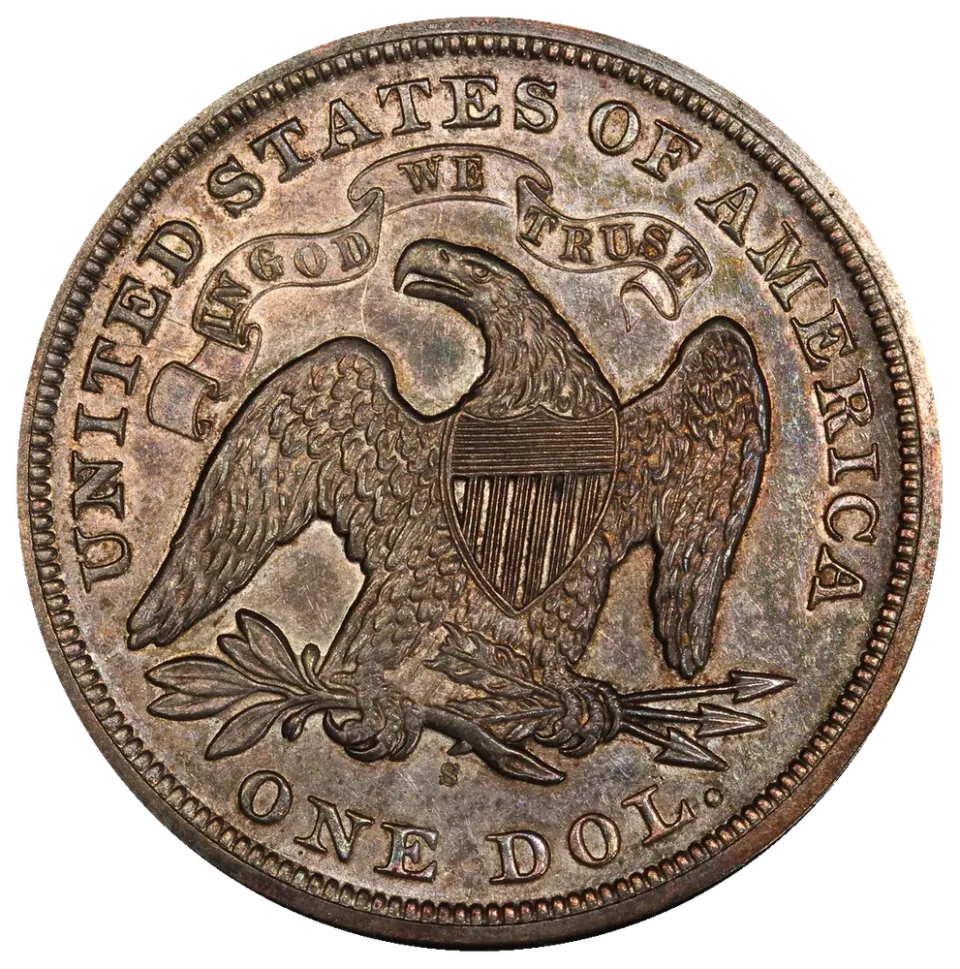
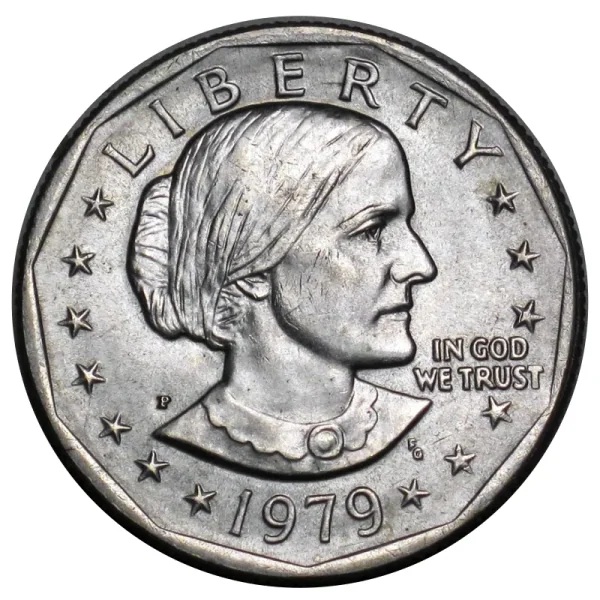
Dollar coins worth checking in a collection
| Issue | How to distinguish it | Dated value or comparison |
|---|---|---|
| 1893-S Morgan | S under the reverse wreath; confirm the date and mint mark together | Use the grade-specific guide and authentication. The near-Mint sale above is one comparison. |
| 1921 Peace dollar | High-relief 1921 Peace reverse says PEACE; the 1921 Morgan has a different reverse | PCGS snapshot in the issue guide: $170 at G4 and $215 at VF20, both problem-free. |
| 1979-P Susan B. Anthony Wide Rim | P on the front and a small gap between the date and inner rim | PCGS 2019 reference at MS65: $45 Wide Rim versus $15 Narrow Rim. |
| 2000-P Sacagawea Cheerios | An attributed FS-902 shows the enhanced tail-feather details. The date and P alone are ordinary. | $6,000 for one PCGS MS67 FS-902 in a 2025 Stack’s Bowers sale. |
| Historic U.S. gold $1 | Actual 1849–1889 gold dollars form a different series from gold-colored modern dollars | Match the type, date, mint and grade. Gold color on a modern dollar does not imply gold content. |
A normal worn Susan B. Anthony, Sacagawea or Presidential dollar starts at $1 face value. High grades, Proofs and authenticated variants call for their own comparisons. For instance, the James Madison dollar guide shows normal edge-lettering orientations and what a genuine missing-edge-lettering candidate requires.
Compare the Morgan dollar key-date list for more dates such as 1889-CC and 1895 Proof. The Dollar Coin Values category includes the wider range of year-specific and metal guides.
How to check a valuable dollar coin
Read the date and denomination on both sides, then find the mint mark in the right place for that series. Check the edge when the design has edge lettering. Use the price for the same grade, finish and attribution, and get independent authentication for an expensive candidate before treating a sale record as a comparison.
Frequently asked questions
What is the most valuable American dollar coin?
One of the highest documented public sales is the 1794 Flowing Hair silver dollar graded PCGS SP66, which brought $10,016,875 at Stack’s Bowers in January 2013. That price is for the named specimen.
Which one-dollar coins should I look for in change?
Look for correctly attributed varieties such as a 1979-P Wide Rim Anthony dollar or a 2000-P Sacagawea with the recognized Cheerios reverse. An ordinary worn modern dollar is usually worth $1.
Are gold-colored dollar coins made of gold?
Ordinary gold-colored Sacagawea and Presidential dollars use a different alloy from historic U.S. gold $1 coins. Identify the issue before drawing a conclusion from the color.
Which Morgan dollar is worth checking first?
The 1893-S is a major key. Read the date and inspect the S below the wreath on the reverse. Compare the same grade and have a high-value candidate authenticated.
Does a high auction price tell me what my coin is worth?
Only a sale for the same issue, grade, finish and attribution can serve as a close comparison. Condition problems and unusual pedigrees can make prices diverge.
References
References and further reading
- https://stacksbowers.com/sbpressreleases/world-record-coin-sold-10-million-dollars/
- https://stacksbowers.com/sbpressreleases/1804-draped-bust-solver-dollar-sells-for-7-68-million-dollars-stacks-bowers-galleries/
- https://coins.ha.com/c/s/d/handbook.pdf
- https://coins.ha.com/itm/seated-dollars/1870-s-1-xf40-ngc-oc-1-low-r7/a/1356-3766.s
- https://stacksbowers.com/sbpressreleases/Sacagawea-Washington-Quarter-Mule/
- https://coins.ha.com/itm/morgan-dollars/1893-s-1-au58-pcgs/a/1344-3810.s
- https://www.pcgs.com/News/The-Different-Types-Of-Us-Dollar-Coins