

 App Store

COIN VALUE GUIDES · DOLLARS
2000-P Sacagawea Dollar:Value, Cheerios and Wounded Eagle
Compare real reverse details, separate ordinary dollars from attributed varieties, and use prices that match the coin in hand.
 HeriBase TeamPublished
In this article
How much is a 2000-P Sacagawea dollar worth?
An ordinary worn 2000-P Sacagawea dollar generally starts at its $1 face value. Philadelphia struck 767,140,000, so the date and P mint mark alone are not rare. The coin has a copper core with manganese-brass outer layers; its golden appearance does not mean it contains gold.
Preservation and a confirmed reverse variety can add a premium. The PCGS guide snapshot checked October 15, 2026 lists regular examples at $5 in Mint State 63 (MS63), $7 in MS65 and $20 in MS67. Cheerios dollars require enhanced tail-feather detail; Wounded Eagle requires the characteristic raised die marks. Those are separate comparisons, not reasons to value every 2000-P in the hundreds or thousands.
Check the reverse before using a special-variety price. A plain edge is normal for this date, and a shiny P-mint coin is not automatically a Proof; the standard 2000 Proof issue carries an S mint mark.
Identify the ordinary 2000-P coin
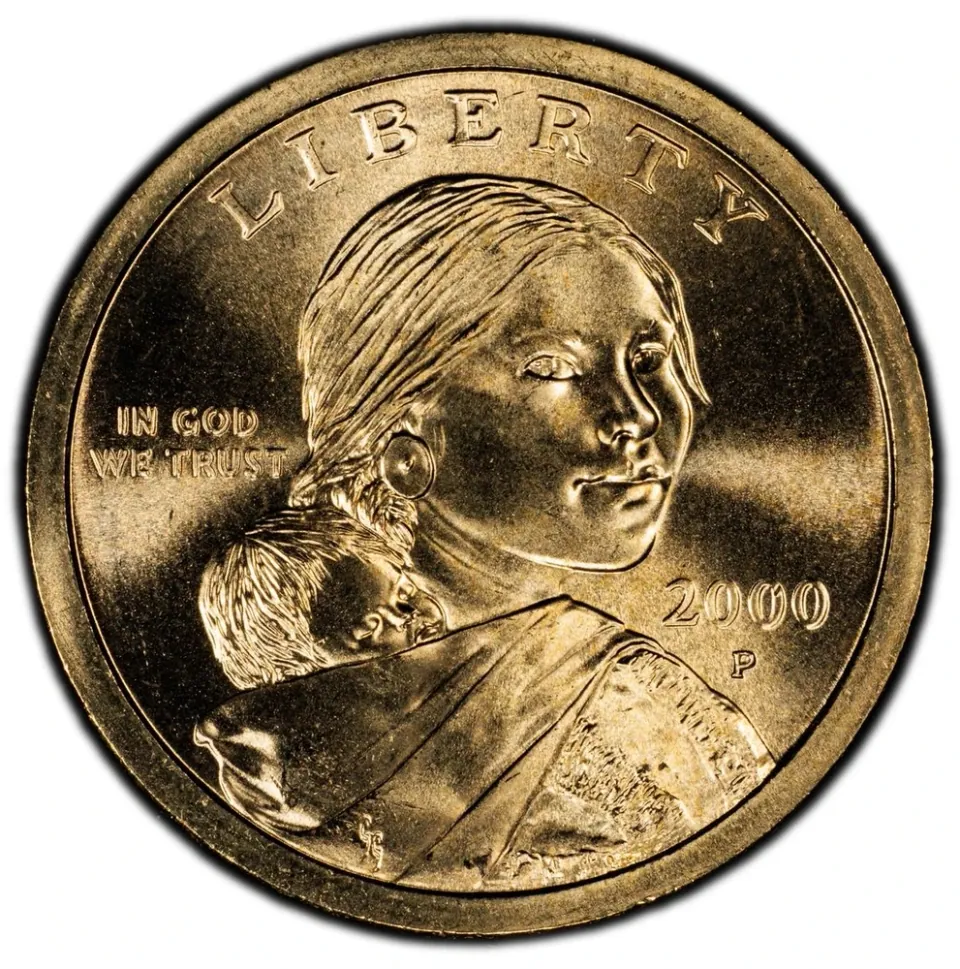
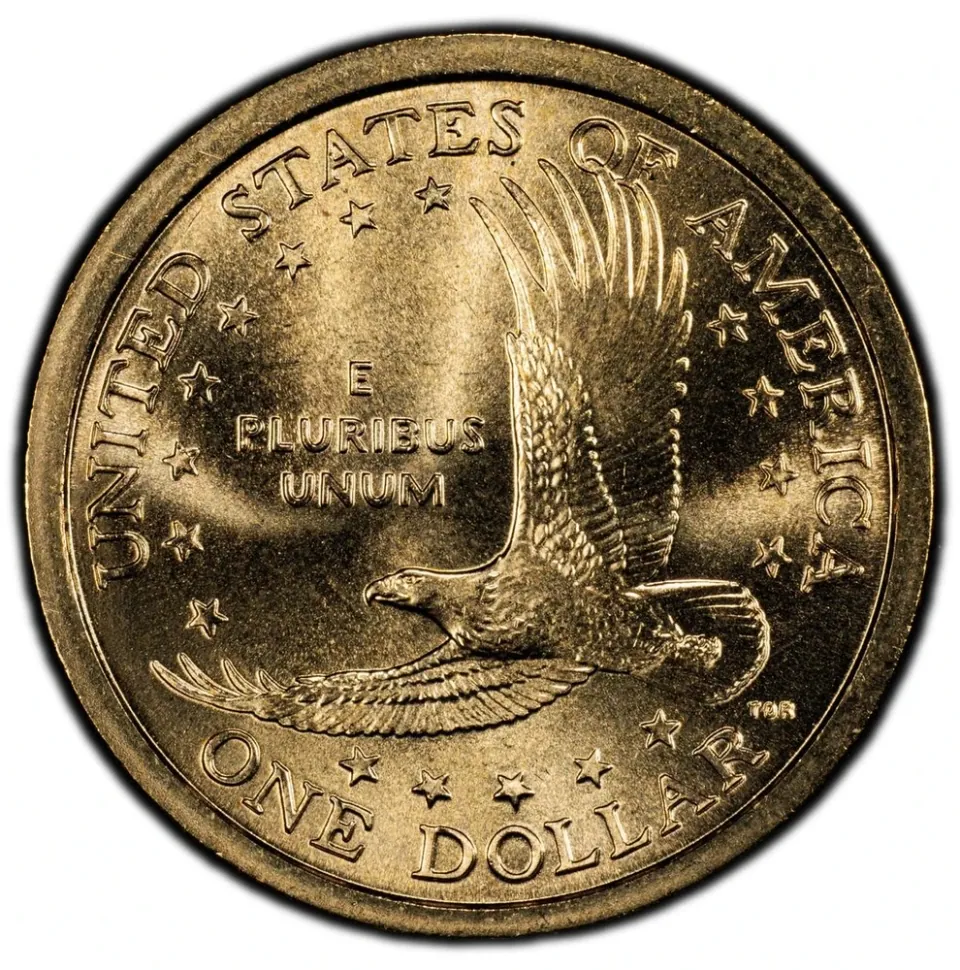
The first-year dollar and the Cheerios story
The golden dollar introduced Sacagawea carrying her infant son, Jean Baptiste, on a design by Glenna Goodacre. Thomas D. Rogers Sr. created the soaring-eagle reverse. The coin followed the Susan B. Anthony dollar and used a golden color and plain edge to make the denomination easier to recognize.
The first-year launch included a General Mills promotion. The Mint supplied 5,500 dollars for placement in Cheerios boxes, helping introduce the new coin to the public. Some of those coins have an early reverse with more detailed eagle tail feathers, now known as the Cheerios prototype reverse or FS-902.
Promotion packaging and the reverse attribution are not the same thing. PCGS has documented a dollar from an original Cheerios package without the enhanced tail feathers. Conversely, a loose coin needs its actual features checked rather than a story about where it was found. “5,500 supplied for the promotion” is not a count of surviving certified FS-902 coins.
| Feature | Standard issue |
|---|---|
| Denomination | $1 |
| Mint | Philadelphia · P below the obverse date |
| Recorded mintage | 767,140,000 regular issue coins; not the Wounded Eagle population |
| Nominal weight and diameter | 8.10 g; about 26.5 mm |
| Metal | Copper core, manganese-brass outer layers; no gold |
| Edge | Plain; no edge date expected in 2000 |
For other years, the change to edge dates in 2009 and the separate gold anniversary issue, use the Sacagawea series guide. This article concentrates on the 2000-P reverse checks.
Ordinary, Cheerios or Wounded Eagle?
| Type | Where to look | Positive feature | Common misreading | Price comparison |
|---|---|---|---|---|
| Ordinary reverse | Eagle’s tail | Regular, less detailed tail-feather design | Calling every feather line a special variety | Regular 2000-P at the same grade |
| Cheerios · FS-902 | Eagle’s tail | Enhanced internal feather detail matching the prototype | Using 2000-P or packaging alone as proof | Attributed FS-902 at the same grade |
| Wounded Eagle · FS-901 | Eagle’s lower body | Characteristic raised die gouges crossing the belly | Mistaking an incuse scratch for a die feature | Attributed FS-901 at the same grade |
Cheerios: compare the internal tail-feather detail
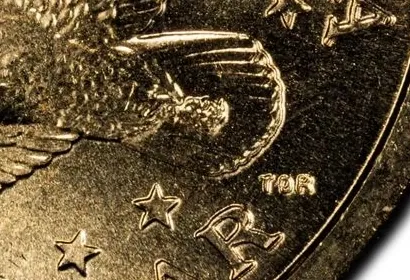
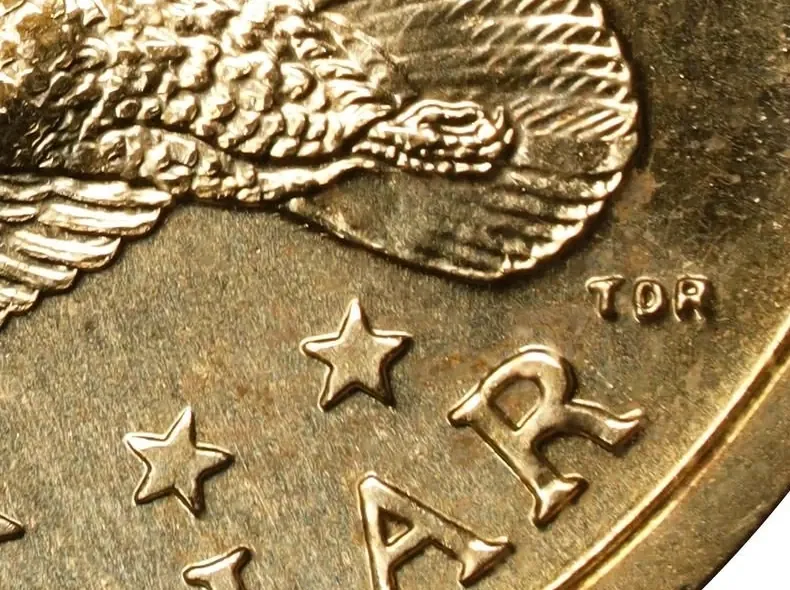
Compare the same feathers and their internal pattern, not overall brightness or the number of visible edges in a blurred image. These are two different coins photographed under different lighting. Weak focus, wear and reflections can hide a diagnostic; a vague resemblance does not establish attribution.
Wounded Eagle: raised marks, not a scratch
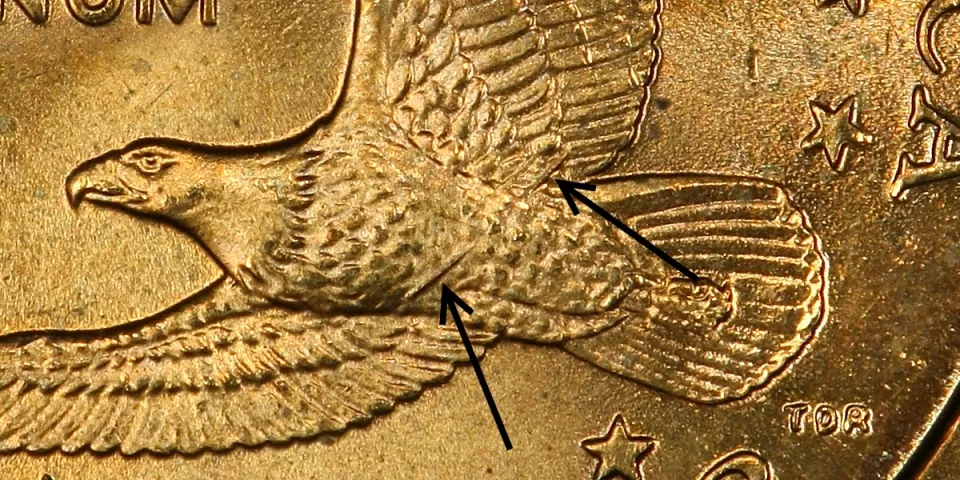
The feature was transferred from damage in the die and stands above the coin’s surface. A post-mint scratch generally cuts into the coin, although displaced metal can form raised edges beside a scratch. Match the complete position and shape with the reference; one raised-looking line under one light is insufficient.
The ordinary issue’s 767,140,000 mintage must not be quoted as the number of Wounded Eagle coins. Nor does this variety share the Cheerios reverse attribution: FS-901 and FS-902 describe different diagnostics.
Three checks before assigning a premium
1. Establish the base coin
Read 2000 and P on the portrait side, then confirm the eagle reverse and plain edge. A 2000-D belongs to a different mint comparison. A standard 2000-S is a Proof collector issue. Later Native American dollars move the date to the edge, so their identification rules should not be transferred to this coin.
2. Photograph the tail and belly separately
Use sharp, evenly lit photographs of both full sides and the two diagnostic areas. Change the light direction to distinguish a raised feature from a cut. Do not clean, scrape or polish the area to make a line more visible; see the cleaned-coin guide for why original surfaces matter.
3. Confirm attribution before using variety prices
A specialist should evaluate a plausible match. If a coin already has a grading label, verify the certificate and exact variety, not just the numerical grade. Goodacre Presentation coins and other specialist issues require their own provenance and attribution; they are not identified by attractive color alone. The appraisal guide explains how to prepare a useful assessment request.
2000-P Sacagawea dollar value: ordinary coins versus attributed varieties
| Coin | Grade / condition | Reference amount | Date / basis | How to interpret it |
|---|---|---|---|---|
| Ordinary 2000-P | Worn, no special attribution | $1 | Face-value baseline | No substantial premium follows from date or P alone. |
| Ordinary 2000-P | MS63 | $5 | PCGS guide checked Oct. 15, 2026 | Retail guide estimate, not a dealer offer. |
| Ordinary 2000-P | MS65 | $7 | Same guide snapshot | Requires the stated preservation. |
| Ordinary 2000-P | MS67 | $20 | Same guide snapshot | Certification costs may exceed value. |
| Cheerios FS-902, lot 6174 | PCGS MS67 | $6,000 | Stack’s Bowers Summer 2025 sale; PCGS record labels Sep. 2025 | One attributed specimen; not an ordinary-coin price. |
| Wounded Eagle FS-901 | Attribution and grade required | Compare matching sold examples | No general price range assigned here | Do not transfer the Cheerios result or an unverified asking price. |
The $6,000 figure is the auction result reported by PCGS for lot 6174, certificate 35750850, checked October 19, 2026. It is not seller net proceeds or a current offer for another coin; consult the sale’s fee terms before comparing a hammer price with a reported total. Its exceptional reverse and grade explain why it belongs in a separate row.
A shiny coin from change does not become MS67 merely because it has little apparent wear. Contact marks, surface condition and preservation affect the grade. Use the coin grading guide, then compare the same issue and finish. Ordinary Proof prices should not be used for a P-mint business strike.
What to remember
Start an ordinary worn 2000-P Sacagawea dollar at $1; investigate a higher value only when preservation or a confirmed attribution supports it. Golden color is not gold, a plain edge is normal, and the P mint mark alone is not a rare feature.
Cheerios is a tail-feather design check; Wounded Eagle is a raised die-feature check across the body. Preserve the coin, obtain clear detail photographs and confirm the variety before using its sales. Keep the ordinary grade chart and rare-variety auction result separate.
Frequently asked questions
Is every 2000-P Sacagawea dollar valuable?
No. An ordinary worn example generally starts at $1. Uncirculated preservation and confirmed varieties can add value, but the date and P mint mark alone do not establish a premium.
How can I tell whether my dollar is a Cheerios variety?
Compare the enhanced internal eagle tail-feather detail with an attributed FS-902 example. A 2000 date, P mint mark or claim of cereal-box origin is insufficient; PCGS has documented a coin from original Cheerios packaging without the enhanced reverse.
What makes a Wounded Eagle dollar different?
The attributed FS-901 variety has characteristic raised die features crossing the eagle’s body. A scratch or damage that merely looks similar is not enough. Match the location and shape and seek specialist attribution if uncertain.
Should a 2000-P Sacagawea dollar have edge lettering?
No. A plain edge is normal on the original 2000–2008 eagle series. Native American dollars beginning in 2009 moved the year and mint mark to a lettered edge; that later rule does not make a 2000 coin an error.
References
Sources
Research checked October 19, 2026. Any price example retains its stated source date and scope.
- PCGS CoinFacts · ordinary 2000-PMintage, dimensions and distinction from attributed varieties.
- U.S. Mint · the new dollar designsDesigners, portrait subject and launch design decisions.
- PCGS · Cheerios prototype reversePromotional distribution and enhanced feather detail.
- PCGS · a packaged Cheerios dollar without enhanced feathersWhy packaging and the FS-902 reverse are not interchangeable.
- PCGS CoinFacts · Wounded EagleRaised die-flaw diagnostic and FS-901 attribution.
- PCGS · Sacagawea guideRegular-strike estimates retained from the October 15, 2026 site research snapshot.
- PCGS auction record · Stack’s Bowers lot 6174FS-902, PCGS MS67, certificate 35750850, $6,000 reported result; record labels the sale Sep. 2025.
- U.S. Mint · Native American dollarsLater edge lettering and annual reverse designs.