

 App Store

COIN VALUE GUIDES · SERIES GUIDE
Sacagawea Dollar:Value, Mint Marks and the Coin’s Story
Identify the golden dollar, follow its transition to the Native American series, and separate ordinary coins from collectible varieties.
 HeriBase TeamPublished
 In this article
What is a Sacagawea dollar, and what is it worth?
The Sacagawea dollar is a U.S. $1 coin introduced in 2000. Ordinary worn 2000-P and 2000-D examples generally have no substantial premium over their $1 face value. Their golden color comes from manganese brass, not gold. The original eagle reverse ran through 2008; the Native American $1 series retained Sacagawea’s portrait but introduced changing reverses and edge dates in 2009.
Uncirculated condition and a confirmed special variety can change the value. The PCGS guide checked October 15, 2026 lists a regular 2000-P at $5 in Mint State 63 (MS63), $7 in MS65 and $20 in MS67. These are guide estimates, not sale guarantees. Cheerios enhanced-tail-feather dollars and Wounded Eagle coins require specific identifying features; the date 2000 alone proves neither.
Read both sides and the edge before comparing prices. The 2025-W half-ounce gold anniversary Proof is a separate collectible made of actual gold and must not be priced as an ordinary brass dollar.
Recognize both sides
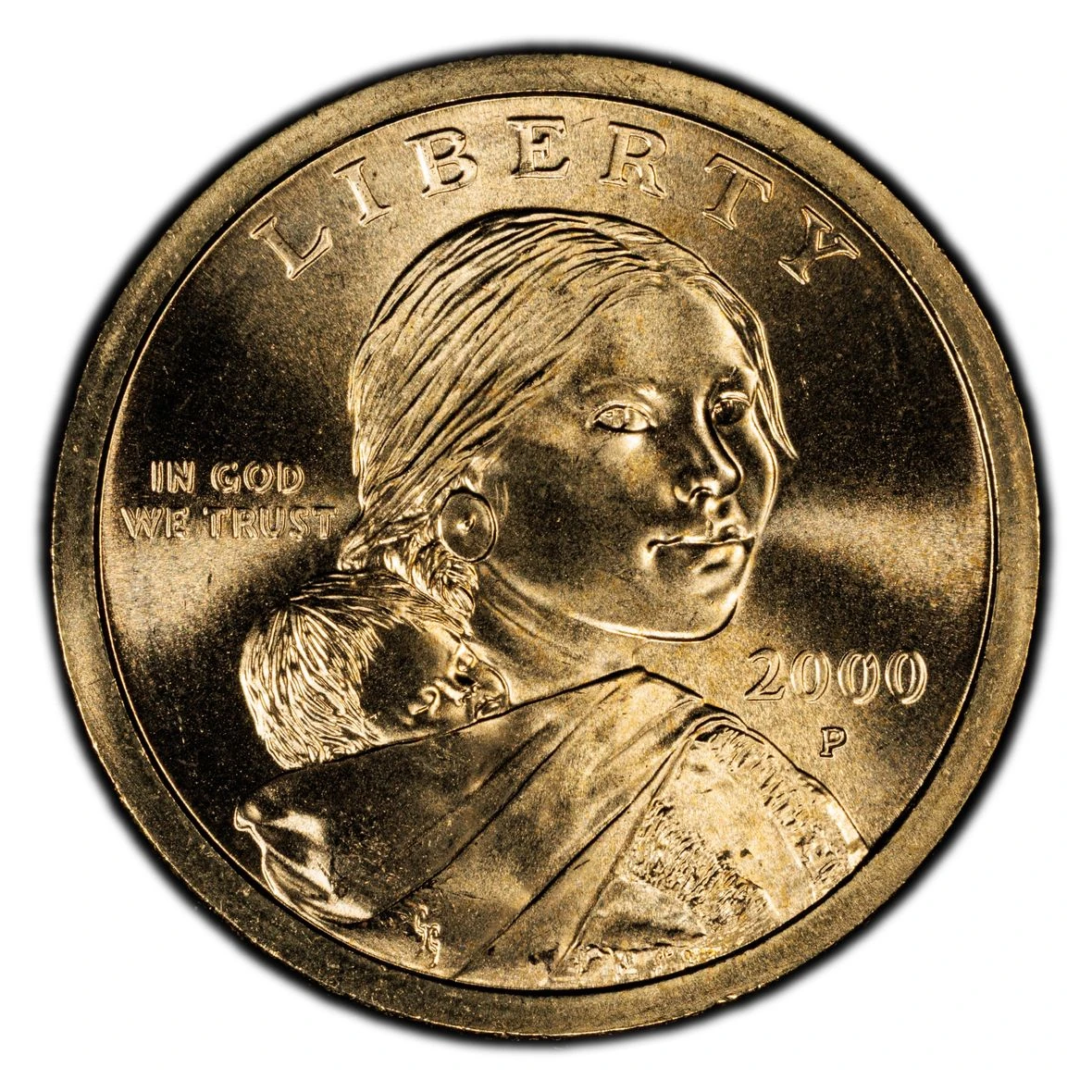
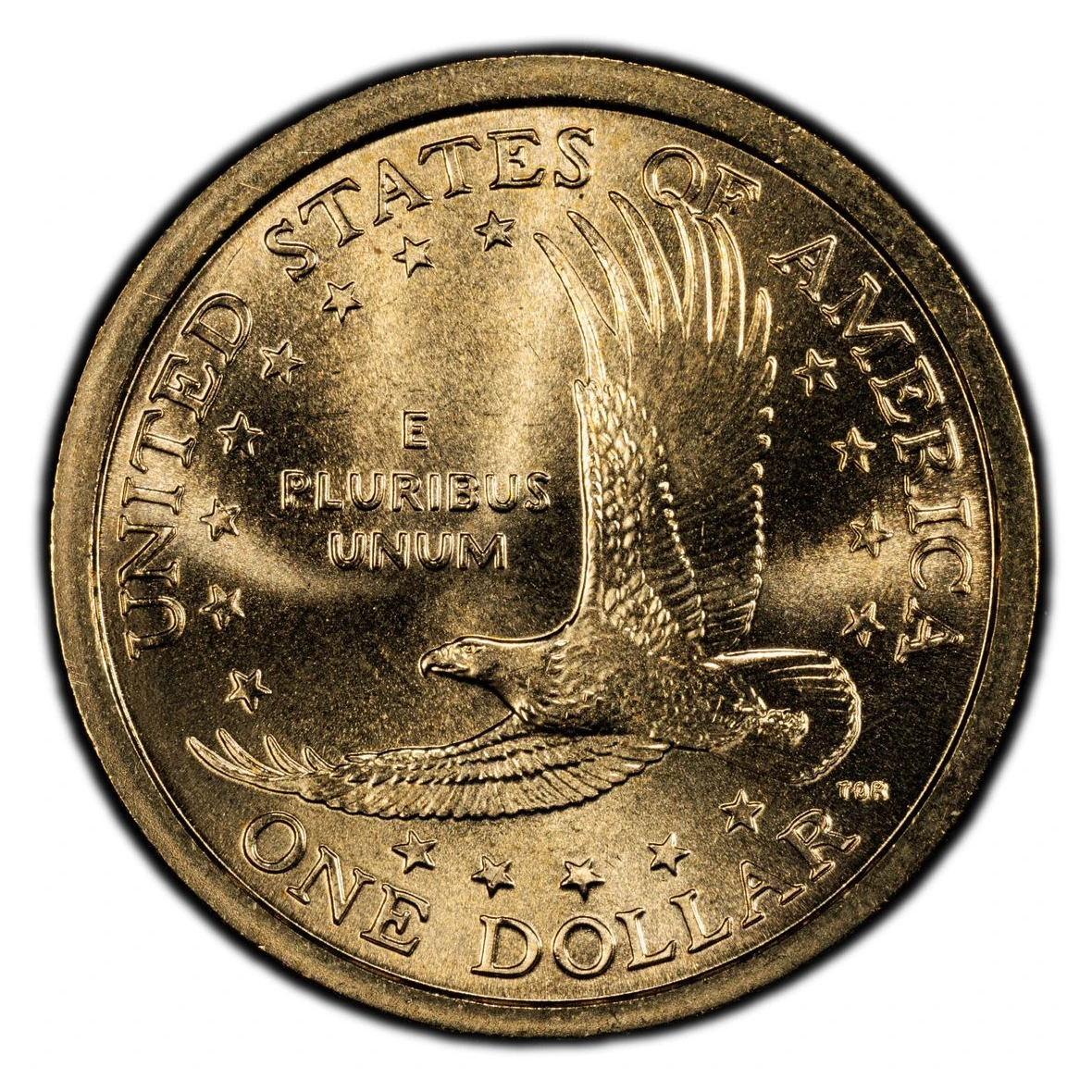
The coin’s story and basic facts
A mother and child on the dollar
Sacagawea, a Shoshone woman, traveled with the Lewis and Clark expedition while caring for her infant son, Jean Baptiste Charbonneau. Her language skills helped the expedition communicate, and the presence of a mother and child could signal peaceful intentions. The child on the coin is therefore part of the historical subject, not a decorative addition.
Glenna Goodacre designed the portrait using Shoshone model Randy’L He-dow Teton. Thomas D. Rogers Sr. designed the eagle reverse. Introduced after the Susan B. Anthony dollar, the new coin used a golden appearance and plain edge to make the denomination easier to distinguish.
One portrait, two series
The original eagle issues form a compact 2000–2008 series. From 2009, the Native American $1 program uses new reverse themes recognizing Native American contributions. A different back with the same portrait can be entirely normal. It is useful to record those later coins by reverse theme as well as year.
| Feature | What to know |
|---|---|
| Denomination | $1 United States dollar |
| Original eagle series | 2000–2008 |
| Successor program | Native American $1 coins, beginning in 2009 |
| Standard composition | Copper core with manganese-brass outer layers; no gold |
| Standard size and weight | 26.5 mm diameter; 8.1 g |
| Date and mint mark | On the obverse in 2000–2008; on the edge for Native American $1 issues |
Date, edge and varieties: what to check
1. Start with the date and mint mark
On an eagle-reverse dollar, look beneath the year for P, D or S. P identifies Philadelphia, D Denver and S San Francisco. Compare an S-mint Proof with the same Proof issue, not a worn circulation coin. For a Native American dollar, rotate the coin to read the edge before calling it dateless.
2. Treat the edge according to the series
A smooth edge is normal for a 2000–2008 Sacagawea dollar. Later Native American dollars normally carry the date, mint mark and E PLURIBUS UNUM on the edge. A missing-edge claim only makes sense after confirming which coin it is and inspecting the entire circumference. Do not transfer Presidential-dollar error descriptions to every golden dollar.
3. Verify a variety before using its price
The Cheerios prototype reverse has enhanced detail in the eagle’s tail feathers. That is a particular reverse design, not a name for every 2000-P dollar. See the gold-dollar guide’s attributed Cheerios example for a close-up and sale discussion.
The Wounded Eagle variety involves a raised die flaw across the eagle’s belly. A scratch cuts into the surface and is a different phenomenon. Photograph the feature under light from more than one direction; compare the position and shape with an attributed specimen before applying the label.
Brown or uneven toning by itself is not a rare variety. Manganese brass can darken with time. Do not polish a coin to make it look golden again; our cleaned-coin guide explains why altered surfaces change the comparison.
What changes a Sacagawea dollar’s value?
Ordinary circulated coins, certified Mint State coins, Proofs and attributed varieties are separate price groups. The examples below show regular strikes only. A bright coin taken from change does not automatically qualify for one of these numerical grades.
| Regular issue | MS63 | MS65 | MS67 | Scope |
|---|---|---|---|---|
| 2000-P | $5 | $7 | $20 | Normal eagle reverse |
| 2000-D | $5 | $7 | $26 | Normal eagle reverse |
| 2001-P | $5 | $7 | $10 | Regular strike |
| 2001-D | $5 | $7 | $10 | Regular strike |
These figures are retail guide estimates for the stated grades, not dealer buy offers or a return promised after grading. Certification costs can exceed the value of a common coin. A high-grade guide figure is only relevant once the actual coin’s preservation supports that grade.
Keep the gold anniversary coin separate
The 2025-W anniversary Proof contains one-half troy ounce of .9999 fine gold. Check its date, W mint mark, specifications and original product identification. The word “golden” on the older series does not imply the same material. The gold-dollar value guide compares this distinction with historical U.S. gold dollars.
For a practical collection, decide whether you want one coin per year, separate P and D issues, or additional Proofs. Keep the format consistent and record any variety separately. Use the grading guide for condition terms, then compare completed sales for the same issue and finish.
What to remember
For the ordinary Sacagawea dollar, start with $1, then check the date, mint, finish and any specific variety. The 2000–2008 eagle series has a normal plain edge; Native American dollars from 2009 move the date and mint mark to the edge. Golden color does not establish gold content.
Keep the 2025-W gold anniversary Proof separate. Save clear photographs of both sides and the edge, leave the surface untouched, and investigate a premium only when the issue, condition or variety supports one.
Frequently asked questions
Are Sacagawea dollars made of gold?
Ordinary Sacagawea dollars have a copper core and manganese-brass outer layers, with no gold. The separate 2025-W anniversary Proof contains one-half troy ounce of .9999 fine gold.
Why does my Sacagawea dollar have no date on the front?
On Native American $1 coins beginning in 2009, the year and mint mark are on the edge. Inspect the entire edge before concluding that the date is missing.
Is every 2000-P dollar a Cheerios dollar?
No. The recognized Cheerios prototype reverse has enhanced eagle tail-feather detail. The 2000 date and P mint mark alone do not establish the variety.
Is a smooth edge a Sacagawea dollar error?
Not on the original 2000–2008 eagle series, which normally has a plain edge. Native American dollars from 2009 normally have edge inscriptions and require a separate assessment.
References
Sources
Research checked October 15, 2026. Price-guide figures retain the stated date and conditions. HeriBase Team prepared this guide; photographs illustrate identification and are not a physical appraisal.
- U.S. Mint · Sacagawea Golden DollarDesigners, original series and standard specifications.
- National Park Service · Sacagawea, The Ultimate Working MotherHistorical context for Sacagawea and Jean Baptiste.
- U.S. Mint · Native American $1 Coin ProgramAnnual reverse themes and edge inscriptions.
- PCGS · Sacagawea Price GuideRegular-strike USD estimates checked October 15, 2026; standard grades, excluding plus grades.
- PCGS · 2000-P Cheerios Sacagawea DollarEnhanced tail-feather identification.
- PCGS · Wounded EagleRaised die-flaw identification.
- U.S. Mint · 2025 gold anniversary issueSeparate half-ounce gold Proof specifications.
- PCGS CoinFacts · 2000-P Sacagawea dollarIssue specifications and identification details.