

 App Store

COIN VALUE GUIDES
1794 Flowing Hair Dollar: Silver Plug, First-Year History and Evidence
Identify the first-year U.S. silver dollar, understand silver-plug weight adjustment, and distinguish a documented specimen from a claim that every 1794 dollar was the first struck.
 HeriBase TeamPublished
In this article
What is the 1794 Flowing Hair dollar and its silver plug?
The 1794 Flowing Hair dollar is the first dated U.S. silver-dollar issue. A mint-inserted silver plug is associated with a famous specimen and weight adjustment before striking; it is not a feature to assume on every coin. Identify the exact specimen and evidence before applying its history, special-strike attribution or exceptional auction price.
Reviewed November 13, 2026. Historical figures retain their stated dates, currency and comparison limits.
Which real features should I compare?
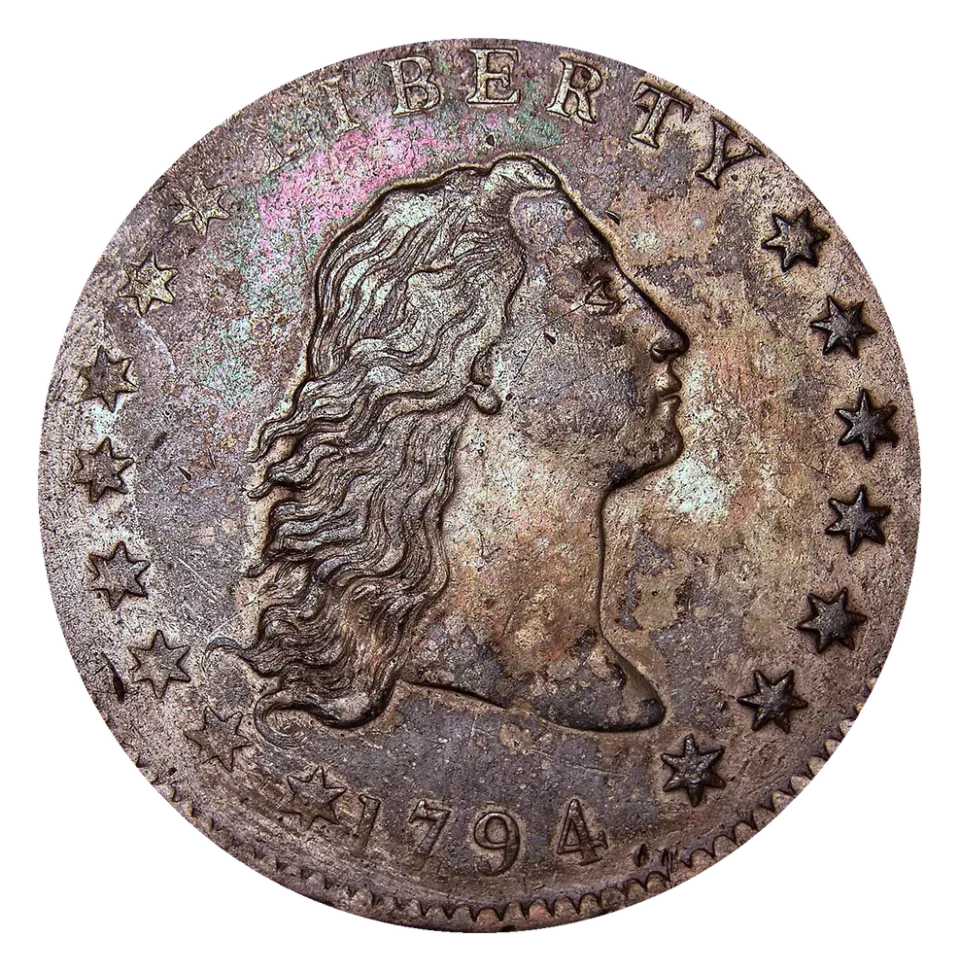
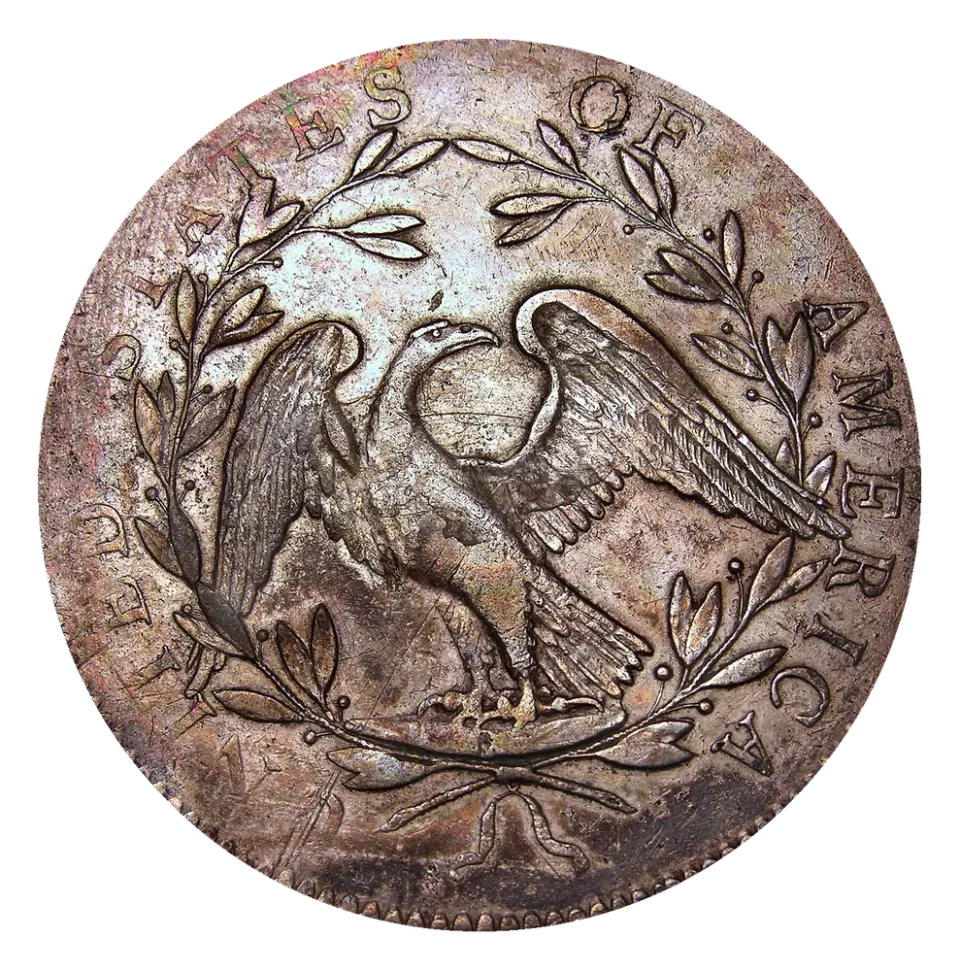
What background helps identify the object?
What made the first silver-dollar issue significant?
The early federal Mint had to turn a statutory dollar into a reliable physical coin while working with its initial equipment and dies. Robert Scot’s Flowing Hair design paired Liberty with an eagle and wreath. The 1794 issue began the silver-dollar denomination; it was followed by further Flowing Hair coinage dated 1795.
That chronology differs from the 1804 dollar’s later presentation-coin history. A date can be part of a coin’s identity without proving every detail of when or why a specific specimen was struck. Documentary evidence and physical die analysis need to be considered together.
How do the issues and evidence compare?
Why would a silver planchet need a plug?
A plug could add metal to bring an underweight planchet toward the required weight before the dies impressed the design. Metal adjustment is different from a later repair. A round feature visible in a photograph alone cannot decide between an original mint process, a repair, a stain or unrelated damage. Context across both faces and the edge is essential.
| Claim | What it concerns | Useful evidence | What is insufficient | Value implication |
|---|---|---|---|---|
| 1794 Flowing Hair dollar | Issue identity | Full design, date, metal and authentication | An old-looking portrait alone | Use the exact authenticated issue |
| Mint silver plug | Pre-strike weight adjustment | Continuous struck detail and specialist examination | A circular discoloration alone | Separate variety / specimen comparison |
| Special or specimen strike | Manufacture attribution | Recognized certification and physical evidence | Shine or cleaning | Do not apply to every circulation coin |
| First coin struck | Historical sequence | Die-state and documentary research | The date alone | A hypothesis is not a universal pedigree |
| Later repair | Post-production alteration | Surface, edge and metal examination | Assuming every filled area is mint-made | Problem-free prices may not apply |
Does the famous plug prove it was the very first dollar?
Researchers have argued for an early striking sequence for the Neil–Carter–Cardinal specimen using die state, surfaces and comparisons with a copper trial. Such an argument is a specimen-specific interpretation. It does not turn all 1794 dollars into first strikes, and the existence of a plug alone does not establish an exact order off the press.
Keep three statements separate in a collection record: the authenticated coin, its certified manufacture or variety, and a researcher’s historical interpretation. That makes the record useful even when later research refines the chronology. Avoid describing an ordinary photograph as proof of an unbroken eighteenth-century ownership chain.
What price belongs to the celebrated specimen?
| Coin / specimen | Recorded attribution | Published amount | Date / record | Limit |
|---|---|---|---|---|
| Neil–Carter–Cardinal specimen | PCGS SP66; silver plug | $10,016,875 | Stack’s Bowers, January 2013; PCGS report | One exceptional specimen, not a normal-date price |
| Another 1794 dollar | Authenticate and grade independently | No blanket value quoted | Use matching completed sales | Do not borrow the SP66 pedigree or result |
The 2013 transaction was a landmark sale. Its amount is retained as historical evidence, not presented as a current world record, a present asking price or a minimum for all 1794 dollars. Subsequent private transactions and changing certifications should be recorded with their own dates rather than retroactively changing the older sale description.
How should I handle an apparent early dollar?
Photograph the complete coin and edge, note dimensions and weight, and preserve original surfaces. Do not probe a suspected plug, polish dark areas or use abrasive testing. A metal or edge question can require direct examination. The identification guide and appraisal guide help organize the evidence before a specialist opinion.
What should I check in three steps?
- 01Identify the complete 1794 Flowing Hair design and denomination before considering a plug or special-strike claim.
- 02Record both faces, edge and stable surface features; preserve any documentary history without assigning a famous pedigree by resemblance.
- 03Ask for specialist examination and match specimen-specific research and dated transactions. Keep a first-strike theory distinct from an established attribution.
What should I remember?
The 1794 date establishes a first-year issue, not a universal first-struck status. A silver plug, special manufacture and a famous pedigree each need their own evidence. Use the exceptional 2013 sale only for the documented specimen and preserve an uncertain coin for direct examination.
What else do collectors ask?
Is every 1794 dollar silver-plugged?
No. Do not assume the famous specimen’s feature applies to every 1794 dollar.
What was a mint silver plug used for?
It added metal to an underweight planchet before striking. A later filled hole or repair is a different matter.
Does a plug prove the first coin struck?
No. A striking-sequence argument needs additional die-state and historical evidence and remains specimen-specific.
What did the celebrated SP66 specimen sell for in 2013?
PCGS reported a $10,016,875 Stack’s Bowers transaction in January 2013 for the documented specimen.
Is that a current price for any 1794 dollar?
No. It is an exceptional dated sale. Other coins require their own attribution, condition and transaction comparisons.
Can I scratch a suspicious area to test it?
No. Probing or abrasive tests can damage the coin and the evidence. Seek specialist examination instead.
Which references support this guide?
References and further readingExpand
- PCGS: 1794 silver-plug specimenSpecial-strike attribution and specimen-specific historical discussion.
- PCGS: 2013 dollar transactionHistorical $10,016,875 sale, not a current record claim.
- ANA: Neil–Carter dollar researchPlug and early die-state arguments; interpreted as specimen-specific research.