

 App Store
Blog
COIN IDENTIFICATION · COLLECTING GUIDES
How to Identify a Coin: Country, Script, Date and Denomination
An unfamiliar coin can come from any place or period. Use its inscriptions, designs and physical details to establish what it is before researching value.
In this guide
Quick answer
To identify an unfamiliar coin, match both sides to a documented issue using the issuing authority, denomination, date and design. Start with clear photographs of both faces and the edge. Copy the visible lettering and numbers, then use the currency unit, emblems and inscriptions to narrow the possible issuers. A portrait or the place where you found the coin is not enough to establish its origin.
Read unfamiliar numbers before interpreting them: confirm whether they show a denomination, an issue date or an anniversary, and identify the calendar or reign before converting a year. Compare the candidate with a mint reference or specialist catalog, checking the opposite face, mint mark, edge, diameter and weight. If the features do not agree, keep the identification provisional and consider whether the object is a token or medal.
Once the issue is established, assess condition and compare completed sales of similar examples to research value. HeriBase can suggest a starting match; if you disagree with it or a detail remains uncertain, request a human expert review with clear photos and a specific question. Arrange physical examination when remote review cannot resolve an important question about authenticity, metal or condition.
1. Build a record of the coin before assigning an identity
A useful identification record shows the whole coin, not just its most recognizable feature. Photograph each face straight on in even light, leaving the complete rim visible. Add an edge photograph and close-ups of lettering that is faint or difficult to read. Handle the coin by its edges and do not polish it to improve the picture.
You do not need to know which face is the obverse before you start. Label the photographs “side A” and “side B” and keep them under the same item ID. Record the diameter in millimeters and the weight in grams if you have suitable tools. Keep a holder or accompanying label with the record, while treating its description as a lead rather than proof.
- Copy what is visible: letters, symbols, punctuation, numbers and their positions.
- Mark uncertainty: write a question mark for a character you cannot read instead of guessing.
- Separate observations from conclusions: “yellow metal, central hole” is an observation; “Japanese brass 5 yen” is an identification that needs a match.
Where a coin was found, bought or inherited does not necessarily identify its issuer. A familiar language or portrait is also only a starting clue. Apply the same checks to every coin, whether its design looks familiar or unfamiliar.
2. Find the issuer, even when the inscription is unfamiliar
Look for a named issuing authority, then cross-check the denomination and design. The issuer may be a country, a historical state or another monetary authority. Its name may use any script, an abbreviation or a name no longer in use. The largest inscription may instead be a ruler’s title, a motto or a currency unit.
Try to identify the script before translating individual words. Arabic script does not identify one country; neither do Cyrillic letters, Chinese characters or a Latin motto. Shared languages, former territories and historical borders all make a one-word match unreliable.
If you can transcribe a distinctive word, search it in quotation marks with “coin,” the visible denomination and a design detail. Otherwise, use a clear photograph or text-recognition tool to suggest a reading, then compare that reading with the actual letters. Worn relief, curved text and decorative lettering can confuse text recognition.
Worked example: identify Japan, five yen and Heisei 18
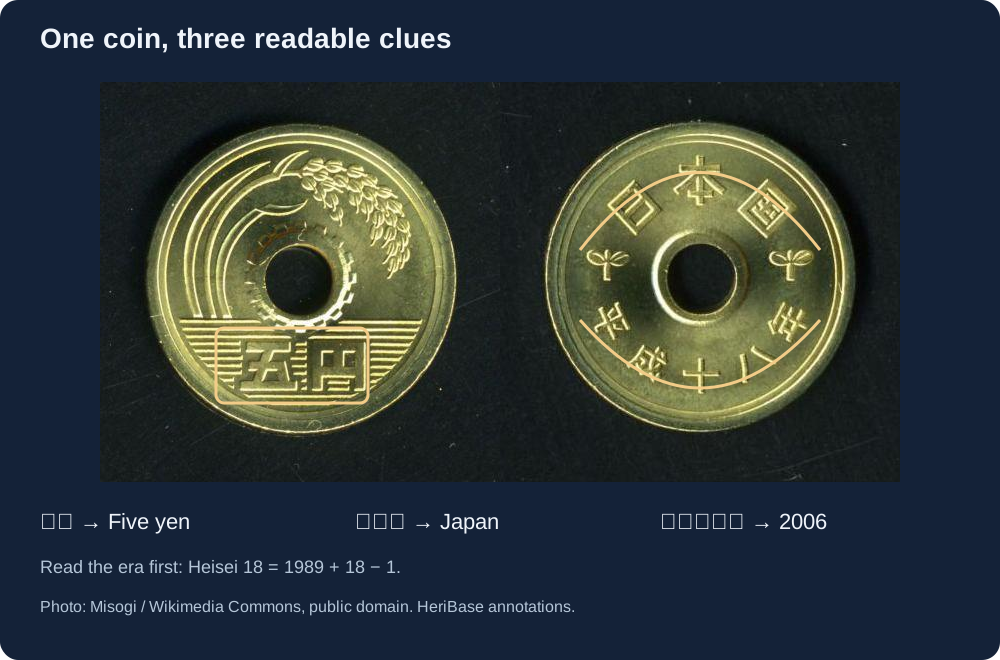
This example shows how three inscriptions combine to identify one issue. The same approach applies to a coin written in any language: separate the issuer, denomination and date rather than asking one symbol to establish all three.
The photograph above provides three separate checks:
- 五円 means five yen: 五 is five and 円 is the currency unit.
- 日本国 identifies Japan: these characters appear on the other face.
- 平成十八年 gives the era and year: Heisei 18 corresponds to 2006.
The hole and plant design help recognize the type, but the lettering makes the identification more specific. Japan’s Ministry of Finance lists the current-style brass 5 yen at 22 mm and 3.75 g. Those are reference specifications, not measurements of the photographed specimen and not a guarantee of authenticity.
3. Recognize the digits before deciding what they mean
Reading a number tells you its value; it does not tell you whether it is a date, denomination or anniversary. Keep the surrounding letters and symbols with the number.
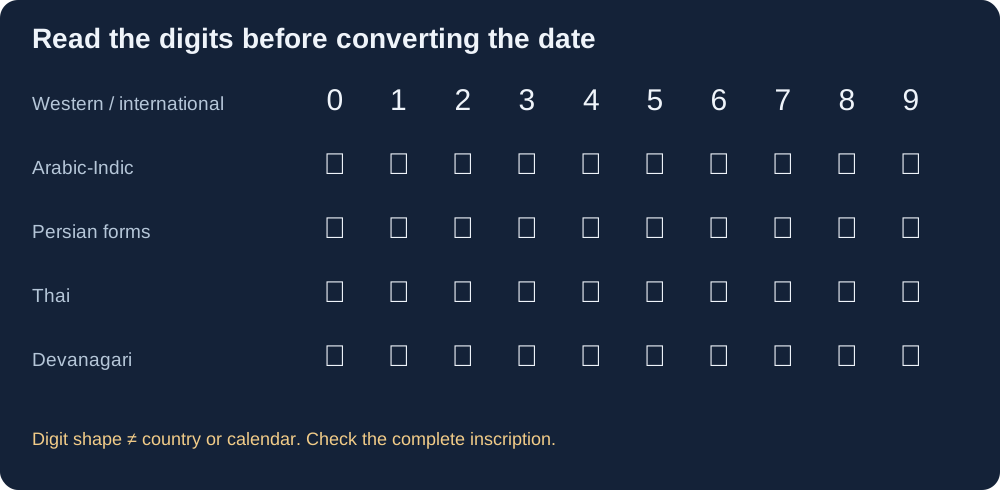
| Numeral forms | 0 → 9 |
|---|---|
| Western / international | 0 1 2 3 4 5 6 7 8 9 |
| Arabic-Indic | ٠ ١ ٢ ٣ ٤ ٥ ٦ ٧ ٨ ٩ |
| Persian forms | ۰ ۱ ۲ ۳ ۴ ۵ ۶ ۷ ۸ ۹ |
| Thai | ๐ ๑ ๒ ๓ ๔ ๕ ๖ ๗ ๘ ๙ |
| Devanagari | ० १ २ ३ ४ ५ ६ ७ ८ ९ |
For example, ١٤٤٥ reads 1445, and ๒๕๖๖ reads 2566. Neither transcription alone establishes the calendar. Do not reverse a string of digits simply because the surrounding language runs from right to left.
Coin lettering can differ from printed type, so compare uncertain digits with the original photograph and an issue-specific reference.
Japanese and Chinese numeral characters can work differently from a digit-by-digit substitution. In 十八, ten plus eight gives 18; 二十三 is two tens plus three, or 23. In a Japanese era date, 元年 denotes the first year. Preserve the full inscription so a partial reading does not turn into the wrong date.
4. Identify the calendar or reign before converting the year
A number on a coin is not automatically a date, and a date is not automatically Gregorian. Confirm the issuing system and any era name before applying a conversion. Also check whether the number marks the issue, a commemorated event or an anniversary.
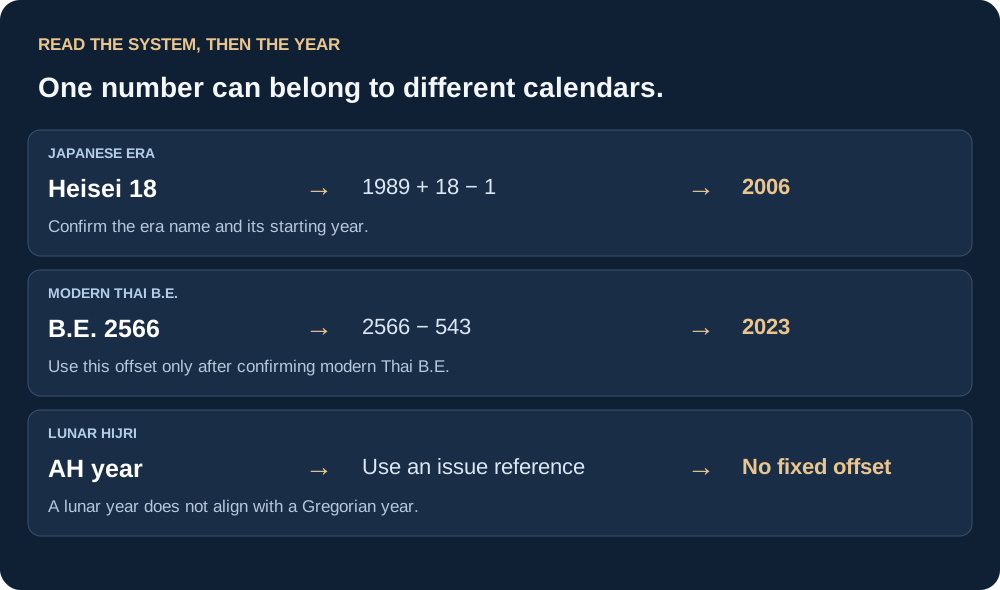
| System | How to handle it | Common mistake |
|---|---|---|
| Japanese era year | Read the era name and year together. Gregorian year = era start year + numbered year − 1. Heisei starts in 1989, so Heisei 18 = 2006. | Reading “18” as 1918, 2018 or the coin’s age. |
| Modern Thai Buddhist Era | Once the date is confirmed as modern Thai B.E., subtract 543. For example, 2566 − 543 = 2023. | Applying that rule to every historical Thai date or every Buddhist calendar. |
| Islamic Hijri year | Confirm the calendar from the issue’s reference. Lunar Hijri years do not align with Gregorian years; use a dated catalog entry or appropriate conversion reference. | Adding one fixed number to all dates written in Arabic script. |
Era transitions need special care. Japan’s official era table lists both Heisei 31 and Reiwa 1 in 2019. Matching only the Gregorian year can therefore miss the distinction recorded on the coin.
Arabic-script inscriptions can also accompany a Solar Hijri date. A lunar-calendar conversion is not suitable for a solar-calendar issue. If you have only a year, preserve the original year and calendar in the record; do not invent an exact Gregorian day.
A commemorative coin may display two dates for an anniversary. Read the mint’s description to distinguish the event dates from the coin’s issue date. If a date is genuinely absent or illegible, record a type or period until more evidence supports a specific year.
5. Cross-check emblems, portraits, denomination and edge
Use visual clues to narrow the possibilities, then require the details to agree. A portrait, eagle, crown or central hole can occur on many issues. One recognizable feature is not enough.
Read both sides: a 2020-W American Samoa quarter
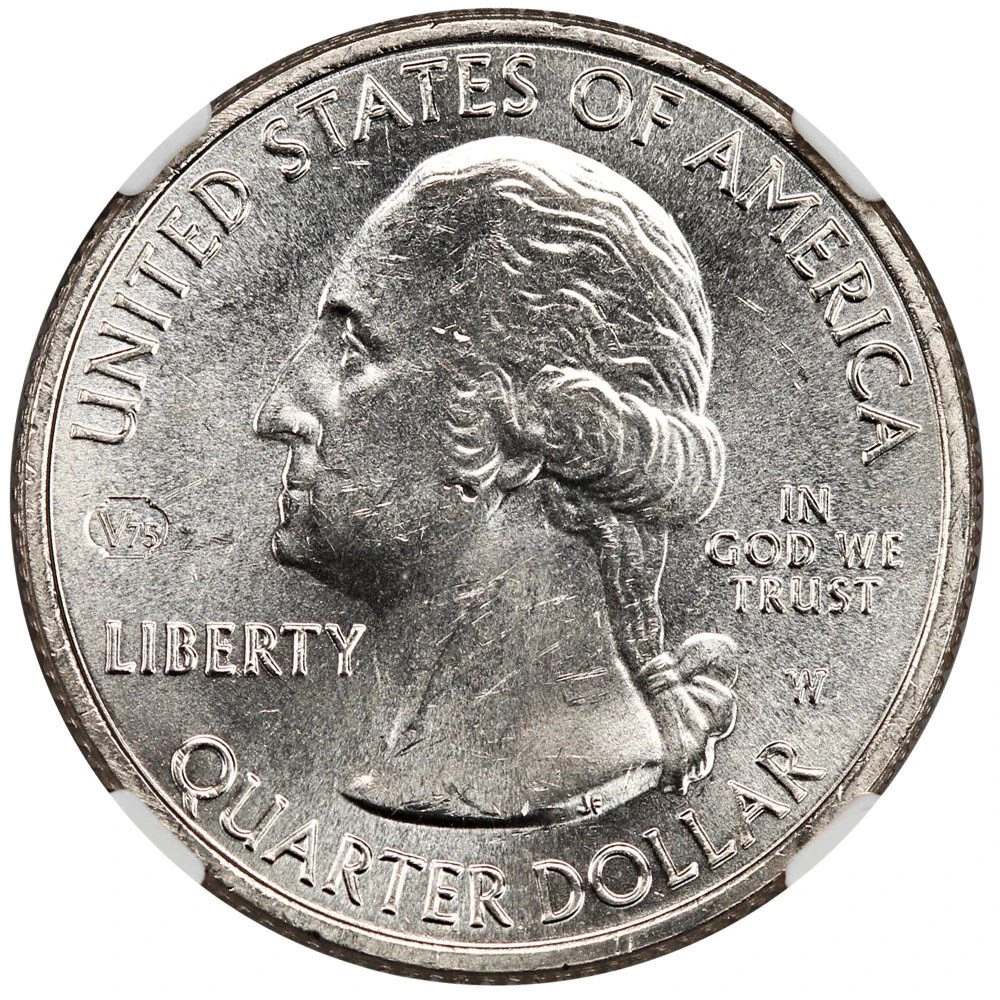
Obverse: issuer and denomination
The legend names the United States and the quarter-dollar denomination. The W mint mark sits to the right of the portrait; V75 is a separate privy mark.
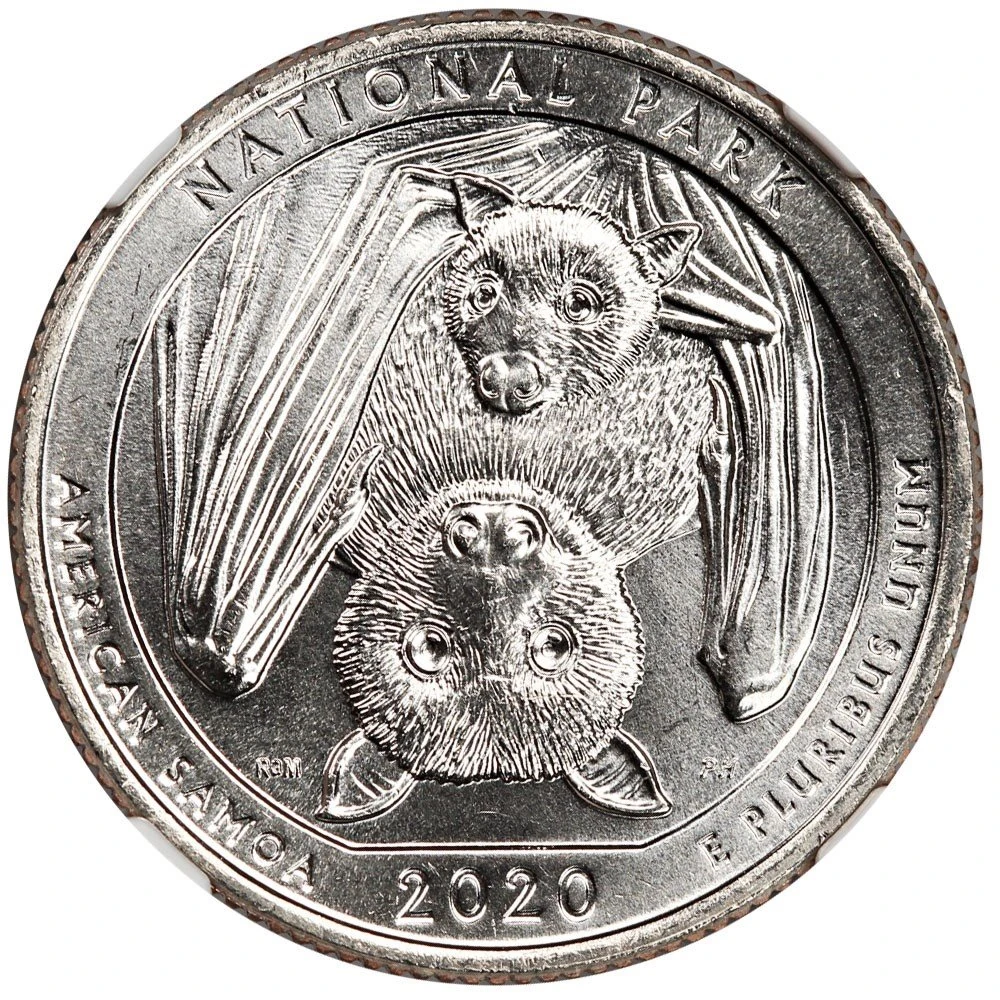
Reverse: design and date
The reverse names American Samoa and shows 2020. The place commemorated on this side does not replace the issuing authority named on the obverse.
These are the two photographs of auction lot 8225, reused from our national park quarters guide. They illustrate visible identification clues, not a new HeriBase test or an appraisal of your coin.
| Clue | What to compare | What it cannot settle alone |
|---|---|---|
| Emblem or coat of arms | Shield divisions, number of heads or stars, surrounding legend and position. | The issuing country from a generic bird or crown. |
| Portrait | Name, titles, portrait style and the design on the opposite face. | The country: one ruler can appear on multiple territories’ coins. |
| Denomination | The complete number and unit, including fractions or subunits. | The currency from “10” or “100” without its unit. |
| Edge | Plain, reeded, interrupted reeds or lettering; photograph the full inscription in overlapping views. | Authenticity from a single groove, seam or damaged area. |
| Size, weight and metal | Published specifications for the exact type and date range. | Composition from color or authenticity from one matching measurement. |
Euro coins show why both sides matter: the common denomination side identifies the euro value, while the national side helps identify the issuer. The ECB’s national-side reference provides an organized comparison. For unfamiliar national designs, also check its commemorative-coin reference.
For a general search, use a world-coin catalog such as Numista to narrow by issuer, denomination and physical features, then confirm the candidate with mint information or a specialist reference. A catalog number is an identifier within a named catalog, not a grade or price; record the catalog name with it.
6. Establish whether the object is a coin, token or medal
Classify the object by its issuing context and intended use, not by how familiar its design looks. A coin, a trade token and a medal can all carry portraits, dates and numbers. Look for a documented monetary issue, a particular service or issuer, or a commemorative purpose before choosing a reference category.
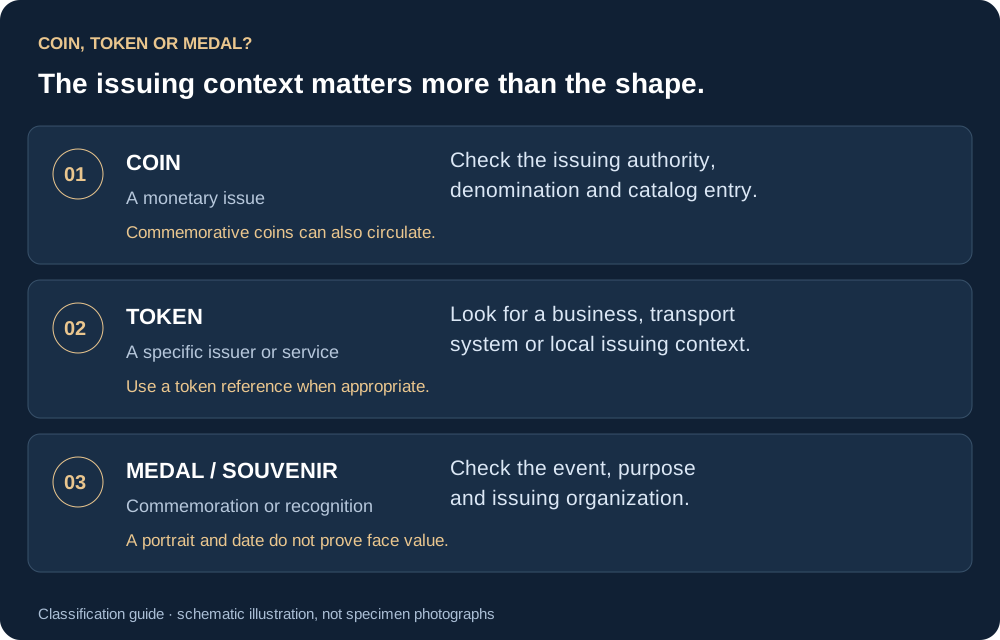
“World coins” is a broad catalog and collecting label, not a separate physical type or a synonym for coins that are foreign to the reader. “Commemorative” describes an issue’s purpose: a commemorative coin can also be a circulating coin and part of a world-coin collection.
- Circulation coin: a monetary issue intended for everyday transactions. An older circulation coin may no longer be spendable; its historical identity and present monetary status are separate questions.
- Commemorative coin: a monetary issue celebrating a person, place or event. Some circulate and others are made mainly for collectors. Establish its issuer and denomination rather than assuming a commemorative design makes it a medal.
- Token: a coin-like object used for a particular issuer, trade or service, such as admission or transport. It may carry a value or date without being a national currency coin. Historical local and emergency issues need specialist classification.
- Medal or souvenir: an object made to commemorate, reward or decorate, rather than necessarily serve as money. A portrait and date do not establish a denomination.
The ECB’s €2 commemorative coins illustrate the overlap: they have a commemorative national design and are legal tender throughout the euro area. That specific rule does not mean every collector coin has the same spending status.
If no normal coin entry matches, look for a business name, admission wording or local issuer and consult token or medal references. Do not conclude “fake” merely because the object is missing from a standard coin catalog. The British Museum’s token collections demonstrate why these objects require their own records.
7. Move from the issuer to the exact issue, metal and value
Identifying the issuer is a starting point; value depends on the specific issue and the condition of the individual coin. Finish the identification before using an attractive asking price as a comparison.
- Confirm the issue: issuer, denomination, written date and calendar, mint mark if present, and any relevant variety. A mint mark identifies a mint or production attribution under that series’ conventions; not every small letter is a mint mark.
- Check the metal: compare the exact date range with the published composition, weight and diameter. Silver-colored coins may be base metal, and gold-colored coins may be brass. Do not scratch, file or apply acid to a collectible to identify it.
- Describe condition: record wear, scratches, corrosion, holes or evidence of cleaning before assigning a grade. A photograph-based identification is not a grading certificate.
- Find comparable completed sales: match type, date, mint, variety and condition as closely as possible. Heritage Auctions’ coin archive, linked in References, provides a starting point; choose the category that matches the issuing authority and inspect the actual lot.
- Keep price concepts separate: record sale date, currency and fee basis. Face value, metal value, an app estimate, a seller’s asking price and a completed sale answer different questions.
If good comparables are unavailable, leave the value open or describe a broad range with explicit limitations. A less familiar design, an older style of lettering or an unusual shape does not by itself create a collector premium. Our guide to what makes a coin valuable explains the factors to consider after identification.
8. Use HeriBase, then ask an expert about the unresolved detail
Use HeriBase to obtain an initial identification, and request a human expert appraisal if you disagree with it or still have questions. Compare the proposed result with the coin’s lettering, both designs and measurements. The HeriBase user guide explains the identification workflow.
When an identification is uncertain, a focused question is more useful than “What is this worth?” Ask for help with a particular script, era, mint mark or conflicting catalog match. Check that the selected expert’s stated scope covers the region and period, and review the current fee and expected response time. Expertise in one coinage does not establish expertise in every country.
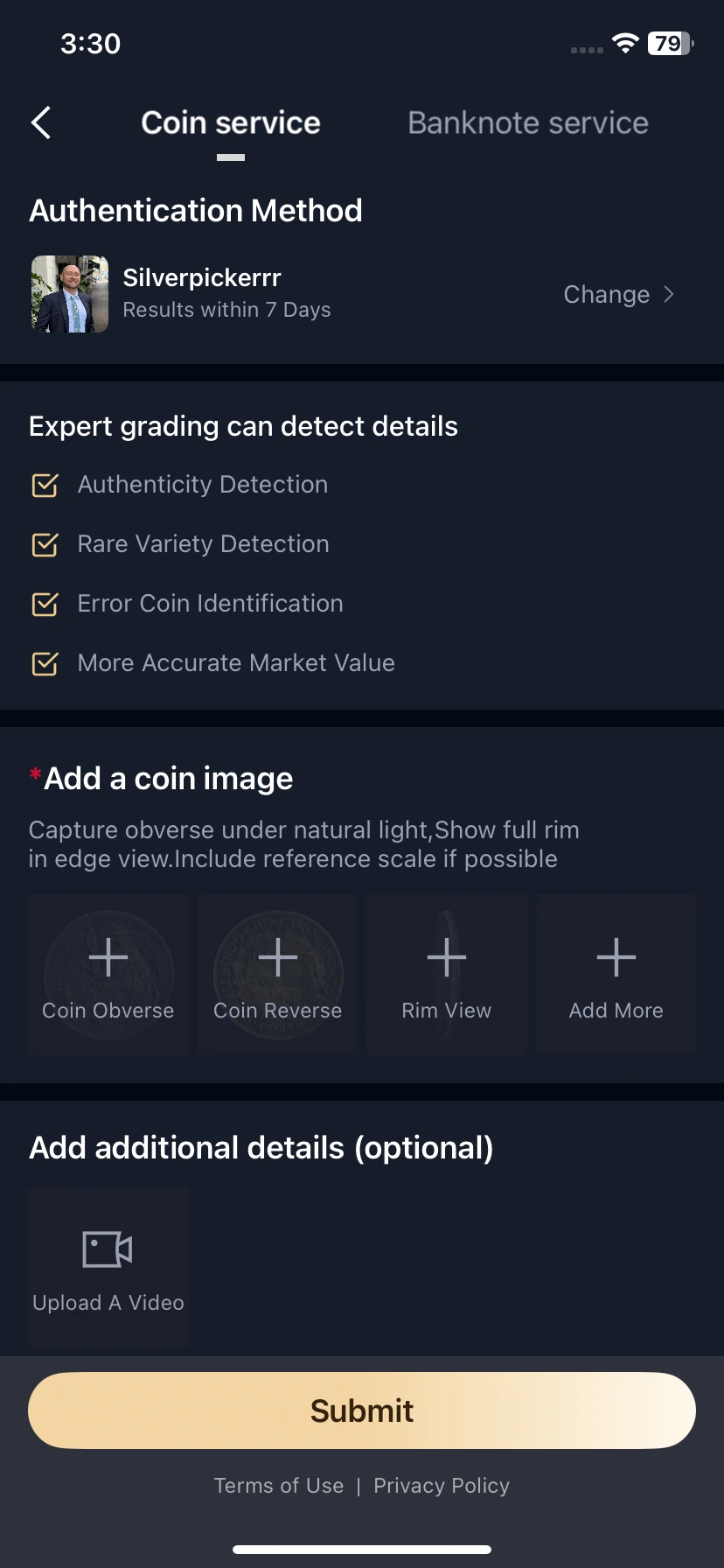
Submit both faces, the edge, close-ups of the uncertain inscription, and any weight or diameter measurements. Include the initial HeriBase result and a competing reference if one exists. The expert appraisal guide explains the submission entry; expert appraisal is separate from the Premium subscription.
Example question: “The coin appears to say 平成十八年, but the identification result gives another year. Can you confirm the era and numeral reading from these photographs?” This is an example of how to frame a request, not a reported HeriBase error or completed expert assessment.
If remote review cannot resolve an important authenticity or alteration question, arrange physical examination through an appropriate institution or authorized submission channel. NGC’s submission guide is one example in References. Confirm accepted coin types, local submission options and total costs before sending anything. This does not describe a HeriBase mail-in service, and routine identification does not require every coin to go through all three stages.
9. Save the identification with its evidence
A good result records what is known and what remains uncertain. Keep the original inscription alongside its translation or converted date so another collector or expert can check your reasoning.
For the illustrated coin, a useful type-level record is: Japan; 5 yen; 平成十八年 / Heisei 18 / 2006; holed brass type; reference specifications 22 mm and 3.75 g. Add your own specimen’s measurements and condition separately. The illustration does not establish a certified grade, authenticity opinion or sale value.
For your coin, save the two face photographs, edge photographs, issuer, denomination, original date, calendar, converted year where supported, catalog reference, observed measurements, sources and unresolved questions. Our beginner collection guide explains how to connect those records with the location of the physical coin.
Summary
A useful identification explains the whole coin: who issued it, what denomination it carries, how its date is written, and why both designs and physical details match the reference. Work from visible evidence, preserve inscriptions you cannot yet read, and check the calendar before assigning a year. Record the confirmed issue alongside the photographs, reference and any unresolved details; leave the value open until the identification and condition support a meaningful comparison.
Use HeriBase to begin the search, then check its suggestion against that record. If the result conflicts with the coin or you still have doubts, ask a human expert about the specific inscription, date, mint mark or variety. If photographs cannot settle the question, arrange examination of the physical coin through an appropriate professional institution. Choose the next step for the uncertainty that remains—you do not need every service for every coin.
FAQ
Can I identify a coin if I cannot read its inscription?
Often, yes. Both designs, the denomination, size and distinctive symbols can narrow the candidates. A reliable final match should still account for the inscription and date; use a reference or specialist for characters you cannot read.
Does Arabic writing mean the coin is from one particular country?
No. Arabic script is used across multiple languages and issuing authorities. Match the issuer, currency unit, complete design and date system rather than assigning a country from the script alone.
What if the date looks far in the future?
Check the calendar before judging the date. A modern Thai Buddhist Era year, for example, is 543 greater than the corresponding Gregorian year. First confirm that the number is a B.E. date rather than a denomination or a date from another system.
Can an app photograph prove that a coin is genuine?
No. An automated image match alone cannot establish authenticity. Request expert review if the result or physical details raise questions; some questions require examination of the coin itself.
Are commemorative coins always valuable?
No. Commemorative purpose does not establish scarcity or demand. Identify the exact issue, metal and condition, then compare relevant completed sales rather than relying on the design or original issue price.
What if I cannot find any matching coin?
Recheck the orientation, uncertain characters, edge and measurements, and consider tokens or medals. Send a specialist the complete record and the closest candidates. A failed catalog search does not prove rarity, an error or counterfeiting.
References
Sources and further reading
- Japan Ministry of Finance — Current coins list: denomination, composition and physical specifications for the 5 yen example.
- Japan National Tax Agency — Era and age table: Heisei/Gregorian equivalents and the 2019 era transition.
- Unicode CLDR — Numbering systems: numeral forms used in the digit reference.
- U.S. Air Force culture guide to Thailand, via GovInfo: Thai Buddhist Era and Gregorian date notation.
- Royal Museums Greenwich — The crescent Moon and Islamic calendar: lunar calendar context.
- European Central Bank — €2 national sides and €2 commemorative coins: national design comparison and commemorative circulation issues.
- Numista — Coin catalog: a searchable starting point for candidate identification, to be cross-checked against issue-specific references.
- British Museum — Trade token record T.4130: an example of separate token attribution.
- Heritage Auctions — Coin auction archives: completed-lot research; public results display sold prices, while account features require sign-in.
- NGC — How to submit: physical submission routes and preparation guidance.
- Misogi — 5JPY.JPG, Wikimedia Commons: public-domain photograph of the Japanese 5 yen coin. HeriBase added labels and outlines without altering the photographed coin. The digit chart is a HeriBase reference illustration, not a photograph of coin inscriptions.
- Quarter photographs: David Lawrence Rare Coins, auction lot 8225, via PCGS Auction Prices. The calendar and coin/token/medal diagrams are HeriBase educational illustrations.
The HeriBase submission screen is an existing user-guide asset, not a new identification test or verification of expert coverage. The pictured expert and response time are historical interface examples; check the current service in the app. This guide reports no new accuracy test, expert result or verified valuation.