

 App Store

COIN COLLECTING
Edward VIII Coins: British Patterns, Portraits and Abdication
Separate genuine Edward VIII British patterns from circulating colonial issues, modern fantasies and replicas. Understand the left-facing portrait and the halted 1937 coinage plan.
 HeriBase TeamPublished
In this article
Were Edward VIII coins issued in Britain?
Edward VIII’s portrait coinage was not released into regular British circulation before his December 1936 abdication, but genuine trial and pattern pieces exist. Humphrey Paget’s left-facing portrait is a key design detail, not an error. Distinguish British patterns, coins from other issuing territories and modern fantasies before using a rare-pattern price.
Reviewed November 13, 2026. Historical figures retain their stated dates, currency and comparison limits.
Which real features should I compare?
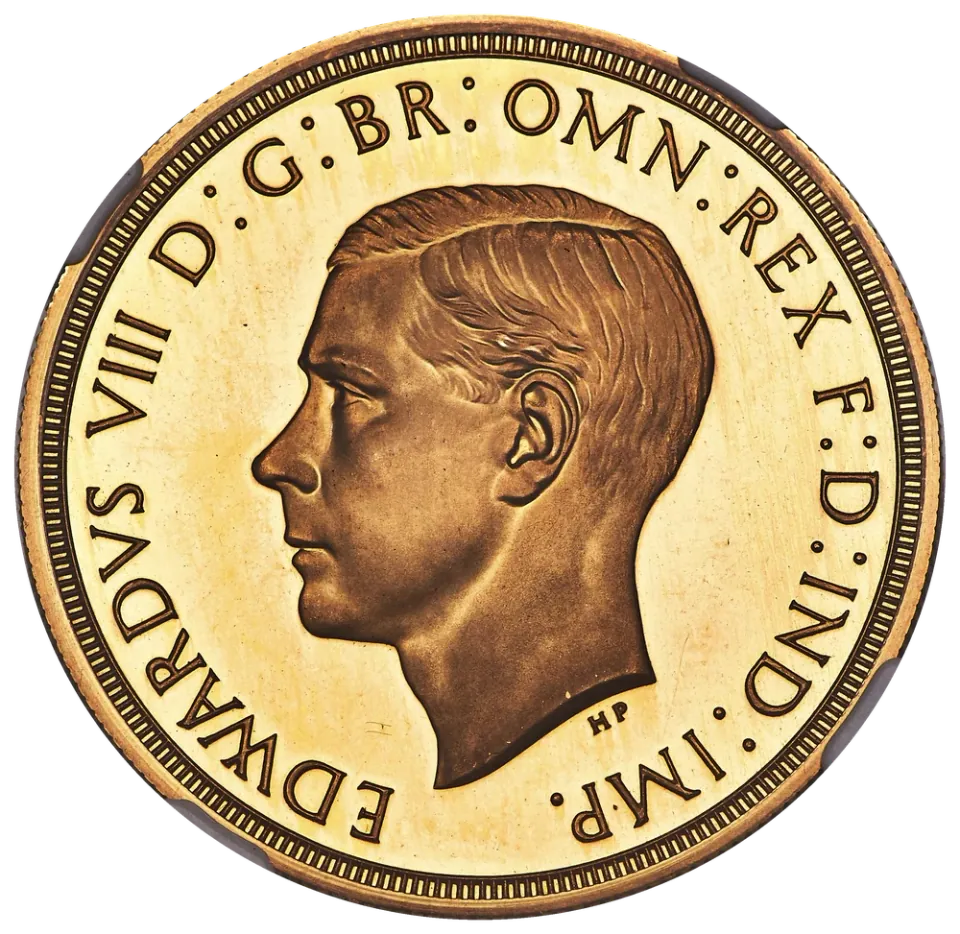
What background helps identify the object?
Why did the planned coinage stop?
Edward VIII became king in 1936, but his abdication interrupted preparations for the new British coinage. The Royal Mint had prepared patterns rather than releasing the proposed portrait series into ordinary circulation. A 1937 date on a genuine pattern therefore does not prove that Edward remained king throughout that year.
The portrait was prepared by Humphrey Paget. Edward preferred his left profile, departing from the customary alternation of portrait directions between successive monarchs. That is a deliberate design choice. It should not be confused with a coin accidentally struck from misaligned dies or a mirror-image photograph.
How do the issues and evidence compare?
| Category | Issuing context | What to inspect | Evidence required | Price comparison |
|---|---|---|---|---|
| British pattern / trial | Proposed British royal coinage | Denomination, date, portrait and reverse | Specialist catalog and provenance | Same genuine pattern and preservation |
| Territorial issue | A particular issuing territory | Issuer’s name and local denomination | That territory’s official issue history | Not a British pattern result |
| Modern fantasy | Later imagined design | Modern maker and declared status | Honest product description | Its own collectible market |
| Replica / copy | Imitation of an earlier piece | Copy marks, fabric and documentation | Authentication before any rarity claim | Cannot inherit genuine-pattern value |
| Medal | Commemorative rather than money | No assumption of monetary denomination | Correct maker and event | Not automatically a coin |
Does “no British circulation coins” mean nothing was made?
No. A prepared pattern is a real numismatic object even when a proposed circulation program is halted. Conversely, the existence of a pattern does not establish that an ordinary British date-and-mint set was released. Keep production for evaluation separate from issue into circulation, and specify Britain rather than making a sweeping statement about every territory associated with the monarch.
How should I read a famous million-pound result?
The Royal Mint’s 2019–2020 annual report records sourcing an Edward VIII sovereign for a private buyer at £1 million. This is a dated private-transaction example, not an auction hammer price or a present minimum for every Edward VIII object. It concerns a sovereign; the five-pound pattern pictured here is a different denomination and is not assigned that transaction.
Which documents matter most?
For an exceptional pattern, ask for its specialist catalog identity, ownership and sale history, examination record and photographs of the exact object. Stable marks can help connect earlier appearances. A dramatic account of abdication cannot establish that a modern replica is an original Mint pattern. An old-looking presentation case is also not a substitute for identifying the coin inside.
How can a collector approach the subject without buying a rarity?
Study official museum photographs, compare the portrait and reverse proposals, or build a clearly described history collection with related ordinary issues. A reproduction can be an educational object if honestly labeled; it must not be entered in a record as an authenticated pattern. The issuer and portrait identification guide helps separate monarchy, issuing authority and denomination.
Before a major purchase, use specialist appraisal preparation and keep the exact scope of the opinion clear. A photograph can document visible design but cannot by itself establish metal, mint origin or the absence of repair.
What should I check in three steps?
- 01Read the issuer, denomination and date; decide whether the object claims to be a British pattern, territorial coin, medal or later fantasy.
- 02Compare the left-facing portrait and reverse with the exact specialist entry, preserving full photographs and documentation.
- 03Authenticate an important candidate and compare the same pattern and condition. Keep the 2019–2020 sovereign transaction separate from other denominations.
What should I remember?
Genuine Edward VIII British patterns exist, despite the halt to circulation coinage. The left-facing portrait is intentional. Identify the issuing context and denomination, then use provenance and direct examination rather than applying a sovereign’s price to a replica or another pattern.
What else do collectors ask?
Did Edward VIII portrait coins circulate normally in Britain?
The proposed British portrait coinage was not released into ordinary circulation before abdication. Genuine trial and pattern pieces exist.
Why does the portrait face left?
Edward preferred that profile. Paget’s left-facing design deliberately departed from the usual alternating convention.
Does a 1937 date prove he was still king then?
No. A proposed coinage date is not proof of the monarch’s reign continuing through that calendar year.
Are all Edward VIII objects British patterns?
No. Identify territorial coins, medals, fantasies and copies separately by their actual issuer and manufacture.
Was £1 million an auction price for the pictured coin?
No. The Royal Mint’s annual report records a private sovereign transaction. The pictured five-pound pattern is a different denomination.
Can a replica be used in a history collection?
Yes, when clearly labeled as a reproduction. It must not be represented or priced as an authenticated original pattern.
Which references support this guide?
References and further readingExpand
- Royal Mint Museum: Edward VIIIPatterns, Paget’s portrait and absence of circulating portrait issues.
- Royal Mint: year of three kingsAbdication and interrupted British coinage plans.
- Royal Mint 2019–2020 annual reportPrivate £1 million Edward VIII sovereign transaction.