

 App Store

COIN VALUE GUIDES · ERRORS & VARIETIES
1975 Penny Errors:Photo Comparisons, Damage Checks and Auction Prices
Compare a normal 1975 cent with a certified double strike, locate the diagnostic features and separate verified auction results from unsupported error claims.
 HeriBase TeamPublished
In this article
Which 1975 penny errors are worth checking?
A 1975 penny needs a confirmed minting error, not simply an unusual color, missing mint letter or damaged surface, to justify an error premium. Start with the normal copper-alloy Lincoln Memorial cent: a plain edge, nominal 3.11 g weight and 19 mm diameter. No mint mark is normal for Philadelphia; D identifies Denver.
Documented examples include a 1975-D double strike sold for US$168, a cent on a dime blank for US$242.40, and a cent overstruck on an already-struck 1975 dime for US$960. These historical results belong to particular certified coins. They are not a price range for an unidentified penny. First establish what happened during production, then compare the same error, grade and visibility.
Normal 1975 penny vs. a genuine double strike
The left-hand photos show an ordinary Philadelphia cent. The right-hand photos show one certified ANACS MS60 RB specimen with a second strike attributed as 80% off-center and uniface. The date remains visible. Compare the full shape before studying tiny letters.
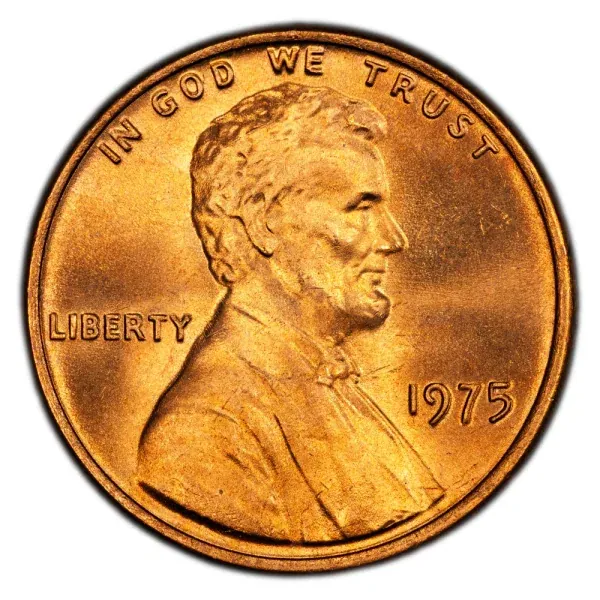
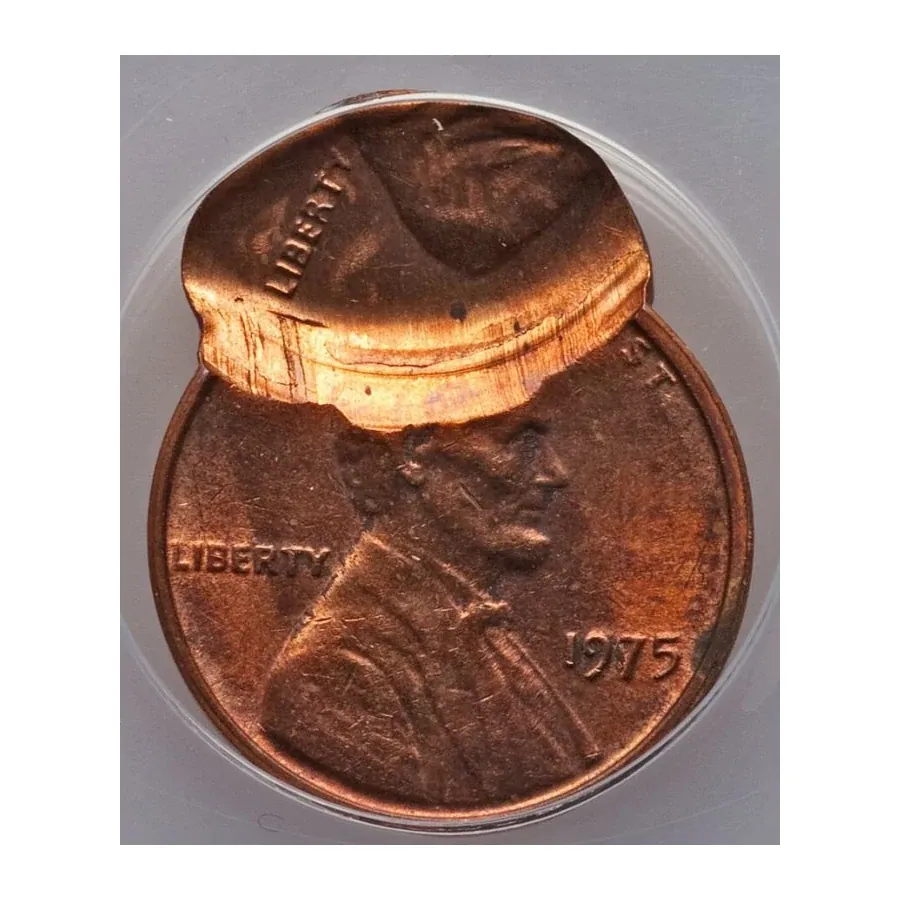
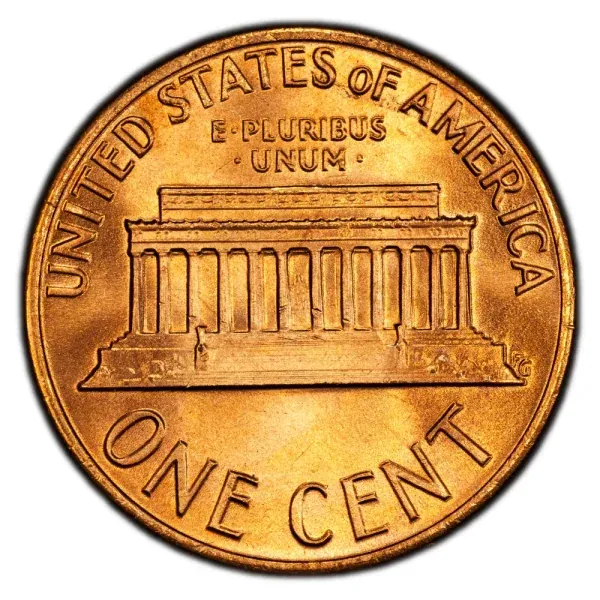
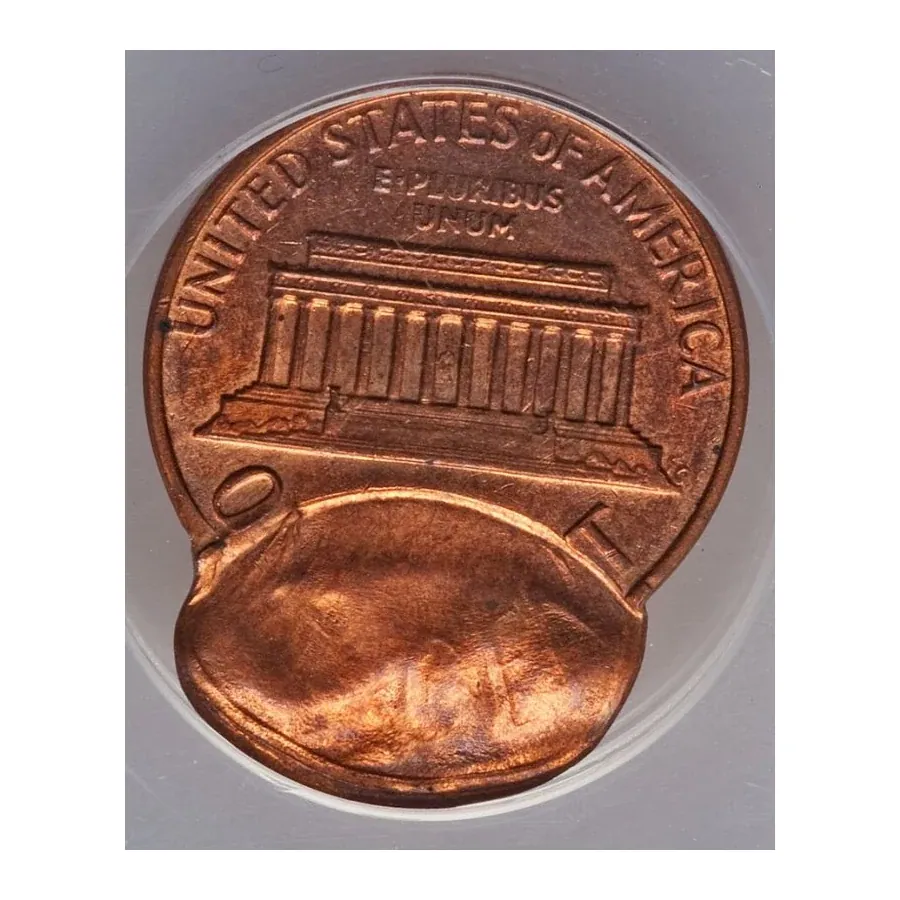
The illustrated ANACS coin is a diagnostic example. It is a different specimen from the NGC-graded auction lots below; its photographs are not being used to establish any of those sale prices.
Know the normal coin before calling an error
In 1975, the cent used Lincoln’s portrait by Victor D. Brenner and the Memorial reverse by Frank Gasparro. This was a copper-based issue, before the later copper-plated zinc composition. A normal date, mint letter or original copper color is part of the issue’s identity, not a striking mistake.
| Feature | Normal reference | Why it matters |
|---|---|---|
| Design | Lincoln / Lincoln Memorial | Compare the correct design family |
| Mint identification | No letter: Philadelphia; D: Denver; S: San Francisco Proof | No-letter circulation cents are normal |
| Composition | 95% copper, 5% zinc | Color alone does not identify a different blank |
| Nominal weight | 3.11 g | Screen an intact coin with a suitable scale |
| Diameter / edge | 19 mm / plain | Check size together with weight and strike |
A shiny Proof is a different manufacture category, not automatically an error. For gold- or silver-colored surfaces, use the 1975 penny color and normal-value guide. It covers ordinary issues and altered coatings; this page concentrates on minting mistakes.
1975 penny error identification: where to look
| Category | Normal comparison | Feature location | False positive to exclude | Evidence needed |
|---|---|---|---|---|
| Double strike | One coherent design | Second portrait, letters or displaced strike area | Impact marks and machine doubling | Coherent additional struck detail on the coin |
| Off-center strike | Design centered within the rim | Missing design at one side, unstruck area at the other | Misaligned die or a ground-down edge | Both faces, rim and date visibility |
| Wrong planchet | Normal cent weight, size and alloy | Whole coin and incomplete border detail | Plating or deliberate metal removal | Compatible measurements and specialist attribution |
| Double denomination | Only cent designs | Surviving design of the underlying denomination | Contact impressions made after minting | Authenticated overstrike on an already-struck coin |
1. Double strike: follow the extra design, not just the outline
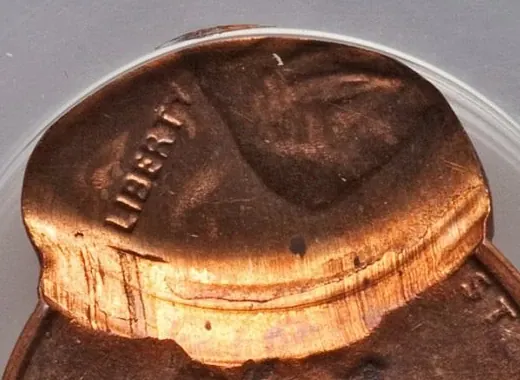
Look above Lincoln’s original portrait. In the pictured coin, another LIBERTY appears on the raised upper extension. The original date is still at the lower right. The reverse shows the corresponding distorted lower extension.
A double strike means two separate strikes of the coin. It does not mean the working die carried doubled lettering. Do not treat the photographed shape as a template every double strike must match: the position of the second strike can differ. For a die-variety comparison, see the 1955 doubled-die guide.
2. Off-center vs. a misaligned die
Examine the complete rim on both faces. A genuine off-center strike leaves part of the intended design outside the struck area, with unstruck metal elsewhere. A shifted design on only one face may instead involve die alignment. A broadstrike concerns striking without normal collar restraint; it is not automatically the same as an off-center strike.
Record which parts of the date and mint mark survive. Do not estimate a striking percentage from a cropped photograph or call an ordinary uneven rim a major error. The illustrated second-strike coin combines displacement with a prior strike; it is not an example of a simple, single off-center strike.
3. Wrong dime blank vs. a cent struck over a dime
These are different claims. A dime blank has not yet received a dime design. A double-denomination overstrike starts with an already-struck coin and can retain parts of that first design beneath the cent impression. Both require more evidence than a silver-colored surface.
The recorded 1975 dime-blank lot weighed 2.3 g. Compare that specific attribution with the normal cent baseline, then measure your own coin without scraping it. Weight by itself cannot distinguish the two error categories or authenticate the metal. An altered cent can also weigh less after material has been removed.
Damage and doubling that can mislead you
Flat doubling is not an automatic doubled die
Inspect the date, LIBERTY and IN GOD WE TRUST under steady light. A thin, flat shelf beside a character can be machine doubling. A doubled-die claim needs matching diagnostic details for an attributed variety; two apparent edges in one photograph are insufficient. This article does not assign a 1975 doubled-die premium to an unverified coin.
A hit, scratch or coating is not evidence of a second strike
Ask whether the extra feature forms readable, correctly oriented struck detail, or instead cuts into the surface and pushes metal to its sides. Check the opposite face and edge. Dark spots, a bent outline, missing letters and a bright coating each need their own explanation; none independently proves a valuable error.
For color changes, compare the existing 1975 gold-colored penny discussion. For surface alteration, use the cleaned-coin guide. Keep uncertain coins uncleaned so a specialist can examine the original evidence.
- 01Photograph. Capture both entire faces, a close-up of the feature and the edge. Avoid glare, filters and digital sharpening that invents outlines.
- 02Measure. Record weight and diameter, including the scale’s precision. Repeat a surprising reading before drawing conclusions.
- 03Attribute before pricing. Compare the exact year, mint, error mechanism and grade. A photo match in an app is a starting point; see how to verify an identification result.
Verified 1975 penny error auction sales
These are completed sales from original auction records, checked November 11, 2026. The amounts are the archive’s displayed sold-for totals in U.S. dollars, not current asking prices or a guarantee for another coin. The three lots involve different errors and grades.
| Coin and error | Grade | Sale date | Recorded total | Auction / lot |
|---|---|---|---|---|
| 1975-D · double struck, broadstruck / off center | NGC MS65 Brown | October 16, 2019 | US$168.00 | Heritage 131942 / 25636 |
| 1975 · struck on 10c blank, 2.3 g | NGC MS63 | April 15, 2021 | US$242.40 | Heritage 60197 / 91039 |
| 1975 · struck on an already-struck 1975 dime | NGC MS66 Brown | August 19, 2018 | US$960.00 | Heritage 1278 / 8452 |
NGC Auction Central independently lists the US$242.40 dime-blank result and states that its realized prices include the auction house’s commission. The 2018 and 2019 Heritage records list a 20% buyer’s premium. Keep the displayed totals intact rather than adding that percentage again; do not confuse a buyer’s total with a seller’s net proceeds.
How to use these results
The US$960 coin is not proof that a plated cent is worth US$960. Its attribution includes an already-struck dime. Likewise, a heavily displaced MS60 double strike is not interchangeable with the MS65 Brown lot. Grade, remaining design, damage, eye appeal and sale date can all change the comparison.
Save the certification number and original auction reference when researching your own coin. Compare multiple completed transactions when available, keeping fees and currencies consistent. The coin and banknote value guide explains the comparison process; if an attribution remains uncertain, start with the appraisal checklist before paying submission costs.
What to do with an unusual 1975 penny
Check shape and struck detail first, measurements second, price last. The strongest evidence is a production feature that fits the entire coin, not an attractive online price attached to the same date.
Keep ordinary no-letter and D cents separate from confirmed errors. Preserve both sides, record the feature and seek an attribution when the evidence does not agree. For more dates and error types, continue with the illustrated Lincoln penny error list.
Frequently asked questions
Is a 1975 penny with no mint mark an error?
No. A normal Philadelphia 1975 Lincoln cent has no mint letter. A missing letter alone does not identify an error or justify an error-coin price.
What 1975 penny errors have documented auction sales?
Heritage recorded a 1975-D double-struck cent at US$168 on October 16, 2019; a 1975 cent on a dime blank at US$242.40 on April 15, 2021; and a cent struck on an already-struck 1975 dime at US$960 on August 19, 2018. These are individual certified specimens, not general prices for all 1975 pennies.
Is a silver-colored 1975 penny a wrong-planchet error?
Not necessarily. A coating or surface alteration can change color. A wrong-planchet attribution requires compatible weight, dimensions, metal and struck detail. The documented dime-blank auction specimen weighed 2.3 grams; a normal cent has a nominal weight of 3.11 grams.
Is a double-struck 1975 penny the same as a doubled die?
No. A double strike means the coin received two strikes. A doubled die carries duplicated design detail on the die itself. Flat, shelf-like machine doubling is another distinct effect and should not be priced as a confirmed doubled die.
Where should I look for a 1975-D penny error?
Read the D below the date, then inspect the entire rim, date, LIBERTY and reverse lettering. For a second-strike claim, look for displaced struck detail and corresponding metal deformation, not just a nick beside the mint mark.
Should I clean a suspected error before getting it checked?
No. Preserve the surfaces. Photograph both sides and the edge, record weight and size, and compare the same issue and error type. Seek an attribution when the cause remains uncertain before paying grading fees or assigning an auction price.
References
Sources and auction records
- PCGS CoinFacts · 1975 Lincoln centNormal design, alloy, nominal weight and dimensions.
- PCGS CoinFacts · 1975-S Proof centSan Francisco Proof issue.
- PCGS · Double-Struck Mint ErrorsDistinguishes a second strike from die doubling.
- PCGS · Double-Denominations: Two Coins in OneHow an already-struck coin can receive another denomination’s design.
- PCGS · Machine doublingFlat shelf-like doubling and the need for proper attribution.
- Heritage · Auction 131942, lot 256361975-D double strike; October 16, 2019; US$168.
- Heritage · Auction 60197, lot 910391975 cent on a dime blank; April 15, 2021; US$242.40.
- Heritage · Auction 1278, lot 84521975 cent overstruck on a 1975 dime; August 19, 2018; US$960.
- NGC Auction Central · 1975 cent resultsCross-check of the dime-blank sale and commission-inclusive price definition.