

 App Store

COIN VALUE GUIDES · PENNY GUIDES
Penny Error List with Pictures:20 Valuable Lincoln Cents
Check 20 Lincoln penny errors and die varieties by year. See what to look for in specimen photos and compare documented auction prices by grade.
 HeriBase Team
Published
In this article
Quick answer
Start with whatever looks unusual: the metal, doubled details, the mint mark or the spacing on the back. A magnetic 1944 cent merits a closer look, while a magnetic 1943 cent is usually an ordinary wartime issue. A doubled die should match a specific pattern on the date, letters or portrait.
This list covers 20 selected Lincoln cent errors and die varieties, arranged by year within each group. The prices are completed U.S. dollar sales for individual examples. Many were unusually well preserved, so use the grade and attribution alongside the price.
Highest sales in this list · 1958 Doubled Die Obverse ($1,136,250), 1943-D bronze ($840,000) and 1969-S Doubled Die Obverse ($601,875).
What to look for in the photos
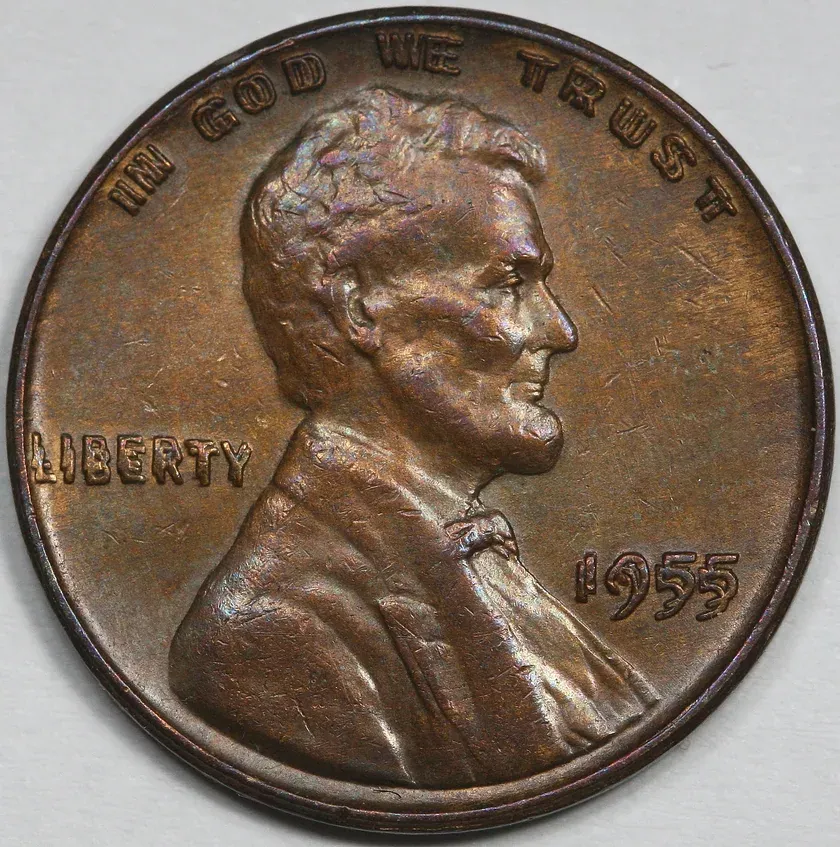
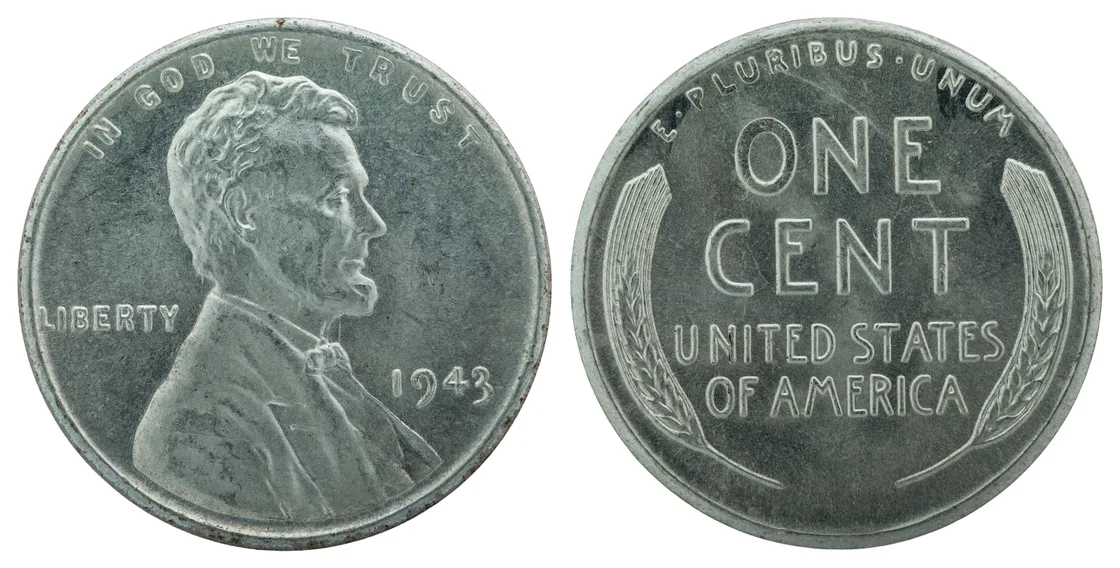
Turn a penny over before ruling out a variety. On a 1983 Doubled Die Reverse, the strongest clues are in the back lettering. On the 1992 Close AM varieties, the clue is the spacing between two letters. Each row below leads to a photo of the attributed issue and its sale evidence.
Wrong metal: check the magnet and weight first
The U.S. Mint used zinc-coated steel in 1943 to conserve copper for World War II. When the cent went back to a copper alloy in 1944, the unusual combination flipped: bronze is the exception in 1943, steel in 1944. In 1982, the change to copper-plated zinc created a different set of normal and abnormal metal-and-date combinations. The 1943 bronze authentication guide and 1982 penny guide show how to compare each date.
| Date and variety | Type | Identification clue | Auction sale | Evidence |
|---|---|---|---|---|
| 1943 Philadelphia bronze | Wrong planchet | Look for a 1943 date without a mint mark on a nonmagnetic cent near 3.11 g. Copper-colored plating over steel still attracts a magnet. | $372,000 PCGS MS62BN · Heritage · Feb 2021 | Photo & sale |
| 1943-D bronze | Wrong planchet | Check the D below the date as well as the alloy. An added D can make a Philadelphia specimen or an altered coin look like Denver. | $840,000 PCGS MS64BN · Heritage · Jan 2021 | Photo & sale |
| 1943-S bronze | Wrong planchet | Look for the S below the date, then check for nonmagnetic bronze. A brown surface can appear on an ordinary steel cent. | $504,000 PCGS MS63BN · Heritage · Nov 2020 | Photo & sale |
| 1944 Philadelphia steel | Wrong planchet | The date reads 1944 without a mint mark. Check for strong magnetic attraction, then examine whether the surface is plated. | $180,000 PCGS MS64 · Heritage · Jun 2021 | Photo & sale |
| 1944-D steel | Wrong planchet | Look for D under 1944 and a magnetic, steel-weight blank. A silvery coating on a normal bronze cent leaves the bronze core. | $122,000 PCGS MS62 · Heritage · Jan 2026 | Photo & sale |
| 1944-S steel | Wrong planchet | Check for S below 1944. Compare the date and mark to a certified specimen before drawing conclusions from a magnet test. | $408,000 PCGS MS66 · Heritage · Aug 2021 | Photo & sale |
| 1982-D Small Date bronze | Wrong planchet | Match the Small Date numerals and D, then weigh the coin. A normal 1982-D Small Date is copper-plated zinc at about 2.50 g. The bronze lot below weighed 3.07 g. | $10,800 NGC AU58 · Heritage · Apr 2019 | Photo & sale |
Doubled dies: find the second outline
DDO means doubled die obverse and DDR means doubled die reverse. The duplication originates in the die, so coins struck from it repeat the same pattern. At auction, BN, RB and RD identify brown, red-brown and red copper surfaces. Compare the ordinary 1955 issues and 1983 reverse diagnostics if you have either date in hand.
| Date and variety | Type | Identification clue | Auction sale | Evidence |
|---|---|---|---|---|
| 1955 Doubled Die Obverse | Obverse die variety | Compare the entire date, LIBERTY and the motto. A faint extra edge on the last 5 alone is a common look-alike. | $114,000 PCGS MS65+RD · Stack’s Bowers · Mar 2018 | Photo & sale |
| 1958 Doubled Die Obverse | Obverse die variety | Start with LIBERTY and the motto. The split lettering is a better lead than the comparatively subtle doubling in the date. | $1,136,250 PCGS MS65RD · GreatCollections · Jan 2023 | Photo & sale |
| 1969-S Doubled Die Obverse | Obverse die variety | Look for separation across the date and front lettering. The S was punched separately, so doubling confined to the mint mark is a poor match. | $601,875 PCGS MS66RD · GreatCollections · Jan 2023 | Photo & sale |
| 1970-S Doubled Die Obverse | Obverse die variety | Match the strong doubling on LIBERTY and the motto to the FS-101 Large Date variety. A Small Date or a faint doubled 0 alone is insufficient. | $38,400 PCGS MS66+RD · Heritage · Aug 2024 | Photo & sale |
| 1972 Doubled Die Obverse, Die 1 | Obverse die variety | Compare the doubled date and letters with Die 1. Other 1972 doubled dies have different patterns and sale histories. | $14,400 PCGS MS67+RD · Heritage · Jun 2019 | Photo & sale |
| 1983 Doubled Die Reverse | Reverse die variety | Turn the cent over and check UNITED, E PLURIBUS UNUM and ONE CENT for separated lettering. | $7,050 PCGS MS68RD · Heritage · Jul 2017 | Photo & sale |
| 1984 Doubled Ear | Obverse die variety | Check for a second earlobe below Lincoln’s ear. Compare the beard and bow tie too, especially if the supposed extra lobe looks like a scratch. | $3,910 PCGS MS68RD · Heritage · Jul 2009 | Photo & sale |
| 1995 Doubled Die Obverse | Obverse die variety | Check LIBERTY and IN GOD WE TRUST. Compare the shape and direction of the doubling before using prices for this attribution. | $5,052.50 PCGS MS69RD · Heritage · Jan 2017 | Photo & sale |
Mint marks and reverse dies: check what belongs there
Start with the normal design and finish for that year. Use the Mint Mark Finder to locate the mark before assessing its absence. For AM varieties, compare the reverse from a straight-on angle, in good light.
| Date and variety | Type | Identification clue | Auction sale | Evidence |
|---|---|---|---|---|
| 1922 No D, Strong Reverse | Die-pair variety | Match the distinct Strong Reverse die pair. A weak or missing D by itself can be misleading, especially on worn or altered coins. | $92,000 NGC MS64 · Stack’s · Jan 2008 | Photo & sale |
| 1990 No S Proof | Proof die variety | First establish that the coin is a Proof. An ordinary Philadelphia circulation cent without a mint mark is expected for this year. | $20,700 PCGS PR69 · Bowers & Merena · Aug 2007 | Photo & sale |
| 1992 Philadelphia Close AM | Reverse die variety | On a no-mark circulation cent, look for a nearly closed gap between A and M in AMERICA. Compare the FG initials and their position as a second check. | $25,850 PCGS MS67RD · Heritage · Jan 2017 | Photo & sale |
| 1992-D Close AM | Reverse die variety | Confirm the D on the front and the tight AM spacing on the back. Look for the complete reverse design match rather than judging from a worn letter edge. | $14,100 PCGS MS65RD · Heritage · Feb 2014 | Photo & sale |
| 1998 Philadelphia Wide AM | Reverse die variety | Check the clear gap between A and M on the no-mark circulation cent. Keep 1998 Proofs separate when comparing the reverse. | $940 PCGS MS67 · Heritage · Jun 2014 | Photo & sale |
Three checks before pricing your penny
- Record the complete coin. Photograph both sides in angled light and add a close-up of the suspected feature. Use the original surface. Cleaning can erase clues and reduce what buyers will pay.
- Choose a test that fits the feature. For suspected wrong metal, use a scale reading to 0.01 g and a magnet. Around 2.70 g is typical for a zinc-coated steel cent, 3.11 g for the bronze composition discussed here, and 2.50 g for copper-plated zinc. Wear, coatings and altered dates can complicate those tests. For doubled dies, look for repeated contours across the correct letters.
- Compare more than one sold coin. Match the full attribution, grade and finish. For example, a 1983 Doubled Die Reverse graded PCGS MS65RD sold for $432 at Stack’s Bowers in March 2026, while the MS68RD example in the table sold for $7,050. The same variety can sell for very different amounts.
Summary
Read the date, identify the unusual feature and match it to a published specimen. Save the price comparison for after you have checked the alloy, die or finish that makes that specific cent collectible.
FAQ
What should I check first on an unusual penny?
Record the date and mint mark, then photograph both sides. Use a magnet and a scale for a metal mismatch, or compare the exact letters and features for a die variety.
Is every doubled-looking penny a doubled die?
No. Machine doubling often leaves a flat shelf that cuts into a letter, and worn dies can blur the design. Match the shape, direction and location of the features to an attributed specimen.
Are pennies without mint marks valuable errors?
Often a missing mint mark is normal for a Philadelphia circulation cent. The 1922 No D Strong Reverse and 1990 No S Proof need different evidence: a specific die pair in 1922 and a genuine Proof finish in 1990.
Does the sale price in this list tell me what my penny is worth?
Each price is a completed sale for one attributed coin. Compare multiple sold examples with the same attribution, grade, color designation and surface quality before estimating a value.
References
References and further reading
Specimen photos can show a different example of the same issue. The listed prices come from the dated records.
- 1943 Philadelphia bronze · Specimen photos · Sale record
- 1943-D bronze · Specimen photos and sale
- 1943-S bronze · Specimen photos · Sale record
- 1944 Philadelphia steel · Specimen photos · Sale record
- 1944-D steel · Specimen photos and sale
- 1944-S steel · Specimen photos · Sale record
- 1982-D Small Date bronze · Specimen photos and sale
- 1955 Doubled Die Obverse · Specimen photos and sale
- 1958 Doubled Die Obverse · Specimen photos and sale
- 1969-S Doubled Die Obverse · Specimen photos · Sale record
- 1970-S Doubled Die Obverse · Specimen photos · Sale record
- 1972 Doubled Die Obverse, Die 1 · Specimen photos · Sale record
- 1983 Doubled Die Reverse · Specimen photos and sale
- 1984 Doubled Ear · Specimen photos · Sale record
- 1995 Doubled Die Obverse · Specimen photos · Sale record
- 1922 No D, Strong Reverse · Specimen photos · Sale record
- 1990 No S Proof · Specimen photos · Sale record
- 1992 Philadelphia Close AM · Specimen photos and sale
- 1992-D Close AM · Specimen photos and sale
- 1998 Philadelphia Wide AM · Specimen photos · Sale record
- U.S. Mint · Wartime steel and the zinc transition
- PCGS · Diagnostic features of major doubled dies
- PCGS · Close AM identification and sale records
- PCGS · 1983 Doubled Die Reverse sale comparisons
- 1955 specimen photograph by Lost Dutchman Rare Coins, via Wikimedia Commons, CC BY-SA 3.0 US. Resized and converted to WebP.