

 App Store

COIN VALUE GUIDES · WHEAT PENNIES
1955 Penny Value:No Mint Mark, D, S and Doubled Die Checks
Compare ordinary 1955 wheat cents by mint and original color, and distinguish the major Philadelphia doubled die from machine doubling and damage.
 HeriBase TeamPublished
In this article
Quick answer
A normal 1955 penny is a bronze Lincoln wheat cent. Philadelphia has no mint mark; Denver has D and San Francisco S. Most worn ordinary examples are common collector coins, not the famous doubled die. The full date, mint, condition and verified variety determine the correct comparison.
The PCGS Red-designated reference rows consulted October 26, 2026 list ordinary Philadelphia MS63 at $9 and MS65 at $22; 1955-D at $8 and $20; and 1955-S at $5 and $18. These are uncirculated Red references, not prices for brown circulated finds. The major Doubled Die Obverse uses separate entries.
Coin photos
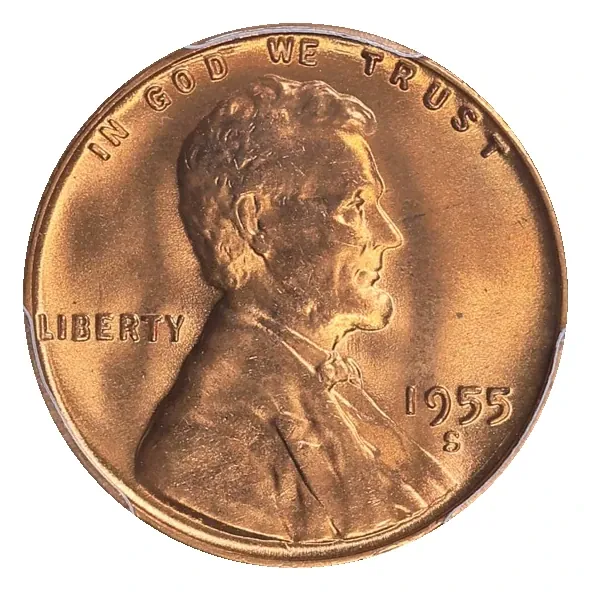
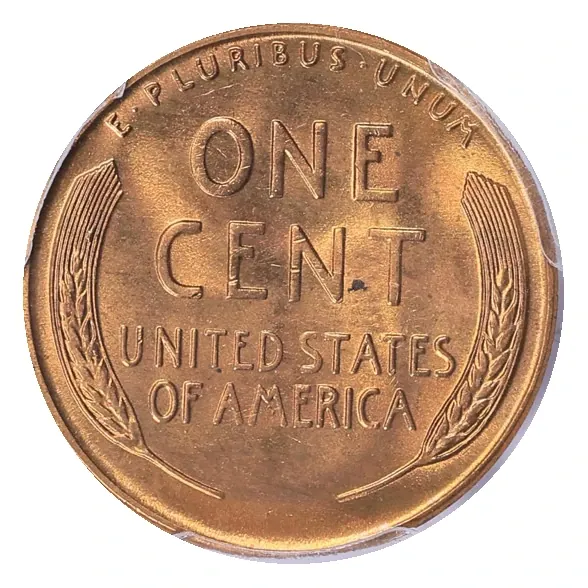
Basics & coin story
Victor David Brenner’s Lincoln portrait and wheat reverse continued in 1955, near the end of the wheat-cent era. San Francisco’s S-marked circulating coinage ended after 1955 before a later return. That history gives the 1955-S a collecting story without making every surviving coin a major rarity.
The famous 1955 Doubled Die Obverse belongs to Philadelphia and shows conspicuous separation in the date and obverse inscriptions. It arose in die preparation, so multiple coins can share the same design doubling. It should not be confused with a single coin that was damaged after striking.
The wheat-cent series guide supplies the broader date-and-mint framework. For the later design change, the 1959 Memorial cent guide shows why Lincoln’s portrait alone cannot identify the reverse era.
| Feature | What to check |
|---|---|
| Design / denomination | Lincoln wheat cent / 1 cent |
| Designer / edge | Victor D. Brenner / plain |
| Normal alloy | 95% copper, balance tin and zinc |
| Nominal mass / diameter | 3.11 g / approximately 19 mm |
| Regular mint choices | No mark, D and S |
| Mint-mark location | Obverse below the date |
| Collector Proof | Separate Philadelphia no-mark issue |
| Important variety | 1955 Philadelphia Doubled Die Obverse; authentication required |
Identification
Match the mint before the grade
Read the space below 1955 for D or S. No letter is expected on Philadelphia circulation strikes and Proofs; it is not a missing-mark error by itself. The photographs here show an ordinary 1955-S, not the Philadelphia doubled die.
Check all the doubled-die diagnostics
The major 1955 variety shows strong doubling in the date, LIBERTY and IN GOD WE TRUST. Compare the complete documented pattern. A faint shelf beside one digit, a blurred image or the informal “poor man’s doubled die” label does not establish the major variety.
If a premium depends on that attribution, take full-face photographs and sharp lettering close-ups and preserve the surface. Use specialist review when the diagnostics cannot be reconciled. A variety’s auction headline cannot price an unverified ordinary cent.
Keep copper color and Proof status separate
Brown (BN), Red and Brown (RB), and Red (RD) are surface-color designations rather than different alloys. Red prices require the appropriate original color and condition; polishing a brown coin does not create a Red collectible. A Proof is separately manufactured and is not established by shine alone.
Condition & value
Amounts are USD. The cited guide was consulted October 26, 2026; its displayed update date is stated below. Values apply only to the specified issue, grade and designation, and are not guaranteed purchase offers.
| Issue | Grade / condition | Value or reference | Basis | Important condition |
|---|---|---|---|---|
| 1955 Philadelphia ordinary, RD | MS63 / MS65 | $9 / $22 | PCGS guide | Not the doubled die |
| 1955-D ordinary, RD | MS63 / MS65 | $8 / $20 | PCGS guide | Denver entry only |
| 1955-S ordinary, RD | MS63 / MS65 | $5 / $18 | PCGS guide | San Francisco entry only |
| Ordinary circulated BN coin | Actual wear and surfaces | Compare matching low-value examples | No universal range asserted | Do not borrow RD Mint State prices |
| Doubled Die Obverse / Proof | Exact attributed issue | Separate comparison | Different catalog entries | Authenticate before assigning a premium |
The retrieved guide displays an October 21 update. The table deliberately begins with ordinary mint issues and excludes high-grade auction records. A scarce designation can change price substantially, but it must first be established on the actual coin.
For a circulated cent, compare other circulated examples with similar corrosion, scratches or cleaning status. Small retail prices can include packaging and seller costs; a dealer buying a group of ordinary wheat cents may use a different basis. No single bulk price or certified Red price values both markets.
Use the surface-condition guide and grading terminology before choosing comparison lots. For an unresolved major doubled die, obtain an attribution instead of repeatedly searching for the largest reported sale.
Summary
Read no mark, D or S, then separate ordinary cents from the major Philadelphia doubled die. Use color- and grade-matched references and keep Proofs distinct. Preserve any plausible variety candidate without cleaning and resolve the diagnostics before quoting a rarity price.
FAQ
Is every 1955 penny a doubled die?
No. Ordinary Philadelphia, Denver and San Francisco wheat cents are separate from the major Philadelphia Doubled Die Obverse.
Does a 1955 penny without a mint mark have an error?
No mint mark is normal for Philadelphia. The major doubled die requires its own date-and-lettering diagnostics.
Are 1955-S pennies automatically rare?
The date has historical collecting interest, but an S alone does not establish a large premium. Grade, original color and surfaces matter.
Can I use Red MS65 values for a brown worn penny?
No. Color designation and condition must match the comparison. A circulated Brown coin needs its own evidence.
References
References and further reading
- PCGS: ordinary 1955 specifications
- PCGS: major doubled-die diagnostics
- PCGS: ordinary P/D/S Red reference rows
- U.S. Mint: San Francisco mint-mark history
References consulted October 26, 2026. Price tables retain the update dates stated in the text; guide estimates, face values and completed transactions are different forms of evidence.