

 App Store

COIN VALUE GUIDES · LINCOLN WHEAT CENTS
Lincoln Wheat Penny: Key Dates, Mint Marks and Collecting Basics
Identify 1909–1958 wheat cents, separate key dates from common coins, and use focused year guides for condition and value.
 HeriBase TeamPublished
 In this article
What is a Lincoln wheat penny, and which ones matter?
A Lincoln wheat penny is the U.S. one-cent design with Lincoln on the front and two wheat ears on the back, issued from 1909 through 1958. Most circulated common dates are affordable collector coins; age and the wheat design alone do not make one a major rarity.
Start with the full date and mint mark. Important issues include 1909-S VDB, 1914-D and 1931-S, while major varieties and wrong-metal errors need separate authentication. Ordinary 1943 steel cents are a normal wartime issue, not the rare bronze error.
Value depends on the exact issue, wear, original surfaces and any verified variety. This series overview helps sort a collection; use the linked year-specific guides for detailed price comparisons rather than assigning one price to every wheat cent.
Recognize the wheat design
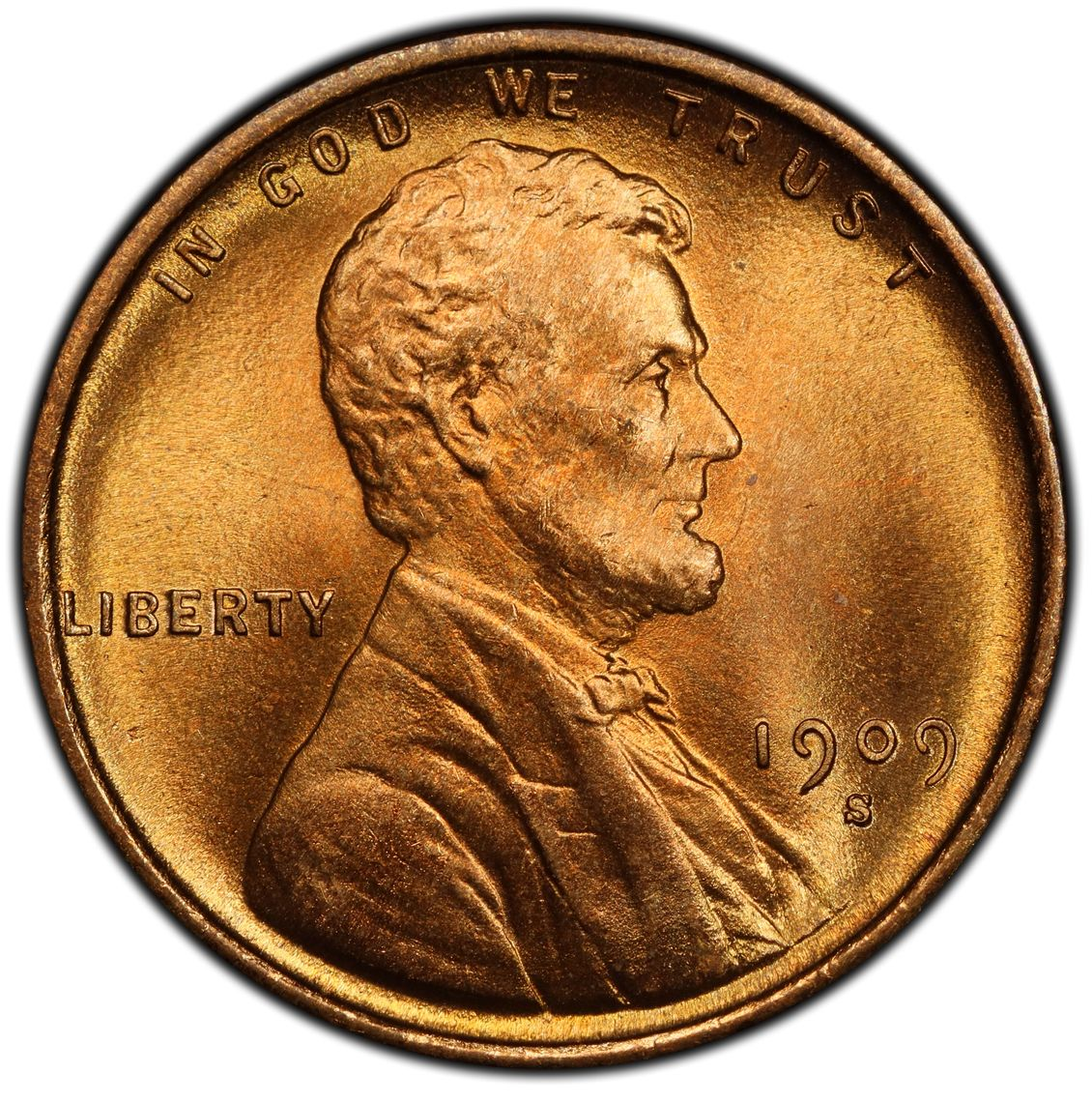
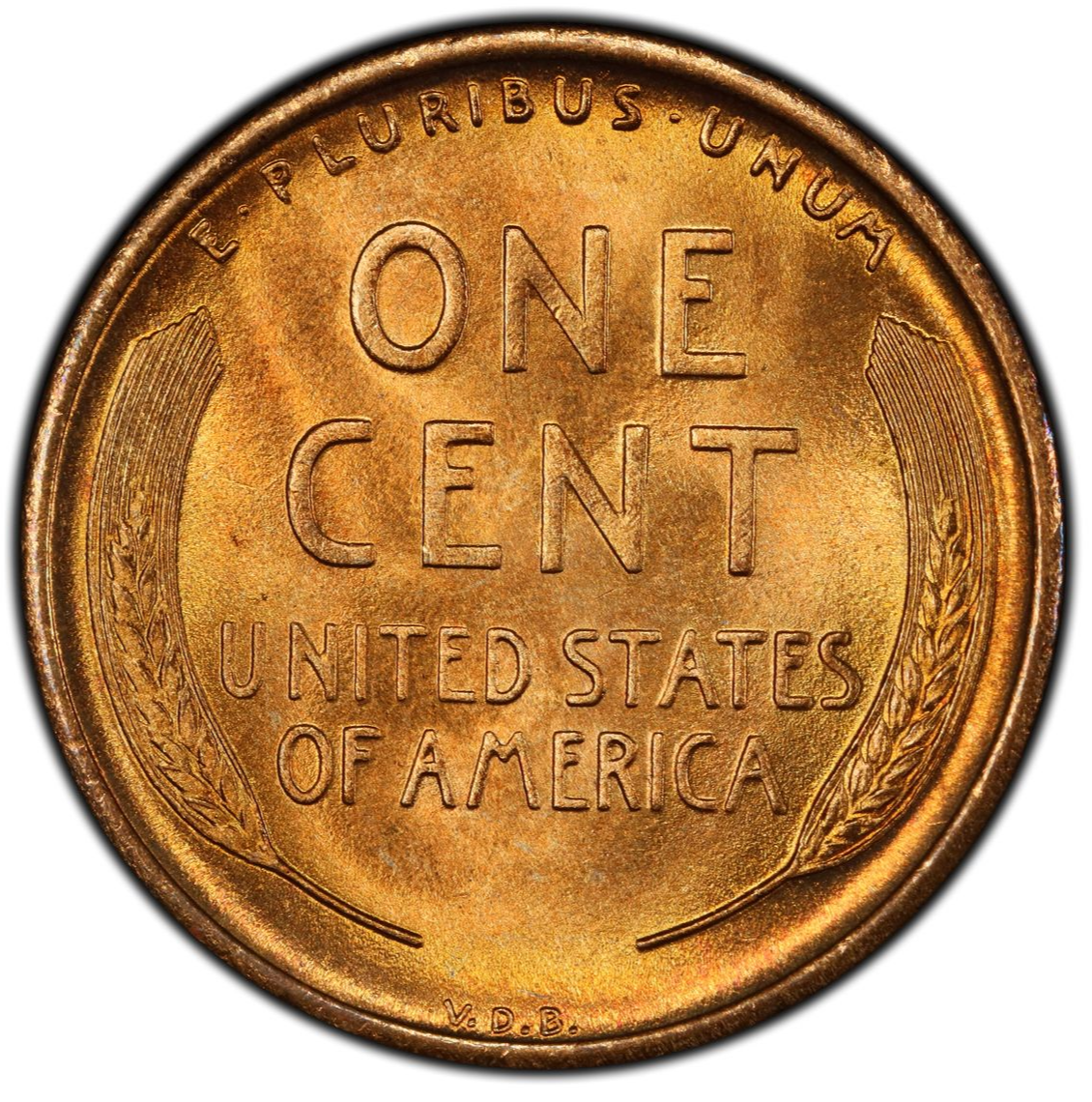
This first-year key date illustrates the series design. It is not a typical common-date value example. The S is below 1909; the small VDB initials sit near the bottom of the reverse.
Fifty years of the wheat reverse
| Feature | Series guide |
|---|---|
| Date span | 1909–1958 |
| Denomination | One cent |
| Front | Abraham Lincoln portrait; date and mint mark |
| Back | Two wheat ears around ONE CENT and UNITED STATES OF AMERICA |
| Mints | Philadelphia, Denver and San Francisco |
| Major metal exception | Standard 1943 cents are zinc-coated steel |
The Lincoln cent arrived in 1909 for the centennial of Lincoln’s birth, replacing the Indian Head cent. Victor David Brenner’s portrait paired a recognizable person with a simple wheat reverse. The design remained familiar through two world wars and decades of everyday circulation.
The small VDB initials created a first-year distinction. They initially appeared on the reverse and were removed during 1909; they returned in a different position beneath the bust in 1918. This makes “1909” an incomplete description: mint and the location or absence of initials matter.
The wheat reverse ended in 1958. The Memorial appeared in 1959 for Lincoln’s 150th birthday; the four 2009 designs later marked his bicentennial. A Lincoln portrait alone therefore does not identify a wheat penny—turn the coin over.
Build a useful record before looking up prices
Read date and mint together
On a wheat cent, look beneath the date for D or S; an unmarked regular issue is Philadelphia. Record the full identity, such as 1914-D, rather than just the year. Do not mistake dirt or a surface mark for a mint letter. If the date is indistinct, photograph it under softer light before entering it into a collection record.
Separate key dates from ordinary examples
PCGS identifies 1909-S VDB, 1914-D and 1931-S as the traditional three key dates. Keep those candidates separate, together with any claimed major variety, until the attribution is checked. A similar year without the required mint mark is a different issue. Added mint marks or altered numerals can create misleading appearances.
A 1909 VDB without S is not a 1909-S VDB. Equally, a genuine 1931-S is not automatically an exceptionally high-grade coin. Separate rarity of the issue from the condition of the individual specimen.
Route 1943 coins to the correct guide
Use the 1943 steel penny guide for the normal wartime issue and the 1943 copper penny checks for a plausible bronze candidate. This keeps common steel pieces out of rare-error price comparisons. For the preceding year’s mint, color and Proof distinctions, use 1942 Penny Value.
Choose the collection you want to build
A date set keeps one example per year; a date-and-mint set adds the different issuing mints. Varieties and Proofs extend the scope further. Decide which approach you want before buying missing pieces, so a specialist variety list does not become an accidental shopping list. The beginner’s collecting guide covers storage and record keeping.
Which wheat cents deserve closer attention?
| Group | Check first | Condition question | Value approach | Next step |
|---|---|---|---|---|
| Common circulated dates | Exact date and mint | Wear, corrosion or damage? | Usually affordable; no single series price | Compare the same issue |
| 1909-S VDB | S and reverse VDB | Original surfaces? | Key-date comparison only | Authenticate before a major purchase |
| 1914-D / 1931-S | Complete date and mint | Grade and surface quality? | Use separate date-specific prices | Verify attribution |
| Uncirculated copper cents | Original color | Marks and luster? | Grade and color can drive premiums | Avoid cleaned-coin comparisons |
| Major varieties / errors | Cataloged diagnostics | Genuine feature or damage? | Individual appraisal | Obtain specialist examination |
A bag of mixed wheat cents and a certified key date are different markets. Bulk pricing averages many low-value pieces; individual retail listings may include sorting, packaging and selling costs. Neither should be applied blindly to the other. If sorting an inherited collection, first separate clear key dates and unusual issues, then evaluate ordinary duplicates together.
For copper coins, Brown, Red-Brown and Red describe color categories, not three different metals. Wear, marks and surface alteration still matter within each category. Use the grading scale for terminology and cleaning-signs guide before choosing comparison coins. Never polish a brown cent in an attempt to create a Red one.
This overview deliberately does not publish one blanket dollar range across fifty years. Start with the date-specific guide, then check matching recent sold records. If a potentially important coin cannot be identified confidently, the appraisal guide explains the next step.
The key takeaway
Wheat pennies are the 1909–1958 Lincoln cents with wheat ears on the reverse. The full date, mint, verified variety and condition determine which are ordinary and which need closer examination.
Sort first, research second: isolate key-date candidates, keep 1943 steel and bronze claims separate, and use the linked year guides for prices. Preserve original surfaces and define the scope of a set before filling gaps.
Frequently asked questions
What years are Lincoln wheat pennies?
The wheat reverse was issued from 1909 through 1958. Lincoln’s portrait continued afterward, but the reverse changed to the Memorial in 1959.
Is every wheat penny valuable because it is old?
No. Most common dates in circulated condition are affordable. Date, mint mark, a verified variety or error, and the coin’s condition matter more than age alone.
Which wheat penny dates should I check first?
Start with 1909-S VDB, 1914-D and 1931-S, and investigate any claimed major variety separately. Confirm all required details rather than relying on the year alone.
Is a 1943 steel wheat penny a mint error?
No. Zinc-coated steel was the standard cent material in 1943. The rare bronze wrong-metal issue is a separate authentication question.