

 App Store

COIN VALUE GUIDES · LINCOLN CENTS
1943 Steel Penny Value: Mint Marks, Condition and Copper Look-Alikes
Find the right comparison for your wartime cent—before treating shine, color or a record price as proof of value.
HeriBase Team · Published
In this article
Quick answer
Most ordinary 1943 steel pennies are inexpensive collectibles, not rare copper errors. Their value depends on the mint mark, remaining detail, original surface and any confirmed variety—not simply the date or silver color.
Read the date and the area below it, photograph both sides, and check whether the coin behaves like zinc-coated steel. Then separate a worn ordinary cent from an uncirculated example, an altered surface or a possible mint error. Compare completed sales of the same mint and condition before assigning a price.
For a documented price scale, PCGS’s February 2020 guide put a circulated three-mint set below $5; the dated examples below also include a higher-grade single-coin sale. These are historical comparisons, not current quotes. Confirm the issue and condition before applying either figure to your coin.
1. Identify the coin before choosing a price
A normal 1943 Lincoln steel cent has a zinc-coated steel body, Lincoln on the front and wheat ears on the back. Its silvery appearance does not mean it contains silver. PCGS lists a standard weight of 2.70 grams and a diameter of about 19 millimeters.
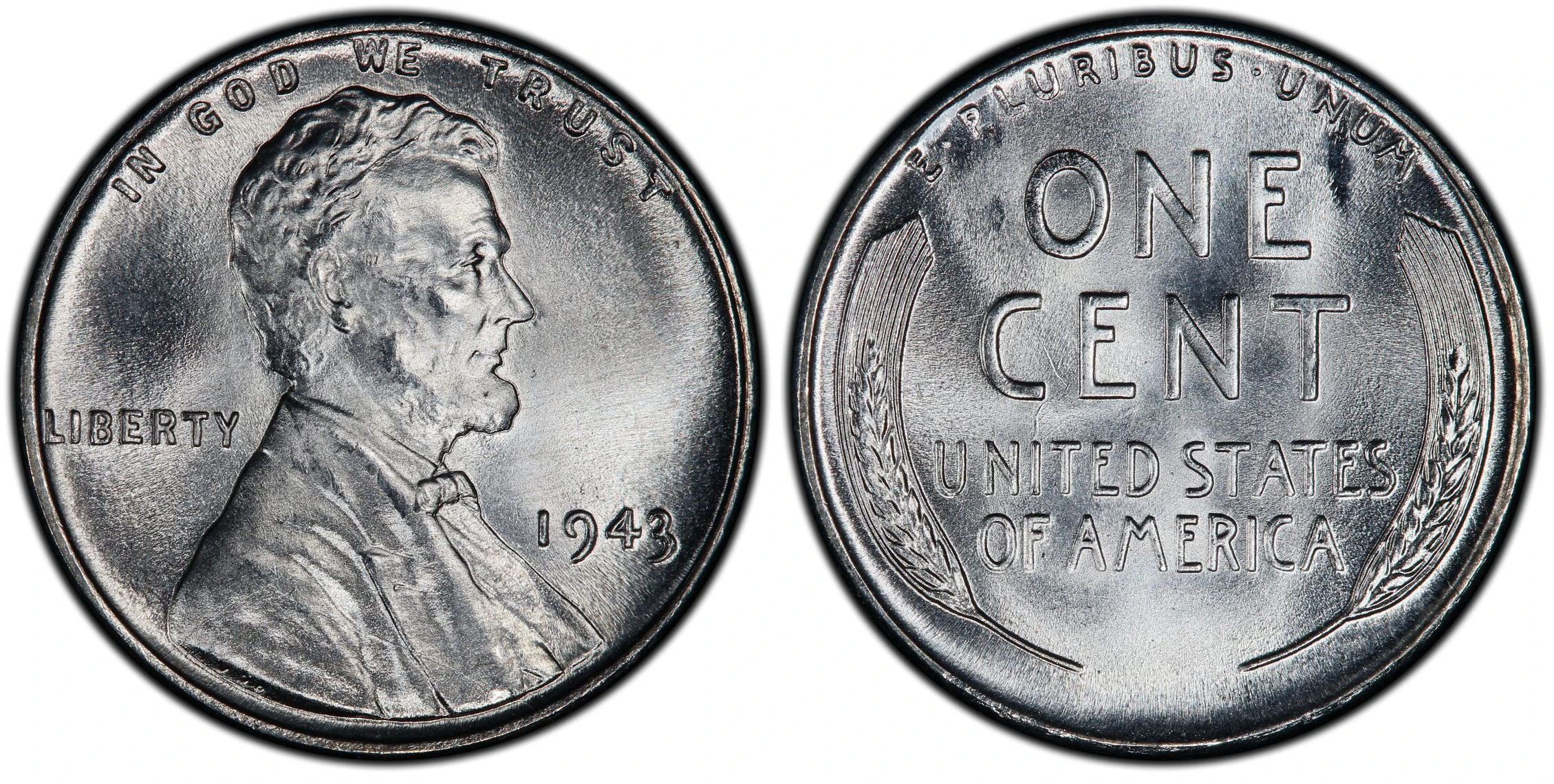
Record the 1943 date and the area directly below it, then compare the three mint-mark photographs in the next section. For a full photo and identification checklist, use the Penny Value Checker guide.
Bring a magnet near the coin without dragging it across the surface. Attraction is consistent with a steel core. Weigh the coin on a suitable calibrated scale if you have one, but treat the result as supporting evidence: wear, corrosion, added plating and measurement error can affect the reading. Do not scratch, file or apply chemicals to expose the metal.
2. No mint mark, D or S: what changes?
The mint mark identifies where the cent was made; it does not by itself establish rarity. Look immediately below the date on the front. Philadelphia examples normally have no letter there, Denver uses D and San Francisco uses S.
| Issue | What to look for | Original mintage | Pricing comparison |
|---|---|---|---|
| 1943, no mint mark | No letter below the date | 684,628,670 | Ordinary Philadelphia steel cents of similar condition |
| 1943-D | D below the date | 217,660,000 | Denver examples; separate attributed D/D varieties |
| 1943-S | S below the date | 191,550,000 | San Francisco examples with comparable surfaces and grade |
Mintage figures: PCGS CoinFacts. Production totals are not surviving populations or price rankings.
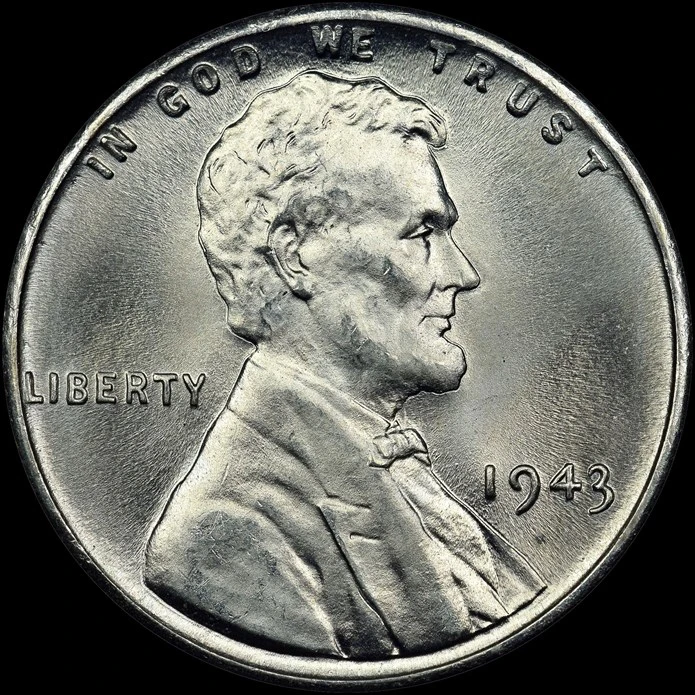
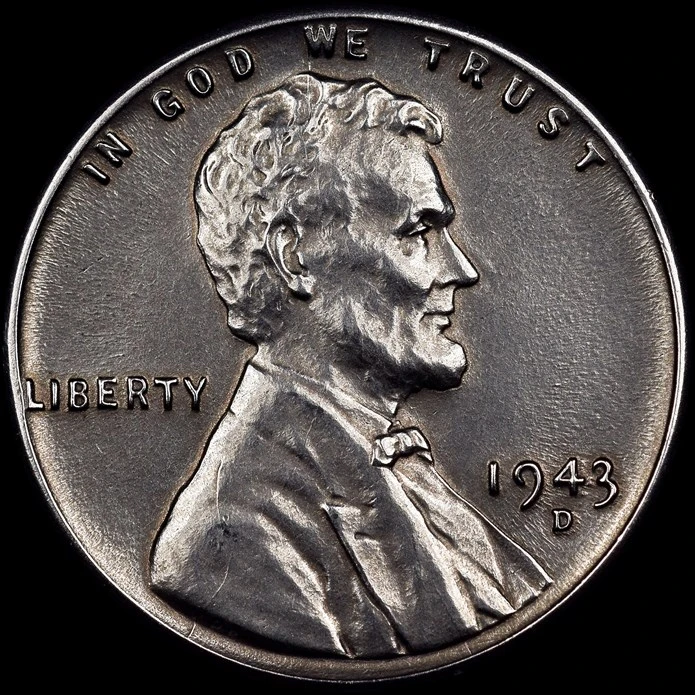
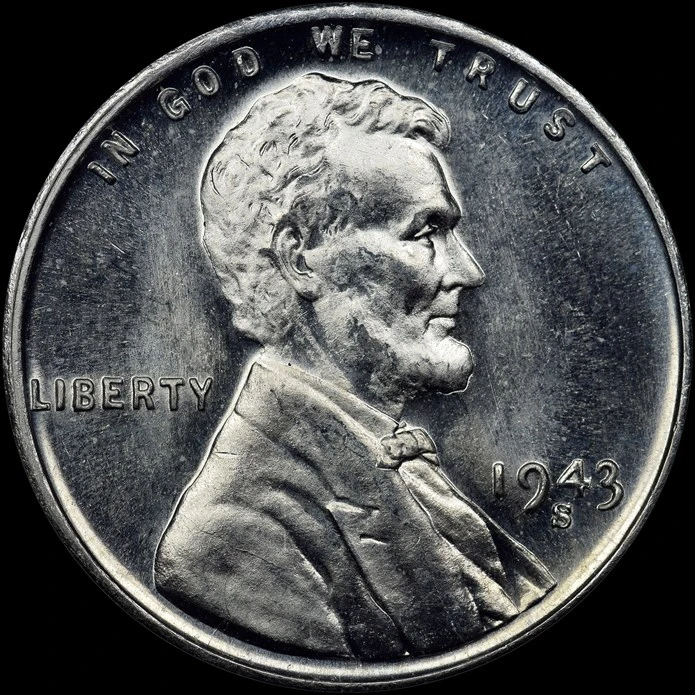
These photographs locate the mint marks. They are not equal-grade price comparisons: the Denver example has a reprocessed surface, discussed below.
Do not treat a no-mint-mark coin as a missing-letter error. Likewise, a weak or obscured mark needs a better photograph before you choose a mint-specific listing. Lower original production alone is not enough to conclude that your S coin is more valuable than every Philadelphia or Denver coin.
3. How much is a 1943 steel penny worth?
Choose a condition and attribution category first. There is no single reliable price for every 1943 steel penny. An ordinary worn piece, a certified high-grade coin and a recognized variety belong in different comparisons.
| Your coin | Useful value context | What to compare |
|---|---|---|
| Ordinary circulated steel cent | Usually the inexpensive end of this collecting category | Same mint, similar wear and no major surface problems |
| Apparently uncirculated | Original surfaces and precise grade become important | Similar certified examples; do not assign a grade from brightness alone |
| Certified exceptional grade | Small grade differences can change the buyer pool substantially | Same numeric grade, plus designation and attribution |
| Replated, corroded or cleaned | Normal problem-free guide prices may not apply | Disclosed problem coins with similar damage |
| Suspected variety or off-metal error | Value remains unresolved until the feature is established | The exact authenticated variety or error, not a generic 1943 listing |
Dated price examples: a set is not a single coin
| Coin or lot | Reported amount | Date and evidence |
|---|---|---|
| Circulated P–D–S set: three coins | Under $5 for the set | PCGS collecting guide, February 13, 2020; retail collecting benchmark |
| MS65 P–D–S set: three coins | About $100 for the set | Same 2020 guide; different preservation category |
| 1943 Philadelphia, PCGS MS67, CAC-approved: one coin | $185 reported sale price | David Lawrence Internet Auction #1060, lot 4083, April 2019; recorded by PCGS Auction Prices |
The auction record identifies a zinc-coated steel cent, not a bronze error. Its summary does not specify the buyer’s-premium treatment. The $185 is the reported transaction amount, not a seller’s net proceeds or an estimate for an ungraded coin. The source entries are in References.
A price guide is an estimate for its stated category. An asking price is a seller’s request. A completed sale is evidence about one transaction. Keep these labels visible when recording figures, and check the transaction date before using an old comparison. A historical example can show how a comparison works, but a present-day estimate needs recent matching sales.
For a common low-value coin, packaging, selling fees and shipping may be large relative to the proceeds. A dealer’s offer can also differ from a retail asking price. Estimate the likely net result before paying for certification solely to increase resale value.
4. Condition: original luster, wear and reprocessing
A shiny 1943 steel penny is not automatically uncirculated, original or valuable. Look for wear on Lincoln’s portrait and the wheat design, surface interruptions, corrosion and evidence of alteration. MS means Mint State: an uncirculated grade on the 60–70 scale. MS65 and MS67 are different grades, not interchangeable price categories. A numerical grade and the coin’s surface status still matter.
NGC’s 2018 examination compared an original MS66 Philadelphia cent with reprocessed Denver pieces. Reprocessing replaces the original zinc coating, changing fine surface detail and luster. The photographs below show the specific examples NGC discussed; they are not a universal photographic authentication test.
NGC’s MS66 example.
The altered Denver example in NGC’s comparison.
NGC also illustrated a genuine 1943-S MS67 Prooflike coin. Prooflike (PL) describes reflective surfaces; it does not mean the coin was made as a Proof issue. Reflectivity alone therefore cannot separate original and altered surfaces. Rotate a coin under gentle light, inspect both faces and request review when the surface remains uncertain. Do not polish it to make the photograph look clearer.
Rust, pitting and scratches should be recorded separately from the amount of wear. Read our coin grading guide for grade terminology and cleaning-identification guide for the limits of visual clues.
5. Steel, copper-colored or a possible bronze error?
A copper-colored 1943 cent is a reason to investigate, not proof of a rare bronze error. PCGS documents copper-plated steel cents and altered dates among the imitations of the famous 1943 bronze issue.
| Observation | What it suggests | What it does not prove |
|---|---|---|
| Silver-gray and attracted to a magnet | Consistent with a steel cent | Original surfaces, grade or a premium variety |
| Copper-colored and attracted to a magnet | Consistent with a steel core, potentially copper-plated | A genuine bronze transitional error |
| Copper-colored and not attracted | Needs closer date, metal and authenticity checks | That the date is genuine or the coin was struck by the Mint in bronze |
PCGS notes that changing the date of a 1948 cent is another way to imitate a 1943 bronze coin. A nonmagnetic result alone does not exclude that possibility. Preserve clear date photographs, the weight reading and both faces; use a professional examination for a credible off-metal candidate.
If the final date digit is 4, use the 1944 steel-cent comparison in our penny guide. A 1944 steel error belongs to a different issue and cannot establish the value of an ordinary 1943 steel cent.
6. Which varieties deserve a closer look?
A named variety needs matching diagnostic details, not just a doubled-looking letter. PCGS lists 1943 doubled-die varieties and a 1943-D/D repunched mint mark, including the FS-501 attribution. A doubled die involves the die’s design; a repunched mint mark concerns the mint mark. Keep the terms separate.
Take a sharp, close photograph with the date and mint mark in the same frame, followed by the suspected feature. Compare the direction and shape of the detail with the exact catalog attribution. Glare, a second photographic edge, damage or disturbed plating are not enough to label a variety.
A practical record might read: “1943-D; possible extra outline at D; attribution unconfirmed.” That is more useful than “rare double-D penny” before the diagnosis is supported. Ordinary D examples should not be valued using a confirmed D/D result.
A major mint error is a separate question. If a coin appears off-center or has an abnormal shape, record both faces and the entire rim. Do not assume every unusual edge or missing detail was created during production.
7. Which sale is a useful comparison for your 1943 cent?
The best comparison is a sold coin matching your mint, attribution, surface condition and grade as closely as possible. A spectacular headline or a listing that never sold cannot establish your coin’s market value.
Match 1943, the mint mark, the exact variety if any, and comparable wear and surfaces. Keep single coins separate from sets and record the sale date and price basis. The full penny-sale comparison checklist explains how to screen listings and account for fees.
A worked comparison decision
Suppose your coin is a worn 1943-D with a visible patch of corrosion. A certified MS68+ coin, a three-mint set and a reprocessed cent are three different comparisons. The first differs in grade, the second in lot size and the third in surface treatment. None gives a defensible direct price for your coin. Look instead for individual circulated Denver examples with comparable disclosed problems.
Use the PCGS price-guide and auction-search entries in References to find candidates, then read each lot’s description.
8. HeriBase image test: a 1943-MS result and $2.70 reference
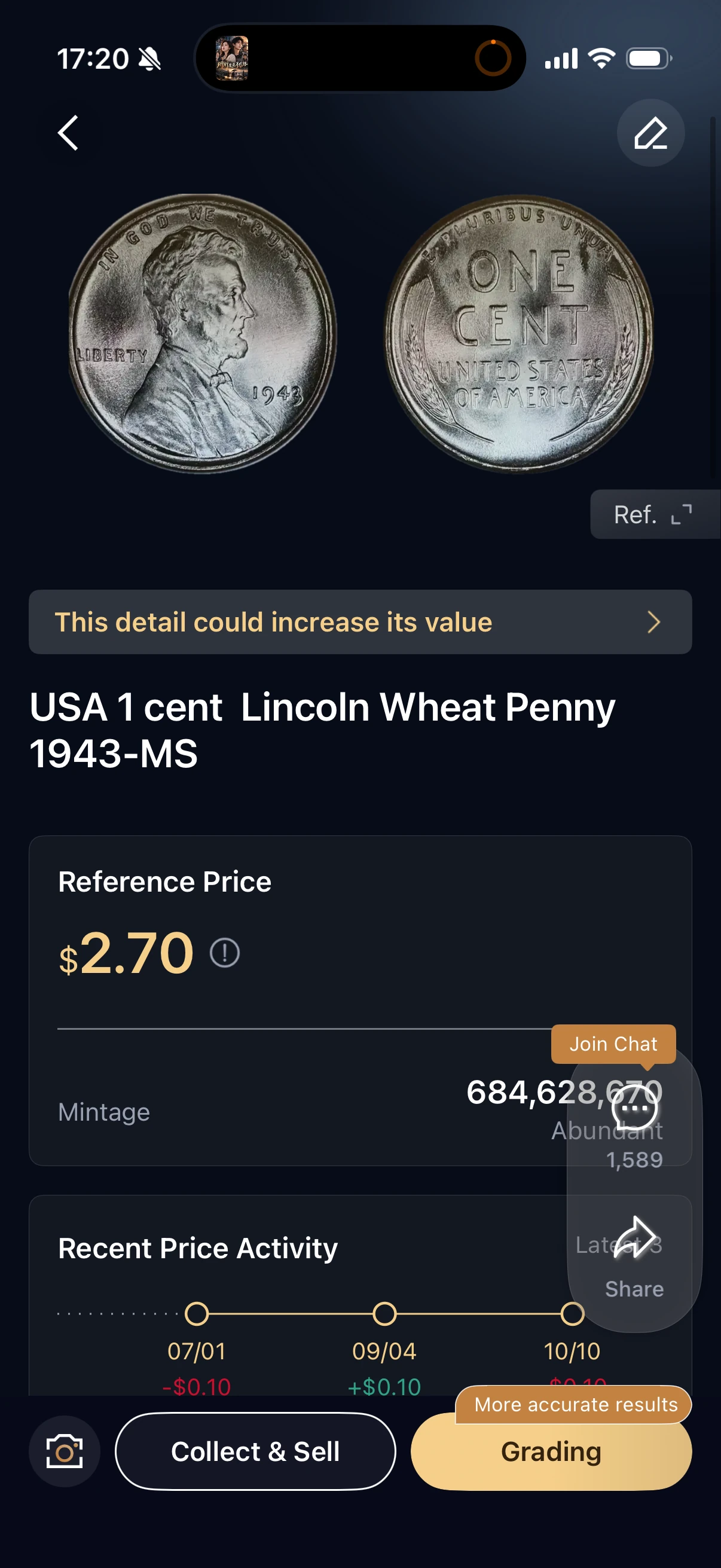
In an October 13, 2026 reference-image test supplied by the HeriBase team, the app returned “USA 1 cent Lincoln Wheat Penny 1943-MS” and a $2.70 reference price. The input showed the obverse and reverse of the 1943 cent illustrated earlier in this article. This is one image-identification case, not an examination of the physical coin or an accuracy-rate study.
What the result establishes
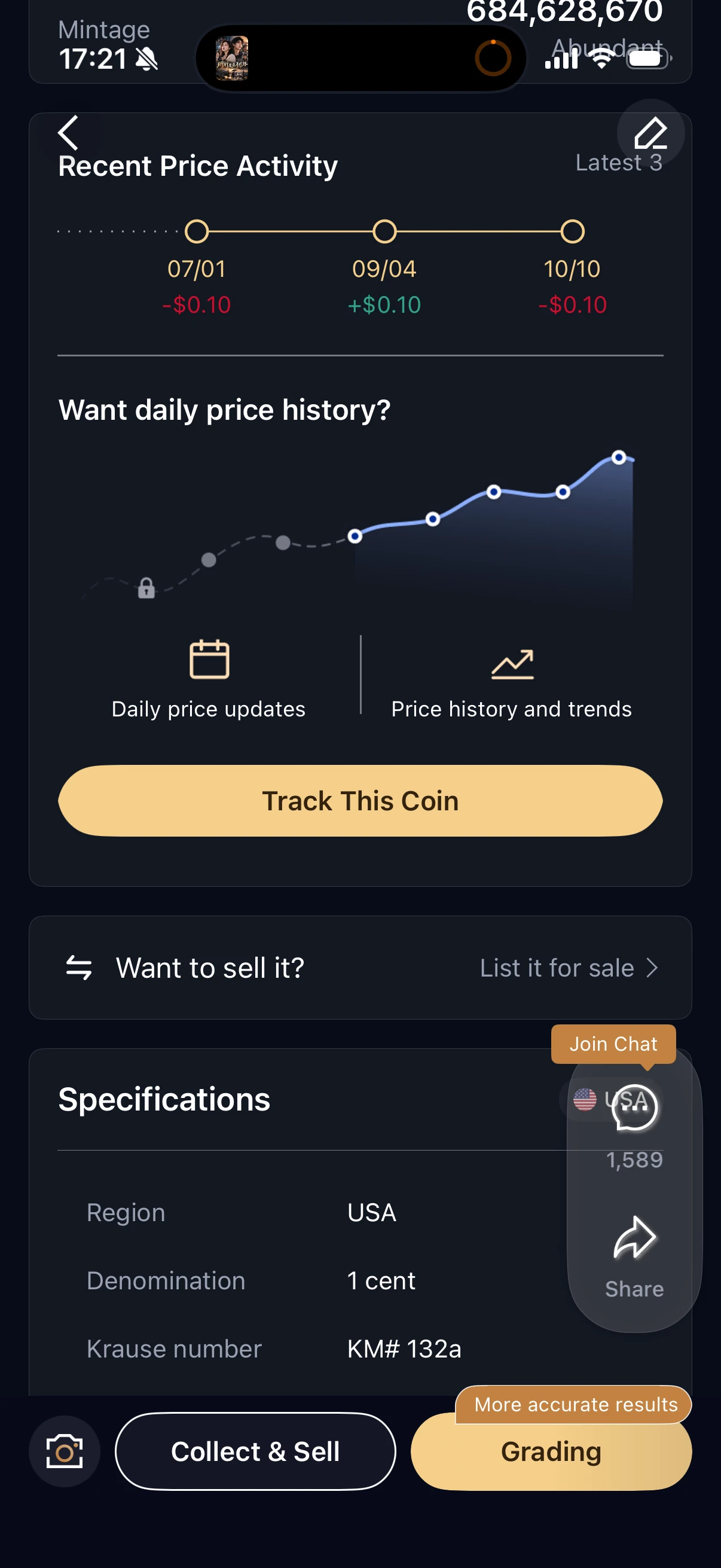
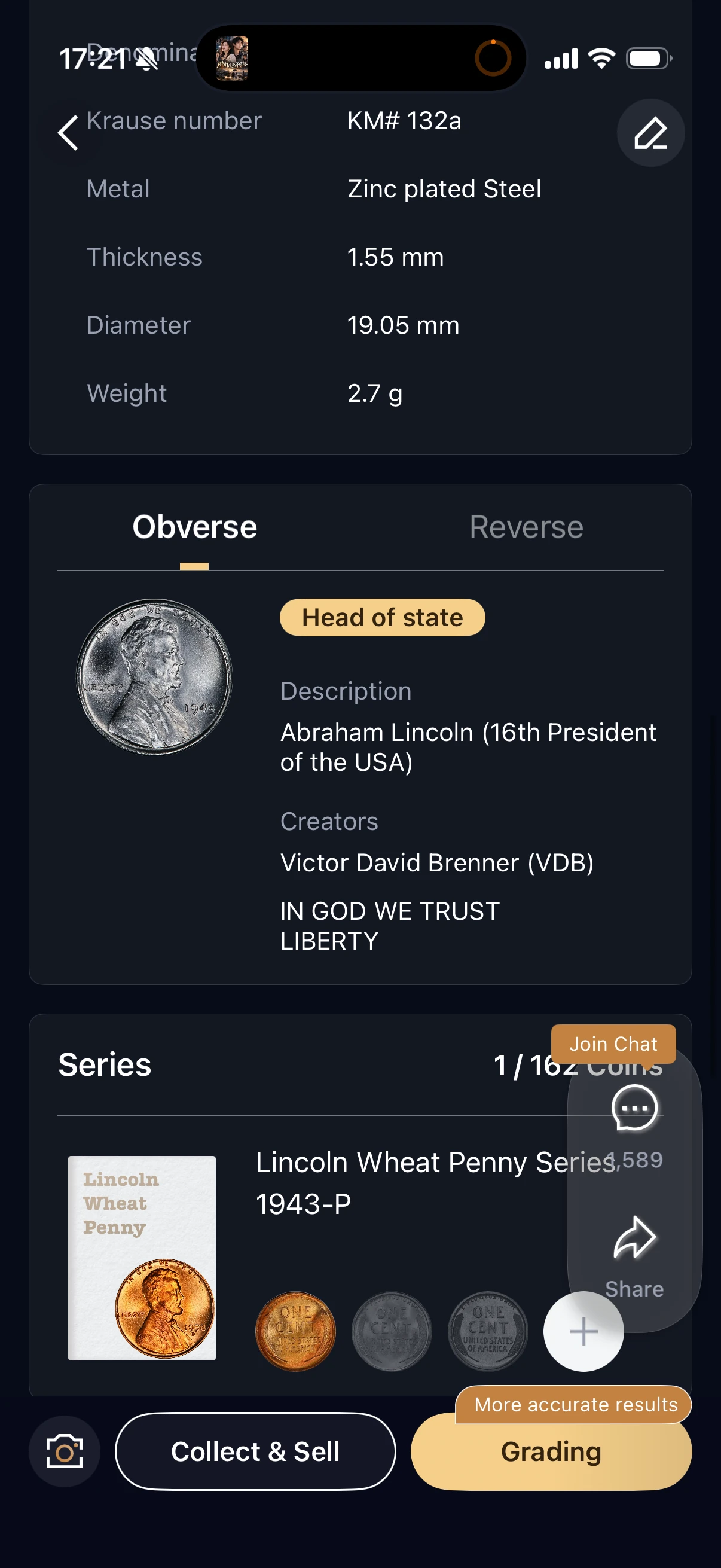
The result gives a specific 1943 entry to investigate. Its mintage field shows 684,628,670, consistent with the Philadelphia issue; the series section also displays 1943-P. The specifications list zinc-plated steel, 2.7 g, 19.05 mm diameter and KM# 132a. These are catalog fields, not measurements made from the submitted photograph.
What still needs checking before using $2.70
The displayed “MS” has no numerical grade. It does not establish MS65, MS67, original plating or a certified variety. The $2.70 is this app result’s reference value, not a sale or an offer. The visible price-activity entries show changes within the app; they do not identify matching auction lots or prove what a particular coin will sell for.
For this sample, first check that no D or S is present, then examine wear and possible reprocessing before choosing a price comparison. The result narrows the research to the ordinary 1943 issue; it does not settle surface originality or the physical coin’s market value.
Resolve the remaining question
If you disagree with the result or remain unsure about the mint mark, surface or variety, request human expert appraisal in HeriBase. Attach both sides, a close-up of the disputed feature and the saved result. Check the selected service’s scope and fees in the HeriBase user guide. If remote review cannot resolve metal or authenticity, arrange physical examination through a professional institution.
Summary
For a 1943 steel penny, establish the issue and the surface before assigning the price. No mint mark, D and S are normal issues. A common worn example should be compared with similar ordinary coins, while a high grade or special variety needs its own evidence. Brightness, copper color and a high-priced listing are not shortcuts to authentication.
Use dated prices as context, then look for recent completed sales of the same mint, grade and surface condition. Keep three-coin set prices, single-coin sales and App reference values separate.
The October 13, 2026 HeriBase image test returned 1943-MS and a $2.70 reference price. Use that identification as a starting point; surface originality, a numerical grade and matched sales still need separate evidence.
Keep the coin uncleaned, save clear photographs and document relevant sold comparisons. Use HeriBase for initial identification and record keeping, human appraisal for disputed or uncertain findings, and physical examination when photographs cannot settle the question.
FAQ
How much is an ordinary 1943 steel penny worth?
Ordinary circulated steel cents are generally inexpensive; there is no single price for all mints and conditions. PCGS’s February 2020 guide put a circulated three-mint set below $5. That is a historical set benchmark, not a current single-coin quote. Compare recent sales of the same mint and similar surfaces before estimating your coin.
Is a 1943 penny with no mint mark rare?
No mint mark is normal for Philadelphia steel cents. It does not make a coin a missing-mint-mark error. Preservation and a confirmed variety can matter, but the absent letter alone is not evidence of rarity.
Is a silver-colored 1943 penny made of silver?
The regular 1943 cent is zinc-coated steel. Color alone is not a metal analysis, but its normal silver-gray appearance should not be priced as silver bullion.
Does a magnet prove that my coin is genuine?
No. Attraction is consistent with a steel core, but it does not authenticate the date, surface or variety. Lack of attraction also does not prove a genuine 1943 bronze error.
Can an extremely shiny steel penny be replated?
Yes, but shine alone cannot diagnose it. Original coins can also be reflective. Compare surface detail and luster, and obtain review when the origin of the surface is unclear.
References
Sources and further reading
- PCGS: Collecting 1943 Lincoln Steel Cents — February 13, 2020 set-price context; historical, not a current quotation.
- PCGS CoinFacts: 1943 Philadelphia steel cent — Identity, dimensions and mintage.
- PCGS CoinFacts: 1943-D steel cent — Denver issue and mintage.
- PCGS CoinFacts: 1943-S steel cent — San Francisco issue and mintage.
- NGC: Reprocessed Steel Cents — September 11, 2018 examination and original-versus-altered surface photographs.
- PCGS: The 1943 Copper Cent — Copper plating, magnet response and altered dates.
- PCGS: 1943-D/D FS-501 — Specific repunched-mint-mark attribution.
- PCGS Lincoln Cent Price Guide — Starting point for issue- and grade-specific guide estimates.
- PCGS Auction Prices — Research completed sales and open the underlying lot descriptions.
- PCGS Auction Prices: 1943 Philadelphia MS67, lot 4083 — April 2019 David Lawrence sale; one steel cent, $185 reported.
Sources reviewed October 13, 2026. Historical figures retain their original dates. Photographs are reference specimens, not a new appraisal of a reader’s coin. Image credits.
HeriBase case evidence: three owner-supplied screenshots from a reference-image test performed October 13, 2026. The displayed reference price is $2.70; no physical measurements, completed appraisal or sale are claimed.