

 App Store

COIN VALUE GUIDES · PENNIES
1959 Penny Value:No Mint Mark, 1959-D and the Memorial Design
Identify the first Memorial cent, compare Red grade values for Philadelphia and Denver, and separate normal details from variety claims.
 HeriBase TeamPublished
In this article
How much is a 1959 penny worth?
An ordinary worn 1959 or 1959-D penny is a common one-cent coin, not a rare issue simply because it is old or copper. Collectors may pay more for original uncirculated examples, but the grade and color must match the price. The PCGS Red guide checked October 19, 2026 lists Philadelphia coins at $6 in Mint State 63 and $18 in MS65; Denver coins are $4 and $18 in those grades.
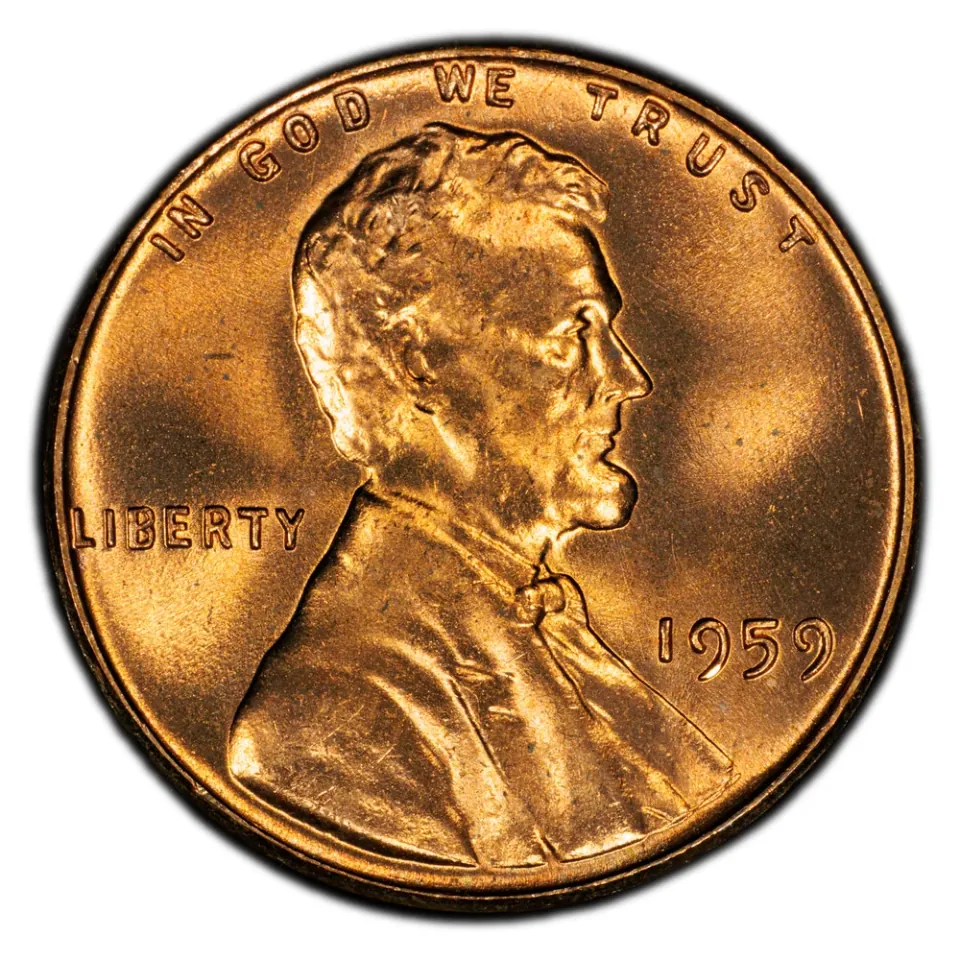
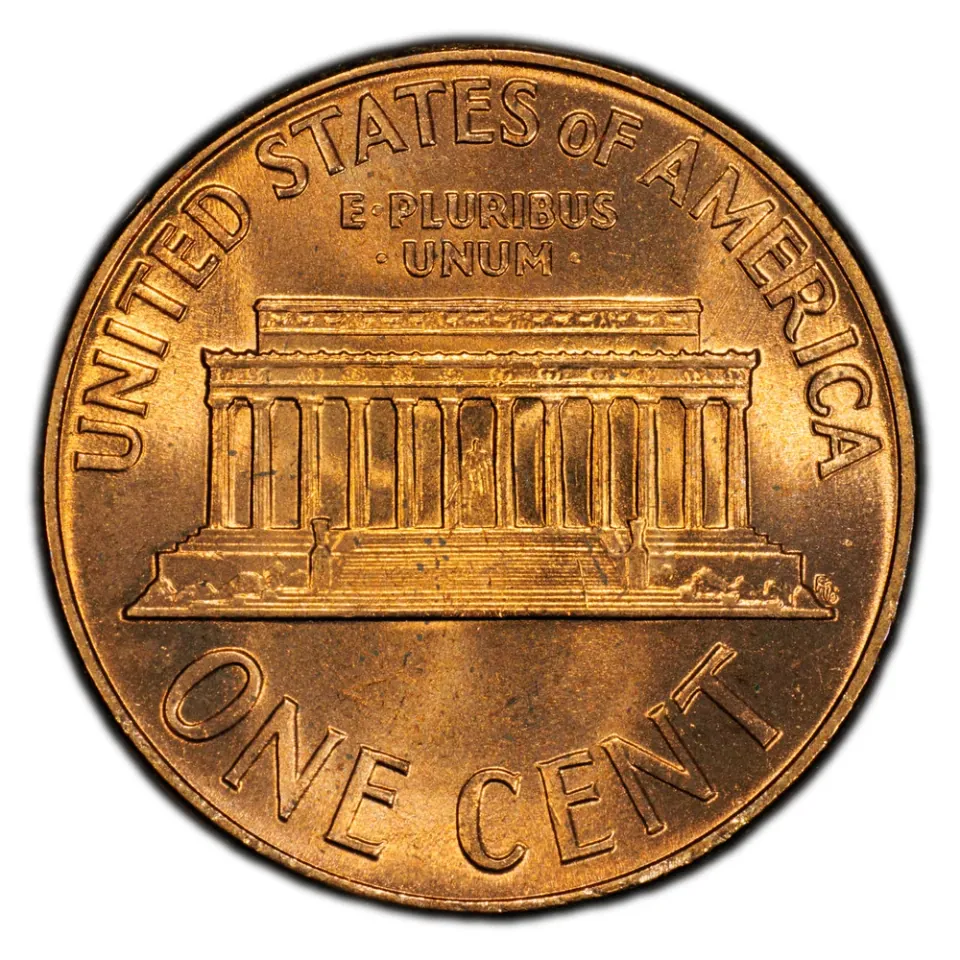
1959 introduced the Lincoln Memorial reverse. No mint mark means Philadelphia; D means Denver. Both standard issues weigh 3.11 g and are 95% copper. Proofs and specifically attributed varieties need separate comparisons, while a purported 1959-D wheat-reverse coin requires expert investigation rather than an ordinary penny price.
The first Lincoln Memorial cent
Why the reverse changed in 1959
The Lincoln Memorial design marked the 150th anniversary of Abraham Lincoln’s birth and the 50th year of the Lincoln cent. Released on February 12, 1959, it replaced the wheat-ear reverse while retaining Victor D. Brenner’s Lincoln portrait. Frank Gasparro designed the new reverse.
The small seated statue visible between the Memorial’s central columns is intentional. Together with Lincoln’s portrait on the front, it makes the president appear on both sides of the coin. Gasparro’s FG initials are designer initials, not a mint mark. The lower-case letter in the inscription “oF” is also a design feature rather than a spelling error.
The Memorial reverse continued through 2008, followed by the four 2009 Lincoln life-stage designs. If your coin has wheat ears, identify its date carefully rather than assuming it is a standard 1959 reverse.
| Feature | Philadelphia | Denver |
|---|---|---|
| Mint mark beneath date | None | D |
| Recorded mintage | 609,715,000 | 1,279,760,000 |
| Nominal weight | 3.11 g | 3.11 g |
| Metal | 95% copper; remaining tin and zinc | Same standard alloy |
| Diameter / edge | 19 mm / plain | 19 mm / plain |
| Normal reverse | Lincoln Memorial | Lincoln Memorial |
A later Memorial cent can raise a different question: the 1975 gold-colored penny guide distinguishes ordinary copper, altered surfaces and unverified composition claims.
No mint mark, D, color and Proofs
On an ordinary 1959 cent, look below the date on the portrait side. A clear D identifies Denver; no letter identifies Philadelphia. Neither is an error by itself. A weakly visible D may be obscured by dirt, wear or the photograph, so examine it before deciding the letter is missing.
Red is a preservation category
RD means Red, RB Red Brown and BN Brown. These color designations describe remaining original copper color under a grading service’s criteria. A bright cleaned cent is not automatically a Red example. Compare the same color designation as well as the numerical grade.
Philadelphia also produced Proof cents for collectors. They have no S mint mark in 1959. Mirrorlike surfaces alone do not turn a polished circulation coin into a Proof; manufacturing characteristics and provenance matter. The regular-strike chart below does not price Proofs.
Be precise about 1959-D varieties
A repunched mint mark is a specific die feature, not any doubling beside a D. Match the location and shape to a cataloged attribution. Mechanical doubling, shadows and damage can imitate parts of the appearance.
The reported 1959-D wheat-reverse mule has a disputed history. Do not use its publicity or a claimed sale to value an ordinary Memorial cent. A mule means a pairing of dies not intended for that normal issue. A proposed discovery needs specialist authentication; it is not established by a blurry reverse or a seller’s label.
1959 and 1959-D penny value by grade
| Grade / scope | 1959 no mint mark | 1959-D |
|---|---|---|
| Ordinary worn coin | 1-cent face value; no standard rare-date premium | Same baseline |
| Mint State 63 RD | $6 | $4 |
| Mint State 65 RD | $18 | $18 |
| Mint State 66 RD | $28 | $26 |
| Mint State 67 RD | $600 | $250 |
The Mint State rows are retail guide estimates for the stated grade and Red color, not typical prices for coins from a jar. The jump to MS67 reflects a much narrower preservation category. It does not imply that every shiny penny is worth hundreds of dollars, or that certification will pay for itself.
A worn brown coin cannot be priced from an RD row. A coin with altered color or abrasive cleaning may not qualify for a problem-free grade at all. Compare actual sold examples with similar surfaces and account for transaction costs before buying a holder or paying for grading.
Nominal copper content helps describe the coin, but it should not be confused with a guaranteed realizable scrap value. For an ordinary piece, the practical decision is usually whether it fills a date-and-mint space in a collection. For a superb original example or plausible attributed variety, careful photographs and expert review are more useful than guessing from a record sale.
Use the coin grading scale for condition terms and the cleaned-coin guide for surface warning signs. Keep detailed grading advice there rather than treating every first-year penny as a special case.
What to remember about the first Memorial penny
1959 and 1959-D pennies are common first-year Memorial cents. Ordinary worn coins start at face value; premiums depend on original condition, color and a confirmed variety. The October 19, 2026 PCGS RD guide lists MS65 examples of either mint at $18, not hundreds of dollars.
Read the mint below the date, verify the Memorial reverse and preserve the surface. A no-mint-mark coin, FG initials or the small statue is normal; a claimed wheat-reverse mule requires independent authentication.
Frequently asked questions
Is a 1959 penny with no mint mark rare?
No. Philadelphia struck 609,715,000 regular cents dated 1959 without a mint letter. Absence of a mark is normal; condition and an attributed variety can matter more than the date.
What is a 1959-D penny worth?
An ordinary worn example is a common one-cent coin. The PCGS Red guide checked October 19, 2026 lists $4 in MS63, $18 in MS65 and $250 in MS67. Those are grade-specific retail estimates, not prices for every bright coin.
Should a 1959 penny have wheat ears?
The normal 1959 reverse is the Lincoln Memorial. A purported 1959-D wheat-reverse mule is a specialist authentication question with a disputed history, not a normal issue to price from an ordinary penny chart.
Are FG initials or the small Lincoln statue errors?
No. FG identifies reverse designer Frank Gasparro, and the small statue between the Memorial columns is intentional. Neither feature by itself adds an error premium.
References
Sources
Research checked October 19, 2026. Any price example retains its stated source date and scope.
- PCGS · 1959 Red centPhiladelphia mintage, specifications and retail guide.
- PCGS · 1959-D Red centDenver mintage and grade-specific guide.
- PCGS · Frank Gasparro’s designsMemorial design history and intentional lettering details.
- U.S. Mint · the pennyLincoln reverse timeline.
- PCGS · the 1959-D mule controversyWhy a claimed wheat-reverse coin needs specialist evaluation.
- PCGS · attributed repunched mint markDistinction between a cataloged variety and generic doubling.