

 App Store

COIN VALUE GUIDES · PENNIES
1975 Gold Penny:Gold Color, Plating and Actual Value
Find out why a 1975 penny can look gold, what the standard metal should be, and which value comparisons actually apply.
 HeriBase TeamPublished
In this article
Is a 1975 gold penny real, and what is it worth?
The U.S. Mint did not issue a standard gold penny in 1975. A normal 1975 Lincoln cent is 95% copper and 5% zinc, with a nominal weight of 3.11 g. A yellow or gold-colored surface does not prove that a coin is made of gold or is a rare Mint error; plating, surface alteration and lighting can change its appearance.
An ordinary worn 1975 cent has a one-cent face-value baseline; gold color alone does not justify a premium. Original high-grade cents are a separate category: the PCGS guide checked October 19, 2026 lists Philadelphia Red examples at $3 in Mint State 63 and $16 in Mint State 65. Those prices do not apply to a plated or altered coin. An unusual composition must be independently authenticated before using an error-coin price.
A normal copper 1975 penny for comparison
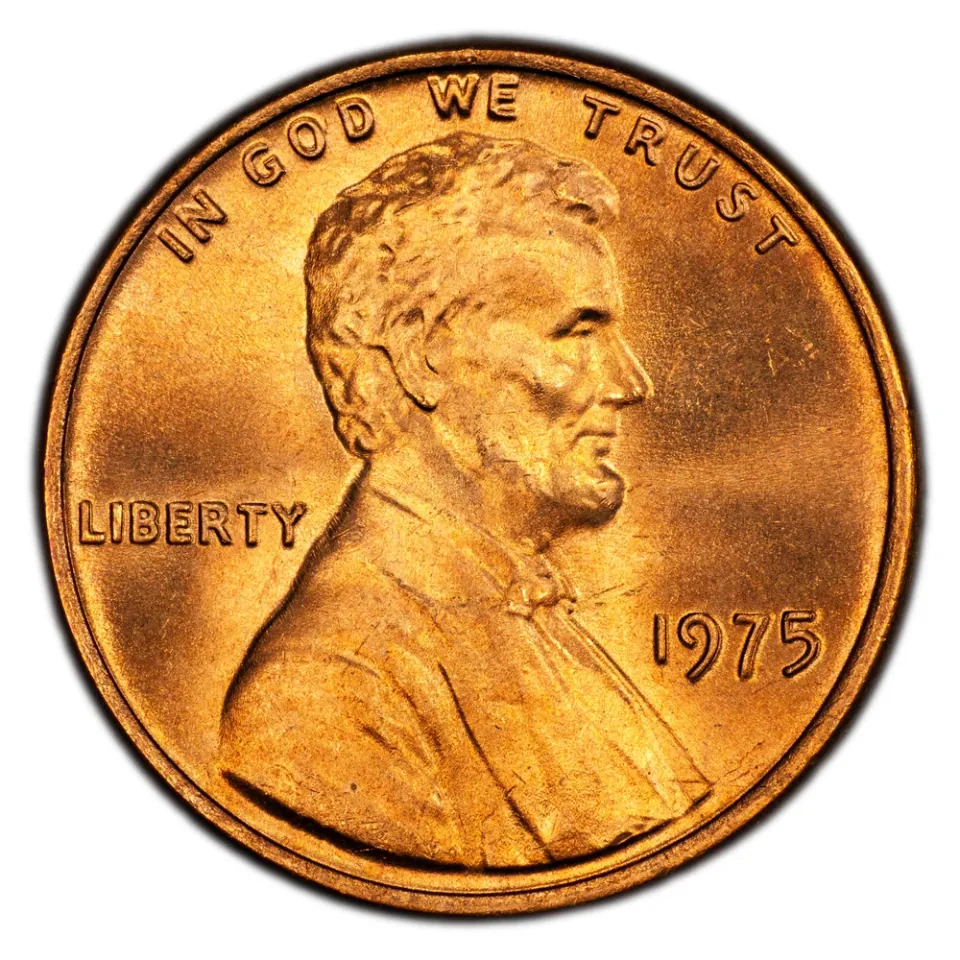
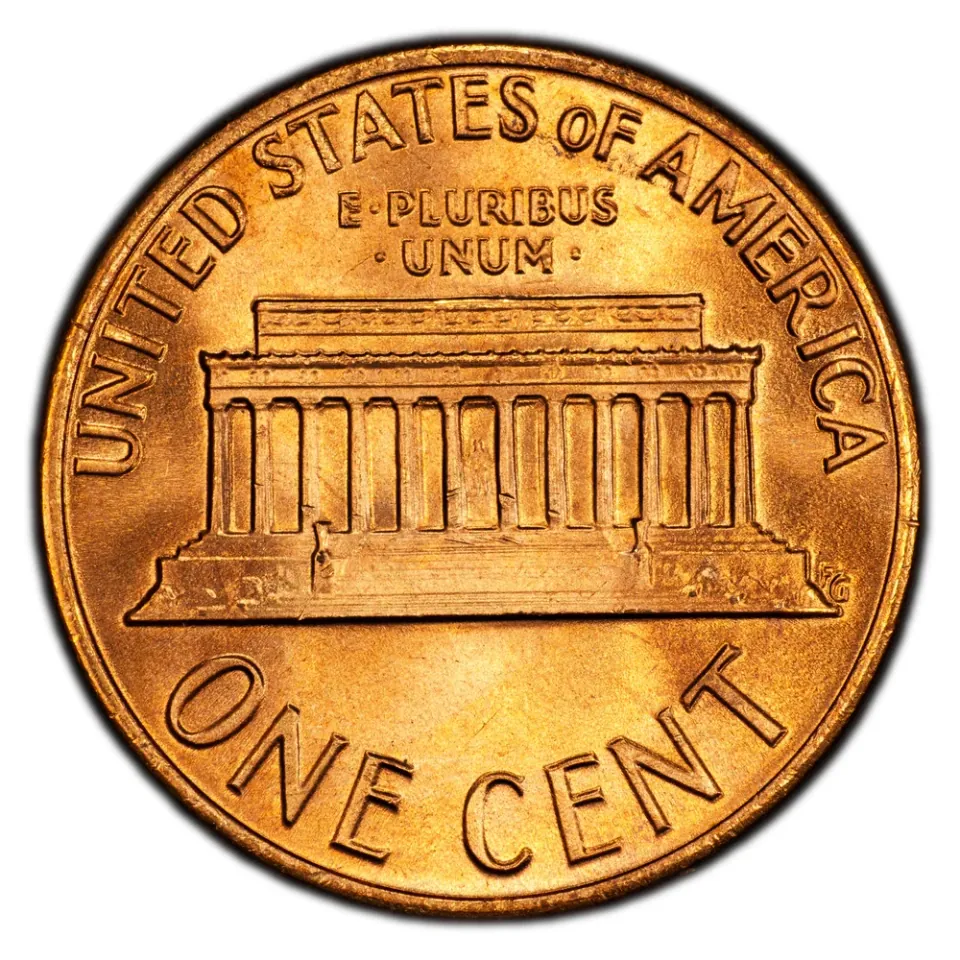
Why a copper penny can look like gold
The Lincoln Memorial reverse was introduced in 1959 and was still in use in 1975. Victor D. Brenner’s Lincoln portrait remained on the front, while Frank Gasparro’s Memorial appeared on the back. This places the coin within the familiar copper Memorial series, not a special gold commemorative program. For the design change, see the first-year Memorial penny guide.
Gold-colored pennies also appear in chemistry demonstrations. The University of Illinois describes how a zinc coating on copper can form a brass-colored surface when treated, producing a gold appearance without turning the coin into gold. That is one explanation for an altered coin, not a diagnosis of every yellow penny. Commercial plating, other surface changes and photographic lighting can create different cases.
The key distinction is between the metal used when the Mint made the coin and what happened to its surface afterward. A coin may be a genuine 1975 cent while its current color is an alteration. The date remains genuine, but the color does not become a Mint-issued variety.
| Feature | What to check |
|---|---|
| Standard issue | Lincoln Memorial cent |
| Regular mints | Philadelphia, no letter; Denver, D |
| Standard composition | 95% copper, 5% zinc |
| Nominal weight / diameter | 3.11 g / 19.00 mm |
| Edge | Plain |
| Gold content of normal issue | None |
| Reverse | Lincoln Memorial, not a wheat-ear reverse |
How to evaluate a gold-colored 1975 penny
Begin with the date, mint mark and full design. Photograph both sides and the edge in neutral light. Compare the coin with an ordinary copper example, but do not use a camera’s color rendering as a metal assay. A warm light source or reflection can exaggerate yellow tones.
Use weight as a screening clue. An ordinary intact 1975 cent should be near its 3.11 g nominal specification. A small difference may reflect wear or measurement error. A coin near the usual weight can still have a thin added coating, so matching the weight does not prove original surfaces. Conversely, an unusual reading is a reason to investigate, not proof of a valuable wrong-planchet error.
Look for a coherent surface explanation. Coating loss at worn areas, different colors on the edge or residue may help a specialist assess alteration. Do not scrape, polish or chemically test the coin yourself to expose its interior; altering it further removes useful evidence. The guide to altered and cleaned surfaces explains why surface history matters.
Could it still be a genuine error?
A wrong-planchet claim needs evidence of an incorrect blank used during striking, with consistent weight, dimensions, metal and struck detail. An unusual color by itself supplies none of that attribution. Seek a qualified assessment before paying for grading or accepting a high-value claim; the appraisal guide lists useful documentation.
1975 penny value: original coins versus altered color
| Coin | Condition | Reference | Basis | Applies to gold-colored alterations? |
|---|---|---|---|---|
| Ordinary 1975 cent | Worn | $0.01 | Face-value baseline | Color adds no established premium |
| 1975 Philadelphia RD | MS63 | $3 | PCGS retail guide | No |
| 1975 Philadelphia RD | MS65 | $16 | PCGS retail guide | No |
| Plated or recolored cent | Altered | No standard rare-coin quote | Assess as altered or novelty item | Requires its own comparison |
| Claimed wrong-planchet coin | Unconfirmed | Not established | Authentication required | Never inferred from color alone |
RD means Red, a numismatic color designation for copper coins retaining the relevant original coloration. It does not mean red paint, a gold coating or simply a shiny surface. Mint State means no circulation wear; neither term can be safely assigned from the year and color alone.
A private novelty coin might sell for more than one cent as a souvenir, but that is a different market from an original collectible cent. Even genuine gold plating would not establish a meaningful bullion value without knowing the amount and purity of gold actually present. Do not apply the price of a solid gold coin to a coated penny.
This article does not quote a market price for an unidentified gold-colored specimen. The verifiable figures above belong to ordinary original cents in specific grades. Matching that distinction is more useful than choosing the highest “1975 gold penny” asking price online.
What the gold color actually tells you
1975 cents were copper-based coins, not standard gold issues. A yellow surface is a clue to investigate, not proof of gold content, rarity or an error. Ordinary worn examples start at one cent; original high-grade coins have a separate collector market.
Record both sides, the edge and weight without altering the coin. If the composition appears genuinely unusual, obtain an attribution before assigning a special price.
Frequently asked questions
Did the U.S. Mint make a gold penny in 1975?
There was no standard gold 1975 cent issue. The normal Lincoln cent was 95% copper and 5% zinc, with a nominal weight of 3.11 grams.
How much is a gold-colored 1975 penny worth?
Color alone does not establish a premium over an ordinary cent. A plated novelty, an original high-grade cent and an authenticated mint error are different categories and must not share one price.
Does a 3.11-gram weight prove my 1975 penny is unaltered?
No. It is consistent with the standard nominal weight, but a thin surface coating can leave the weight close to normal. Weight alone cannot authenticate original surfaces or a special composition.
Can a copper penny look gold without containing gold?
Yes. Surface changes, including a brass-colored layer demonstrated in copper-and-zinc chemistry, can produce a gold appearance. Lighting and other coatings may also affect the observed color.
References
Sources
Research checked October 19, 2026. Any price example retains its stated source date and scope.
- PCGS · 1975 Red Lincoln centStandard composition, weight, design and grade-specific guide.
- PCGS · 1975-D Lincoln centThe separate Denver regular issue.
- University of Illinois · Copper and zinc surface colorWhy a brass-colored surface is not evidence of gold.