

 App Store
COIN VALUE GUIDES · PENNIES
1974 Penny Value:No Mint Mark, D, S and Aluminum Confusion
Check ordinary 1974 penny values, red Mint State prices, mint marks and the history behind the experimental aluminum cent.
 HeriBase TeamPublished
In this article
How much is a 1974 penny worth?
Most worn, ordinary 1974 pennies have little collector premium; their face value is one cent. Normal issues are 95% copper, weigh about 3.11 g when new, and come with no mint mark, D or S. No mint mark is normal for Philadelphia, and an S does not automatically mean Proof.
Condition and version create the premium. PCGS retail estimates checked October 20, 2026 for red MS65 coins are $18 with no mark, $15 for D and $20 for S. These graded, uncirculated references do not apply to brown pocket-change coins. A silver-colored penny is not proof of the famous aluminum experiment; an unusual metal claim needs expert testing.
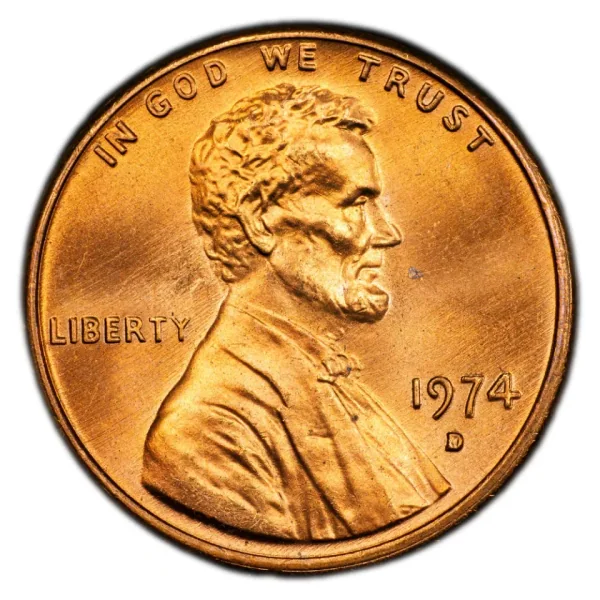
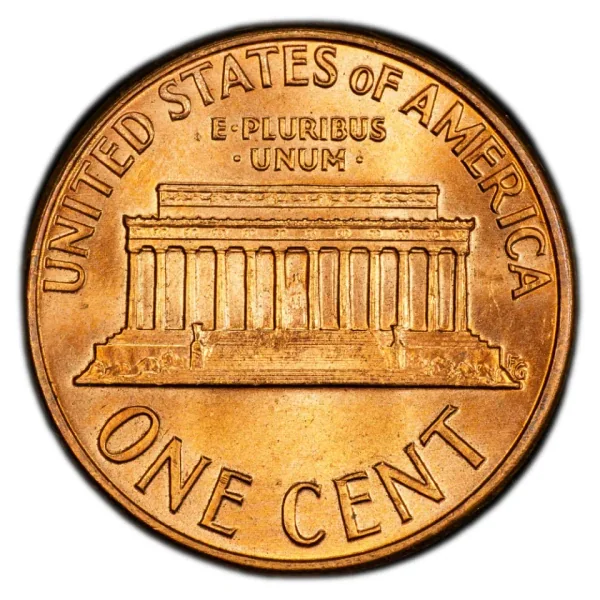
1974-D penny: portrait, date and Memorial
The penny shortage and the aluminum experiment
| Feature | What to check |
|---|---|
| Normal circulation coin | Lincoln Memorial cent; plain edge |
| Alloy and weight | 95% copper, 5% zinc; 3.11 g |
| Diameter | About 19 mm |
| Regular-strike mintage | Philadelphia 4,232,140,523; Denver 4,235,098,000; San Francisco 412,039,228 |
In 1974, a penny was both everyday change and a policy problem. The Mint urged people to return idle cents to circulation, while rising copper costs prompted experiments with cheaper materials. That history makes the year interesting even when the coin in hand is ordinary.
The U.S. Mint’s account describes research into aluminum and plated steel after copper costs rose in 1973. The proposed aluminum alloy was not adopted for regular cents. A 1974-D experimental aluminum specimen was returned to the Mint in 2016. That exceptional history is separate from the billions of copper cents issued for spending.
For the later production change, see the 1982 copper-versus-zinc guide. A normal 1974 cent predates that transition; it should not be evaluated as a standard 2.50 g copper-plated zinc cent.
Identify the mint, finish and metal
| What you see | What it means | Next check |
|---|---|---|
| No mint mark | Normal Philadelphia circulation issue | Wear, remaining original color and damage |
| D below 1974 | Normal Denver issue | Do not confuse it with the experimental aluminum story |
| S below 1974 | San Francisco; regular strikes and Proofs exist | Production finish and original set context |
| Silver or gold appearance | Color is not a metal identification | Weight, coating, surfaces and expert analysis |
Silver-colored does not establish aluminum
Plating or altered surfaces can change a copper cent’s appearance. Photograph both sides and the edge, and record weight with a suitable scale. Do not scratch, file or apply chemicals to expose the metal. A precise composition claim requires more than a photograph and a color description.
An S mint mark is only the starting point
A regular 1974-S belongs in a Mint State comparison if unworn; a Proof belongs with Proofs of the same grade and contrast designation. The table below covers regular strikes only. A shiny circulated coin is not a Proof merely because it has a reflective patch.
A gold-colored cent raises similar questions. The gold-colored penny guide explains why appearance and original Mint composition need to be separated.
1974 penny values by mint and red grade
PCGS retail guide estimates in US dollars, checked October 20, 2026. These are references for genuine, problem-free coins in the stated grade, not auction results or guaranteed offers. Cleaned, damaged and incorrectly graded coins need different comparisons.
| Mint | MS63 RD | MS65 RD | MS67 RD |
|---|---|---|---|
| No mark | $7 | $18 | $115 |
| D | $5 | $15 | $135 |
| S | $7 | $20 | $550 |
RD means the grading service has assigned the red color designation; it is not a label for any orange-looking penny. RB and BN identify different color categories, and coins with stains, corrosion or cleaning are different comparisons again. Do not polish a brown coin to chase a red price.
Is grading an ordinary 1974 penny worthwhile?
Compare the likely value with grading, shipping and selling costs first. The MS63 and MS65 figures show why certifying a common single penny can cost more than its expected value. A high-grade claim needs strong surface evidence, not simply a readable date or attractive color.
When an apparent error needs a closer look
For normal-versus-error photographs, feature locations, damage checks and documented sales, see the 1974 penny errors guide.
A possible off-center strike should have a convincing displaced design and remaining original blank area; a doubled-die claim should match a documented variety’s specific lettering. Scratches, corrosion and flat strike doubling are not interchangeable with genuine Mint errors. Keep a sharp close-up with the full coin so the feature can be evaluated in context.
For broader sorting and terminology, use the penny value checklist and grading guide.
The practical answer for a 1974 penny
Most worn 1974 cents are ordinary; scarce condition or a verified special issue creates the premium. Read the mint mark, separate Proofs from regular strikes and preserve original color. Treat aluminum claims as an authentication question, not a shortcut to a high price.
Frequently asked questions
Is a 1974 penny with no mint mark rare?
No. Philadelphia made more than four billion regular 1974 cents without a mint mark. An exceptional grade or verified special feature must be assessed separately.
How much should a normal 1974 penny weigh?
The original standard is 3.11 grams for the 95% copper alloy. Wear, damage, coatings and scale accuracy can affect a measurement; weight alone does not prove an unusual metal.
Are all 1974-S pennies Proofs?
No. San Francisco produced regular strikes as well as collector Proofs. Identify the finish and compare the same production type.
Is a silver-colored 1974 penny the rare aluminum cent?
Color alone cannot establish that. A coated copper cent can look silver-colored. The aluminum experiment was not adopted as a regular circulating issue; a suspected experimental piece requires expert examination.
References
Sources
Research checked October 20, 2026. Any price example retains its stated source date and scope.
- PCGS CoinFacts: 1974 (Philadelphia)Issue specifications, grade-specific guide estimates and historical context.
- PCGS CoinFacts: 1974-DIssue specifications, grade-specific guide estimates and historical context.
- PCGS CoinFacts: 1974-SIssue specifications, grade-specific guide estimates and historical context.
- U.S. Mint: 1974 experimental aluminum centResearch program, proposed alloy and return of the Denver specimen.
- U.S. Mint: June Is Penny Redemption MonthThe contemporary 1974 effort to return cents to circulation.