

 App Store

COIN VALUE GUIDES · LINCOLN MEMORIAL CENTS
1982 Penny: Copper vs. Zinc and Seven Regular Varieties
Sort 1982 pennies by weight, date size and mint mark. Compare real date details and understand the bronze Small Date Denver exception.
 HeriBase TeamPublished
 In this article
What is a 1982 penny worth?
1982 pennies come in seven regular circulation combinations of mint mark, date size and metal. Ordinary worn examples generally have little collector premium over one cent. A copper color, a D or a Small Date alone does not make one rare.
The important exception is an authenticated 1982-D Small Date struck on a bronze planchet. The expected weights are about 3.11 g for bronze and 2.50 g for copper-plated zinc. A D-marked Small Date near the heavier weight deserves expert examination; the normal zinc version and a no-mint-mark bronze Small Date are different coins.
Uncirculated condition can also create premiums, but a weight reading is not a grade or an authentication. Identify all three features before comparing prices; do not apply a rare error’s auction result to an ordinary 1982 cent.
The Lincoln portrait and Memorial reverse
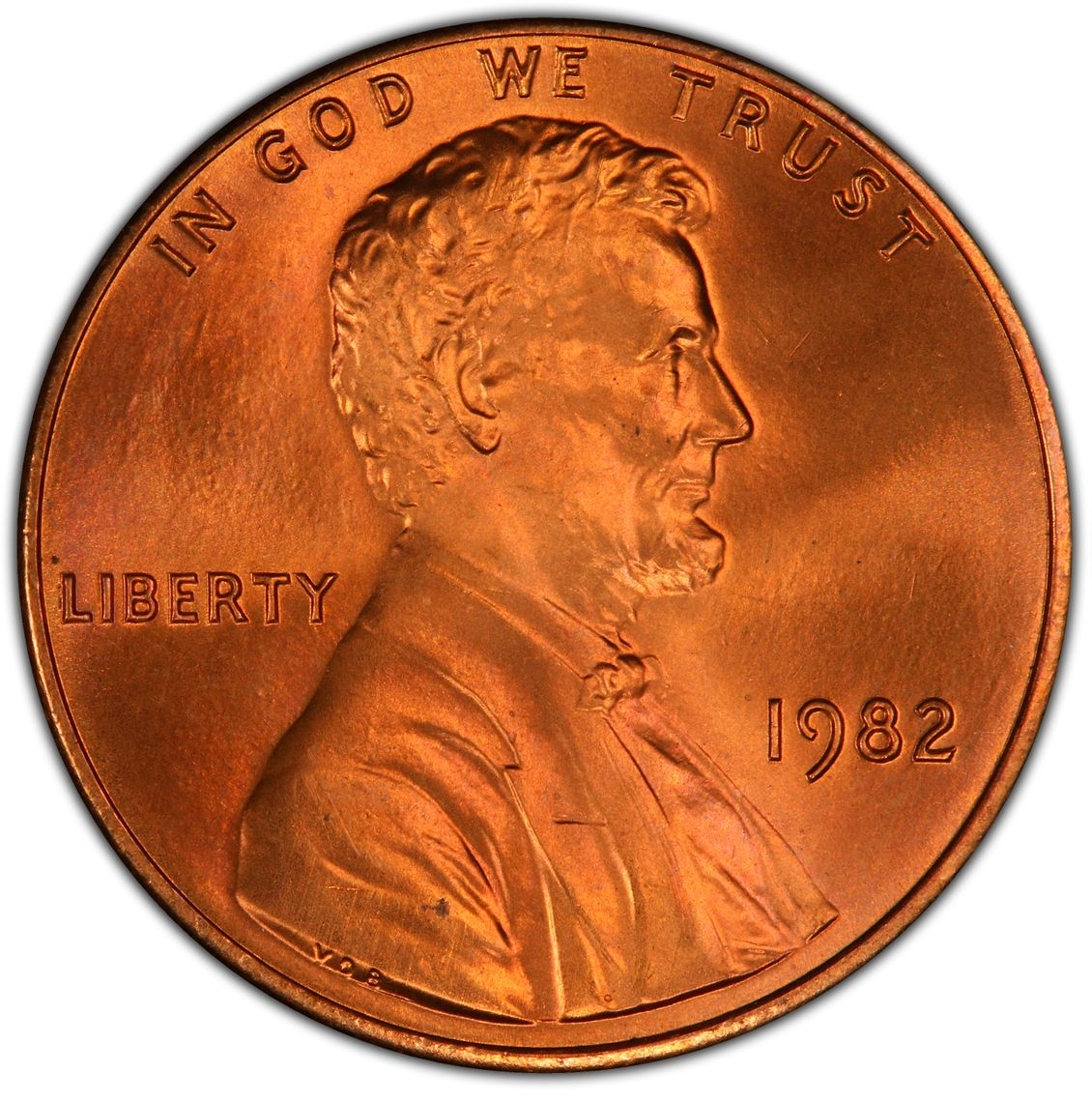
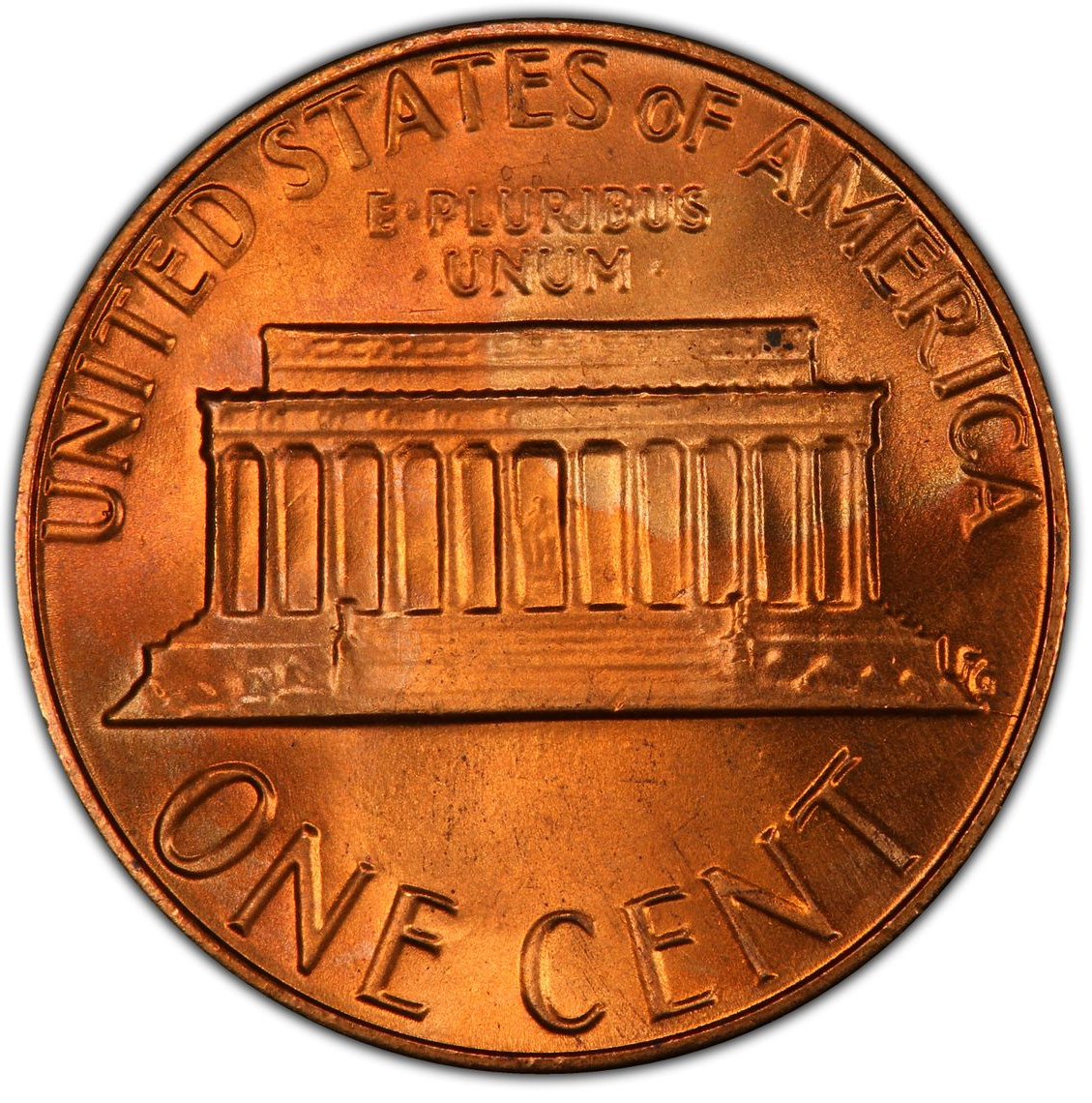
This is a no-mint-mark bronze Small Date, one of the regular combinations. It is not the rare Denver bronze Small Date error.
Compare metal, date size and mint mark
The story: a change hidden beneath the copper color
Rising copper costs led to a change in cent composition during 1982. The new zinc core retained a copper-colored surface, while different date punches created another visible distinction. One year therefore became a useful sorting exercise: appearance, weight and mint mark must be recorded separately.
Lincoln’s portrait and the Memorial continued through the transition. If your coin has wheat ears instead of the Memorial, start with the Lincoln wheat penny overview. For the four later anniversary reverses, use the 2009 penny design guide.
| Mint mark | Date size | Composition | Weight | Classification |
|---|---|---|---|---|
| None | Large | Bronze / copper alloy | 3.11 g | Regular issue |
| None | Small | Bronze / copper alloy | 3.11 g | Regular issue |
| D | Large | Bronze / copper alloy | 3.11 g | Regular issue |
| None | Large | Copper-plated zinc | 2.50 g | Regular issue |
| None | Small | Copper-plated zinc | 2.50 g | Regular issue |
| D | Large | Copper-plated zinc | 2.50 g | Regular issue |
| D | Small | Copper-plated zinc | 2.50 g | Regular issue |
The table excludes Proofs and mint errors. PCGS notes that unmarked 1982 circulation cents were made at Philadelphia, San Francisco and West Point; the absence of a letter does not identify which of those facilities struck a particular coin. A visible S belongs outside this seven-coin circulation comparison.
1982 · date comparison
Small Date
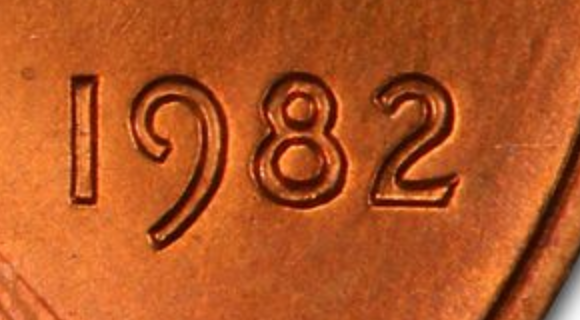
Look at the whole date: its tops are approximately level and the diagonal of the 2 curves slightly. Small Date describes the design, not the metal. Both bronze and zinc examples exist without a mint mark.
Use magnification and even light. Wear or a tilted photograph can obscure the outline; compare the numerals together before naming the variety.
1982 · date comparison
Large Date
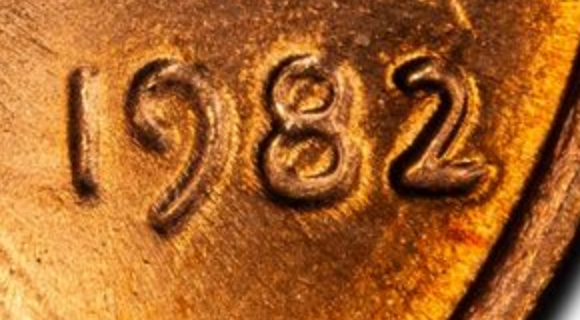
The tops of 9 and 8 stand higher than 1 and 2, and the 2 has a straighter diagonal. A bronze 1982-D Large Date is a normal combination; do not confuse it with the bronze Small Date error.
Use magnification and even light. Wear or a tilted photograph can obscure the outline; compare the numerals together before naming the variety.
The Denver bronze Small Date exception
In February 2017, NGC reported authenticating a 1982-D Small Date bronze cent as a mint error. That discovery coin weighed 3.08 g and was graded About Uncirculated 58 (AU58). Its slightly lower weight illustrates why 3.11 g is a nominal specification, not an exact pass-or-fail reading. The announcement’s “unique” description belongs to its publication date, not a current population claim.
1982 penny value by metal, date size and condition
Treat an ordinary worn regular issue as a low-value coin unless a specific feature justifies further research. For an uncirculated example, compare the same composition, date size, mint mark, numerical grade and color designation. Brown, Red-Brown and Red describe retained copper color; cleaning does not turn a circulated cent into a naturally Red Mint State coin. See the grading guide and cleaning-signs guide.
A rare bronze Small Date Denver attribution requires authentication before any rare-coin valuation. There is no useful single price for an unverified candidate, and this guide does not assign one. Save sharp photographs and the measured weight for an initial professional opinion.
Sort a 1982 cent without damaging it
1. Read the mint mark and date
Photograph the portrait upright. Record D or no letter, then match the complete numeral shapes to the comparison. If the date is too worn to distinguish, record it as uncertain instead of forcing a match.
2. Weigh it on a suitable scale
Use a calibrated scale reading to 0.01 g on a stable surface. Recheck an unexpected result and weigh the bare coin, not its holder. Corrosion, added material, plating or a scale error can complicate the result. Do not scrape the edge, cut the coin or use acid to expose the core.
3. Match the complete combination
Use the seven-row table for regular issues. A heavier D-marked Small Date is a candidate for examination, not an instant discovery. The coin appraisal guide explains how to prepare a potentially significant find; the penny value checklist helps organize an ordinary collection.
The key takeaway
For 1982 pennies, the combination matters: mint mark + date style + metal. Most worn coins are ordinary; the bronze 1982-D Small Date is the special authentication question.
Record those three features, preserve the surfaces and compare only like-for-like coins. A Small Date without a D must not be assigned the Denver error’s value.
Frequently asked questions
Is a 1982-D Small Date penny valuable?
The normal 1982-D Small Date penny is copper-plated zinc, with a nominal weight of 2.50 g; ordinary worn examples have little collector premium. The valuable exception is an authenticated bronze Small Date Denver error, nominally 3.11 g. A no-mint-mark bronze Small Date and a bronze D Large Date are regular issues. Confirm the complete combination before using an error price.
How much should a 1982 penny weigh?
The nominal weights are about 3.11 g for bronze and 2.50 g for copper-plated zinc. Wear, damage and measurement error matter, and weight alone cannot authenticate a rare mint error.
How do I tell the 1982 Small Date from the Large Date?
Compare all four numerals. Small Date has more evenly aligned tops and a slightly curved diagonal on the 2. Large Date has higher middle numerals and a straighter diagonal on the 2.
Does no mint mark prove a 1982 penny was made in Philadelphia?
No. PCGS documents unmarked circulation cents from Philadelphia, San Francisco and West Point in 1982. Those coins cannot be separated by a mint letter that was not applied.