

 App Store

COIN VALUE GUIDES · LINCOLN SERIES
Lincoln Memorial Penny Value:Copper Years, Zinc and Key Varieties
Identify the 1959–2008 Lincoln Memorial cent, separate copper-rich and plated-zinc issues and find the relevant year guide before assigning a collector premium.
 HeriBase TeamPublished
In this article
Quick answer
The Lincoln Memorial penny is the one-cent design issued from 1959 through 2008, showing the Memorial building on the reverse. Common circulated coins generally start at face value unless a specific collectible attribute is established.
The main composition transition occurred in 1982: copper-rich cents normally weigh 3.11 grams, while plated-zinc cents normally weigh 2.50 grams. Both standards occur in that transition year. Exact date, mint, manufacture, condition and any verified variety determine the next useful comparison.
Coin photos
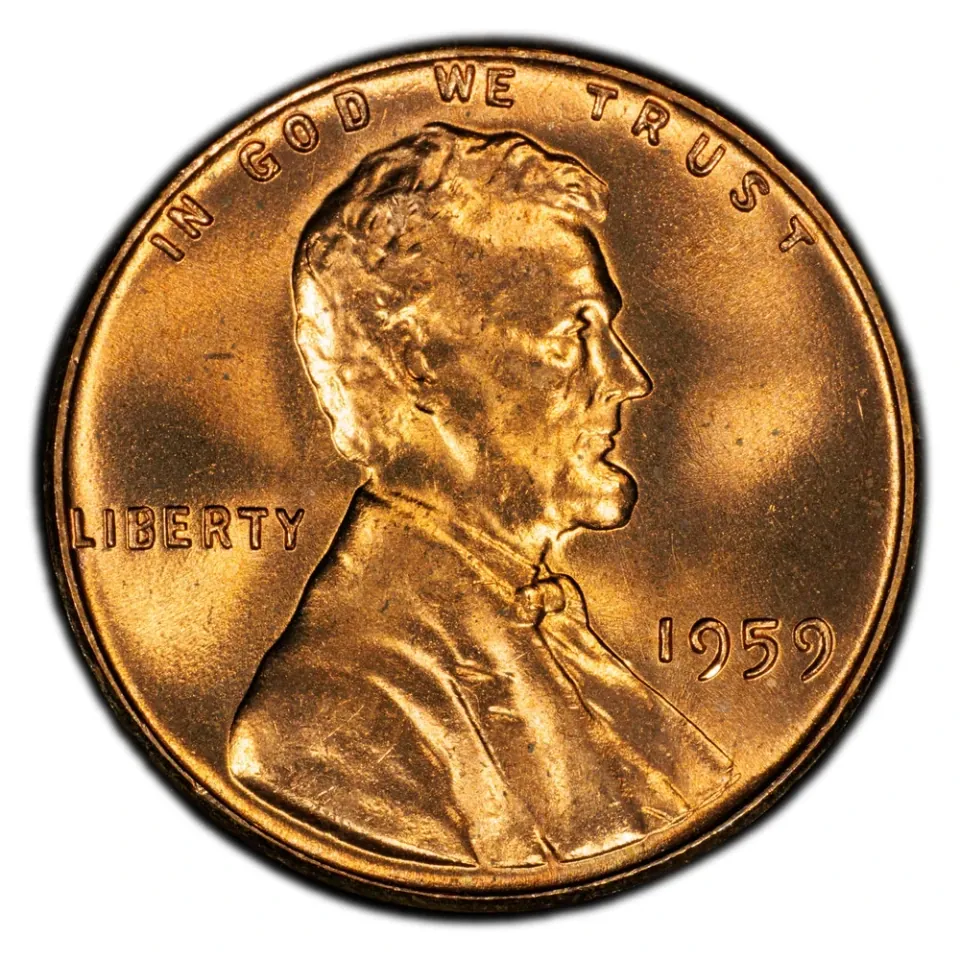
Basics & coin story
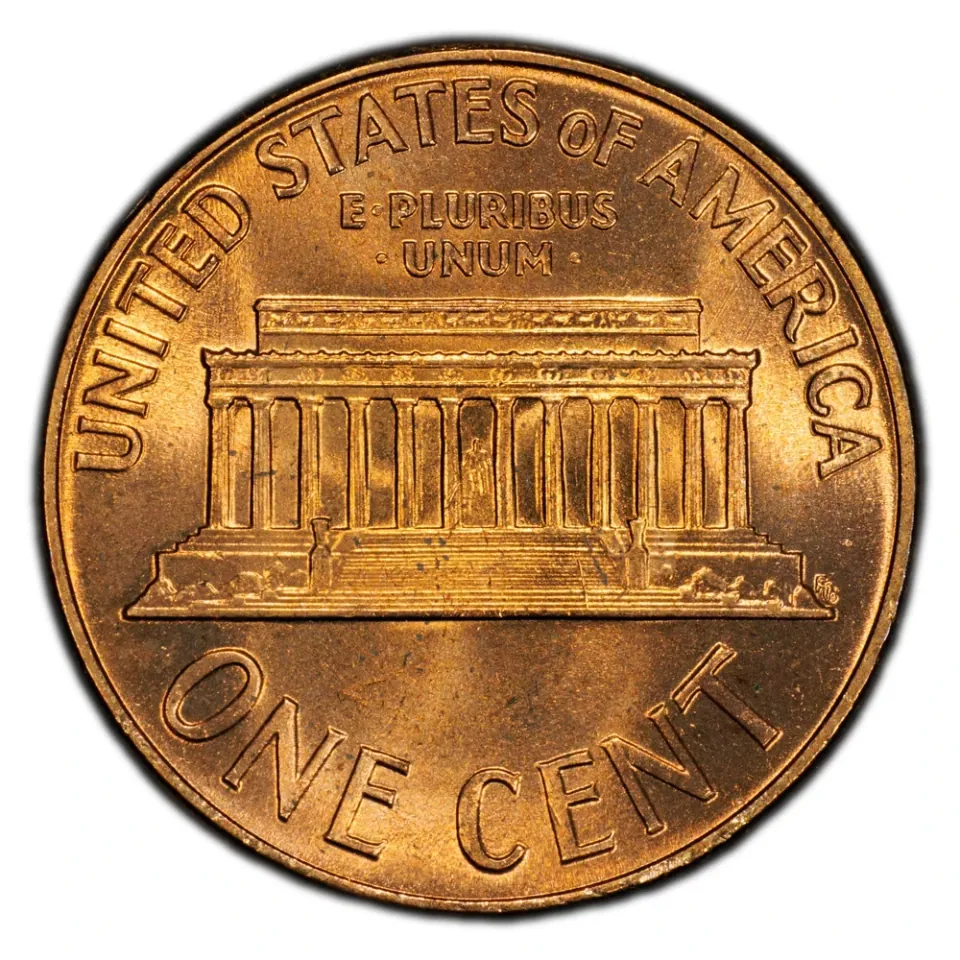
The Memorial reverse marked the 150th anniversary of Lincoln’s birth in 1959. Frank Gasparro’s architectural design replaced the Wheat reverse while retaining Victor D. Brenner’s portrait. The tiny seated Lincoln within the building is an intentional design element, not an extra-portrait error.
Rising copper costs led to plated-zinc production during 1982. The exterior kept the familiar copper appearance even though most of the coin’s mass became zinc. Appearance alone therefore cannot separate the heavier and lighter standards.
The Memorial design ended after 2008. Four different Lincoln Bicentennial reverses followed in 2009, and the Union Shield reverse began in 2010. A late date with another reverse belongs to a different design category. The Wheat cent guide covers the preceding 1909–1958 reverse.
| Feature | What to check |
|---|---|
| Design span | 1959–2008 |
| Denomination / diameter | One cent / approximately 19 mm |
| Obverse / reverse artists | Victor D. Brenner / Frank Gasparro |
| Earlier copper-rich standard | Nominal 3.11 g; 95% copper |
| Later plated-zinc standard | Nominal 2.50 g; 97.5% zinc, 2.5% copper overall |
| Transition year | 1982: more than one composition and date style |
| Mint identification | No letter, D or S depending on year and manufacture |
| Following designs | 2009 Bicentennial reverses; Union Shield from 2010 |
Identification
Identify the building and the date together
Turn the coin over and read ONE CENT beneath the Memorial. Then read the obverse date. A building reverse and an old-looking portrait establish a research direction, not a single market price for the entire series.
The photographs show a 1959 Philadelphia coin, an early copper-rich issue. Its appearance must not be used to claim that every similar-looking Memorial cent has the same composition. The 1959 guide covers the first year in detail.
Separate the 1982 metal transition from date styles
An accurate scale is useful because the two ordinary mass standards differ substantially. Weigh an unaltered coin on a calibrated scale and record the reading. Damage, deposits or an inaccurate instrument can make an individual result misleading.
Large Date and Small Date describe numeral shapes; copper-rich and zinc describe composition. Those are independent questions. A proposed scarce combination needs the full date style, mint and metal identification rather than the weight alone.
Research varieties by their exact year
Doubled dies, repunched mint marks where applicable, and AM reverse varieties have specific diagnostic patterns. Do not call every thick letter a doubled die or attach another year’s price to a similar spacing pattern.
The 1993 cent guide illustrates an ordinary plated-zinc year and common misinterpretations. Use each dated guide for its own evidence. A series page should route the reader to that exact issue rather than repeat a long list of loosely related search terms.
Condition & value
USD face-value baseline for an ordinary circulated cent. No universal retail value or metal-price quotation is assigned to the whole 1959–2008 series.
| Issue | Grade / condition | Value or reference | Basis | Important condition |
|---|---|---|---|---|
| Common Memorial regular strike | Ordinary circulated coin | $0.01 starting point | Face value | No verified premium feature |
| Copper-rich issue | Correct date and nominal 3.11 g standard | Compare the exact issue | Composition identification | Copper content is not a complete collector valuation |
| Plated-zinc issue | Correct date and nominal 2.50 g standard | Compare the exact issue | Composition identification | Copper color does not establish the older alloy |
| Collector Proof | Exact year, mint, grade and cameo | Use a matching Proof guide | Separate manufacture | Reflectivity alone is insufficient |
| Verified variety or exceptional grade | Exact attribution and condition | Use matching completed sales | Collector evidence | No universal series-wide premium asserted |
There is no useful single high-grade value for all Memorial pennies. A typical worn late date, a recognized doubled die and a certified top-grade earlier coin are different comparisons. Begin with the ordinary face-value baseline and add only attributes supported by evidence.
For an uncirculated candidate, distinguish friction from marks and assess the original copper color. RD, RB and BN do not replace the numerical grade. Plating breaks, corrosion or an artificially red surface can separate a coin from ordinary guide values.
Keep images of both sides, the edge and any proposed diagnostic area. For a specialized premium, record the exact attribution, grade, sale date and fees. The cleaning guide explains why rubbing away discoloration can also remove useful surface evidence.
Summary
Identify the Memorial reverse, date, mint and appropriate composition standard. Common worn coins start at one cent. Use a year-specific guide for confirmed varieties, Proofs and exceptional grades, preserving the surfaces throughout.
FAQ
What years have the Lincoln Memorial reverse?
The regular Lincoln Memorial reverse design was issued from 1959 through 2008.
Are all Memorial pennies copper?
They have a copper appearance, but the composition changed. Earlier copper-rich coins normally weigh 3.11 grams; plated-zinc coins normally weigh 2.50 grams, with both standards in 1982.
Is the tiny Lincoln inside the Memorial an error?
No. The seated statue within the Memorial is an intentional part of the reverse design.
Does a copper-rich Memorial penny automatically have a large collector premium?
No. Composition identifies the issue; a collector premium still depends on date, mint, condition and any verified variety or error.
References
References and further reading
- U.S. Mint: cent design and composition timeline
- PCGS: Memorial-cent subtypes and varieties
- PCGS: Lincoln cent design and composition guide
References consulted October 27, 2026. Price tables retain the update dates stated in the text; guide estimates, face values and completed transactions are different forms of evidence.