

 App Store

COIN VALUE GUIDES · PENNIES
1983 Penny Value:No Mint Mark, D, Doubled Die and Copper Errors
Distinguish ordinary 1983 cents from the major doubled die reverse and copper-planchet errors, with weight checks and grade-specific prices.
 HeriBase TeamPublished
In this article
What is a 1983 penny worth?
A normal circulated 1983 or 1983-D penny is generally worth its one-cent face value. Uncirculated red examples can have a collector premium: the PCGS guide checked October 19, 2026 lists a regular Philadelphia coin at $5 in MS63 Red and $14 in MS65 Red; Denver is $5 and $16 in the same grades. These prices do not apply to an ordinary worn penny.
The important exceptions are confirmed varieties and errors. The major Philadelphia doubled die reverse is listed at $340 in MS63 Red and $575 in MS65 Red. A rare coin struck on an older copper-alloy blank is a different error requiring authentication: normal 1983 cents weigh about 2.50 g, while the earlier copper standard is about 3.11 g. No mint mark is normal, and copper color alone proves neither rarity nor composition.
A normal 1983 Lincoln Memorial cent
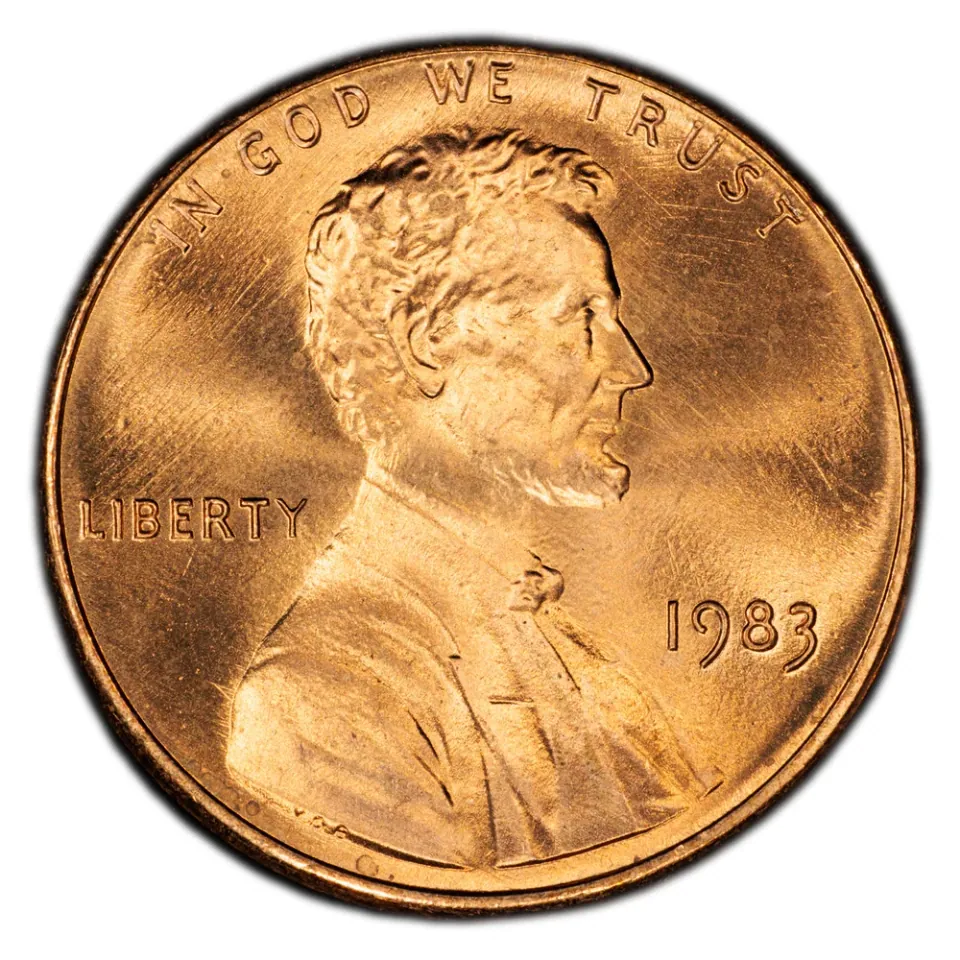
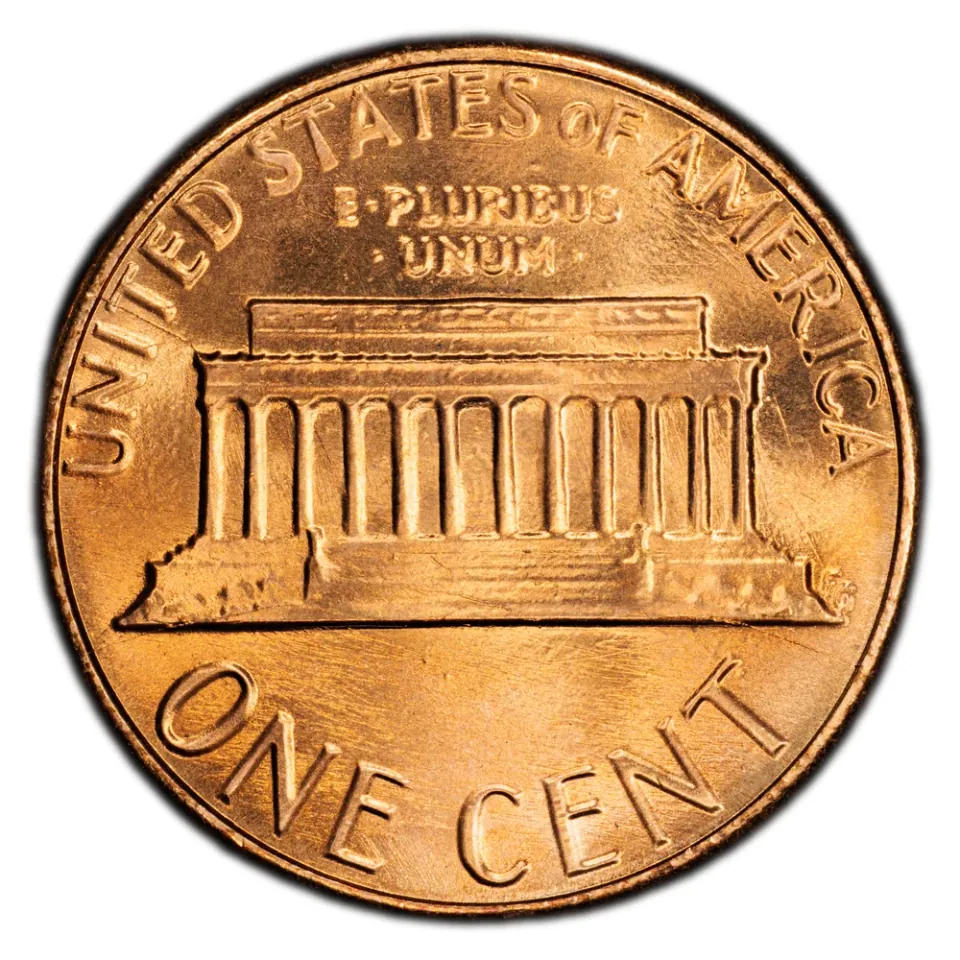
The first full year after the composition change
The Mint changed the cent’s standard composition during 1982, replacing the heavier copper alloy with copper-plated zinc. By 1983 the normal issue used the lighter material. The familiar copper-colored exterior remained, so a glance at the surface could not reveal the change underneath. That is why weight matters to the 1983 story.
The coin retained Victor David Brenner’s Lincoln portrait and Frank Gasparro’s Memorial reverse. Its design therefore continued across the metal transition. The rare surviving 1983 copper-alloy errors draw interest because an obsolete type of blank reached production after the normal changeover, not because every 1983 coin was made of the older metal.
| Feature | What to check |
|---|---|
| Normal composition | 97.5% zinc, 2.5% copper overall |
| Nominal weight / diameter | 2.50 g / approximately 19 mm |
| Edge | Plain |
| Philadelphia regular issue | No mint mark; 7,752,355,000 struck |
| Denver regular issue | D below date; 6,467,199,428 struck |
| San Francisco | S-mint collector Proof issue |
| Design | Lincoln portrait / Lincoln Memorial |
For the mixed compositions and date styles in the transition year, see the 1982 penny guide. The 1983 decision starts with the new zinc standard; it should not inherit every 1982 variety label.
Check the reverse doubling and the weight separately
The major doubled die reverse
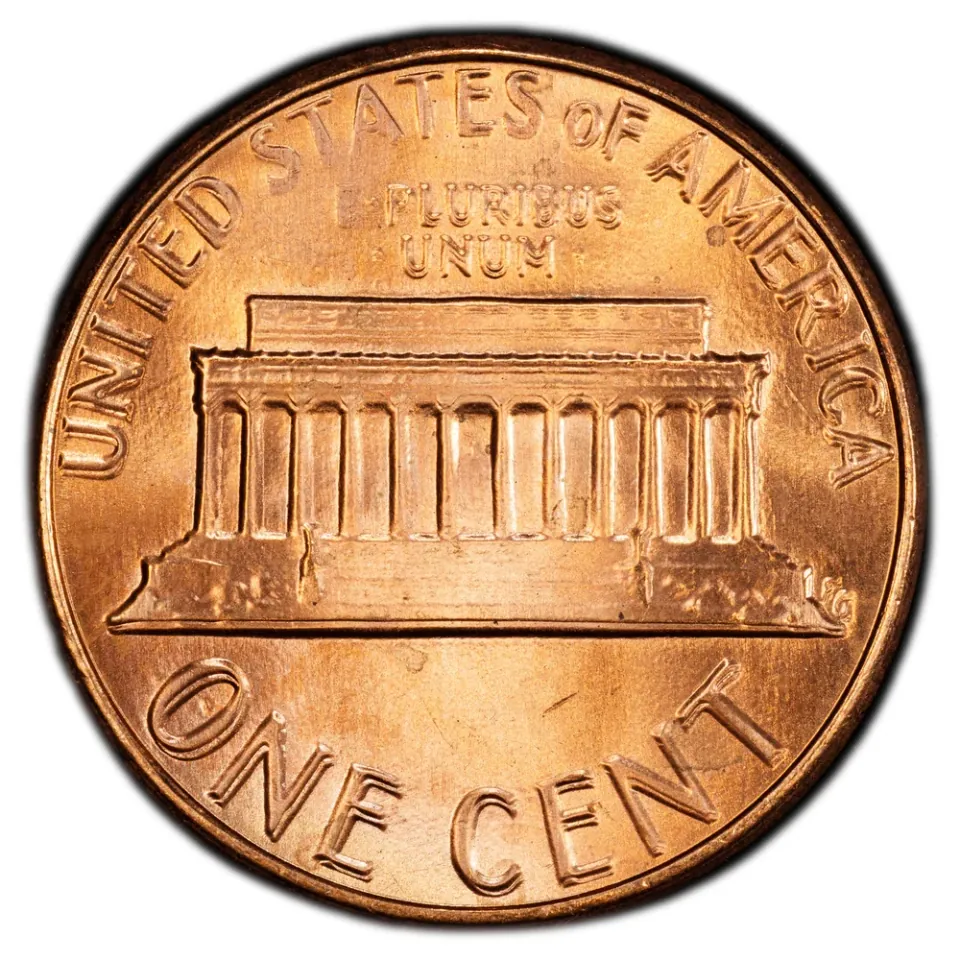
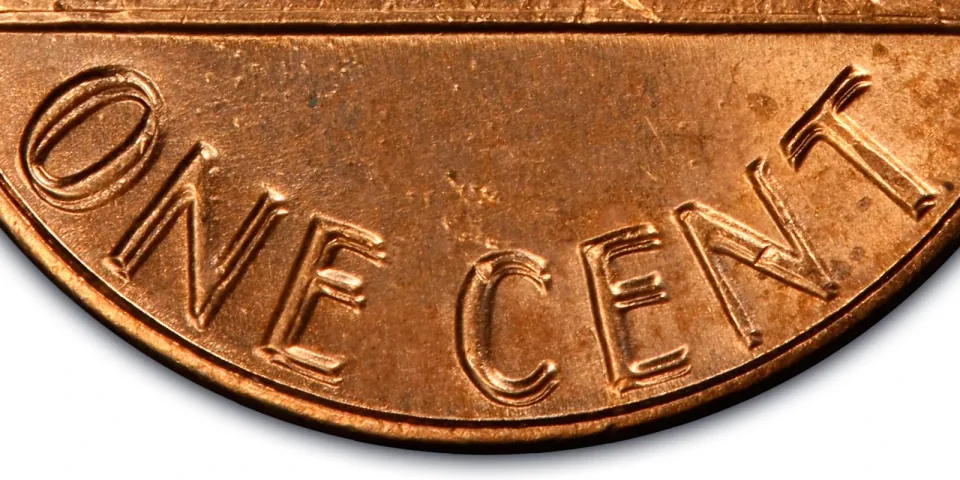
The major Philadelphia doubled die reverse, often cataloged as FS-801, shows strong doubling in ONE CENT, E PLURIBUS UNUM and parts of UNITED. Compare the position and direction of the repeated lettering with the reference. A blurred photograph, flattened shelf-like edge or random surface mark is not enough to identify the variety.
This is a die variety: the duplicated design was present on the die that struck the coins. It is different from a wrong-metal error. A genuine example of this doubled die can still have the normal zinc composition and normal weight. The word “double” in a sales listing does not tell you which mechanism occurred.
A penny near 3.11 g needs further examination
Use a calibrated scale with 0.01 g resolution on a stable surface and repeat the measurement. About 2.50 g fits the normal copper-plated zinc cent. A result near the older 3.11 g standard is a reason to investigate, not automatic proof of a copper-alloy transitional error. Added material, alteration and measurement problems must be excluded.
GreatCollections documented a 1983 bronze-planchet coin authenticated using both its approximately 3.1 g weight and X-ray fluorescence testing. That combination illustrates why a scale reading alone cannot settle the composition. Do not scrape, file or acid-test a suspect coin. Have its metal and authenticity examined professionally.
No mint mark simply identifies the normal Philadelphia issue. An S indicates a collector Proof, which uses a different price category. If the coin is merely dark, unusually bright or discolored, consult the surface-alteration guide before treating color as an error.
1983 penny value by issue and condition
| Issue / designation | MS63 RD | MS65 RD | MS67 RD | Scope |
|---|---|---|---|---|
| 1983 regular | $5 | $14 | $55 | Uncirculated; original red designation |
| 1983-D regular | $5 | $16 | $30 | Uncirculated; original red designation |
| 1983 doubled die reverse | $340 | $575 | $1,500 | Uncirculated; original red designation |
PCGS retail guide estimates in US dollars, checked October 19, 2026. These are references for genuine, problem-free coins in the stated grade, not auction results or guaranteed offers. Cleaned, damaged and incorrectly graded coins need different comparisons.
MS means Mint State; RD means Red, a grading designation for retained original copper color. Red and Brown (RB) and Brown (BN) are different categories. A penny that looks bright after cleaning does not thereby qualify for RD. The table deliberately compares the same designation across issues rather than mixing ordinary brown circulated coins with high-grade red examples.
For a common circulated coin, start at one cent. The Mint State guide prices assume the specified grade and color. Grading and shipping costs can exceed the value of an ordinary example, so do not infer that a $5 guide entry means every loose 1983 penny should be submitted.
The doubled die figures depend on a confirmed attribution as well as grade and color. They are not values for all coins with apparent doubling. Philadelphia’s total production figure is the whole regular issue, not a count of how many doubled die coins exist.
San Francisco Proofs need Proof-grade comparisons and any applicable Cameo designation. Rare copper-alloy transitional errors need authenticated, coin-specific comparisons; this table does not invent a general price for a heavy coin. For an unusually promising example, preserve its surfaces and use the appraisal guide before paying for a specialist service.
Keep photographs, measured weight, mint mark and any certification details together. The grading guide explains wear and numerical grades; a single close-up cannot establish the overall condition of both sides.
Most are one cent; verify the exceptions
Normal worn 1983 pennies are generally face-value coins. Uncirculated red coins have modest premiums at the grades shown, while the confirmed major doubled die reverse has a separate, much higher guide.
Check the lettering for a catalog match and weigh a suspected wrong-metal coin, treating those as two separate tests. A missing mint letter, copper color or isolated high auction price does not establish an error.
Frequently asked questions
Is a 1983 penny with no mint mark rare?
No. Philadelphia normally used no mint letter on this issue. A circulated ordinary example is generally worth one cent; a premium requires condition, a confirmed variety or an authenticated error.
What should a normal 1983 penny weigh?
The copper-plated zinc standard is approximately 2.50 grams. A reading near the older 3.11-gram copper standard warrants further checks, but weight alone does not authenticate a transitional error.
Where is the doubling on the valuable 1983 penny?
The major Philadelphia doubled die reverse shows repeated lettering in ONE CENT, E PLURIBUS UNUM and parts of UNITED. Match the complete diagnostic rather than relying on one flattened or blurry letter.
What is a 1983 doubled die reverse penny worth?
The PCGS guide checked October 19, 2026 lists $340 in MS63 Red, $575 in MS65 Red and $1,500 in MS67 Red. These estimates require the genuine variety, corresponding grade and Red designation; they do not apply to ordinary cents.
References
Sources
Research checked October 19, 2026. Any price example retains its stated source date and scope.
- U.S. Mint · Historic coin productionThe 1982 change to copper-plated zinc.
- PCGS · 1983 Philadelphia RedRegular-issue specifications and guide.
- PCGS · 1983-D RedDenver production and guide prices.
- PCGS · 1983 doubled die reverseDiagnostic lettering and separate grade prices.
- PCGS · 1983-S ProofCollector issue and composition.
- GreatCollections · 1983 bronze-planchet authenticationWeight and X-ray fluorescence evidence for an authenticated error.