

 App Store

COIN VALUE GUIDES
1970 Penny Value: No Mint Mark, D, S and Small Date Checks
Identify a 1970 penny by mint mark, Small Date or Large Date, Proof finish and condition. Compare real coin photos, date details and dated price evidence.
 HeriBase TeamPublished
In this article
How much is a 1970 penny worth?
A worn, ordinary 1970 penny starts at its one-cent denomination; no mint mark is normal for Philadelphia. Collector premiums depend on condition, original color and the exact issue. Check 1970-S cents for Small Date versus Large Date, and separate circulation strikes, Proofs and doubled dies before comparing prices.
Evidence reviewed November 13, 2026. Prices retain their original reference dates and stated conditions.
Which coin details should I compare?
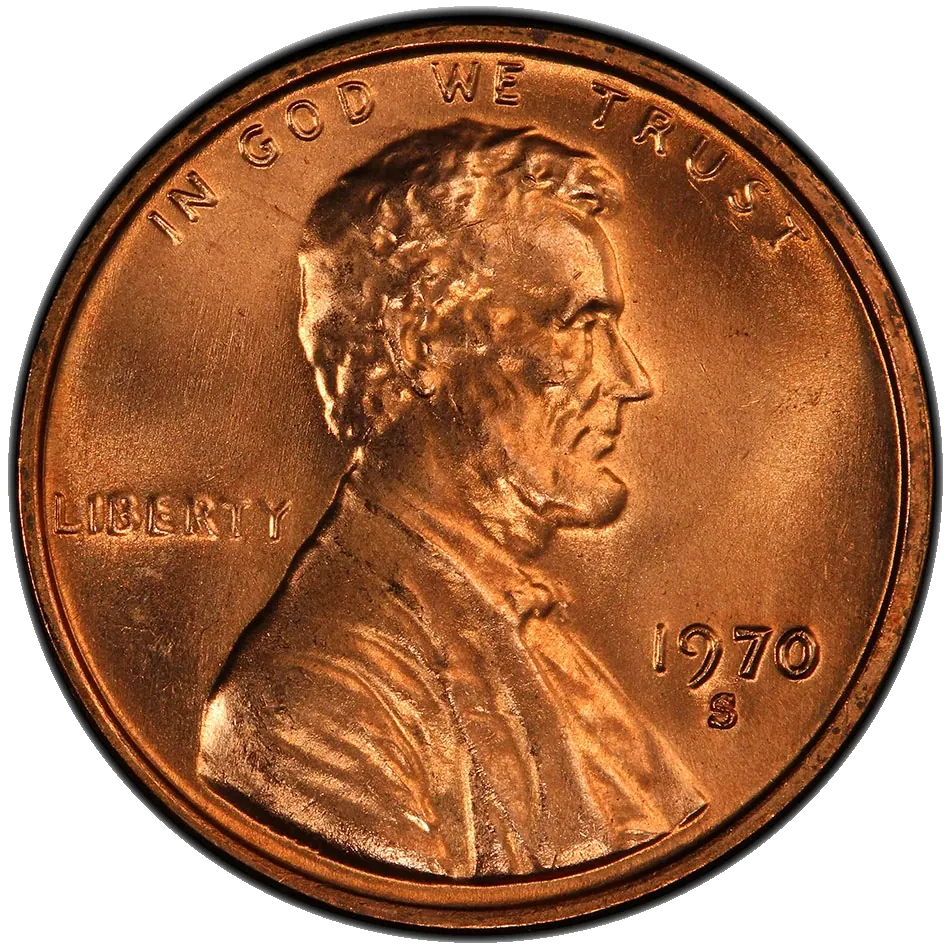
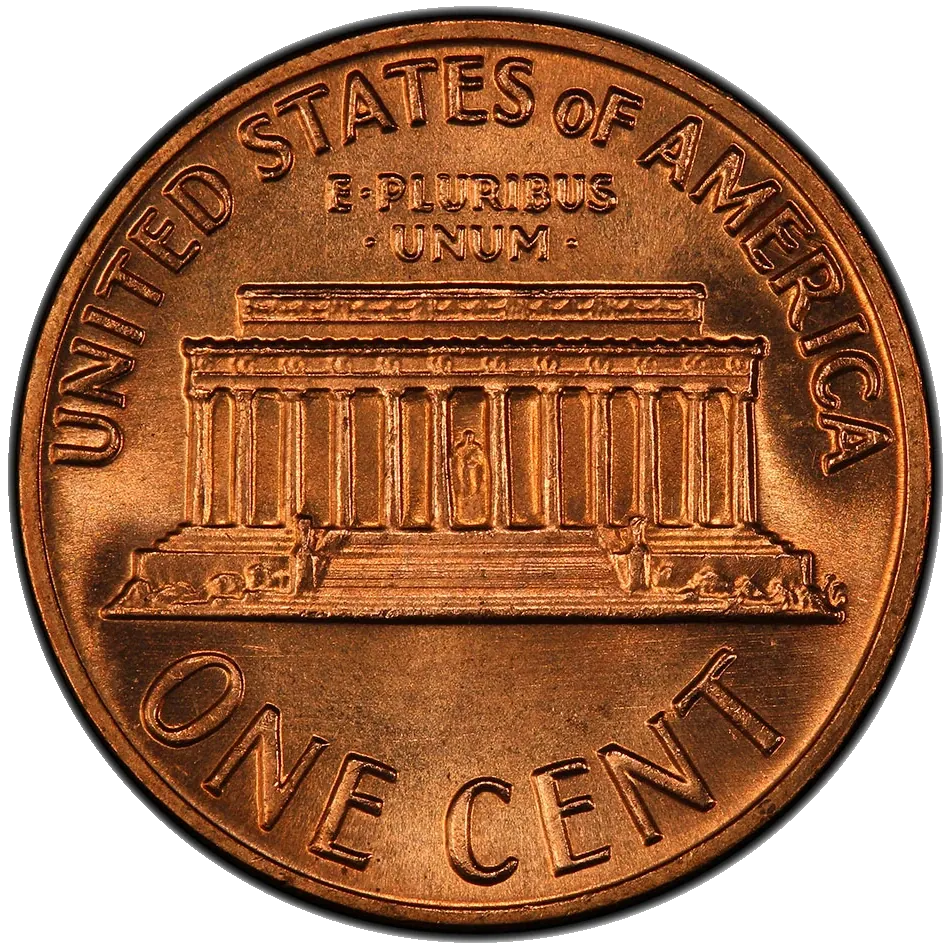
How do the issues and values compare?
What do no mint mark, D and S mean?
Read the small letter below the date before comparing date sizes. An ordinary Philadelphia 1970 cent has no mint mark. D indicates Denver and S indicates San Francisco. The familiar Small Date / Large Date comparison in this guide concerns the 1970-S issue; it does not turn every Philadelphia or Denver coin with a small-looking date into that variety.
These are Lincoln Memorial cents. Victor David Brenner’s Lincoln portrait appears on the front and Frank Gasparro’s Memorial reverse on the back. The series used the Memorial from 1959 through 2008. A normal 1970 cent weighs approximately 3.11 grams, measures 19 millimeters and has a plain edge. Its copper alloy predates the copper-plated zinc construction used for most later cents. For the broader design sequence, see the Lincoln Memorial penny guide.
| Issue | Normal identifying feature | Manufacture / condition | Value starting point | Evidence to compare |
|---|---|---|---|---|
| 1970, no mint mark | No letter below 1970 | Philadelphia circulation strike | Ordinary worn coin: $0.01 denomination | Condition, surfaces and any separate attribution |
| 1970-D | D below date | Denver circulation strike | Ordinary worn coin: $0.01 denomination | Same mint, grade and color |
| 1970-S Large Date | S; lower top of 7 | Circulation or Proof; distinguish finish | Not automatically a scarce variety | Date alignment and manufacture |
| 1970-S Small Date | S; higher top of 7 | Circulation or Proof; distinguish finish | Collector variety; grade-dependent premium | Complete date, LIBERTY and original surfaces |
| Attributed doubled die | Specific repeated design features | Named die variety, not just date size | Use its own attribution and sales | Not a price for every Small Date |
How do I identify the 1970-S Small Date?
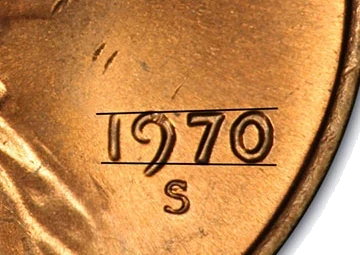
Compare the numerals at the same angle and magnification. The Small Date is often called High 7 because the top of the 7 aligns more closely with the neighboring digits. Weaker LIBERTY can support the attribution, but worn lettering alone is insufficient. Use the date first and the lettering as a cross-check.
Both Small Date and Large Date occur as circulation strikes and Proofs. A date variety is a repeatable die feature; it is not an accidental second strike. A Proof label describes manufacture rather than a guarantee that a coin is a valuable error.
What makes the Large Date different?
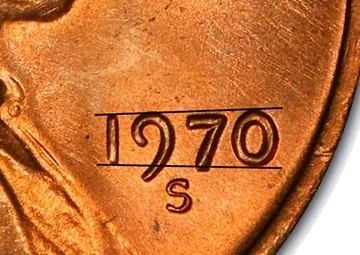
The Large Date is called Low 7 because the top of that digit sits lower. It normally has stronger LIBERTY than the Small Date. Photographic enlargement can make any date appear large, so compare relative numeral alignment rather than the size of a picture on your screen.
A weak strike, abrasion or an out-of-focus photograph may hide the useful details. If the top of the 7 cannot be read, keep the attribution open. Do not clean the date or rub LIBERTY to make the comparison easier.
Which prices are useful, and which are exceptional?
The following figures are deliberately labeled by date and price type. The 2020 guide figures provide historical grade context, not a refreshed 2026 retail quote. The auction example concerns an unusually well-preserved Red coin. An ordinary circulated cent should not inherit either a gem price or a Proof price.
| Issue / variety | Condition | Amount / price type | Date and source | How to use it |
|---|---|---|---|---|
| Small Date circulation strike | MS65RD | $80 historical guide level | PCGS article, Dec. 15, 2020 | Dated context; not a current offer |
| Small Date circulation strike | MS66RD | $160 historical guide level | PCGS article, Dec. 15, 2020 | Match the grade and Red designation |
| Small Date circulation strike | PCGS MS67RD | $2,464 auction result | David Lawrence RC, June 23, 2008; PCGS record | Exceptional individual coin; not the pictured specimen’s sale |
| Small Date Proof | PR65CAM | $75 historical guide level | PCGS article, Dec. 15, 2020 | Different manufacture and surface contrast |
| Ordinary worn 1970 / 1970-D | Circulated; no special attribution | $0.01 denomination | Face-value baseline, not a dealer purchase quote | Check for a separate premium before spending |
How do color, grade and doubled dies change the comparison?
Brown (BN), Red-Brown (RB) and Red (RD) are separate color designations used for copper coins. Red does not simply mean that a coin looks orange under warm lighting, and a cleaned bright coin is not equivalent to an original Red specimen. Proof grades use PR; Mint State circulation strikes use MS. Cameo and Deep Cameo describe contrast on qualifying Proofs. Keep all of these details with the price.
A doubled die obverse (DDO) needs specific doubled-design diagnostics. Small Date alone does not establish DDO, and flat machine doubling is a different effect. The pictured penny error and variety list is a better starting point for attributed doubling than a seller’s generic “rare 1970 penny” caption. For the adjacent major variety, compare 1969 penny values and the 1969-S doubled die.
A large recorded price can reflect a highly selective grade, an unusual error or an old competitive auction. Before sending a common cent for grading, compare several recent transactions for the exact issue and weigh the likely premium against examination and selling costs. The coin grading scale explains preservation without turning a photograph into a certified grade.
How can I check my coin in three steps?
- 01Read 1970 and the mint-mark area in neutral light. Photograph both sides and the edge; record approximately 3.11 g and 19 mm as normal specifications, allowing for wear and measurement uncertainty.
- 02For an S-mint cent, compare the top of the 7 with the other date digits and then examine LIBERTY. Establish circulation strike or Proof separately; neither brightness nor weak lettering alone decides the issue.
- 03Describe wear, color and any damage before pricing. Match manufacture, variety, grade and color to comparable sales. Preserve a credible candidate uncleaned and use specialist attribution for uncertain doubled dies.
For more illustrated mint-error comparisons, explore the coin errors and varieties guides.
What should I remember before pricing?
Identify the mint first, then the date variety and manufacture. An S by itself does not mean Small Date, and Small Date does not mean doubled die.
For value, separate a normal worn cent from a collector-grade or attributed example. Use the dates and conditions beside the figures above; do not treat a 2008 auction or 2020 guide as today’s universal selling price.
What else do collectors ask?
Is a 1970 penny without a mint mark an error?
No. No mint mark is normal for the Philadelphia circulation issue. The absence of a letter does not establish rarity or a missing-mint-mark error.
How do I tell a 1970-S Small Date from a Large Date?
Compare the top of the 7 with the other digits. The Small Date has the higher, more level 7; the Large Date has a lower 7. Use the strength of LIBERTY as a supporting check rather than a standalone test.
Does the Small Date comparison apply to every 1970 penny?
The recognized Small Date versus Large Date comparison discussed here is for 1970-S cents. Establish the S mint mark before applying those diagnostics.
Are all 1970-S pennies Proofs?
No. San Francisco produced 1970-S circulation strikes as well as Proofs. Both date varieties exist in the two manufacture categories, so an S does not identify Proof manufacture by itself.
Is a 1970-S Small Date also a doubled die?
Not automatically. Date size and doubled-die attribution are separate characteristics. A DDO requires its own matching diagnostics; machine doubling is another effect.
What did the MS67 Red Small Date auction example sell for?
PCGS records a $2,464 result at David Lawrence RC on June 23, 2008 for a PCGS MS67RD circulation-strike Small Date. It is a dated individual result, not a current quote for every Small Date.
Should I clean a brown 1970 penny to make it Red?
No. Cleaning changes the surfaces and cannot recreate original mint color. Keep the coin uncleaned and compare preservation and color honestly before seeking an appraisal.
Which references support this guide?
References and further readingExpand
- NGC: variety versus mint errorProduction errors and recurring die varieties are different categories. Checked November 13, 2026.
- NGC: coin grading scaleCondition and preservation affect collector value. Checked November 13, 2026.
- PCGS: 1970-S Small Date and Large DateDate diagnostics, circulation and Proof distinction, and explicitly dated December 2020 guide levels. Checked November 13, 2026.
- PCGS CoinFacts: 1970-S Small Date, RedSpecifications and $2,464 MS67RD David Lawrence RC result, June 23, 2008. Checked November 13, 2026.
- PCGS CoinFacts: 1970 Philadelphia centNormal no-mark Philadelphia issue and physical specifications. Checked November 13, 2026.
- NGC: 1970-S centIndependent date-variety diagnostic discussion; February 2007, not a current price guide. Checked November 13, 2026.
- PCGS: Lincoln Memorial cent Small DatesSeries context and the role of date varieties. Checked November 13, 2026.