

 App Store

PAPER MONEY GUIDES
1957 Silver Certificate Dollar Bill Value:Series, Stars and Grades
Identify 1957, 1957A and 1957B blue-seal dollars, compare paper grades and stars, and separate a guide estimate from an auction lot.
 HeriBase TeamPublished
In this article
Quick answer
A common 1957 $1 silver certificate is usually a modest collector item; its blue seal does not imply a large payout or a right to silver bullion. Series letters, replacement stars and original paper condition determine the appropriate comparison.
For a dated guide baseline, the PMG/NumisMaster entries recorded October 26, 2026 showed $2 in grade 12, $3.50 in grade 40 and $10 in grade 50 for ordinary 1957, 1957A and 1957B notes. These are historical guide estimates, not today’s offers.
Banknote reference photos
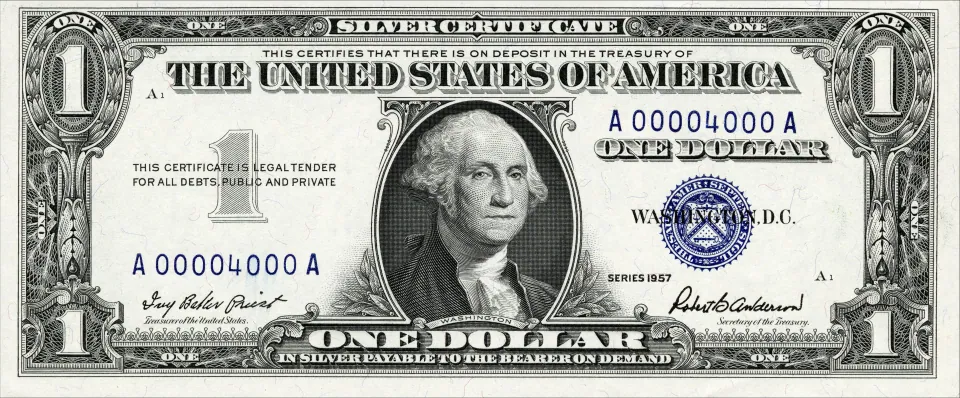
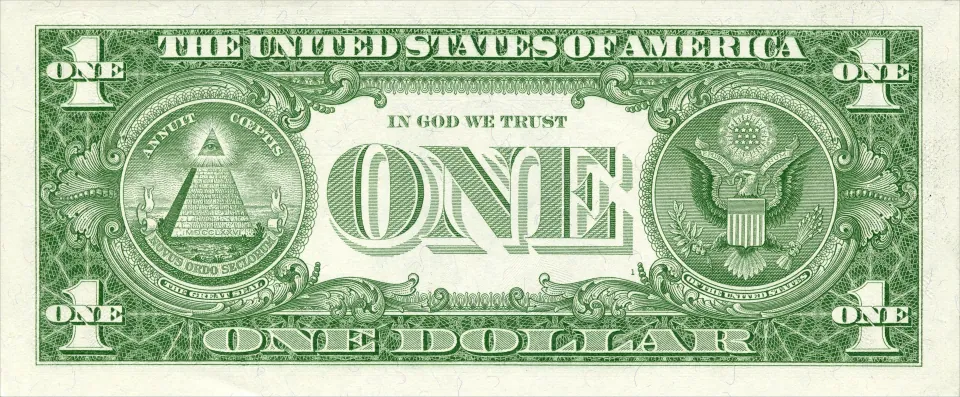
What this series represents
Series 1957 belongs to the small-size silver-certificate era. Washington appears on the face, with a blue Treasury seal and the SILVER CERTIFICATE title. Its back carries IN GOD WE TRUST, a useful contrast with many earlier 1935-family dollars. The series date should not be read as a guarantee that every note was physically printed during 1957.
Silver redemption ended in 1968. Today the certificate’s printed historical promise is part of its collectible identity. Market demand concerns the actual banknote, its series and paper, rather than a quantity of silver that the holder can still claim. The silver-certificate overview explains the distinction across denominations and formats.
How do you identify the right issue?
How do 1957, 1957A and 1957B differ?
Read the complete series beside the portrait rather than the largest visible year. The ordinary signature pairs are Priest–Anderson for 1957, Smith–Dillon for 1957A and Granahan–Dillon for 1957B. Match the actual signatures to the series; do not use a seller’s shortened title as the sole identification.
What should I inspect on a star note?
Check the printed replacement star at the beginning of the serial and record the remaining characters. An older silver-certificate star is not positioned like the suffix star on many modern Federal Reserve notes. Compare the same series and block, not every blue-seal star together.
Which details matter in the photos?
Start with the series and two signatures on the face, then the motto above ONE on the back. Examine all corners, margins and fold intersections. Strong ink and clean-looking paper do not rule out pressing, repairs or a light fold that crosses the design.
Can a blue seal identify the note by itself?
It is a helpful clue but not sufficient. The denomination and SILVER CERTIFICATE title must agree. A large-size 1923 dollar, a 1935 emergency issue and a 1957 small-size dollar cannot share a price simply because their seals appear blue.
What does the value evidence actually show?
| Issue / check | Condition / identification | Value / composition | Evidence / basis | Comparison limit |
|---|---|---|---|---|
| Ordinary 1957 / A / B | Grade 12 | $2 | PMG/NumisMaster guide recorded Oct. 26, 2026 | Guide page did not state an update date |
| Ordinary 1957 / A / B | Grade 40 | $3.50 | Same historical guide | Not a completed sale |
| Ordinary 1957 / A / B | Grade 50 | $10 | Same historical guide | About Uncirculated is not Gem Uncirculated |
| 34 consecutive Fr.1619 notes | Choice About Uncirculated; auction description | $156 for all 34 notes | Heritage 141818, lot 81192; May 1, 2018 | Includes 20% buyer’s premium; group price |
| Star or fancy serial | Series, block and exact grade | Requires its own comparables | Separate collector feature | Do not apply ordinary-note figures |
Heritage sold 34 consecutive ordinary Series 1957 notes together for USD $156 on May 1, 2018. The catalog described them as Choice About Uncirculated; this is an auction description, not a stated third-party numerical grade. The sale’s 20% buyer’s premium is included in the reported total.
This dated group demonstrates why the number of notes matters. It does not establish a current single-note retail price, and dividing a group total does not capture individual selling costs. Keep the guide rows and auction row separate. For replacement terminology see what a star note means; for unusual numbers see fancy serial patterns.
Summary
Read the full series and signatures, distinguish a replacement from an ordinary serial, and inspect original paper before quoting a price. Use the historical guide as a baseline and recent matching sales for an actual buying or selling decision.
Frequently asked questions
How much is a normal 1957 silver certificate worth?
The historical PMG/NumisMaster reference recorded October 26, 2026 showed $2 at grade 12, $3.50 at grade 40 and $10 at grade 50 for ordinary entries. Exact condition and current matching sales are still needed.
Can I redeem it for silver?
No. Silver-certificate redemption in silver ended in 1968. Collector value is separate from the former redemption promise.
What is the difference between 1957 and 1957B?
They are different series with different signature combinations. Include the series letter in a catalog or sale comparison.
Where is the replacement star?
On these small-size silver certificates, inspect the beginning of the serial for a printed star. Record the full serial and series.
Does every 1957 note have the motto?
The regular Series 1957 family carries IN GOD WE TRUST on the back. Compare the actual note with the correct design.
Is the $156 auction result for one note?
No. It was the entire 34-note consecutive lot, sold in 2018. It is not a single-note price.
References
References and further reading
- BEP: motto and currency questions
- PMG/NumisMaster: 1957 series guide; historical reference recorded October 26, 2026
- Heritage: 34 consecutive notes, May 1, 2018
- PMG: grading scale
Historical sale dates and conditions are retained beside each example. References reviewed November 17, 2026; historical results are not live offers.