

 App Store

PAPER MONEY GUIDES · SILVER CERTIFICATES
Silver Certificate Dollar Bill Value:Blue Seals, Series and Condition
Identify U.S. silver certificates by issue title, series and format, compare a dated small-note reference and keep collector value separate from silver redemption.
 HeriBase TeamPublished
In this article
Quick answer
A silver certificate is a U.S. paper-money issue, not a modern voucher for silver bullion. Its collector value depends on denomination, series, signature variety, replacement status and condition. A blue seal is a useful clue on familiar issues, but the printed SILVER CERTIFICATE title and complete design must agree.
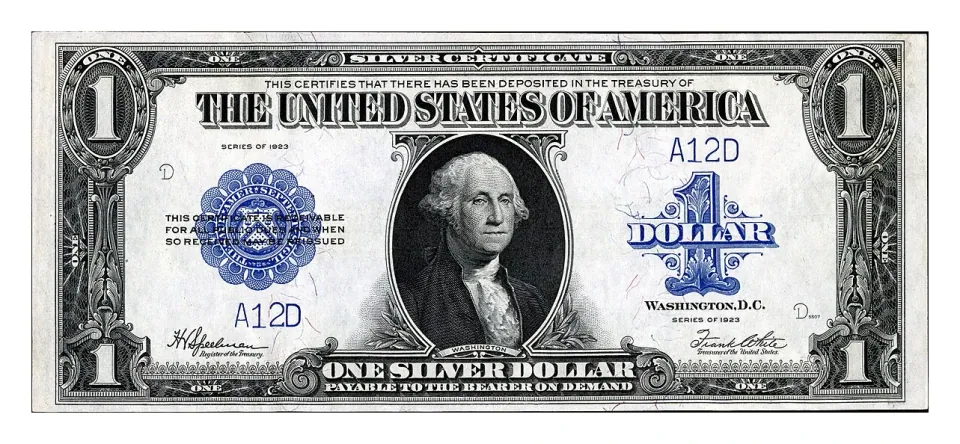
As a narrow reference, the PMG/NumisMaster page consulted October 26, 2026 lists ordinary Series 1957, 1957A and 1957B $1 entries at $2 in grade 12, $3.50 in grade 40 and $10 in grade 50. The page gives no update date. These are guide estimates for those small-size entries, not current offers and not values for the pictured large-size 1923 note.
Note photos
Basics & note story
Silver certificates were first issued in 1878 under legislation associated with increased silver purchases and coinage. Their wording reflected a historical redemption arrangement. Later changes to U.S. money ended silver redemption; Treasury records state that certificates were no longer redeemable in silver after June 24, 1968.
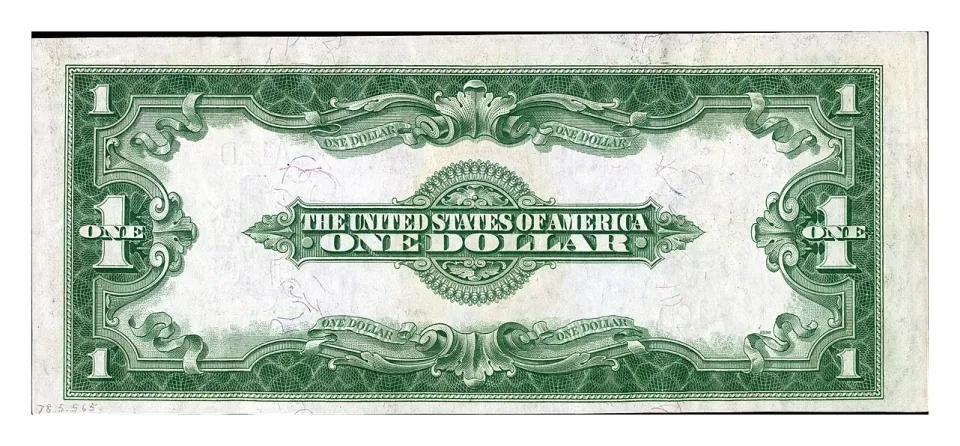
The pictured Series 1923 $1 is a large-size note with a different design and format from the familiar small-size Series 1935 and 1957 notes. A portrait of Washington and a blue seal are not enough to treat them as one catalog issue. Read the series and signature pair before searching prices.
The first IN GOD WE TRUST motto on U.S. paper money appeared on Series 1957 $1 silver certificates. A motto distinction is useful for identification, but its presence alone does not establish an unusual premium.
| Feature | What to check |
|---|---|
| Issue class | United States silver certificate; read the printed title |
| Common identifying clue | Blue seal on many familiar issues; exceptions exist |
| Important format distinction | Large-size notes versus later small-size notes |
| Series record | Keep suffix letters, including A or B |
| Additional identifiers | Denomination, signatures, full serial and replacement status |
| Condition factors | Folds, paper quality, stains, tears and repairs |
| Silver redemption | Historical entitlement; not exchangeable for silver bullion today |
| Pictured example | Series 1923 $1 large-size certificate; separate from the 1957 price rows |
Identification
Match the issue name, format and series
Read SILVER CERTIFICATE rather than inferring the class from ink color alone. Match the entire front and reverse, then record the series including suffix and both signatures. The large-size 1923 design and a small-size 1957 $1 need different catalog entries.
Blue is a clue, not an exhaustive definition
Special wartime issues used different seals and overprints, including yellow-seal North Africa notes and HAWAII issues. A non-blue seal does not automatically rule out every silver certificate, and a seller’s “blue seal dollar” label is not a complete identification. Research the actual issue and overprint.
Keep stars, fancy serials and errors independent
Record any replacement star and exact serial pattern separately. The star-note guide explains why a replacement symbol alone does not guarantee a premium. A printing-error claim requires physical evidence beyond a fold, stain or faded seal. Use the banknote-error guide to distinguish production features from later damage.
Condition & value
Amounts are USD. The undated PMG/NumisMaster reference page was consulted October 26, 2026; it is not a live transaction feed or a valuation of the photographed 1923 note.
| Issue | Grade / condition | Value or reference | Basis | Important condition |
|---|---|---|---|---|
| Series 1957 / 1957A / 1957B ordinary $1 | Grade 12 | $2 | PMG/NumisMaster guide | Small-size ordinary entries only |
| Same ordinary $1 entries | Grade 40 / grade 50 | $3.50 / $10 | PMG/NumisMaster guide | Undated source; consulted October 26 |
| Pictured Series 1923 large-size $1 | Exact signatures and condition | Use its own catalog and sold notes | Different format and issue | Do not apply the 1957 rows |
| Star, wartime or other special variety | Exact catalog attribution | Compare separately | Issue-specific market | No blanket blue-seal price |
| Silver-bullion redemption | Current exchange for silver | Not available | Historical redemption ended | Collector value is a separate question |
The guide numbers are conditional references and can lag the market. Its blank grade columns should remain unknown rather than being filled by interpolation. A raw note needs a condition assessment before a numbered-grade guide figure can be used meaningfully.
For a large-size or scarcer issue, search the denomination, series, signature pair and catalog number, then compare several completed notes with similar folds and paper quality. Confirm the sale date and premium basis. A high-grade star or error result cannot price an ordinary worn certificate.
Do not iron, press or clean the note. Flattening it can compromise original paper characteristics without restoring a genuine uncirculated condition. The banknote identification and value workflow explains photographs, catalog matching and when physical examination is useful.
Summary
Identify the certificate class, series, format and signatures before using a price. Separate historic silver redemption from today’s collector market, and ordinary small-size references from large-size notes and special varieties. Preserve the paper and compare matching condition.
FAQ
Can I exchange a silver certificate for silver today?
No. Silver redemption ended in 1968. A certificate’s collector value is a separate matter from the former redemption arrangement.
Is every blue-seal dollar worth the same amount?
No. Denomination, series, signatures, size, replacement status and condition can identify different markets.
Does the 1957 guide price apply to a 1923 silver certificate?
No. The pictured 1923 large-size issue needs its own catalog and condition comparison.
Should I iron a silver certificate to improve its value?
No. Leave the paper as found. Pressing or cleaning can impair originality and does not restore an uncirculated grade.
References
References and further reading
- BEP: silver-certificate history
- BEP: wartime certificate seals and overprints
- PMG/NumisMaster: Series 1957 $1 guide
- U.S. Treasury report: end of silver redemption
- PMG: paper-money grading and originality
References consulted October 26, 2026. Price tables retain the update dates stated in the text; guide estimates, face values and completed transactions are different forms of evidence.