

 App Store

COIN VALUE GUIDES · PENNIES
1935 Wheat Penny Value:No Mint Mark, D, S and Original Copper Color
Identify a 1935 Lincoln wheat cent, distinguish Philadelphia from D and S issues, and compare Red Mint State references without applying them to ordinary brown circulated pennies.
 HeriBase TeamPublished
In this article
Quick answer
A normal 1935 wheat penny is a common copper-alloy Lincoln cent, especially in circulated Philadelphia grades. Its denomination is one cent; ordinary worn examples belong to a modest-premium collecting category rather than the market for exceptional Red Mint State coins. No mint mark is normal for Philadelphia; D and S are separate issues.
The PCGS retail guide checked October 23, 2026 lists Philadelphia regular strikes with Red color at $18 in Mint State 63, $32 in Mint State 65 and $55 in Mint State 66. These figures are not a circulated-price range. A brown worn cent, a Denver or San Francisco coin, or a recognized doubled die needs its own comparison.
Coin photos
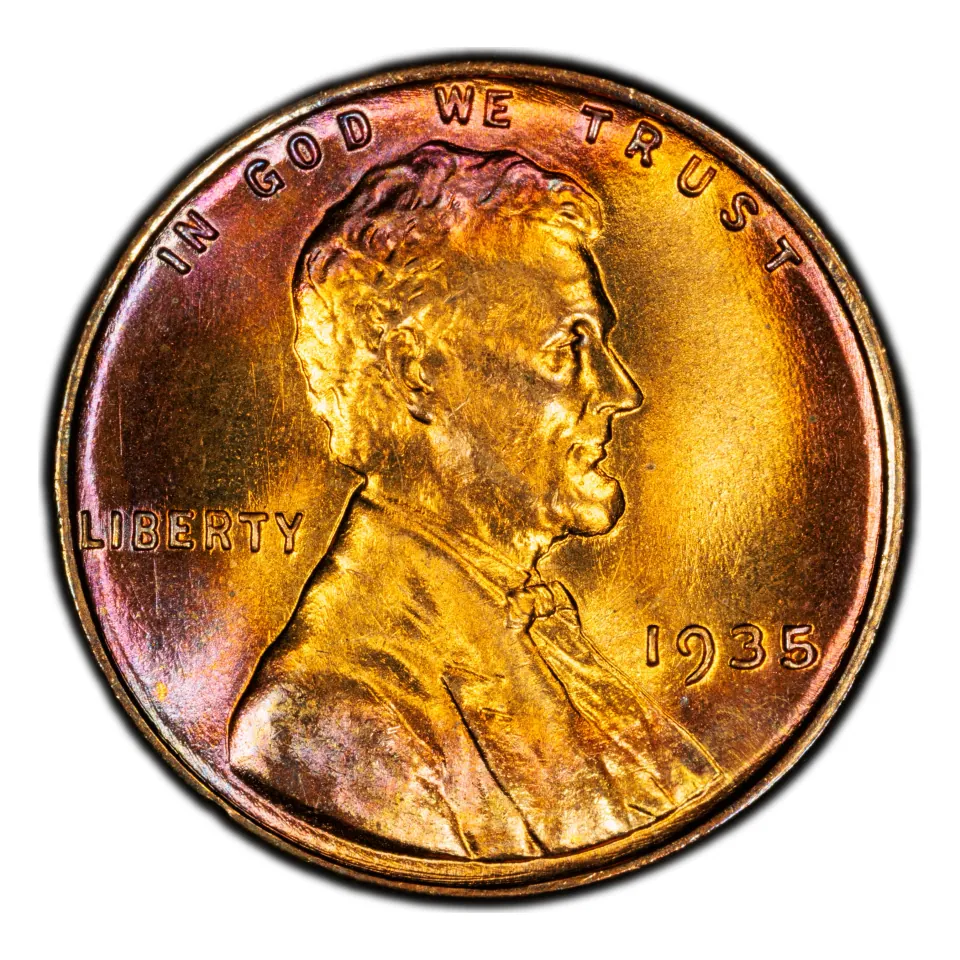
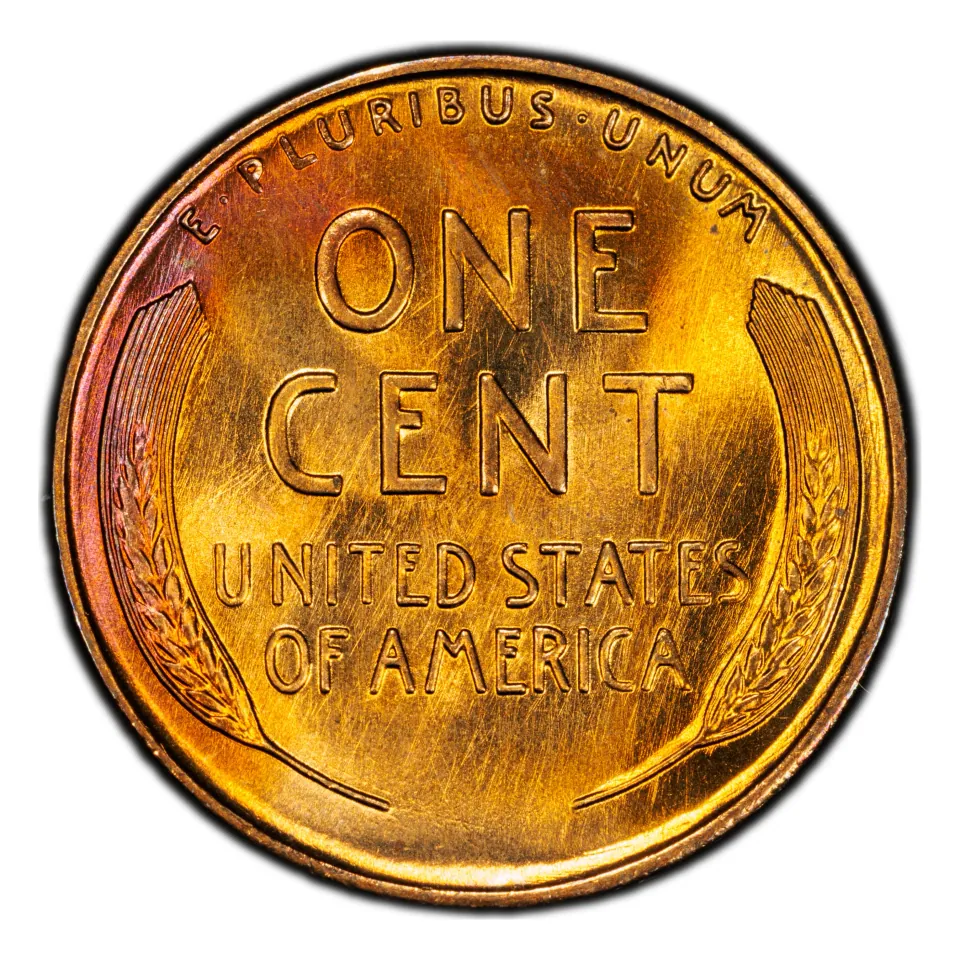
Basics & coin story
Victor David Brenner’s Lincoln portrait and wheat reverse identify the series introduced in 1909. The wheat ears remained through 1958, long before the Memorial building and later reverse designs. A 1935 cent therefore combines a familiar Lincoln portrait with the earlier wheat layout rather than the building seen on many later pennies.
PCGS records 245,388,000 Philadelphia regular strikes for 1935 and describes the issue as common in circulated grades. The large original output explains why age alone is not a reliable rarity test. The collecting challenge changes as one moves from an album example to preserved original copper color and unusually high grades.
The normal alloy is 95% copper with tin and zinc making up the remaining 5%, at a nominal 3.11 grams. This is different from the later copper-plated zinc cent. Copper can develop a range of surface colors, but color by itself does not establish authenticity, a grade or a valuable error. The wheat penny series guide places the date in the wider design history.
| Feature | What to check |
|---|---|
| Type / denomination | Lincoln wheat cent / 1 cent |
| Designer | Victor David Brenner |
| Standard alloy | 95% copper; 5% tin and zinc |
| Nominal weight / diameter | 3.11 g / 19 mm |
| Edge | Plain |
| Regular mints | Philadelphia: no mark; Denver: D; San Francisco: S |
| Mint-mark location | Obverse below 1935 |
| Color categories | Brown, Red-Brown and Red; separate from numerical grade |
| Philadelphia regular mintage | 245,388,000; not a survival total |
Identification
Check the year, mint and reverse together
Read every digit and look directly below the date for D or S. No letter is the expected Philadelphia arrangement. Confirm wheat ears around ONE CENT on the reverse; another country’s 1935 penny or a different Lincoln date needs another guide. Wear or deposits can hide a small mint mark, so record uncertainty rather than forcing a premium attribution.
Red describes retained color, not a different alloy
Brown (BN), Red-Brown (RB) and Red (RD) are collector color designations. The numerical grade separately describes preservation and wear. A brown cent can be uncirculated, while a reddish circulated coin can still show friction. Cleaning or artificial color does not turn an ordinary cent into an original RD Mint State example.
A doubled die requires matching diagnostics
PCGS lists separate doubled-die obverse entries for 1935. A second-looking edge in a blurry photograph is not enough to name one. Match the correct mint and the specified lettering or other features. Flat strike-related doubling, corrosion and scratches should not inherit a cataloged doubled die’s price.
Condition & value
Amounts are in U.S. dollars. PCGS retail-guide examples were checked October 23, 2026 and apply only to the stated issue, grade and designation. They are not guaranteed purchase offers; current market conditions and selling costs can change the amount received.
| Issue | Grade / condition | Value or reference | Basis | Important condition |
|---|---|---|---|---|
| 1935 Philadelphia regular, RD | MS63 | $18 | PCGS retail guide | Original Red; problem-free |
| 1935 Philadelphia regular, RD | MS65 | $32 | PCGS retail guide | Correct numerical grade and color |
| 1935 Philadelphia regular, RD | MS66 | $55 | PCGS retail guide | Not a price for a worn brown coin |
| Ordinary circulated or other copper color | Actual wear and surfaces | Use matching circulated / color evidence | Separate comparison | No RD Mint State price transferred |
| 1935-D / S / recognized doubled die | Exact issue and attribution | Compare separately | Different entries | Date alone does not establish a premium |
For a worn cent, start with circulated single-coin comparisons rather than the RD rows. This guide does not supply a verified numerical circulated range. A common date can still be worth keeping in an album, but packaging, sorting and individual selling costs can account for much of a small retail price. A bulk-lot average and a certified single-coin result are different references.
Inspect Lincoln’s cheek and jaw and the wheat lines for friction, then examine the fields for spots, scratches and altered color. Detailed wheat ears alone do not establish MS65. The grading scale and cleaning-signs guide explain the general checks. Preserve the coin before requesting an opinion about an unusual feature.
Exceptional auction results involve particular coins, not every specimen sharing 1935. Compare the same mint, grade, color and surface status and confirm that the amount is a completed sale. The 1940 wheat penny guide offers another common-date comparison, while the 1909 VDB guide shows why specific mint-and-variety combinations can change the question completely.
Summary
Read the mint mark and assess wear before using a copper-color price. A common circulated 1935 cent must not inherit a Red Mint State or doubled-die value. Keep the wheat design, exact issue, surface condition and original color together when choosing comparable evidence.
FAQ
Is a 1935 penny with no mint mark rare?
No mint mark is normal for Philadelphia. The ordinary Philadelphia issue is common in circulated grades; grade, color and an authenticated variety can change the comparison.
Where is the mint mark on a 1935 wheat penny?
On the obverse below the date. D identifies Denver, S San Francisco, and no mark Philadelphia.
Can a brown circulated 1935 cent use Red MS65 prices?
No. Red is a color designation and MS65 is an uncirculated grade. Both must match the comparison coin.
Is every doubled-looking 1935 penny a doubled die?
No. A recognized doubled die requires the correct issue and matching diagnostics. Strike-related doubling, damage and unclear photographs do not establish an attribution.
References
References and further reading
- PCGS CoinFacts: exact issue, specifications and available guide evidence
- U.S. Mint: Lincoln cent and wheat-reverse history
- PCGS: copper color and numerical grading standards
Sources and quoted guide evidence checked October 23, 2026. Guide estimates, historical sales, face value and metal-content calculations are identified separately.