

 App Store

COIN VALUE GUIDES · QUARTERS
1935 Quarter Value:Silver, No Mint Mark and D/S Identification
Identify a 1935 Washington silver quarter and distinguish ordinary Philadelphia grade references from Denver, San Francisco and attributed doubled-die comparisons.
 HeriBase TeamPublished
In this article
Quick answer
A standard 1935 Washington quarter contains 90% silver and approximately 0.1808 troy ounce of fine silver. No mint mark is normal for Philadelphia; D and S identify separate Denver and San Francisco issues on the reverse.
The PCGS retail guide checked October 23, 2026 lists Philadelphia regular strikes at $17 in VF20, $55 in MS63 and $100 in MS65. A worn coin must not inherit an uncirculated price. The exact mint and any attributed variety must also match.
Coin photos
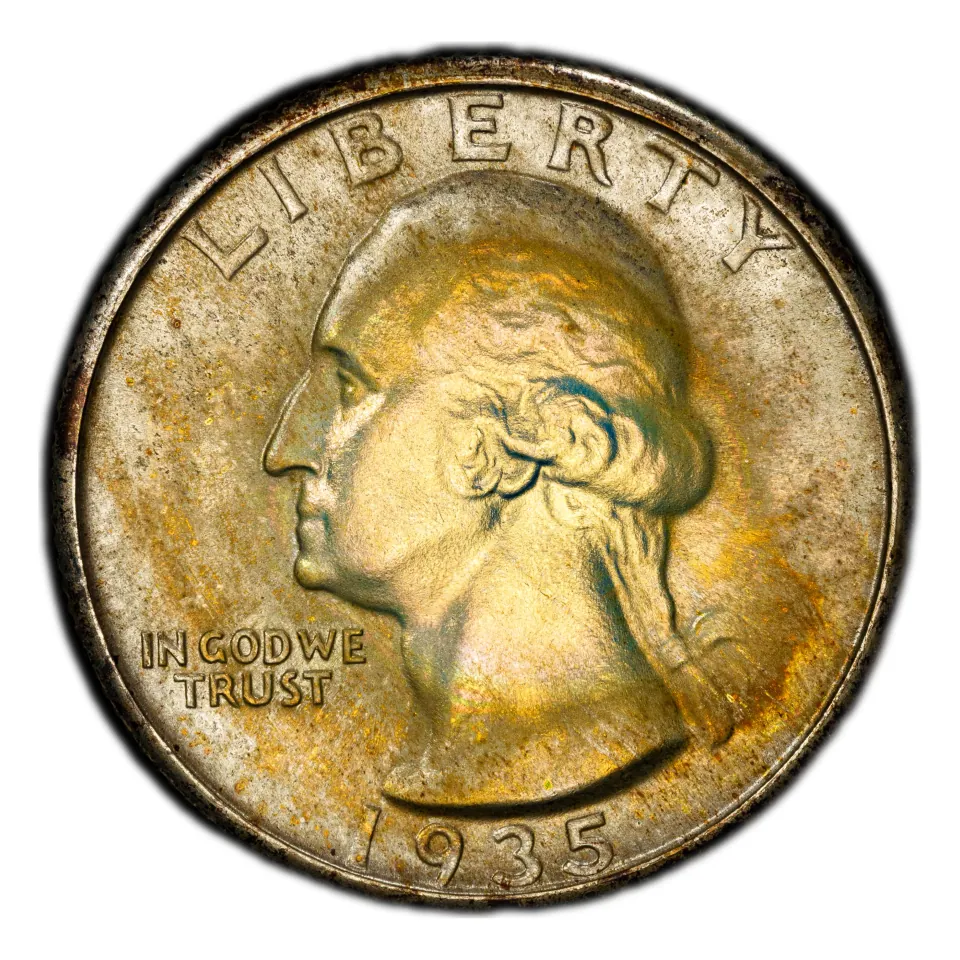
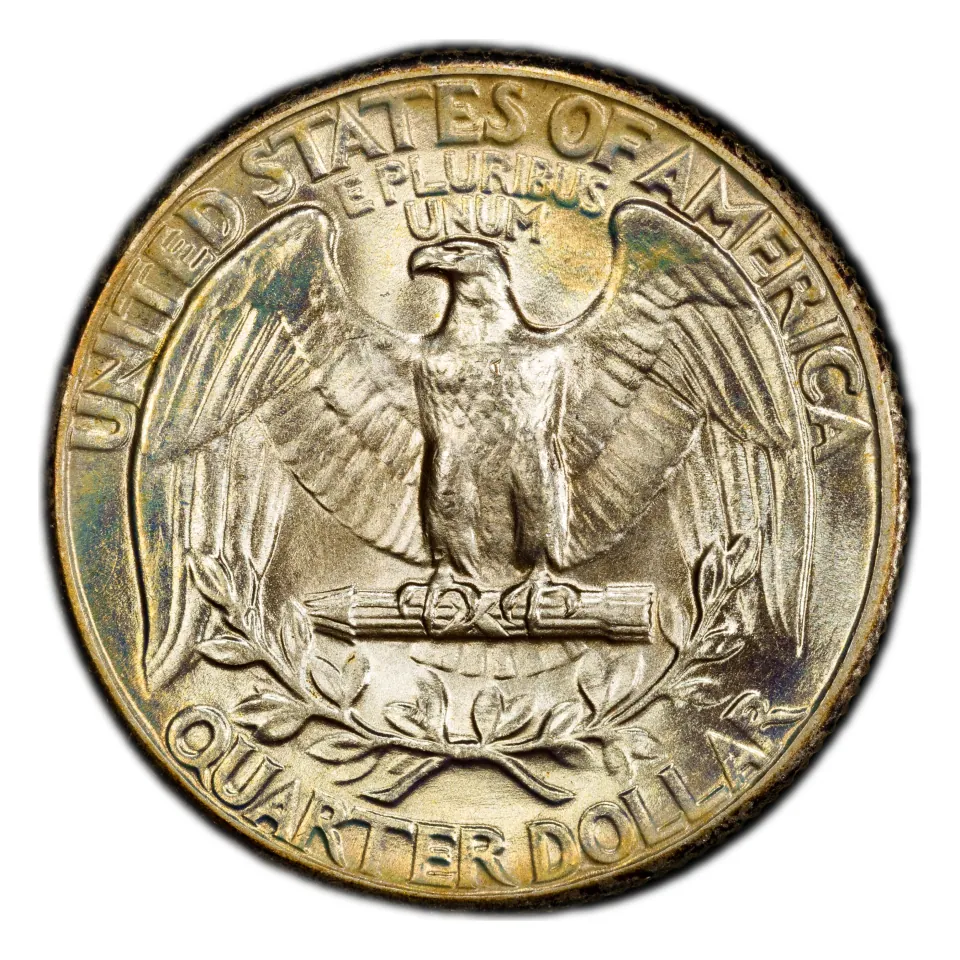
Basics & coin story
The Washington quarter was still a young series in 1935. Its portrait honored the bicentennial of Washington’s birth in 1932, paired with an eagle and wreath on the reverse. The date belongs to the early silver years, before the later circulating clad composition.
PCGS records 32,484,000 Philadelphia regular strikes. An early date is not automatically a key date: the ordinary 1935 Philadelphia coin should not inherit the reputation or prices of scarce 1932-D and 1932-S quarters. Original production, surviving grades and demand answer different questions.
The widening guide difference between circulated and Mint State examples makes wear identification particularly useful here. A silver type collector and a collector seeking a matched high-grade mint set are buying different levels of preservation. Compare the Washington quarter guide for the series’ issue distinctions.
| Feature | What to check |
|---|---|
| Type / denomination | Washington quarter / 25 cents |
| Designer | John Flanagan |
| Composition | 90% silver, 10% copper |
| Nominal weight / diameter | 6.25 g / approximately 24.3 mm |
| Fine silver | Approximately 0.1808 troy ounce |
| Edge | Reeded |
| Regular mint marks | None: Philadelphia; D: Denver; S: San Francisco |
| Philadelphia recorded mintage | 32,484,000 regular strikes, per PCGS |
Identification
Identify Philadelphia, D or S on the reverse
The letter sits below the eagle’s wreath and above QUARTER DOLLAR. If that area is worn, damaged or obscured, record the mint as uncertain until examined. A letter guessed from a shadow is not a reliable basis for a premium purchase.
Separate wear from a weakly detailed strike
Inspect the cheek, hair above the ear and eagle’s high points for friction. Fine detail alone cannot establish Mint State. An uncirculated coin can have strike softness, while a sharply struck coin can have circulation wear or cleaning hairlines.
Check an alleged doubled die against its catalog entry
A recognized 1935 doubled-die attribution is a separate comparison. A blurry date or shelf-like outline does not establish it. Use focused detail photographs alongside full obverse and reverse views; do not assign the variety’s price to an ordinary coin.
Condition & value
Amounts are in U.S. dollars. PCGS retail-guide examples were checked October 23, 2026 and apply only to the stated issue, grade and designation. They are not guaranteed purchase offers; current market conditions and selling costs can change the amount received.
| Issue | Grade / condition | Value or reference | Basis | Important condition |
|---|---|---|---|---|
| 1935 Philadelphia, regular | VF20 | $17 | PCGS retail guide | Ordinary circulated issue |
| 1935 Philadelphia, regular | MS63 | $55 | PCGS retail guide | No circulation wear |
| 1935 Philadelphia, regular | MS65 | $100 | PCGS retail guide | Problem-free Gem reference |
| Contained silver | Approximately 0.1808 troy oz | 0.1808 × silver spot per oz | Metal reference | Not a fixed retail value |
| 1935-D / S / attributed doubled die | Exact issue and grade | Compare separately | Different entries | No Philadelphia price transferred |
Use the contained-silver calculation for the metal component, then compare collector evidence for the actual mint and grade. A silver reference does not guarantee a dealer’s net offer, and a dated retail estimate may move differently from the metal market.
The difference between $17 at VF20 and $100 at MS65 does not mean a quick polish can increase value. Cleaning can remove original surfaces and make ordinary grade comparisons inappropriate. Keep the coin unaltered and use the surface-identification guide if hairlines or unusual brightness raise questions.
For sales evidence, match a single coin with the same mint, grade and surface status. A roll, a set or an attributed variety is a different purchase. Certification should be considered only after the likely premium justifies its costs.
Summary
A 1935 quarter needs a reverse mint-mark check and an honest wear assessment. Its early date and silver composition do not make every example rare. Keep ordinary Philadelphia, D/S and doubled-die comparisons separate.
FAQ
Is a 1935 quarter silver?
Yes. Its standard alloy is 90% silver, containing approximately 0.1808 troy ounce of fine silver at nominal weight.
Is no mint mark on a 1935 quarter an error?
No. It is the normal Philadelphia arrangement. D and S are on the reverse below the wreath.
Are all 1935 quarters key dates?
No. The ordinary Philadelphia issue should not inherit the rarity or prices of different dates and mints, such as 1932-D or 1932-S.
Can a worn 1935 quarter use MS65 prices?
No. MS65 is an uncirculated grade; circulation wear, cleaning and other surface problems change the comparison.
References
References and further reading
- PCGS CoinFacts: exact issue, specifications and available guide evidence
- U.S. Mint: Washington quarter origins
- PCGS: recognized 1935 doubled-die entry
Sources and quoted guide evidence checked October 23, 2026. Guide estimates, historical sales, face value and metal-content calculations are identified separately.