

 App Store

COIN ERRORS & VARIETIES
Rotated Die Coins: Alignment, Flip Test and Error Checks
Check coin versus medal alignment, document a repeatable die rotation, and separate an actual axis error from edge-lettering direction, off-center strikes and photography.
 HeriBase TeamPublished
In this article
How do I check a rotated die error?
A rotated die error is a departure from an issue’s intended obverse-to-reverse alignment. Establish coin or medal alignment first, then turn the coin around a fixed axis without spinning it in your fingers. Repeat and document the offset. An upside-down reverse, two independently rotated photos or variable edge-lettering direction alone does not prove an error.
Reviewed November 13, 2026. Historical figures retain their stated dates, currency and comparison limits.
Which real features should I compare?
What background helps identify the object?
Why is an upside-down reverse sometimes normal?
A coin’s two designs have an intended angular relationship, called die alignment. For normal U.S. coin alignment, hold the obverse upright and turn it top-to-bottom about a horizontal diameter: the reverse should appear upright. A side-to-side turn of that same coin produces a different appearance. Medal alignment uses the other relationship.
This is not a rule that every country or every historical issue follows. Establish the normal alignment for the exact issue before calling a rotation. Ancient, early and specialist issues can require different comparison standards. An unfamiliar national convention is not itself a manufacturing fault.
How do normal features, errors and damage compare?
Which reverse detail supports the rotation comparison?
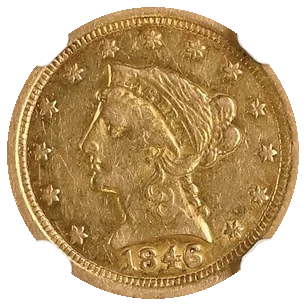
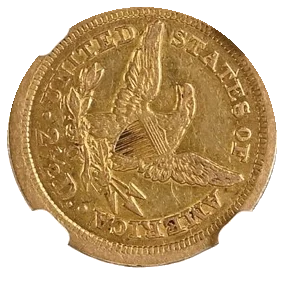
Compare the eagle’s axis with the upright Liberty reference. The important evidence is their relative orientation under a fixed turning method. This is different from a design displaced toward the rim. Do not calculate a precise angle after independently rotating the pictures.
| Observation | Normal baseline | Potential issue | Test to perform | Do not confuse with |
|---|---|---|---|---|
| U.S. coin turned top-to-bottom | Reverse normally upright | Possible relative rotation if askew | Keep the horizontal turning axis fixed | Side-to-side turning |
| Medal-aligned issue | Reverse upright after side-to-side turn | Offset from that intended relationship | Use correct issuer convention | Assuming every coin uses U.S. alignment |
| Two separate photographs | Camera can rotate either image | No reliable axis measurement by itself | Preserve one fixed physical reference | Independent image editing |
| Displaced design near rim | Centering is a different variable | Misalignment or off-center strike | Compare centering and axis separately | Die rotation |
| Edge lettering points either way | May vary normally for the issue | Not a face-axis diagnosis | Check series-specific edge process | Rotation of the face dies |
What does the photographed example establish?
NGC’s published 1846-O quarter eagle example is attributed Rotated Dies and graded AU53. The reverse eagle is nearly horizontal relative to the expected relationship. The photographs identify a documented specimen; do not assign a new exact angle by independently rotating or cropping the two designs. For a reader’s own coin, preserve the viewing reference during the test.
How do I make the test repeatable?
Set the obverse upright using its lettering and date. Mark the turning direction in a written note, hold the same diameter and turn the coin without slipping it around its circumference. Repeat several times. A short continuous recording can show the turning method more clearly than separate edited photographs. Avoid tape or marks on the coin itself.
If measuring degrees, state clockwise or counterclockwise and the face used as the reference. Confirm that the camera or holder is level. A measured offset should be reproducible; inconsistent results usually mean the turning method or reference changed. Do not extrapolate a highly precise number from an angled photograph.
Is there one universal threshold for certification?
NGC’s January 2024 article states that it recognizes rotated-die errors at 15 degrees or more. That is the stated policy in that source, not a guarantee of every service’s current attribution or a universal price threshold. Before paying for certification, check the chosen service’s current rules and how the exact issue is normally aligned.
How does rotation affect value?
| Issue | Recorded condition | Published total | Sale date | Comparison limit |
|---|---|---|---|---|
| 1966 Jefferson nickel | NGC MS65 | $276 | Heritage · January 2009 | Individual historical sale; angle not quoted here |
| 1968-S quarter | NGC PF68 Ultra Cameo | $144 | Heritage · October 2021 | Different coin and manufacture |
| Unidentified offset | No attribution | No price assigned | Examination required | Magnitude alone is not a guaranteed premium |
The selected amounts are reported in NGC’s error article, not current retail quotations. Preservation, magnitude, issue, visibility and collector interest affect comparisons. A loose low-grade coin should not inherit a gem Proof result. For other mechanisms, use centering and multiple-strike checks; for dollar edges, compare normal Presidential dollar inscriptions.
What should I check in three steps?
- 01Establish the intended alignment for the exact issuer, issue and manufacture; set the obverse upright.
- 02Turn around a fixed horizontal or vertical axis appropriate to that baseline without spinning the rim. Repeat and record the visible offset.
- 03Separate axis rotation from centering and edge lettering. Check attribution rules, then compare matching dated sales rather than an upside-down photograph alone.
What should I remember?
The baseline alignment and a repeatable turning method decide whether an offset is meaningful. Do not diagnose from independently oriented photos or edge-lettering direction. Document the reference face and angle, then seek issue-specific attribution and price comparisons.
What else do collectors ask?
Is an upside-down reverse always an error?
No. The appearance depends on the intended alignment and the axis used to turn the coin.
How do I turn a normal U.S. coin for this test?
With the obverse upright, turn it top-to-bottom around a horizontal diameter without spinning the rim. The reverse should normally appear upright.
Can separate upright photos measure rotation?
Not reliably. Either photograph may have been independently rotated. Preserve a fixed physical reference or show the continuous turning method.
Does rotated edge lettering prove rotated dies?
No. Edge-lettering direction and face-die alignment are different matters and require their own issue-specific checks.
What threshold does the cited NGC article state?
Its January 2024 article states at least 15 degrees for recognition. Check the service’s current rules before submitting a coin.
Do all rotations have the same value?
No. Issue, magnitude, preservation, manufacture and demand affect the comparison. A historical certified sale is not a universal price.
Which references support this guide?
References and further readingExpand
- NGC: rotated diesJanuary 16, 2024; alignment examples, stated threshold and historical sales.
- PCGS: state-quarter die rotationRelative die axis, clockwise / counterclockwise descriptions and normal coin alignment.
- NGC: John Adams errorsFace alignment and the need to distinguish other dollar production features.