

 App Store

COIN VALUE GUIDES
Penny Rim Errors: Pictures, Identification and Damage Checks
Compare penny rim errors with rolled edges and impact damage. Use real coin photos to check finning, broadstrikes, partial collars, misalignment and rim cuds.
 HeriBase TeamPublished
In this article
How do I tell a penny rim error from damage?
A genuine penny rim error must reflect a production fault, not simply a thick or uneven edge. Check both faces and the edge for a fin, missing collar restraint, misalignment or a rim-connected die break. Rolled, flattened or cut rims can be post-mint damage. No reliable premium follows from an unidentified raised rim alone.
Evidence reviewed November 13, 2026. All quoted prices retain their stated dates and conditions.
Which real coin details should I compare?
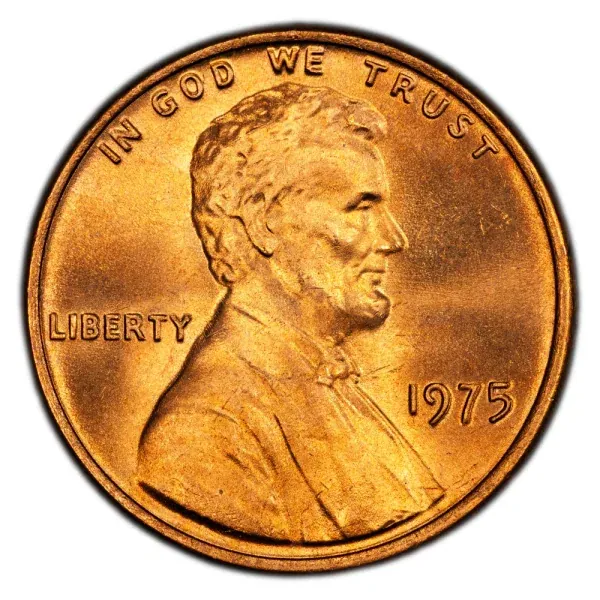
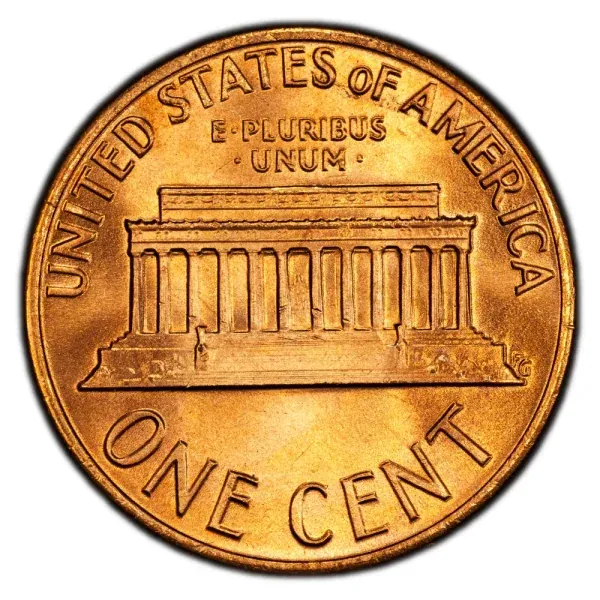
How do the issues and values compare?
What is the difference between the rim and the edge?
The rim is the raised border around each face; the edge is the narrow side between the faces. They are related but not interchangeable. A side photograph can reveal a stepped edge that a straight-on image hides, while a high rim visible from the front may result from displaced metal after striking. Start with all three views instead of assigning a nickname from one cropped photograph.
The raised border protects the design and helps coins stack. During manufacture the planchet is prepared and then struck between dies, normally with a collar controlling its diameter. Departures at different stages create different features. That production sequence is why an oversized full design, a thin upright fin and a smashed edge should not be grouped under one price.
| Observation | Possible production category | What to inspect | Damage lookalike | Price approach |
|---|---|---|---|---|
| Thin upright flange at rim / edge junction | Finned rim | Height, metal flow and matching die alignment | Folded or squeezed edge | Specific attribution and comparable sales |
| Expanded coin; entire design remains present | Broadstrike | Both faces, diameter and lack of collar restraint | Hammering or a flattened cent | Do not apply off-center prices automatically |
| Stepped / railroad-like edge | Partial collar strike | Side view and partial collar engagement | Ground or rolled edge | Authenticate physical edge structure |
| One face displaced; other face more centered | Misaligned die | Full design and relative centering | Wear or camera perspective | Do not assume every uneven rim is an error |
| Raised mass attached to rim replacing design | Rim cud from die break | Continuous raised area and affected design | Solder, impact or corrosion | Size and attribution matter |
| Thick rolled border; worn peripheral detail | Likely post-mint damage | Metal pushed inward; wear around edge | Often called a dryer coin | No error premium established |
What does a finned-rim penny look like?
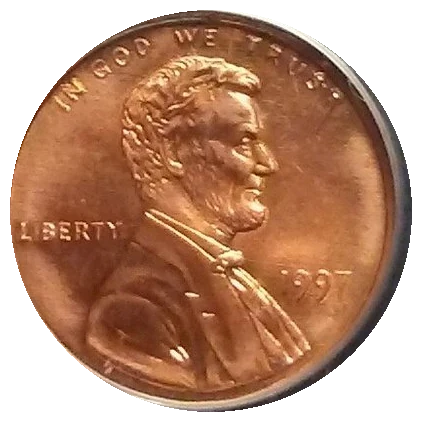
A fin is a thin flange of metal at the rim-edge junction. It is different from the ordinary rounded protective border. Die alignment and striking pressure can contribute to finning, but an unusually high rim needs examination before its cause is assigned. A fin can also be bent or damaged after manufacture, so the condition of the feature matters.
The source photograph includes a holder reading 1997 Mint Error, PCGS MS64RD, Finned Rim, Misaligned Die. It is a visual reference for those described features. This guide has not independently confirmed the certificate, and it assigns neither a sale price nor a universal grade to similar-looking cents. The pictured penny error and variety list supplies other established comparison categories.
How is a broadstrike different from an off-center strike?
NGC describes a broadstrike as a coin struck without proper collar restraint while the complete design remains on both faces. Metal can spread beyond the normal diameter. If part of the design is missing because the strike is displaced, the off-center category becomes relevant. An uneven border alone is insufficient: establish what happened to the complete design on each side.
A partial collar strike involves incomplete collar engagement and may produce a stepped edge. Record the coin’s diameter at several angles and its weight with a suitable scale. Measurements help screen a candidate but do not rule out deliberate alteration. Do not file or straighten the edge to make a cleaner photograph.
Why do rolled or dryer-like rims look convincing?
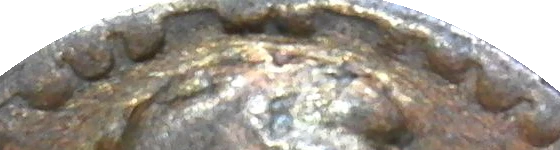
Repeated mechanical contact can move metal inward, thicken the border and wear peripheral letters. Such damage can create a striking appearance without occurring at the Mint. The photographed damaged cent is useful because it shows a rolled border and heavy surface wear together. Calling a coin a “dryer penny” describes a commonly discussed damage pattern; it does not prove the exact machine or history of this specimen.
Vise pressure, hammer blows, cutting, grinding and corrosion can also alter an edge. Look for displaced lettering, flattening, parallel tool marks and disturbed surfaces. Compare the whole object before deciding whether the shape fits a production mechanism. The surface-alteration guide helps keep damage separate from preservation.
Are rim cuds the same as small die chips?
A cud is a raised area associated with a die break reaching the die’s edge; the affected area can replace intended detail on the coin. A small chip within the design is a different feature. Neither should be identified from color alone. Corrosion blisters and attached material can imitate raised metal, while a scratch is normally an incuse interruption rather than a raised die-break feature.
How much is a penny rim error worth?
There is no trustworthy single range for all thick-rim pennies. Establish the category, date, severity, preservation and authenticity first, then compare completed sales for closely matching examples. An asking price for a mislabeled “rare rim” is not evidence. Minor features may not justify certification costs; spectacular authenticated errors are a different market.
This article deliberately does not attach a price to the finned-rim reference or the damaged cent. For a documented but different striking category, the 1975 penny error guide pairs an actual double-struck coin with dated auction evidence. A double-strike sale does not value a rolled edge. Use the appraisal guide when physical examination is needed.
How can I check my coin in three steps?
- 01Photograph the entire obverse, reverse and edge in neutral light. Record the date, mint, weight and diameter without modifying the rim.
- 02Ask which production mechanism fits all views. Compare finning, full-design broadstrike, partial collar and a rim-connected cud against displaced or worn metal.
- 03Keep uncertain coins uncleaned. Seek an attribution before using an error price, and compare similar completed sales rather than dramatic asking prices.
What should I remember?
An unusual rim is an observation, not an attribution. The complete design, edge structure and signs of displaced metal distinguish plausible production faults from damage.
Use the photographs to frame the right questions, then authenticate a credible candidate. Do not pay an error premium merely because the rim is high, thick or uneven.
What else do collectors ask?
Is every raised penny rim an error?
No. Pennies normally have a protective raised rim. A premium requires a specific supported production fault rather than height alone.
What is a finned rim?
It is a thin upright flange at the rim-edge junction. It should be distinguished from the normal rim and from metal rolled inward after manufacture.
Does a broadstrike have missing design?
Under NGC’s distinction, a broadstrike retains the complete design on both sides despite insufficient collar restraint. A displaced strike losing design belongs to a different comparison.
What is a partial collar error?
It is incomplete collar engagement during striking, which can leave a stepped edge. A side view and physical examination help distinguish it from grinding or rolling.
Are dryer pennies mint errors?
Dryer-like rolled rims are generally discussed as post-mint mechanical damage. The exact damage mechanism cannot always be established from appearance.
Does an uneven rim mean the coin is off-center?
No. Compare both complete faces. Misaligned dies, ordinary tolerances, wear and perspective can create different appearances.
Can I use a high online asking price to value mine?
An asking price is not a completed sale. Identify and authenticate the feature, then compare the same category and condition in actual transactions.
Which references support this guide?
References and further readingExpand
- NGC: broadstrikesCollar restraint and the requirement for complete design.
- NGC: mint errors, part 3Striking and collar-error distinctions.
- NGC: variety versus mint errorDie breaks, production categories and attribution.
- NGC: Details gradingMechanical rim and edge damage and surface problems.