

 App Store

COIN VALUE GUIDES · DOLLAR GUIDES
Peace Dollar Value:Silver Content, Key Dates and Year Guides
Identify original Peace dollars, separate the 1921 high-relief issue from later dates, and compare mint, grade and surface quality before assigning a price.
 HeriBase TeamPublished
In this article
Quick answer
Original Peace dollars were issued in 1921–1928 and 1934–1935, contain 90% silver and hold about 0.7734 troy ounce of fine silver. There is no single value for the whole series. Read the year, reverse mint mark and condition before checking a price; modern collector Peace dollars beginning in 2021 are separate products.
A useful documented reference is a 1925 Philadelphia MS66 coin with a $550 PCGS certificate-guide value, checked October 21, 2026. That high-grade figure cannot value a worn coin or a different mint. For ordinary circulated pieces, compare current silver content and matching transactions; for scarcer dates, collector value can dominate.
Compare the designs
1921 · original high-relief design
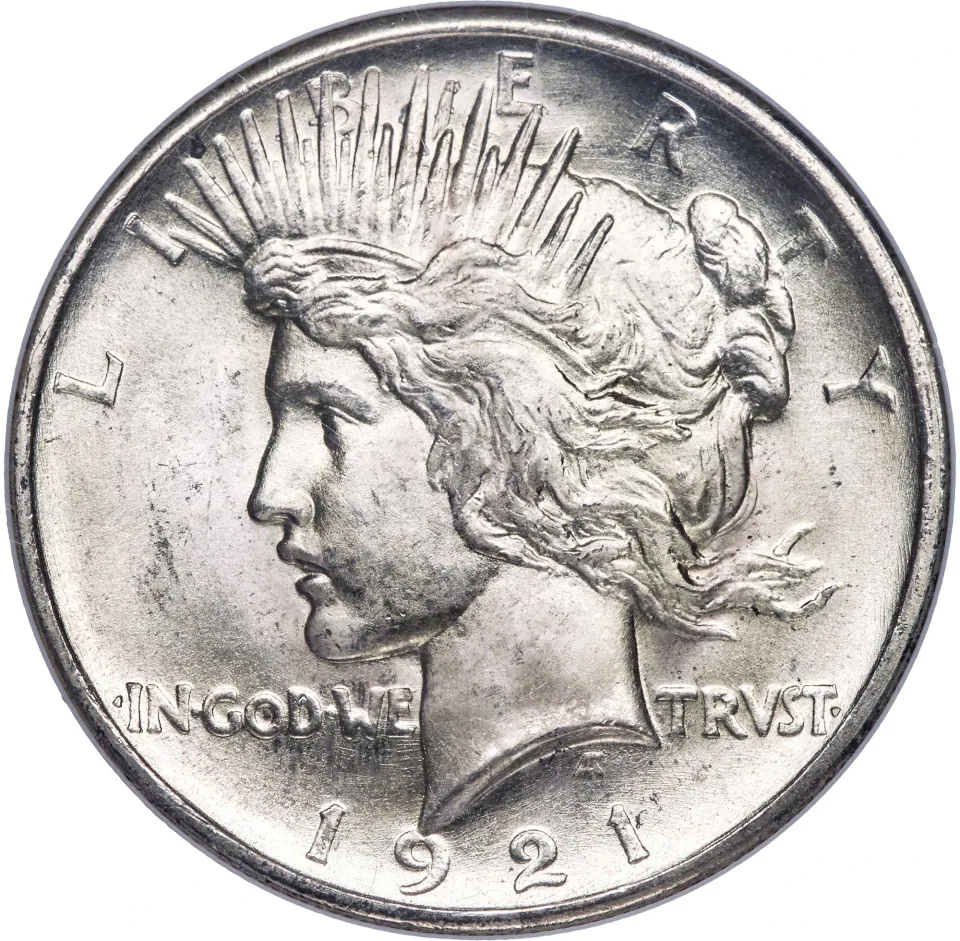
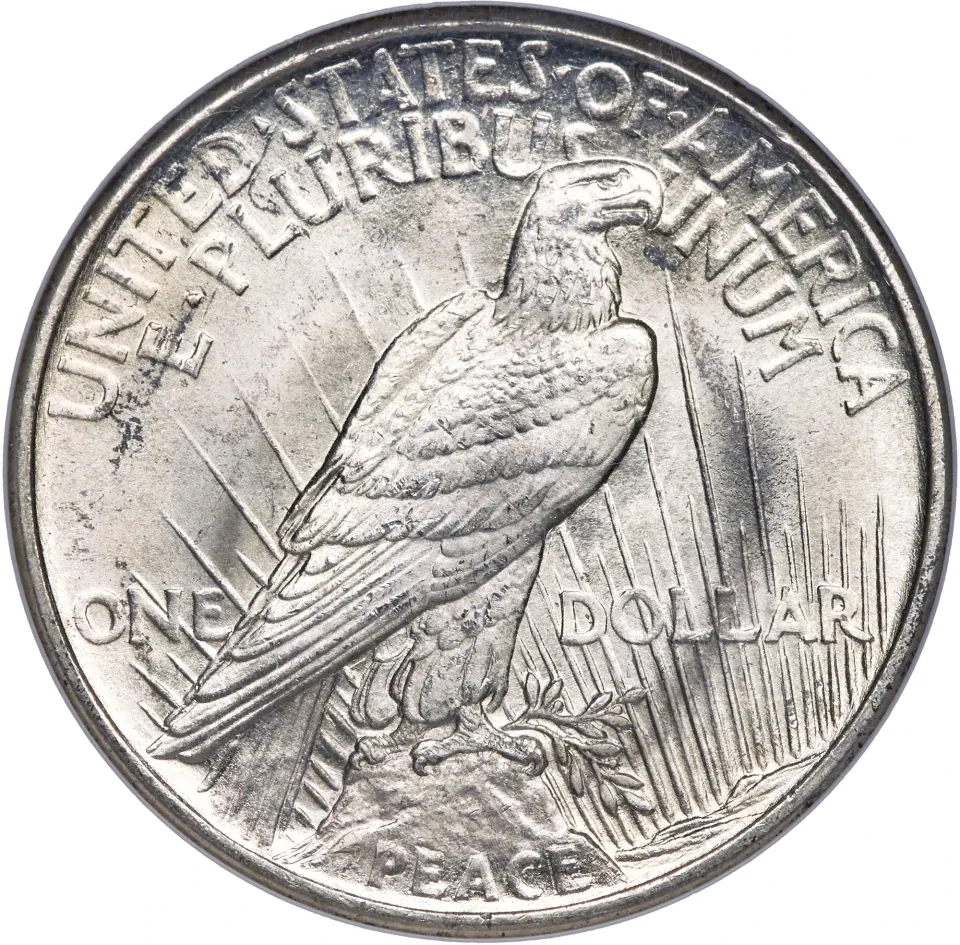
1925 · later lower-relief example
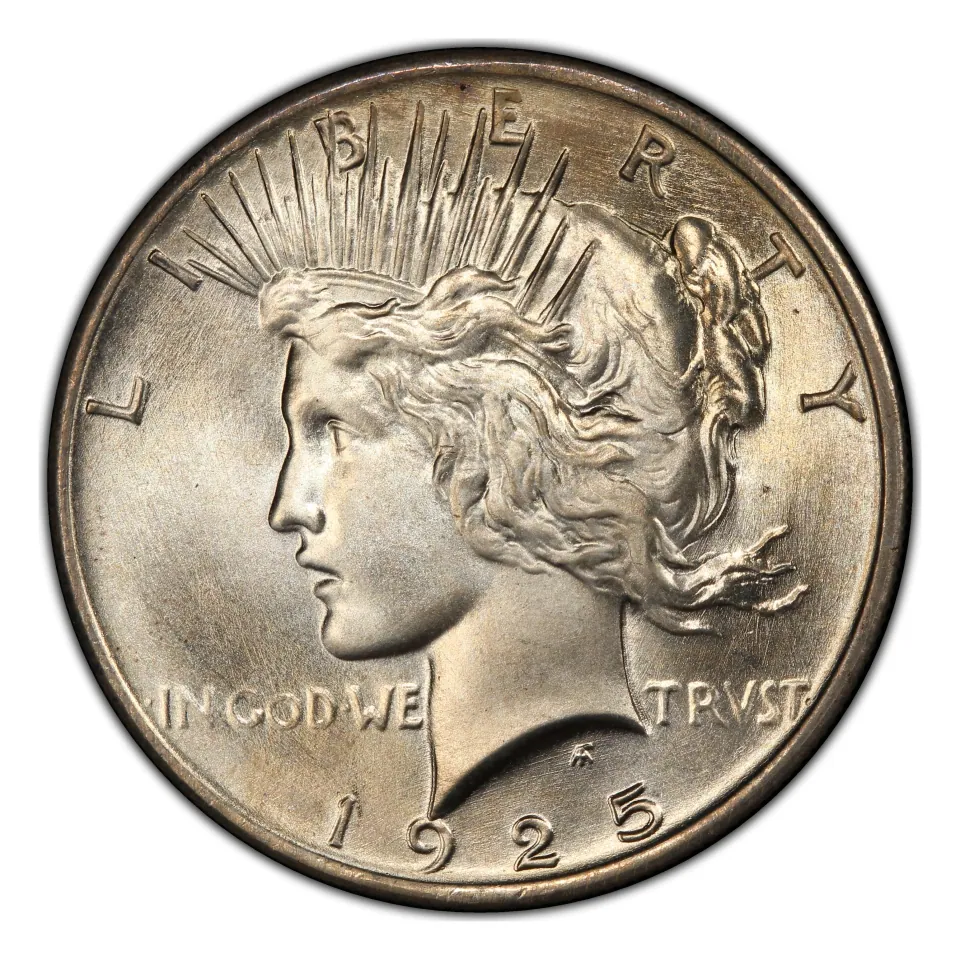
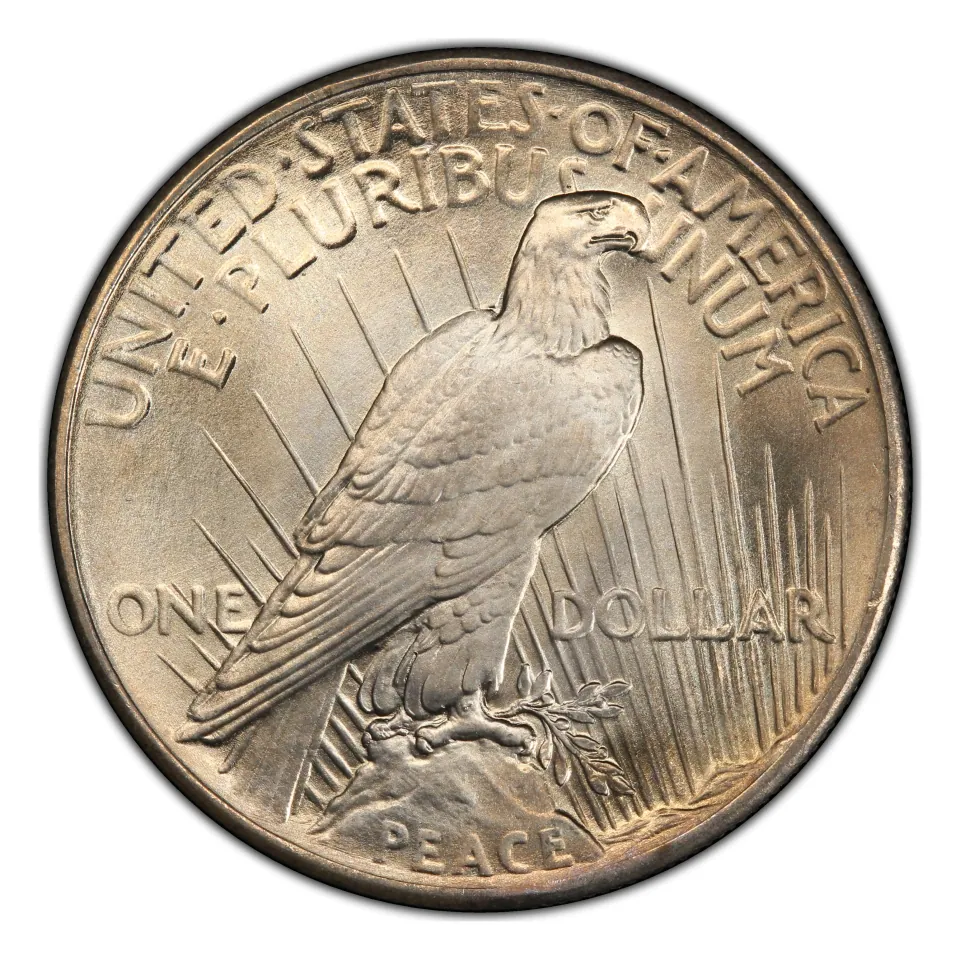
Types, history & value
Anthony de Francisci’s dollar marked the peace following World War I. In late 1921 it replaced the Morgan dollar, which had returned that same year. The radiate crown and perched eagle create a different visual language from the Morgan bust and spread-wing eagle.
The regular 1921 Peace issue has high relief. Later regular circulation issues use lower relief, with specialized exceptions requiring their own catalog entries. Production stopped after 1928 and resumed in 1934–1935; the date span is not continuous annual production. Modern collector releases revive the design but do not share the original alloy.
Amounts are U.S. dollars. These PCGS retail-guide examples were checked October 21, 2026 for the stated issue and designation. A raw coin needs its own condition assessment; guide figures are not guaranteed sale proceeds and can lag metal prices.
| Type / issue | Identification | Metal / specification | Value evidence | Comparison limit |
|---|---|---|---|---|
| Original Peace, 1921–1935 issues | Radiate crown; PEACE beneath eagle | 90% silver; 26.73 g; 38.1 mm | Approx. 0.7734 oz × silver spot | Metal reference, not an exact selling price |
| 1921 regular issue | First-year high relief | Original silver standard | Use 1921 high-relief evidence | Do not substitute common later-date values |
| 1925 Philadelphia example | No reverse mint mark | Original silver standard | MS66 guide: $550; recorded 2023 sale: $312 | Specific cert 45292020; not all grades |
| Scarcer dates and mints | Check full year and mint together | Condition-sensitive collector issues | Use exact catalog and sale comparison | 1928 Philadelphia and 1934-S warrant attention |
| Modern Peace collector coin | 2021 or later issue date | 99.9% silver; separate specifications | Compare exact year, finish and product | Do not apply historic alloy or prices |
A
1921: identify the first-year high relief
Confirm the Peace portrait. A 1921 date alone is insufficient because Morgan dollars were also issued that year. The radiate crown identifies the Peace design.
Read high points carefully. Strike softness and circulation rub can both reduce visible detail. Luster and surface examination are needed before assigning a grade.
Choose the 1921 comparison. An ordinary later-date guide does not represent the original high-relief issue.
B
1925: read the reverse before choosing a mint
No letter is normal here. The illustrated coin is Philadelphia. An S identifies a different 1925 issue, with its own grade-specific market.
Use the date-and-mint pair. A regular 1925-D issue does not exist. An apparent D requires examination rather than a made-up price row.
Separate surfaces from design. Toning or weak feathers cannot identify a mint. Use the actual letter and the complete coin.
Identification & collecting
Find the mint mark and avoid nonexistent combinations
On original coins, inspect the reverse below ONE near the eagle’s tail. No mark means Philadelphia; D and S appear on dates when those mints participated. Not every year exists from all three. In particular, the normal 1925 issues are Philadelphia and San Francisco, with no regular 1925-D.
The classical V in TRVST is normal lettering. A radiate crown, a V-shaped U or soft hair detail is not automatically an error. Confirm the whole design and date before looking up varieties.
Use a year guide when the question becomes specific
| Year / issue | What the guide resolves |
|---|---|
| 1921 | High relief, first-year identification and condition |
| 1922 | Later regular relief and mint-specific comparisons |
| 1924 | Philadelphia and S issues; condition and surfaces |
| 1925 | No mark versus S, with documented certificate evidence |
For 1928 Philadelphia or 1934-S, authentication and grade deserve particular care before using a premium. Low original production and survival in high grade are different questions. A common date can be difficult in exceptional preservation, while a scarce issue with cleaning or damage needs a discounted comparison.
Separate a guide, a historical sale and metal
The certificate reference for 1925 MS66 lists a $550 guide and a recorded Stack’s Bowers transaction of $312 on April 12, 2023, lot 92092. Those are two different kinds of evidence, at different times. The historical reported sale total is neither a current offer nor the seller’s net proceeds.
Inspect luster and rub, especially near Liberty’s ear and the eagle’s high points. A weak strike can leave soft detail without circulation wear; cleaning can leave sharp details but damaged surfaces. Read the surface guide before interpreting brightness as Mint State quality.
A modern Peace Proof, reverse Proof or uncirculated collector coin requires its own product and finish comparison. An old-style portrait does not make a modern coin a 1920s issue. Record the actual date before using the original-dollar silver formula.
Summary
Identify an original Peace dollar by design and date, then match its mint and grade. Use about 0.7734 troy ounce for original silver content, keep 1921 high relief and scarce issues separate, and follow the appropriate year guide for actual price evidence. Modern collector issues belong to a different specification and market.
FAQ
What years are original Peace dollars?
Original issues are dated 1921–1928 and 1934–1935. There was a production gap between those periods.
How much silver is in an original Peace dollar?
An original standard Peace dollar contains 90% silver, approximately 0.7734 troy ounce of fine silver.
Is TRVST a Peace dollar error?
No. The inscription uses a classical V for U. It is a normal design feature.
Does a modern Peace dollar use the old alloy?
No. Modern collector Peace dollars beginning in 2021 use 99.9% silver and need their own issue and finish comparison.
References
References and further reading
- U.S. Mint: Peace design and modern revival
- U.S. Mint: historic dollar chronology
- PCGS: 1925 Peace dollar specifications
- PCGS certificate 45292020: guide and April 12, 2023 sale, lot 92092
- PCGS: 1928 Philadelphia issue
- PCGS: 1934-S issue
Sources checked October 21, 2026. Retail guides and historical sales are identified separately; neither guarantees a buying offer.