

 App Store

COIN ERRORS & VARIETIES
Lamination Errors and Split Planchets: Before or After Striking?
Use real split-planchet photographs to distinguish internal metal separation, before-strike and after-strike splits, missing clad layers, corrosion and deliberate damage.
 HeriBase TeamPublished
In this article
How are lamination errors and split planchets different?
A lamination error involves separation within planchet metal; a split planchet is a more extensive division, sometimes before and sometimes after striking. A pre-strike split can receive design on both faces, often weakly; an after-strike half usually pairs an original struck face with a separated interior surface. Missing cladding and post-mint peeling require different diagnoses.
Reviewed November 13, 2026. Historical figures retain their stated dates, currency and comparison limits.
Which real features should I compare?

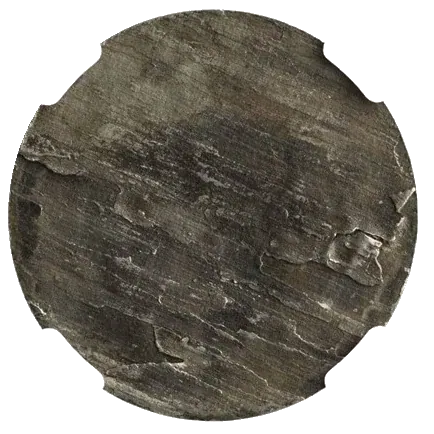
What background helps identify the object?
Why can a solid-looking blank separate?
A planchet can contain an internal weakness before it ever reaches the dies. When part of the metal separates, the visible result may be a small retained flap, a detached area or a much larger division parallel to the faces. The timing of separation determines what the striking process can impress on the new surface.
This differs from the intended layered construction of a clad dime or quarter. Losing an outer clad layer is not the definition of every lamination. Ring-and-center assembly in a bimetallic coin is another structure again. Start by identifying the coin’s normal construction rather than grouping every exposed inner surface under one name.
How do normal features, errors and damage compare?
What does the opposite original design look like?

The useful comparison is between a struck outer surface and an exposed separation surface. Photograph all faces of both portions rather than treating one rough image as a complete diagnosis. The photographs are not being used to infer a new sale price for the pair.
| Category | Expected physical feature | Design relationship | Damage lookalike | Next check |
|---|---|---|---|---|
| Normal intact planchet | Expected thickness and mass | Both intended designs | Wear may weaken relief | Use exact issue specifications |
| Retained lamination | Flap or fissure within metal | Design may cross or be interrupted | Corrosion blister or tool cut | Inspect relief and adjoining surfaces |
| Split before strike | Thin separated planchet portion struck afterward | Both faces may show weak design | Ground-down or hammered coin | Weight, thickness and coherent strike |
| Split after strike | An originally struck coin separates | Struck face opposite rough interior | Sawing, grinding or later separation | Fracture and design evidence together |
| Missing clad layer | Loss of an intended outer layer | Exposed core; reduced mass possible | Artificial layer removal | Alloy construction and surface examination |
What does the real mated pair show?
NGC published a Greece 1966 5 drachmas mated pair graded XF40 Split Planchet. One piece carries the original obverse and the other the reverse; their opposite faces expose the separation. Keeping both pieces together provides stronger physical context than an isolated photograph of one rough face. The pairing does not mean two separately struck denominations were issued.
How can a before-strike split be recognized?
If a separated thin portion was subsequently struck, its two surfaces could receive the dies’ designs. Weakness can be extensive because the metal is thinner than intended, but weakness alone is not decisive: wear, die adjustment, pressure and other faults can also reduce detail. The explanation must account for both faces, thickness, weight and the exposed surface structure.
What should I check against damage?
Look for cuts, parallel grinding marks, displaced metal, corrosion products and inconsistent edges. A low weight is not proof of a mint error because later metal removal also lowers weight. Do not pull a retained flap or try to mate fragments forcibly; that can destroy the relationship being examined. Photograph the edge and preserve any matching portion with the same record.
For an outer-layer candidate use dime error identification; for a wrong blank or later damage compare 1974 penny error checks. Neither category should inherit a split-planchet attribution merely because the coin looks thin or copper-colored.
Which historical sales illustrate the distinction?
| Coin | Attributed category | Condition | Published total / date | Limit |
|---|---|---|---|---|
| Canada 1980 dollar | Split before strike | NGC Mint Error; numerical grade not quoted | $552 · October 2021 | Historical Heritage result reported by NGC |
| U.S. 1857 three-cent silver | Obverse half, split after strike | NGC MS63 | $1,320 · July 2022 | Different denomination and split category |
| 1917 Buffalo nickel mated pair | Split planchet pair | NGC MS64 each | $1,260 · June 2023 | Total for a pair, not each half |
NGC states that these published amounts include the buyer premium. They are different specimens and categories, not a current value range for an unidentified peeling coin. A minor lamination, a complete split and a matched pair should be compared separately.
What should I check in three steps?
- 01Identify normal alloy, weight and construction. Photograph both faces, the full edge and every retained or separate portion.
- 02Ask whether the separated surface received a coherent strike afterward or exposes the interior of an already struck coin; compare plausible damage causes.
- 03Keep fragments together without manipulating them, obtain specialist attribution and compare only the same split category and condition in dated sales.
What should I remember?
Separate internal lamination, full planchet splitting and an intended clad layer. The timing of a split changes the design evidence; one rough face or low weight is insufficient. Preserve any mated pieces and compare the exact attributed category rather than a generic error price.
What else do collectors ask?
Is every peeling coin a lamination error?
No. Corrosion, plating, layer removal and mechanical damage can produce superficially similar appearances.
What is a split before strike?
A planchet portion separates before it is struck. The thinner portion may receive design on both faces, often with weakness.
What is a split after strike?
An already struck coin separates along an internal plane. A half can retain one struck face opposite an exposed interior surface.
Is missing cladding the same mechanism?
No. A clad coin has intended outer layers and a core. Loss of one layer should be assessed in that construction rather than assumed to be every kind of internal split.
Does a low weight prove a mint error?
No. Later grinding or other metal removal can also reduce weight. Surface and design evidence must support the attribution.
Are the sale figures prices for any lamination?
No. They are dated transactions for specifically attributed split-planchet objects, including a pair. Minor laminations require different comparisons.
Which references support this guide?
References and further readingExpand
- NGC: planchet errorsInternal metal weaknesses and distinctions from missing clad layers.
- NGC: split-planchet chroniclesBefore / after examples, mated-pair evidence and selected buyer-premium-inclusive historical results.
- CONECA error glossaryLamination and split-planchet terminology; physical attribution remains necessary.