

 App Store

COIN ERRORS & VARIETIES
Bimetallic Coin Errors: Shifted Cores, Rings and Damage Checks
Distinguish a real ring-and-center assembly error from normal bimetallic construction, clad-layer faults, missing inserts and centers forced out after minting.
 HeriBase TeamPublished
In this article
What is a bimetallic coin error?
A ring-and-center bimetallic coin error concerns the assembly or striking of its inner insert and outer ring. A shifted core, missing component or wrong insert needs physical evidence consistent with manufacture. Normal color contrast is not an error, and a center forced out after minting does not become one. Clad-layer errors are a different construction.
Reviewed November 13, 2026. Historical figures retain their stated dates, currency and comparison limits.
Which real features should I compare?
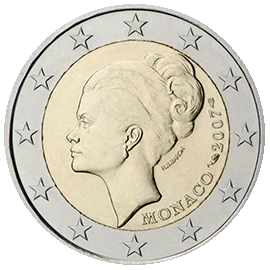
What background helps identify the object?
How is a ring-and-center coin different from a clad coin?
In the structure discussed here, a central insert sits inside an outer ring, so the two components appear next to one another across the face. A clad U.S. quarter instead has layers over a core through its thickness. Both involve multiple metals, but their geometry and possible faults differ. A missing quarter layer therefore cannot serve as a direct diagnosis of a missing €2 center.
Normal bimetallic design often creates an obvious color boundary. Design elements may cross that boundary intentionally. Start with the exact issuer’s normal coin, not a generic expectation that a line, seam or two colors must indicate a fault. The €2 commemorative guide separates issue identity and collector demand from error attribution.
How do normal features, errors and damage compare?
What does an attributed offset insert look like?
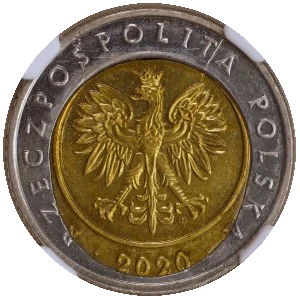
This is the Polish specimen described in the lot, not the normal Monaco construction reference above. Examine the unequal relationship around the center and preserve the whole coin for attribution. The public photograph supports a visual comparison; the auction record supplies the reported NGC attribution and grade.
| Observation | Normal / possible mechanism | Required evidence | Damage lookalike | Comparison limit |
|---|---|---|---|---|
| Two contrasting colors | Normal ring and insert | Correct issue specifications | Plating can also change color | No error premium from color alone |
| Core displaced relative to ring | Possible offset insert | Coherent strike and boundary on both faces | Center shifted by force after minting | Authenticate the assembly history |
| Center absent | Possible missing component | Struck design, aperture and rim evidence | Punched-out or dismantled coin | An empty ring alone proves little |
| Outer ring absent | Possible missing ring or fragment category | Physical planchet and strike evidence | A removed insert sold separately | Do not assume every loose center is mint-made |
| Exposed metal over one face | May concern cladding rather than assembly | Identify intended construction first | Grinding, chemicals or plating | Use the correct mechanism |
Is there a documented shifted-core example?
Gabinet Numizmatyczny ROSTEK’s auction listing describes a Poland 2020 five-złoty coin as NGC MS62 Mint Error, Offset Center Insert, certificate 6632483-003. The original listing provides a useful attributable comparison. It does not mean that an uneven-looking ring on another coin has the same cause, and this guide does not assign that certificate to the normal €2 reference photograph.
| Coin | Recorded attribution | Published amount | Date / lot | Fee basis |
|---|---|---|---|---|
| Poland 2020 5 złotych | NGC MS62; Offset Center Insert | €80 hammer | ROSTEK auction 1, lot 501 · Sept. 25, 2026 | 15% buyer premium listed separately |
| Another shifted-looking coin | Not authenticated here | No amount assigned | Exact issue and physical check needed | Do not transfer the lot price blindly |
Which physical details help distinguish assembly from force?
Photograph both faces square to the camera and record the full edge, not just the most dramatic side. Compare the central opening, ring width and the relationship between the relief and boundary. Look for pressure marks, cuts, distorted metal or other evidence of later movement. A continuous design is relevant context, but a photograph alone cannot prove when a component moved.
Weight and diameter can help describe what is present, yet they do not rule out an alteration. A removed center changes weight whether removed accidentally during manufacture or deliberately afterward. Avoid pushing, tapping, heating or prying a component to “test” it; that destroys evidence and can create the very damage being investigated.
How are wrong inserts and mixed colors evaluated?
A proposed wrong-metal insert needs the correct normal specification and direct material evidence. Color from lighting, toning or plating is inadequate. Separate what is visibly unusual from the proposed manufacturing explanation. Specialists may need to inspect dimensions, surfaces, edge engagement and alloy together before naming an error.
How should I compare value?
Use the exact issue, attributed assembly fault, preservation and severity. A missing component, an offset insert and a mismatched alloy are different categories. The €80 hammer result above is a modest dated example, not a floor, ceiling or market range for all bimetallic errors. Keep currency and buyer fees visible instead of converting it into an unexplained dollar estimate.
For internal metal separation compare lamination and split planchets; for U.S. layered coins compare dime clad-layer checks. The mechanisms should remain separate even when both leave an unusual exposed surface.
What should I check in three steps?
- 01Identify the coin’s intended ring-and-center construction and normal issuer specifications; photograph both faces and edge.
- 02Describe the component relationship before naming the mechanism. Compare evidence of striking with cuts, pressure, plating or later removal.
- 03Leave the parts untouched, seek specialist attribution and compare only matching assembly faults in dated transactions with currency and fees recorded.
What should I remember?
A genuine assembly error needs more than two colors, an uneven seam or a missing center. Establish the normal construction and inspect both faces and the edge. Keep the normal €2 photograph separate from the attributed Polish sale, and do not force components apart.
What else do collectors ask?
Are all two-colored coins errors?
No. Ring-and-center construction and contrasting colors are normal on many issues.
Is a clad quarter the same structure as a €2 coin?
No. The quarter’s layers run through the thickness, while the ring and insert are arranged across the face.
Does an empty outer ring prove a missing-center mint error?
No. A center can be removed after minting. The remaining strike and physical evidence must support a manufacturing fault.
Should I push the center to see whether it moves?
No. Force can damage the object and destroy evidence of its original condition.
What did the documented Polish offset-insert coin realize?
The listing records an €80 hammer on September 25, 2026, with a 15% buyer premium stated separately.
Is the Monaco photograph the certified error coin?
No. It is a normal €2 construction reference. The documented error is a separate 2020 Polish five-złoty specimen.
Which references support this guide?
References and further readingExpand
- ROSTEK auction 1, lot 501Poland 2020 five-złoty, NGC MS62 Offset Center Insert; €80 hammer, September 25, 2026; 15% premium separate.
- ECB: euro coinsNormal euro coin identity and construction context.
- Error-Ref: specialist mechanism indexPlanchet and core error terminology; individual physical attribution still required.