

 App Store

COIN ERRORS & VARIETIES · PENNY
2009 Penny Errors: Extra Fingers, DDR and Four-Reverse Checks
Separate the four normal Lincoln Bicentennial designs from attributed Formative Years doubled dies, damage and collector finishes.
 HeriBase TeamPublished
In this article
What is the variety, and what is the value reference?
The four different 2009 penny backs are normal designs, not four mint errors. A recognized Formative Years Doubled Die Reverse, FS-801 / WDDR-043, shows extra finger details on the hand holding the book. Ordinary worn cents start at one cent; an attributed variety needs its own grade, color and dated value comparison.
What do the real reference coins show?
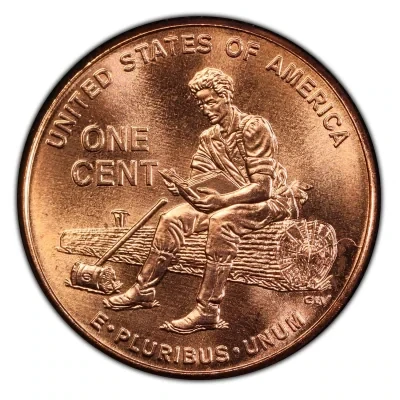
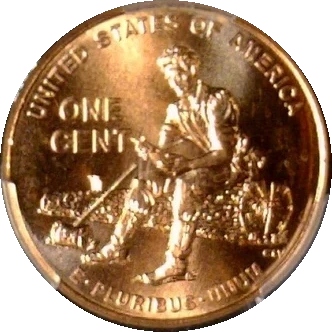
How do normal coins, the variety and damage differ?
| Coin / observation | Feature to check | Meaning | Common mistake | Before pricing |
|---|---|---|---|---|
| Four different 2009 reverses | Cabin, seated reader, standing Lincoln, Capitol | Normal Bicentennial design program | Different pictures are intentional | Use the design-specific normal comparison |
| Normal Formative Years reverse | Seated Lincoln holding a book | Ordinary design | A book edge or normal finger is not an extra digit | No DDR attribution from the full design alone |
| Formative Years FS-801 / WDDR-043 | Matching partial extra finger details | Specific Doubled Die Reverse | Other doubled dies have different patterns | Record the exact attribution and grade |
| 2009-D or another reverse | Different mint or design | Needs its own catalog check | FS-801 on this page is not a label for all 2009 coins | No transferred price |
| Satin finish, Proof or damage | Different manufacture or disturbed metal | Not automatically an error | Keep finish, variety and damage separate | Use the appropriate category |
How do you identify it without mistaking damage for an error?
The Bicentennial cents tell Lincoln’s story through four reverses. Their normal design differences can be mistaken for errors when a reader has only seen one version in change. The first useful decision is therefore which reverse is present. Our 2009 penny design guide explains the complete set; this article focuses on the identification work behind an error or variety claim.
The Formative Years reader’s small hand is the important area for the named doubled die discussed here. A nickname such as “extra fingers” is broader than a catalog attribution. Several dies can create additional-looking details in this part of the design, so a specimen must match a specific listing rather than merely look unusual. FS-801 and WDDR-043 refer to the particular Formative Years variety used for the comparisons on this page.
Which hand detail belongs to FS-801?
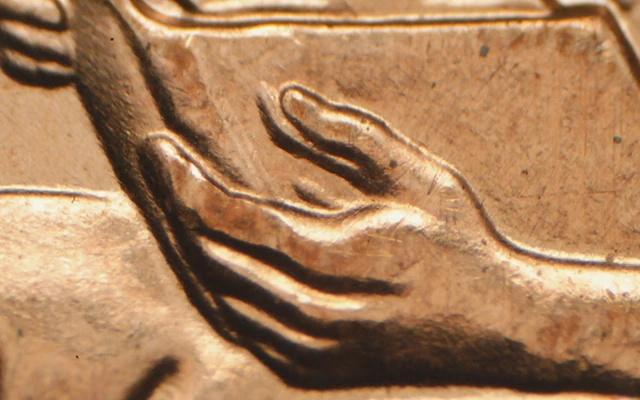
Start at the hand holding the book. Examine the partial additional finger details and their relationship to the normal thumb and fingers. Compare the position, direction and surrounding book edge, rather than counting every ridge as an extra finger.
This close-up illustrates the attributed pattern on a separate specimen; it is not the enlarged hand of the full-coin MS64RD reference photo. Preserve that distinction when documenting your own coin.
What should an ordinary reverse show?
Identify the reverse before magnifying a detail. A cabin or Capitol reverse cannot be matched to a Formative Years hand diagnostic. Photograph the full reverse first so the small feature retains its context.
Date, mint, finish and composition category should be kept in separate notes. A collector finish is not itself proof of a die variety. Do not infer that every unusually bright or differently weighted 2009 cent has the same error.
What should you exclude before naming the variety?
Keep glare, weak focus, scratches and displaced metal out of the attribution. Take one full-face photograph and one close-up under steady light, then repeat with the light coming from another angle. A feature that vanishes with a reflection is different from a raised part of the design. Do not clean, scrape or press the area to make a suspected feature clearer.
When the match remains uncertain, describe the observation rather than assigning a rare name. The appraisal and authentication guide explains which questions can be explored with photographs and when the physical coin needs examination.
What are the three practical checks?
- Identify which of the four reverses you have and record the obverse date, mint area and finish.
- For Formative Years, take a focused hand-and-book photograph and match a named DDR listing; keep the full reverse alongside it.
- Confirm the exact variety and condition, then compare the same grade/color and manufacture with a dated record.
Which price belongs to your exact coin and condition?
| Coin / attribution | Condition | Reference | Basis and date | Limits |
|---|---|---|---|---|
| Ordinary worn 2009 circulation cent | No attributed variety | 1-cent face value | Ordinary baseline | Four reverses do not create an automatic premium |
| Formative Years DDR FS-801 | MS66RD as listed by PCGS | $112 | PCGS-reported historical marketplace record, August 26, 2021 | Fee basis not stated here; not a live quote |
| FS-801 reference coin in the full photograph | PCGS MS64RD holder identification | Not quoted | Photo used for attribution context, not a matched sale | Do not assign the MS66 result to this specimen |
| Other DDRs, Proofs or collector finishes | Different attribution or manufacture | Not quoted | Requires its own verified comparison | No universal extra-finger price |
The $112 observation is the marketplace result recorded by PCGS for its FS-801 entry, not an independently authenticated sale by HeriBase. We do not use a login-hidden auction amount or a seller’s asking price as a confirmed result. The full-coin and diagnostic photographs show different reference examples.
A seller’s listing is not a completed sale, and a large historical result does not establish an ordinary coin’s value. Match the full attribution, manufacture, grade and surface condition first. Fees, shipping and selling costs can also change what a buyer pays or a seller receives. Use the grading and surface-condition guide when deciding which comparison is relevant.
What should you conclude before pricing it?
A 2009 cent becomes a variety candidate through a specific diagnostic match, not because it has one of four different backs. Use the full reverse to choose the right design, inspect the book-holding hand for the documented Formative Years pattern, and keep an attribution separate from a price. Preserve the coin unchanged if the feature is promising.
Continue with the Coin Errors & Varieties directory and Four normal 2009 penny designs, 1995 obverse doubling checks, Penny errors and varieties photo list.
Frequently asked questions
Are all four 2009 penny backs errors?
No. They are normal Bicentennial designs. An error or variety needs a separate feature beyond the intended design change.
Which 2009 penny has the extra-finger variety discussed here?
The Formative Years reverse with Lincoln seated and reading. This page focuses on the FS-801 / WDDR-043 Doubled Die Reverse.
Where should I look for FS-801?
Inspect the hand holding the book. Match the partial extra finger details, the normal thumb and fingers, and the adjacent book edge to an attributed example.
Is every extra-looking finger FS-801?
No. Multiple die varieties and ordinary design details can be confused. A nickname is not a complete attribution.
Can I use this price for a 2009-D penny?
Not automatically. Mint, reverse, manufacture and exact variety must match the cited record. Do not transfer the Philadelphia Formative Years attribution to a D coin.
Does a different finish mean a mint error?
No. Collector finishes and Proof manufacture are separate categories. First establish what issue was intended, then evaluate any proposed error.
What does the $112 figure describe?
A historical MS66RD FS-801 marketplace result dated August 26, 2021 as recorded by PCGS. It is not a guaranteed value for every 2009 cent or every extra-finger claim.
Are the full coin and close-up the same specimen?
No. They are separately identified reference examples. The close-up demonstrates the attributed pattern and must not inherit the full coin’s certificate or grade.
References and dated evidence
Open factual and price references
- U.S. Mint: Lincoln Bicentennial cent program
- PCGS: Formative Years DDR FS-801 catalog and reported record
- Wexler: Formative Years reverse doubled dies
- John Wexler in Coin World: reported variety diagnostics
Editorial review: November 16, 2026. Historical source and sale dates are retained in the tables; reviewing them does not make those figures live quotations.