

 App Store

COIN ERRORS & VARIETIES · QUARTER
1977 Quarter Errors: No Mint Mark, D and Silver-Planchet Checks
Compare a real 1977-D silver-clad planchet error with ordinary clad quarters, normal missing mint marks and later surface damage.
 HeriBase TeamPublished
In this article
What should you know first?
A 1977 quarter without a mint mark is normal; it is not a missing-P error. A documented major exception is the 1977-D quarter struck on a 40% silver planchet. Heritage recorded $4,935 for an NGC XF Details example on January 6, 2016. That result is not the value of an ordinary silver-colored quarter.
What do the real coins show?
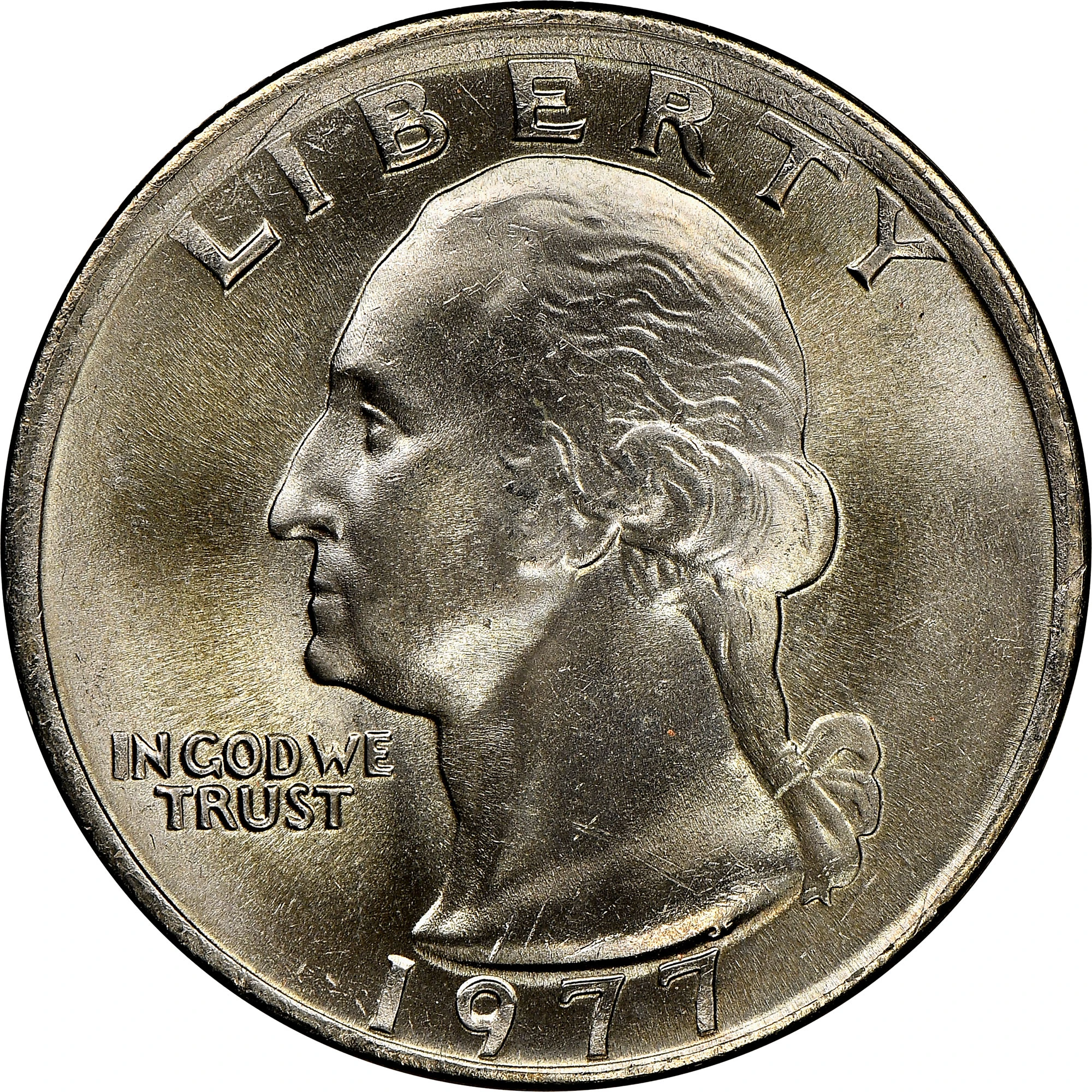
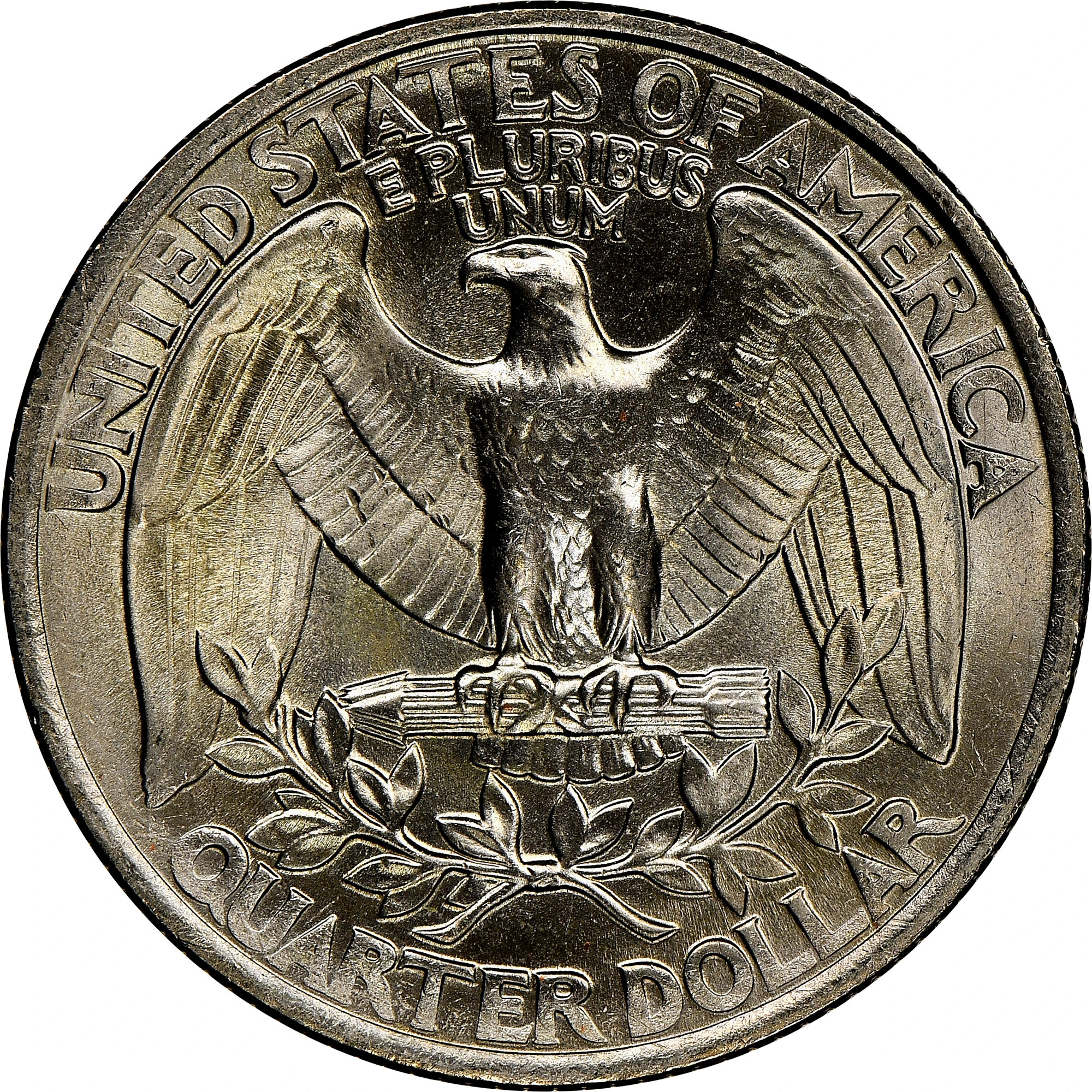
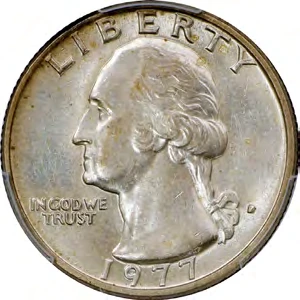
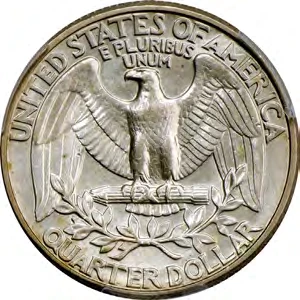
What is normal for this issue?
In 1977, the quarter returned to the eagle reverse after the dual-dated 1776–1976 Bicentennial issue. The ordinary eagle and the 1977 date are the expected combination. The return to regular production also provides the setting for the documented silver-clad wrong-planchet pieces.
Circulation quarters of this period did not all carry visible mint letters. An unmarked 1977 quarter is not supposed to have a P. Denver issues have D;San Francisco supplied Proof issues. The important error question is whether the planchet or strike differs from the intended issue, not whether an expected blank mint-mark position looks empty.
For the broader mechanisms and other dates,compare the quarter error guide. A year-specific attribution still needs the exact diagnostics described below.
How do normal coins and errors compare?
| Coin or observation | Where to look | Meaning | How to confirm | Value context |
|---|---|---|---|---|
| No mint mark | Blank area beside the portrait | Normal 1977 mint-mark convention | Verify date and intended issue | Not an error premium |
| 1977-D on silver-clad planchet | Certified composition inconsistent with regular clad issue | Documented transitional wrong-planchet error | Alloy analysis, edge, surfaces and provenance | Compare only confirmed silver-clad errors |
| Wrong-size blank | Design constrained by a different blank | Separate wrong-planchet category | Mass and diameter, not the color alone | Not interchangeable with silver-planchet prices |
| Broadstrike or off-center claim | Expanded diameter or missing design with blank crescent | A striking error if genuine | Inspect both faces and edge | Severity and date visibility matter |
Which diagnostics identify the actual cases?
Why is a silver-colored 1977-D quarter insufficient evidence?
Ordinary copper-nickel quarters are also silver-colored. The pictured error is identified by its cataloged planchet attribution, not by a brighter photograph. Stack’s Bowers describes a 40% silver-clad blank associated with Bicentennial collector coinage. A color match cannot establish that composition.
What does the edge tell you?
A regular clad quarter normally shows the copper core along the edge. A different-looking edge is a reason to investigate, not a completed authentication. Wear, lighting, plating and alteration can hide the normal band. Record the actual mass and dimensions without polishing or filing the edge.
Are there other 1977 quarter errors?
Yes. Heritage’s Don Bonser collection archive includes an unmarked 1977 quarter struck on a 5-cent blank, graded NGC AU 55. That is a different wrong-planchet pairing from the silver-clad 1977-D. A photograph or amount from one must not be used as evidence for the other.
Could the feature be damage?
Could polishing create a rare-looking silver quarter?
Polishing can change brightness while removing original surfaces. It cannot establish a silver-clad blank, and it may reduce collector interest. Keep the coin uncleaned.
What separates an off-center strike from a shifted-looking rim?
A convincing off-center coin shows actual loss of design and unstruck area caused by the blank’s position. A small uneven rim or a one-sided alignment difference is not enough to assign the same error category.
What do the price records establish?
| Coin or category | Grade or attribution | Amount | Source and date | Basis and limitation |
|---|---|---|---|---|
| Ordinary worn 1977 clad quarter | No mint mark or D | 25¢ | Face denomination | No error premium |
| 1977-D on 40% silver planchet | NGC XF Details;improperly cleaned | $4,935 | Heritage lot 3499, January 6, 2016 | Reported sale total;condition problem retained |
| Unmarked 1977 on 5¢ blank | NGC AU 55 | $134.40 | Heritage auction 60174, lot 93144, November 6, 2020 | Different planchet and grade;not a silver-error comparison |
| Pictured 1977-D silver-clad coin | PCGS MS 61 | Not quoted | Stack’s Bowers Winter 2022 catalog, lot 5143 | Catalog identification only;no result inferred |
Treat these as historical specimen records, not current asking prices or a guaranteed offer for a newly found coin. The 2016 quarter was described as improperly cleaned and graded XF Details;the pictured Stack’s Bowers quarter was graded MS 61. Neither the grade nor the price can be transferred between them.
A light coin with a copper-colored surface also does not automatically belong in the silver-planchet category. Loss of a clad layer, chemical damage and a blank of another denomination involve different evidence. A surface metal test can also be misleading on a plated coin, so a specialist considers the whole construction.
How should you check your coin?
1.Identify the issue
Read the complete 1977 date and mint position;record whether it is an ordinary circulation coin or a Proof.
2.Measure without altering
Record mass, diameter and edge photographs. Do not perform acid tests, grind the rim or remove material.
3.Use the correct comparison
A silver-clad candidate needs specialist alloy and construction review. Compare a 5-cent-blank error only with similar wrong-size-planchet coins.
Keep the original photographs and measurements together. HeriBase can help with an initial photo-based identification; a coin-specific error attribution or certified grade still requires the appropriate evidence.
What is the key takeaway?
A missing P is normal on 1977 quarters. The worthwhile silver-planchet exception needs composition evidence and authentication;the historical sale amounts here belong to different identified specimens and cannot price a coin by color.
What else do collectors ask?
Is a 1977 quarter with no mint mark an error?
No. An unmarked mint position is normal for the issue;do not expect a P as on later quarters.
Were ordinary 1977 quarters silver?
Regular issues were copper-nickel clad. The documented 1977-D silver-clad-planchet pieces are exceptional errors.
Can a scale alone confirm the silver error?
No. Mass is one clue and may overlap closely with regular specifications. Alloy, edge, surface condition and authentication remain necessary.
Did a 1977-D error sell for $4,935?
Heritage recorded that result for its NGC XF Details silver-planchet specimen on January 6,2016. It is not a price for every 1977-D quarter.
Is the photographed MS 61 coin the 2016 auction coin?
No. The photographs show Stack’s Bowers Winter 2022 lot 5143, identified as PCGS MS 61. The 2016 Heritage specimen was NGC XF Details.
Should I clean a possible error?
No. Keep original surfaces intact and obtain clear photographs and measurements before seeking review.
Where can you verify the evidence?
References and further reading
- Heritage:1977-D silver-planchet quarter, lot 3499
- Stack’s Bowers: Winter 2022 Rarities Night catalog, lot 5143
- Heritage: Don Bonser archive, auction 60174, lot 93144
- NGC: ordinary 1977 quarter reference
References accessed November 16, 2026. Publication dates and historical sale dates are retained separately. A catalog attribution is not itself a sale or a current buying offer.